
Channel Management
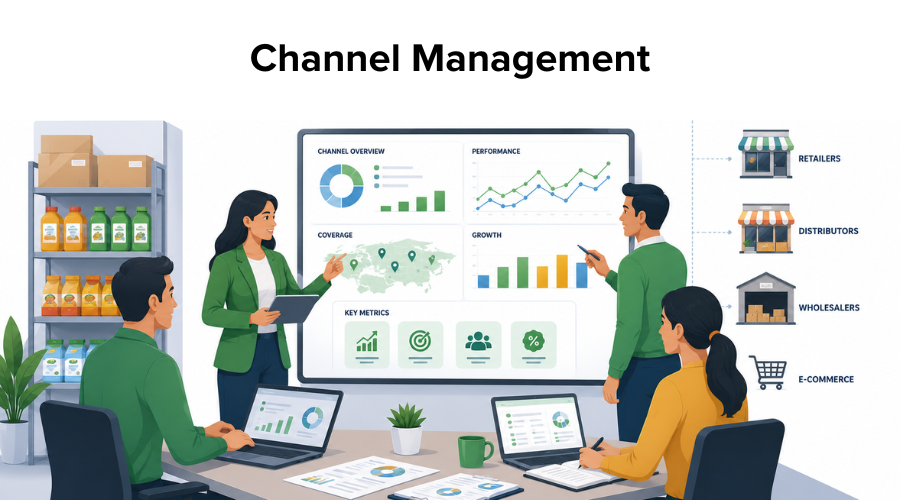
Channel Management is the strategic process of designing, managing, and optimizing the sales and marketing channels through which a business delivers its products or services to end customers. It involves coordinating both direct-to-consumer routes and indirect partners such as distributors, wholesalers, retailers, and resellers to ensure smooth product flow and consistent market coverage.
In simple terms, channel management ensures that products are delivered efficiently to customers through the right mix of distribution partners while maintaining cost efficiency and brand consistency.
Channel Management Models in Business
Organizations typically use multiple channel structures depending on their market strategy:
Direct Channel:
The company sells directly to customers without intermediaries, often through field sales teams or digital platforms.
Indirect Channel:
Products are sold through distributors, wholesalers, and retailers who act as intermediaries.
Hybrid Channel:
A combination of direct and indirect channels to maximize market reach and flexibility.
A strong channel strategy for FMCG distribution helps businesses balance control, cost, and coverage.
Core Functions of Channel Management
Effective channel management is built on structured processes and partner coordination:
Partner Selection:
Identifying and onboarding distributors, wholesalers, agents, or resellers who align with business goals and target markets.
Partner Support:
Providing training, product knowledge, marketing materials, and incentives (such as Marketing Development Funds) to enable better sales performance.
Channel Architecture Design:
Creating a structured distribution model such as:
- Manufacturer → Distributor → Retailer → Customer
- Direct-to-consumer (D2C) models
- Hybrid distribution structures
Conflict Management:
Preventing channel conflicts by defining clear pricing rules, territory boundaries, and sales responsibilities to avoid cannibalization.
How Channel Management Works
Channel management operates as a coordinated system between the company and its partners:
-
Businesses define distribution structure and partner roles
-
Products are distributed through selected direct and indirect channels
-
Sales and marketing support is provided to partners
-
Performance is tracked across all channels
-
Adjustments are made based on market data and sales results
Modern organizations use channel management software solutions to monitor performance and improve coordination across complex distribution networks.
Key Strategies for Effective Channel Management
To build a strong and efficient channel ecosystem, companies focus on:
-
Selecting the right distribution and retail partners
-
Offering continuous training and partner enablement programs
-
Designing efficient multi-tier distribution structures
-
Monitoring sales performance across all channels
-
Aligning incentives to encourage partner productivity
-
Resolving conflicts through clear policies and data transparency
Channel management is not just about distribution, it is a strategic business function that ensures products reach the right customers through the right partners, while maximizing efficiency, minimizing conflicts, and driving sustainable revenue growth.