
Distributor Margin
A distributor margin is the profit percentage a distributor retains for purchasing, storing, and selling a manufacturer's goods to retailers. It covers operational costs like warehousing, logistics, and credit risk. Margins generally range from 3% to 30% depending on the industry, product volume, and services provided
This margin serves as compensation for the distributor's role in product storage, transportation, inventory management, credit handling, market coverage, and sales support. A healthy distributor margin helps ensure that distributors remain motivated to stock, promote, and distribute products effectively across their assigned territories.
How is Distributor Margin Calculated?
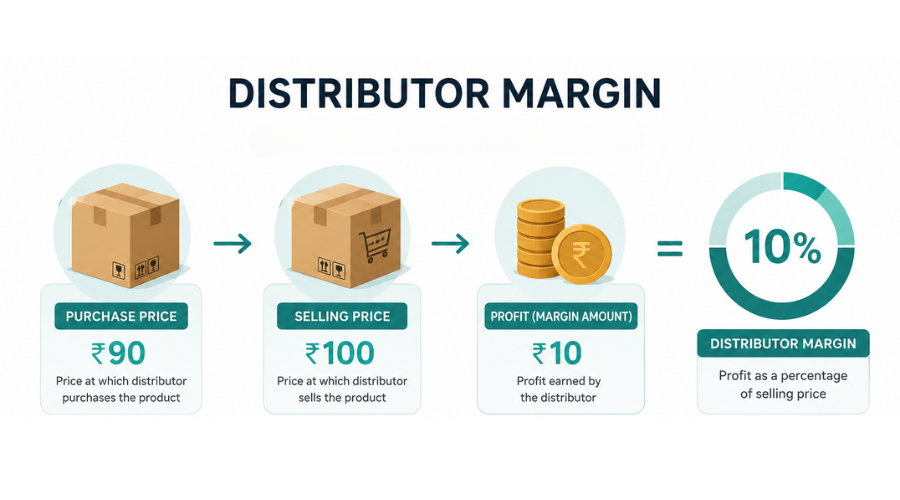
Distributor margin is typically calculated as the difference between the purchase price and selling price, expressed as a percentage.
Distributor Margin Formula
Distributor Margin (%) = [(Selling Price - Purchase Price) ÷ Selling Price] × 100
For example, if a distributor purchases a product for ₹90 and sells it for ₹100:
Distributor Margin = [(100 - 90) ÷ 100] × 100 = 10%
Understanding how distributor margin is calculated helps businesses evaluate distributor profitability and optimize their channel sales strategy.
Who Decides Distributor Margin?
Distributor margin is usually determined by the manufacturer or FMCG company based on its pricing and channel distribution strategy. Sales leaders, finance teams, and channel managers work together to establish an appropriate distributor margin strategy in FMCG companies.
Several factors influence margin decisions, including:
-
Product category
-
Market competition
-
Geographic location
-
Distribution costs
-
Expected sales volume
-
Service requirements
-
Secondary sales performance
In some industries, distributor margins are fixed as a percentage of the Maximum Retail Price (MRP) or net selling price. In others, margins may be negotiated based on distributor capabilities, market potential, and business commitments.
Why is Distributor Margin Important?
Distributor margin plays a crucial role in maintaining a healthy and productive distribution network.
Encourages Distributor Participation
A competitive margin incentivizes distributors to invest in inventory, expand market coverage, and actively promote products.
Covers Operational Costs
Margins help distributors manage expenses related to warehousing, transportation, manpower, delivery operations, and working capital.
Improves Market Reach
Adequate margins encourage distributors to serve more retailers and expand product availability across territories.
Strengthens Channel Relationships
A well-designed distributor margin structure in FMCG distribution helps build long-term partnerships between manufacturers and channel partners.
How Does Distributor Margin Impact Retail Prices and Profitability?
Distributor margin directly affects pricing and profitability throughout the supply chain.
Higher distributor margins may increase the overall cost structure of the channel, which can indirectly influence retail pricing if manufacturers or distributors do not absorb the additional cost. On the other hand, lower margins can improve price competitiveness but may reduce distributor motivation, service quality, or market coverage.
Businesses must strike a balance between channel profitability and consumer affordability. A properly planned distributor margin and channel sales performance strategy ensures that distributors remain profitable while helping companies maintain competitive pricing and strong market penetration.
Distributor Margin in FMCG Companies
Distributor margin is particularly important in FMCG businesses because products move through multiple intermediaries before reaching consumers.
An effective distributor margin structure in FMCG distribution helps companies:
-
Improve distributor retention.
-
Increase product availability.
-
Expand retail coverage.
-
Drive higher sales volumes.
-
Strengthen distributor relationships.
-
Improve market penetration.
Without attractive margins, distributors may prioritize competing brands that offer better profitability or sales incentives.
How Technology Helps Manage Distributor Margin
Modern distributor management software and sales force automation solutions help companies monitor distributor profitability and channel performance more effectively.
These solutions enable businesses to:
-
Track primary and secondary sales.
-
Analyze distributor profitability.
-
Monitor schemes and incentives.
-
Manage discounts and trade promotions.
-
Improve channel visibility.
-
Optimize distribution performance.
By leveraging technology, organizations can make data-driven decisions and maintain a profitable distribution network while improving overall channel efficiency.
Distributor margin is the profit earned by distributors for moving products through the supply chain and making them available to retailers and customers. It is a critical component of channel sales management, influencing distributor motivation, market coverage, retail pricing, and overall business profitability.
A well-planned distributor margin strategy, supported by effective distribution management and sales automation tools, helps businesses build stronger channel partnerships, improve distributor profitability, and achieve sustainable sales growth across competitive markets.