
Perfect Store
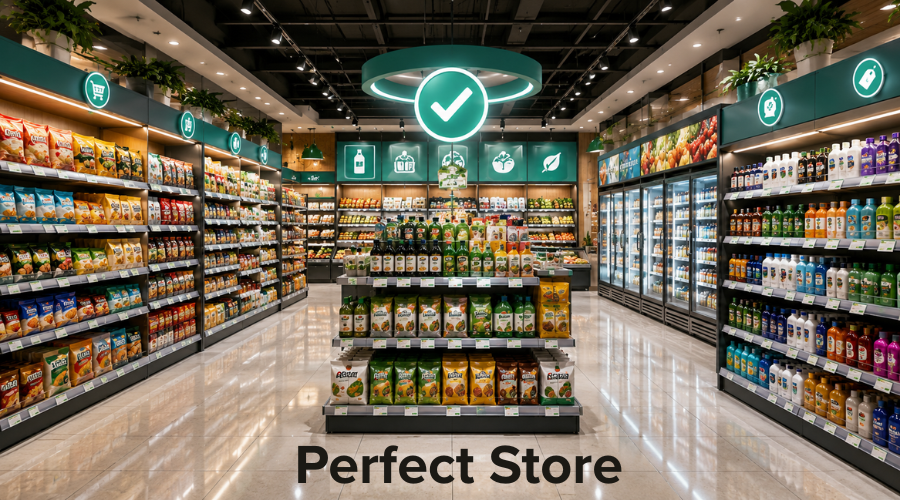
A Perfect Store is a retail outlet that consistently meets predefined standards for product availability, visibility, pricing, promotions, and merchandising. It represents the ideal retail environment where shoppers can easily find, identify, and purchase a brand's products, leading to higher sales and an improved customer experience.
For businesses looking to understand perfect store in FMCG retail execution, it is a framework used to measure how effectively products are presented and executed at the point of sale.
Key Elements of a Perfect Store
A store is typically considered "perfect" when it meets specific retail execution criteria, including:
Product Availability
Products are consistently in stock and available for customers to purchase, reducing the risk of lost sales due to stockouts.
Shelf Visibility
Products are displayed prominently and receive adequate shelf space to maximize visibility and customer attention.
Pricing Compliance
Products are sold at the correct price and follow approved pricing strategies across retail outlets.
Promotional Compliance
In-store promotions, offers, and marketing campaigns are executed as planned.
Merchandising Standards
Products are displayed according to company guidelines, including planograms, shelf facings, and visual merchandising requirements.
Why is the Perfect Store Concept Important?
The perfect store strategy in FMCG companies helps brands improve retail execution and create a consistent shopping experience across all outlets.
Increases Product Availability
Ensures products remain on shelves and available to customers when needed.
Improves Brand Visibility
Better shelf placement and merchandising increase the likelihood of customer purchases.
Drives Sales Growth
Stores that meet perfect store standards often achieve higher sales and better market performance.
Enhances Retail Execution
Helps sales teams identify gaps in product availability, merchandising, and promotional compliance.
Perfect Store in FMCG Companies
The perfect store model in FMCG distribution is widely used by manufacturers and consumer goods companies to evaluate retail performance and optimize in-store execution.
By tracking perfect store metrics, businesses can:
-
Improve product availability.
-
Increase shelf share and visibility.
-
Monitor promotional execution.
-
Strengthen retailer relationships.
-
Enhance customer shopping experiences.
-
Improve retail sales performance.
Many organizations use field sales teams and retail audit programs to measure perfect store compliance across territories.
How Technology Supports Perfect Store Execution
Modern retail execution software and field sales management solutions help companies measure and improve perfect store performance.
These tools enable businesses to:
-
Conduct retail audits.
-
Capture store images and compliance data.
-
Monitor product availability.
-
Track merchandising standards.
-
Measure shelf share and planogram compliance.
-
Generate real-time retail execution reports.
By leveraging technology, brands can improve visibility into store conditions and ensure consistent execution across retail networks.
A Perfect Store is a retail outlet that meets predefined standards for product availability, visibility, pricing, promotions, and merchandising. It is a key concept in retail execution that helps FMCG brands improve customer experience, strengthen retail performance, and drive sales growth. Implementing an effective perfect store strategy enables businesses to maximize product visibility, improve compliance, and achieve better results across their retail distribution network.