
Route Compliance
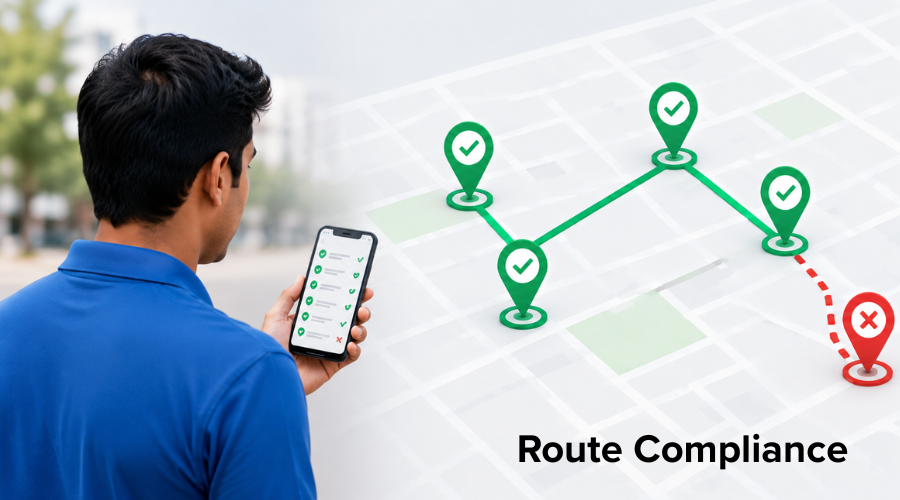
Route Compliance refers to the degree to which field sales executives, delivery personnel, or service agents follow a predefined beat plan and scheduled travel route while visiting assigned retail outlets or customer locations. It ensures that planned territory coverage is executed in the correct sequence, frequency, and timing defined by the organization.
Strong route compliance helps businesses validate whether actual field movement aligns with planned routes, improving control over field execution, outlet coverage, and sales discipline.
Why Route Compliance is Important
Route compliance directly impacts field efficiency, market coverage, and sales performance. When teams consistently follow planned routes, organizations achieve more structured execution and better visibility of on-ground operations.
Key benefits include:
-
Consistent and complete outlet coverage across territories
-
Improved utilization of field sales time and resources
-
Reduced missed visits and coverage gaps
-
Better coordination between distributors and field teams
-
Stronger discipline in retail execution and sales operations
-
Improved predictability of field performance
Without strong route compliance, even well-planned sales strategies fail due to inconsistent execution at the field level.
Key Elements of Route Compliance
Route compliance is built and monitored using structured planning and real-time tracking systems:
Beat Planning:
Defined outlet visit schedules and territory-wise routing plans for field teams.
GPS Tracking:
Real-time monitoring of field executive movement to ensure adherence to planned routes.
Outlet Mapping:
Geo-tagged retail outlet database used to validate visits and coverage.
Visit Validation:
Check-in and check-out mechanisms to confirm actual outlet visits.
Route Sequencing:
Predefined order of outlet visits to optimize travel time and maximize coverage.
How to Improve Route Compliance
Organizations can strengthen route compliance by combining planning discipline with technology-driven execution control:
-
Designing data-driven and realistic beat plans
-
Using GPS-enabled field force tracking systems
-
Implementing geo-fencing for accurate visit validation
-
Monitoring route deviations in real time
-
Optimizing routes based on outlet density and geography
-
Conducting regular audits of field execution patterns
-
Training field teams on structured route adherence
Modern field force automation tools play a key role in identifying gaps between planned and actual execution and improving compliance rates over time.
Strong route compliance leads to better market penetration, fewer missed sales opportunities, and more predictable field execution. It is a key driver of operational efficiency in FMCG and retail distribution networks.