
Stock Replenishment
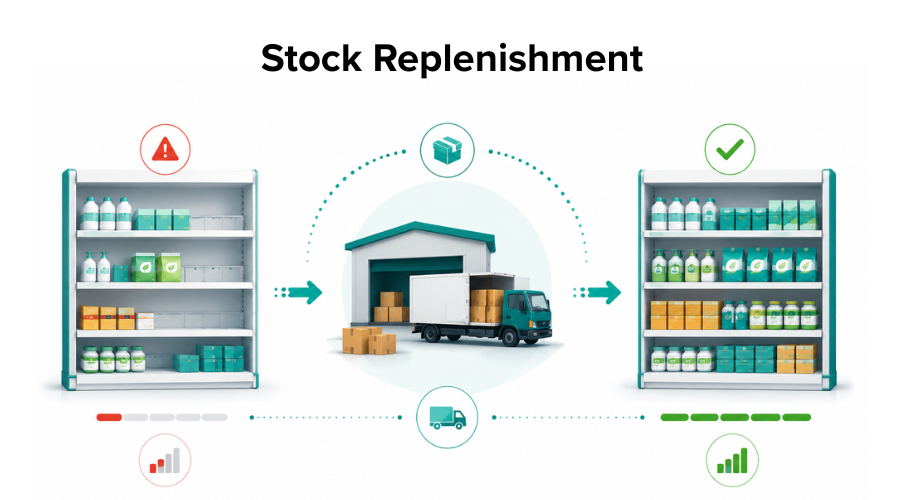
Stock replenishment is the process of refilling inventory to maintain optimal stock levels, ensure product availability, and prevent stockouts while minimizing inventory carrying costs. For businesses looking to understand stock replenishment in inventory management, it serves as a critical process that aligns inventory levels with customer demand by proactively reordering or transferring products as they are sold or consumed.
An effective stock replenishment strategy for FMCG companies helps maintain product availability across warehouses, distributors, and retail outlets while reducing excess inventory and improving operational efficiency.
Key Stock Replenishment Strategies
Reorder Point Replenishment
This method automatically triggers a purchase order when inventory falls below a predefined threshold. The reorder point is typically calculated based on demand forecasts and supplier lead times. It is one of the most widely used approaches for automatic stock replenishment systems.
Periodic Replenishment
Inventory levels are reviewed at fixed intervals, such as weekly or monthly, and replenishment orders are placed as needed. This approach is commonly used in retail and distribution environments.
Top-Off Replenishment
Products are replenished in active picking or storage locations before they run out. This helps maintain uninterrupted order fulfillment, especially during peak demand periods.
Continuous Replenishment
In this model, suppliers continuously monitor inventory levels and automatically replenish stock when required. This method improves collaboration between manufacturers, distributors, and retailers.
Lean-Time Replenishment
Closely aligned with Just-in-Time (JIT) inventory practices, this strategy replenishes only the stock needed for immediate demand, helping businesses reduce waste and lower inventory holding costs.
Benefits of Stock Replenishment
Prevents Stockouts and Lost Sales
An effective stock replenishment process in FMCG distribution ensures that high-demand products remain available, reducing lost sales opportunities and improving customer satisfaction.
Reduces Excess Inventory
Proper replenishment prevents overstocking, helping businesses avoid unnecessary storage costs and inventory obsolescence.
Optimizes Cash Flow
Maintaining the right inventory levels allows companies to balance working capital requirements with order fulfillment needs, improving overall financial performance.
Improves Supply Chain Efficiency
Businesses can enhance forecasting accuracy, streamline procurement processes, and improve inventory turnover through effective inventory replenishment management.
Stock replenishment is a fundamental component of inventory and supply chain management. By implementing the right stock replenishment strategy, businesses can maintain product availability, reduce excess inventory, optimize cash flow, and improve customer satisfaction. Whether through reorder points, continuous replenishment, or demand-based planning, effective replenishment practices help organizations achieve better inventory control and sustainable business growth.