
Territory Mapping
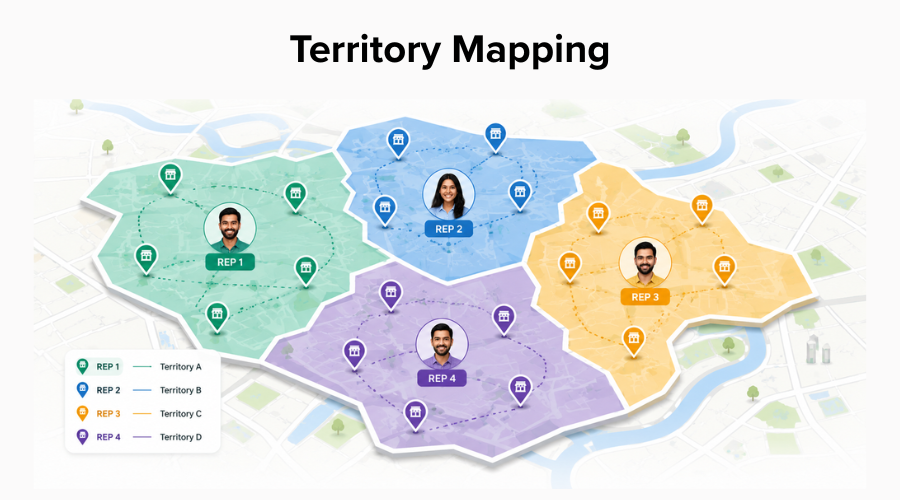
Territory mapping is the strategic process of dividing a market into defined geographic areas, customer segments, or account-based zones and assigning them to sales representatives. It helps businesses balance workloads, improve customer coverage, reduce territory overlap, and maximize field sales productivity. By considering factors such as customer density, market potential, outlet locations, and travel time, organizations can create efficient sales territories that drive better sales performance and resource utilization.
How Technology Improves Territory Mapping
Modern territory mapping software uses real-time data, GPS tracking, and analytics to create balanced sales territories and improve customer coverage. Instead of relying on manual planning, businesses can analyze customer locations, sales potential, travel distance, and field activities to optimize territory allocation and reduce overlap.
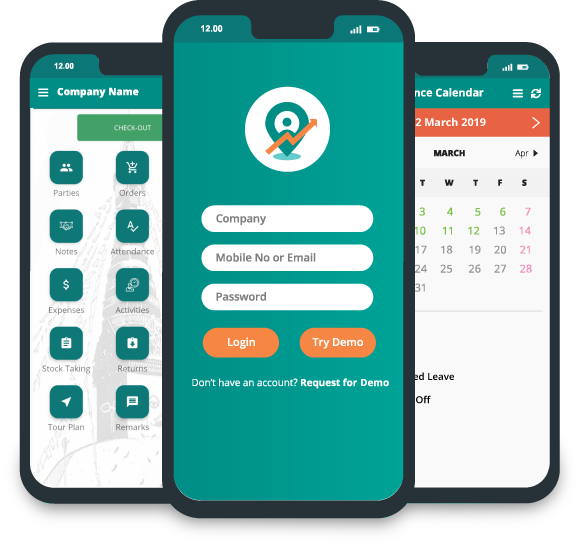
With Delta Sales App, managers can streamline territory planning, monitor territory-wise performance, optimize sales routes, and improve field sales productivity. This helps businesses achieve better resource utilization, stronger market coverage, and more effective sales territory management.
Benefits of Territory Mapping
-
Improves customer coverage and market penetration.
-
Reduces territory conflicts and duplicate visits.
-
Balances workloads among sales representatives.
-
Optimizes route planning and travel time.
-
Increases field sales productivity and efficiency.
-
Enhances territory-wise performance tracking.
-
Supports better sales forecasting and resource allocation.
-
Helps businesses identify growth opportunities in untapped markets.
Territory mapping helps businesses improve sales territory management, optimize customer coverage, and increase field sales productivity. By using territory mapping software and effective territory planning for sales teams, organizations can reduce territory overlap, optimize sales routes, and ensure balanced workloads. Businesses can strengthen field sales territory management, improve market coverage, and drive sustainable sales growth through data-driven territory allocation.