
Beat and Route Plan in FMCG Sales
Sales representatives in the FMCG (Fast-Moving Consumer Goods) sector often confuse the terms "beat" and "route," using them interchangeably. However, understanding the distinction between the two is crucial for efficient field sales execution. A clearly defined beat and route plan reduces time wastage, enhances retail coverage, and improves return on investment.
This article dives deep into beat and route planning, their benefits, and how they contribute to smarter territory management.
What is a Beat Plan in FMCG?
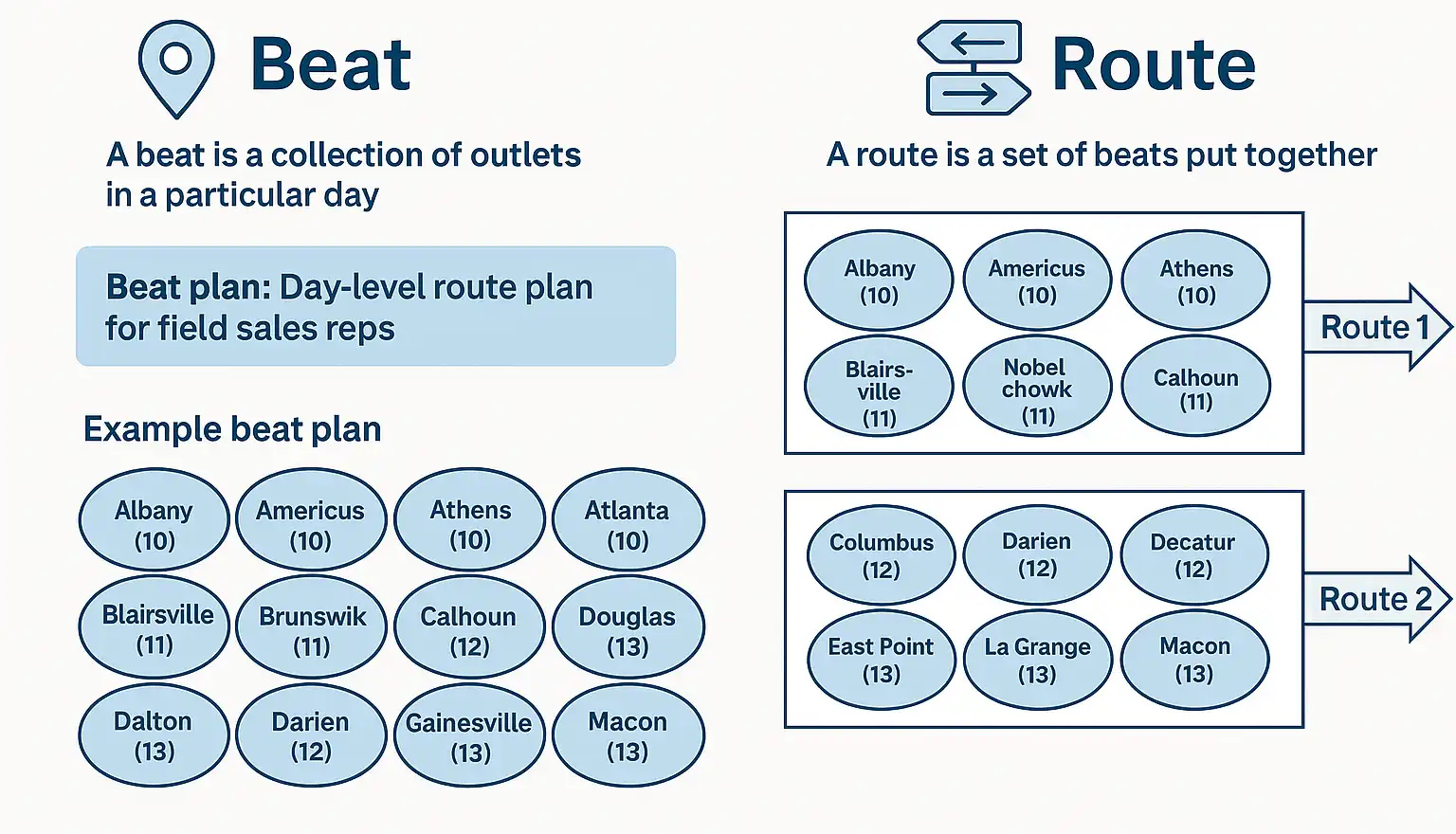
A Beat Plan in FMCG is a strategic schedule that outlines which retail outlets, distributors, or customers a field sales representative should visit during a defined period, typically daily or weekly. It ensures systematic coverage, strengthens retailer relationships, and drives consistent sales. Beat planning is not just about visiting stores—it provides a roadmap for field operations, performance tracking, and territory management.
A well-designed beat plan helps FMCG companies maintain product availability, optimize market coverage, and achieve sales targets efficiently. It also allows prioritization of high-value outlets and improves overall operational productivity.
Key Features of a Beat Plan:
-
Outlet Coverage: Identifies which stores or distributors need regular visits.
-
Visit Frequency: Specifies how often each outlet should be visited to maximize impact.
-
Sales Objectives: Aligns each visit with goals such as order collection, promotions, or product monitoring.
-
Performance Tracking: Monitors field sales productivity and ensures accountability.
-
Territory Management: Organizes visits to optimize sales coverage across regions.
-
Prioritization: Segments outlets based on sales potential, location, or strategic importance.
In the competitive FMCG sector, implementing a clear and structured beat plan ensures no outlet is overlooked, enhances product visibility, and helps sales teams achieve consistent results. Proper planning also enables sales managers to make data-driven decisions, improve resource allocation, and drive overall business growth.
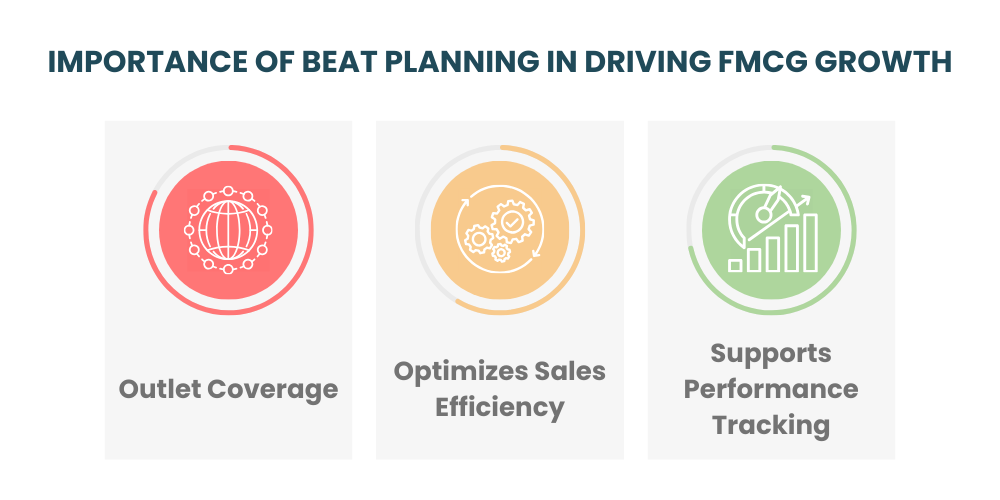
Importance of Beat Planning in Driving FMCG Growth
Beat planning is a crucial element of FMCG sales management because it ensures systematic field operations, maximizes market coverage, and strengthens relationships with retailers and distributors. Without a proper beat plan, field sales teams risk missing important outlets, losing sales opportunities, and underperforming in competitive markets.
A structured beat plan not only guides sales representatives on where and when to visit, but also helps sales managers track performance, optimize resources, and align field activities with business goals. In the fast-paced FMCG industry, regular and consistent visits are essential to maintain product availability, promote new SKUs, and ensure effective execution of marketing strategies.
Key Benefits of Beat Planning:
-
Ensures Complete Outlet Coverage: No store or distributor is overlooked, reducing missed sales opportunities.
-
Optimizes Sales Efficiency: Helps sales reps prioritize high-value outlets and plan visits effectively.
-
Supports Performance Tracking: Provides measurable data on field activity, helping managers evaluate productivity.
-
Enhances Customer Relationships: Regular visits build trust and strengthen retailer partnerships.
-
Improves Inventory Management: Ensures products are stocked adequately and reduces out-of-stock situations.
-
Aligns with Sales Objectives: Every visit is purpose-driven, whether for order collection, promotion execution, or merchandising.
-
Facilitates Strategic Decision-Making: Helps managers identify underperforming areas and allocate resources efficiently.
Beat planning is a cornerstone of FMCG field sales success. It ensures disciplined execution, improves operational efficiency, and drives consistent revenue growth while maintaining strong relationships with retail partners.
What is a Route Plan?
A route plan is a strategic grouping of beats, typically organized for a week or based on a specific geographic territory. It allows FMCG sales teams to cover the maximum number of outlets efficiently while minimizing travel time, effort, and operational costs. Route planning ensures that field sales representatives follow a structured schedule, reach all target locations, and maintain consistent engagement with retailers.
Routes are generally assigned to individual sales reps to balance workload and optimize coverage across regions. By combining multiple beats into a single route, sales managers can plan visits logically, reduce redundancies, and ensure that no outlet is missed during the week.
Benefits of Route Planning
Route planning provides several advantages for FMCG field sales operations:
-
Cost Efficiency: Reduces fuel consumption and travel expenses by minimizing unnecessary trips.
-
Higher Productivity: Enables sales reps to visit more outlets in a day by optimizing their travel paths.
-
Structured Execution: Prevents unorganized or random visits, ensuring a systematic approach to coverage.
-
Improved ROI: More planned and strategic visits result in better sales performance and revenue growth.
-
Data-Driven Decisions: When integrated with field sales automation apps, route plans allow managers to track coverage, optimize territories, and make informed decisions.
A well-implemented route plan, supported by technology and analytics, ensures that FMCG field teams operate efficiently, stay focused on high-priority outlets, and achieve consistent sales results.
Tools for Beat and Route Planning
Efficient beat and route planning relies heavily on the right set of tools to optimize field sales operations. Modern FMCG companies increasingly leverage technology-driven solutions to streamline sales coverage, track visits, and maximize productivity. These tools not only help sales managers plan and assign beats and routes effectively but also provide real-time insights into execution and performance.
Essential Tools for Beat and Route Planning:
-
Field Sales Automation Apps: Enable assignment of beats and routes, track visits, and capture order data in real-time.
-
Route Optimization Software: Helps determine the most efficient travel paths, reducing fuel costs and travel time.
-
GPS & Location Tracking: Monitors sales reps’ movements to ensure planned coverage is followed.
-
CRM Integration: Centralizes customer data, visit history, and order patterns for better planning.
-
Analytics & Dashboards: Provides insights on sales trends, outlet performance, and coverage gaps.
-
Mobile Applications: Allow field reps to view daily schedules, capture orders, and update visit reports on the go.
Using these tools, FMCG teams can enhance operational efficiency, reduce missed visits, and ensure that every outlet receives timely attention.
Best Practices for Effective Planning
To maximize the impact of beat and route planning, FMCG companies must follow structured strategies that ensure consistency, accountability, and optimal coverage. Effective planning improves sales performance, customer satisfaction, and overall field team productivity.
Best Practices for Beat and Route Planning:
-
Prioritize High-Value Outlets: Focus on key accounts and high-potential stores to maximize sales impact.
-
Maintain Balanced Workloads: Ensure routes are evenly distributed among sales reps to prevent fatigue.
-
Regularly Update Plans: Adjust beats and routes based on market changes, new outlets, or seasonality.
-
Monitor Performance Metrics: Track visits, orders, and coverage to identify gaps and optimize plans.
-
Leverage Technology: Use automation, GPS, and analytics tools to streamline planning and execution.
-
Train Field Teams: Ensure sales reps understand beat and route plans and the objectives of each visit.
-
Integrate Feedback Loops: Collect insights from field teams to refine future plans and improve efficiency.
Following these best practices ensures FMCG field sales teams operate systematically, reduce missed opportunities, and consistently meet sales targets.
Beat vs. Route: What's the Difference?
| Feature | Beat | Route |
|---|---|---|
| Definition | Daily set of retail outlets | Group of beats |
| Purpose | Plan daily visits | Optimize week/territory |
| Usage | Individual sales reps | Team or regional planning |
| Frequency | Daily | Weekly/monthly |
| Example | Albany, Athens | Route 1 = Albany + Athens + Macon |
Companies managing large territories often implement a distributor management system to keep this process structured and scalable.
Challenges in Beat and Route Planning
Despite the advantages, FMCG companies often face several challenges in implementing effective beat and route plans. These challenges can impact sales coverage, operational efficiency, and overall field performance if not addressed strategically.
Common Challenges:
-
Inaccurate Territory Mapping: Poorly defined beats or routes can lead to missed outlets or overlapping coverage.
-
Unplanned Absences or Delays: Sales reps missing visits due to unforeseen circumstances can disrupt schedules.
-
High Travel Costs: Inefficient route planning increases fuel consumption and time spent on the road.
-
Dynamic Market Conditions: Changing consumer demand, promotions, or new store openings require frequent adjustments.
-
Data Management Issues: Lack of centralized systems makes tracking visits, orders, and performance difficult.
-
Manual Planning Limitations: Planning routes manually can be time-consuming, error-prone, and inefficient.
-
Low Field Visibility: Without real-time monitoring, managers cannot verify if reps are following planned routes effectively.
Addressing these challenges requires a combination of strategic planning, real-time monitoring, and the adoption of modern technology tools.

How Technology Transforms Beat and Route Management
Technology has revolutionized how FMCG companies manage beats and routes, making field sales operations more efficient, data-driven, and profitable. By integrating automation, analytics, and mobile tools, sales teams can plan smarter, execute better, and track results in real-time.
Key Transformations Enabled by Technology:
-
Route Optimization Software: Calculates the most efficient paths to reduce travel time and costs.
-
Mobile Field Sales Apps: Provide daily schedules, digital order capture, and instant reporting.
-
GPS & Location Tracking: Ensures real-time visibility of sales reps’ movements and coverage.
-
Analytics & Dashboards: Track visit frequency, performance metrics, and sales data to improve decision-making.
-
Automated Beat Assignment: Assigns beats based on priority, outlet potential, and sales rep capacity.
-
Real-Time Alerts: Notifies managers about missed visits, stockouts, or deviations from the plan.
-
Integration with CRM & Inventory Systems: Ensures sales teams have access to the latest customer data and stock levels.
By leveraging these technological solutions, FMCG companies can maximize field efficiency, increase sales, reduce operational costs, and maintain a competitive edge in highly dynamic markets.
FAQs
Q1: What does beat and route planning mean in FMCG sales?
Beat and route planning organizes FMCG retail visits by defining daily store coverage and grouping those plans into structured territories for systematic, repeatable market coverage.
Q2: How are beats and a route different?
A beat represents a daily visit plan for outlets, while a route combines multiple beats into a weekly or regional structure for broader territory management.
Q3: Why is structured planning important in FMCG sales?
Structured planning ensures consistent outlet coverage, prevents visit duplication, optimizes rep productivity, improves market penetration, and enables predictable sales performance across assigned territories.
Q4: Which tools support effective planning for FMCG field teams?
FMCG teams use retail execution apps, territory management systems, beat planning software, and route optimization tools to streamline assignments and reduce operational inefficiencies.
Q5: How does this approach benefit van sales teams?
It minimizes unnecessary travel, increases productive store visits, improves delivery efficiency, and supports faster order fulfillment through integrated van sales automation systems.
Conclusion
The success of FMCG field sales teams depends on how well beats and routes are planned. With a structured beat and route strategy:
-
Sales reps are more productive
-
Retail coverage improves
-
Sales costs reduce
-
Relationships with retailers strengthen
To enhance these efforts, businesses are increasingly turning to digital tools like a field sales automation app or an order management app that not only optimize scheduling but also integrate real-time order capture and performance monitoring.
Now is the time to build an efficient beat and route plan to elevate your FMCG sales strategy to the next level.
Explore more
👉Effective Beat Plan in Sales: Enhance Field Operations for Greater Efficiency
👉10 Steps to Master Your Beat Plan in Sales
See What Users Say About Us!
Delta Sales App, trusted by businesses for streamlining sales processes and boosting productivity, is highly rated on top review platforms.
See what real users have to say about us: