How Building Material Companies Can Improve Dealer Coverage

Building material companies depend on consistent dealer relationships to hold their market presence, generate repeat orders, and stay competitive. Whether a company sells cement, steel, tiles, paints, pipes, sanitaryware, or construction chemicals, its field sales team has to keep dealers engaged, spot sales opportunities, and make sure products stay available.
Dealer coverage gets harder as the network grows, though. Dealers spread across towns and remote markets, reps lose real time to travel, and some outlets end up getting far more attention than others. Without proper tracking, a company can go months without realizing an important dealer hasn't been visited or has already started buying from a competitor.
Dealer coverage plays an important role in dealer management for building material companies. When sales reps fail to visit dealers regularly, companies may miss sales opportunities, overlook dealer needs, and lose business to competitors. In this blog, we will explain how building material companies can improve dealer coverage and manage their field sales teams more effectively.
Why Dealer Coverage is Hard in Building Materials
Building material companies often manage large dealer networks across different markets. Representatives must balance dealer visits with order booking, stock checks, payment collection, and new dealer acquisition. Without a structured process, maintaining consistent coverage becomes difficult.
-
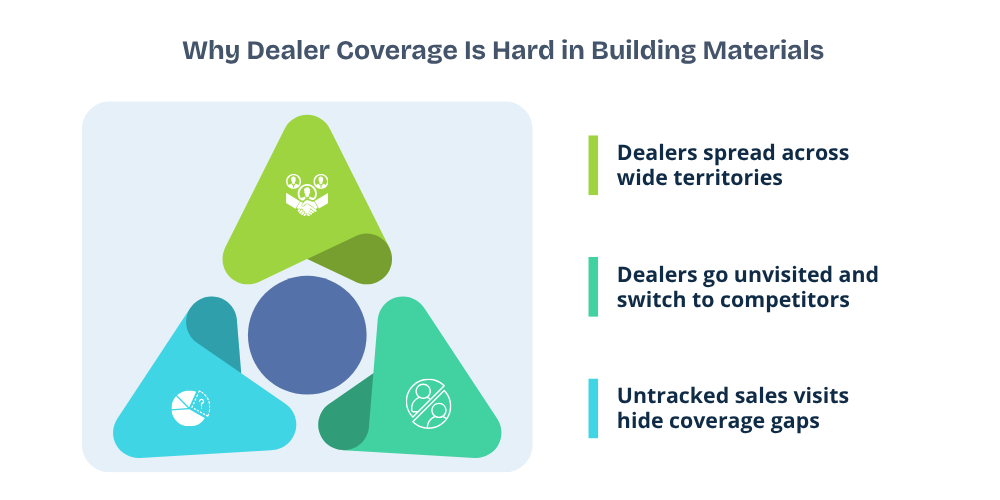
Thousands of small dealers spread across wide territories
Building material dealers sit across cities, small towns, and rural markets, and one rep can easily be responsible for hardware shops, cement dealers, tile showrooms, and construction material suppliers scattered across a huge territory. Long travel distances eat into the time left for actually talking to dealers. Poorly planned routes make it worse, doubling back over the same ground and leaving some outlets missed entirely. Companies need a clear dealer database and geographic beat plans to organize visits, cut unnecessary travel, and keep territory coverage consistent.
-
Dealers that go unvisited and shift to competing brands
Dealers start buying less when a rep stops showing up regularly, stops communicating schemes, or leaves stock and delivery issues unresolved. Competitors step into that gap fast, with better service or a stronger relationship. A cement dealer who keeps hitting stock shortages, for instance, starts recommending a different brand to the local contractors who ask. Regular visits are what catch declining orders early, surface the dealer's actual concerns, and keep the relationship intact before the account goes quiet for good.
-
Sales visits that are not tracked, so gaps stay hidden
When field reporting runs on spreadsheets, phone calls, or a manually typed DSR, managers can't really verify whether the planned dealer visits actually happened. Reps keep returning to the outlets they already know well, and others sit unattended for weeks without anyone noticing. Digital visit tracking and centralized reporting fix that; managers can set planned visits against completed ones, spot the missed dealers, and act on it before the gap becomes a lost account.
How to Find Where Your Dealer Coverage is Weak
Before changing sales targets or beat plans, companies should understand their current dealer coverage. Reviewing dealer locations, order history, and visit records helps identify neglected accounts and opportunities for growth.
1. Mapping dealers by area, size, and order history
A centralized dealer database helps managers understand where accounts are located and how they contribute to sales. Maintain the following information for each dealer:
-
Location and territory: Address, district, assigned representative, and distributor.
-
Dealer profile: Outlet type, business size, and relevant product categories.
-
Order history: Purchase frequency, order value, and SKUs purchased.
-
Visit history: Last visit date, visit frequency, and planned follow-ups.
-
Commercial details: Outstanding payments, pending deliveries, and other unresolved issues.
Mapping this information helps managers identify areas with limited coverage, dealers with declining orders, and markets where additional sales opportunities may exist.
2. Spotting dealers with long gaps between visits
Evaluate the last time each dealer was visited against how often they should be seen. This process reveals accounts that may be feeling neglected. Pay special attention to:
-
Dealers who haven't been visited within the expected timeframe.
-
Locations that have been overlooked during planned visits.
-
Dealers experiencing a drop in orders without any recent check-ins.
-
Regions where visit schedules are often incomplete.
-
Accounts facing overdue payments or unresolved delivery concerns.
For instance, if a key dealer hasn't had a visit in three weeks when they typically need weekly support, the sales manager should look into the situation and arrange a follow-up.
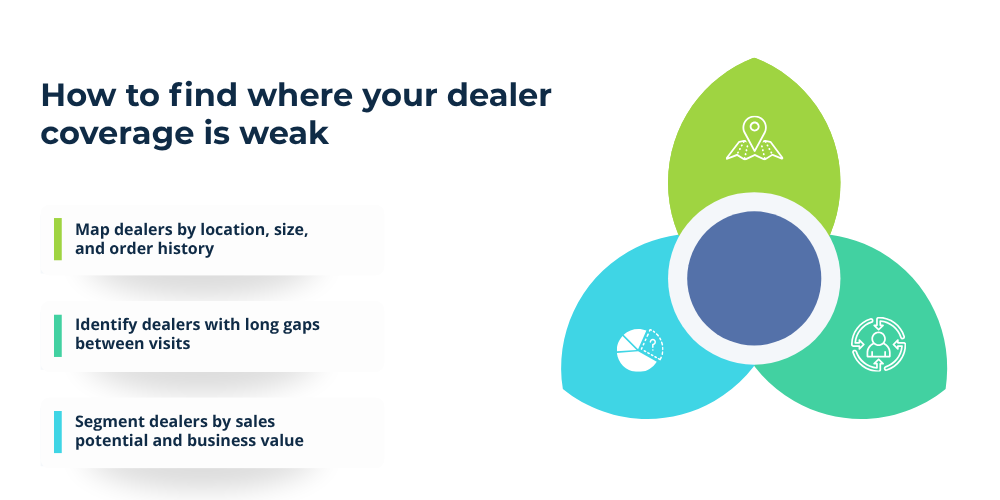
3. Separating high-potential dealers from low-value ones
Not every dealer requires the same visit frequency. Companies should prioritize accounts based on current sales, growth potential, market influence, and business requirements. A practical segmentation approach includes:
-
High-potential dealers: Strong sales contribution or significant growth opportunities. Schedule frequent visits and review their requirements.
-
Growth dealers: Moderate sales with opportunities to increase orders or expand SKU distribution. Focus on product availability and repeat purchases.
-
Routine dealers: Smaller accounts with predictable purchasing patterns. Schedule suitable visits based on demand.
-
Inactive or at-risk dealers: Accounts with declining purchases or long periods without orders. Plan targeted reactivation visits.
Review these categories periodically because dealer potential changes with construction activity, local demand, and competitor performance.
How to Improve Dealer Coverage Step by Step
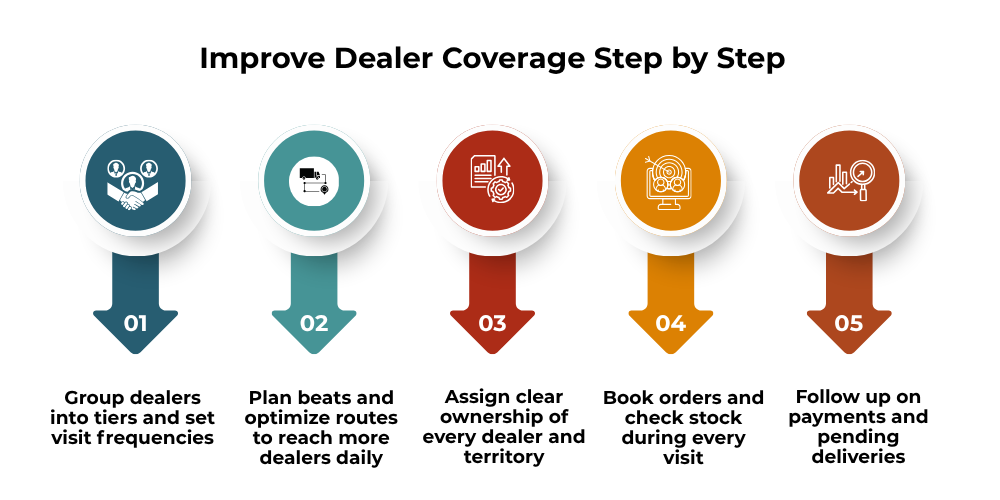
Improving dealer coverage requires a structured approach to planning visits, prioritizing accounts, and managing daily field activities. Building material companies can improve territory coverage by setting clear dealer priorities, optimizing routes, assigning responsibilities, and ensuring every visit contributes to sales or dealer relationship management.
-
Group dealers into tiers and set a visit frequency for each
Assigning a visit frequency to each dealer tier helps reps know where to put their time. High-potential dealers might need weekly visits. Growth accounts might need a visit every two weeks. Routine dealers might only need monthly coverage. These frequencies should flex with purchasing cycles, market conditions, and service needs, and the expected frequency for each dealer should be written down somewhere everyone can see it so reps know who to visit and managers can check whether it's actually happening.
-
Plan beats and routes so reps reach more dealers per day
A beat plan organizes dealer visits by location and schedule. Group nearby outlets together and assign them to specific days, which cuts travel time and improves coverage on its own. When building the routes, factor in dealer operating hours, travel distance, traffic, and how long each visit actually takes; don't cram the day so tight there's no room for a real conversation at any of the stops. GPS-based tracking system and digital visit records let managers review field movement afterward, spot inefficient routes, and adjust the beat plan based on what actually happened, not what was supposed to happen.
-
Give every dealer and area a clear owner
Every dealer should have an assigned sales representative, and each territory should have a responsible manager. This prevents duplicate visits and reduces the risk of accounts being overlooked.
Clearly define responsibility for dealer visits, order booking, payment follow-ups, and complaint resolution. When representatives change territories, transfer dealer records and pending actions to the new owner. Clear ownership also makes it easier to measure individual performance and maintain consistent dealer relationships.
-
Book orders and check stock during every visit
Dealer visits should focus on sales opportunities and whatever's affecting product availability. Reps should check stock requirements, book orders, communicate schemes, and look for chances to expand SKU distribution; a paint dealer might need specific shades, and a plumbing supplier might need certain pipe sizes or fittings, and that's the kind of detail worth catching in person. Recording orders right there in the field cuts out reporting delays and gets dealer requirements to the distributor faster. Stock checks also matter for a different reason: they're what separate a distributor-level shortage from something that's simply unavailable at the dealer level.
-
Follow up on payments and pending deliveries
Outstanding payments and delayed deliveries can quietly stop a dealer from placing new orders. Reps should log these during the visit and set a clear follow-up date for pending collections, delayed dispatches, short deliveries, and unresolved complaints. Give each issue an owner and review the overdue ones regularly. That way reps actually fix what's wrong instead of visiting the same dealer month after month without ever touching the reason purchases have slowed down.
How to Measure Whether Dealer Coverage is Improving
Dealer coverage should be measured through field activity and commercial results. Tracking both helps managers determine whether the team is reaching the right dealers and generating meaningful outcomes.

1. Visit compliance and coverage percentage
Visit compliance measures how many planned visits representatives complete.
Visit compliance (%) = Completed planned visits ÷ Total planned visits × 100. For example, completing 85 out of 100 planned visits gives a compliance rate of 85%. Dealer coverage percentage measures how many unique targeted dealers received a visit during a defined period.
Dealer coverage (%) = Unique targeted dealers visited ÷ Total targeted dealers × 100. Review both metrics alongside missed visits, dealer tier, and territory conditions. A high visit count does not necessarily mean the entire dealer network is being covered.
2. Orders and sales per dealer
Track order frequency, average order value, sales per dealer, and SKU distribution to see whether the visits are actually driving growth. If a dealer keeps getting regular visits and orders keep declining anyway, that's worth investigating: stock availability, pricing, competitor activity, and payment issues. Where secondary sales data exists, use it to understand dealer-level demand directly. Primary sales to distributors alone can't confirm the product is actually reaching retailers or generating repeat purchases; they just show what's left in the warehouse.
3. Dealer reactivation and new dealer additions
Track how many inactive dealers resume purchasing and how many newly registered dealers place their first orders.
Dealer reactivation rate (%) = Inactive dealers that resumed purchasing ÷ Inactive dealers targeted for reactivation × 100
Define inactivity according to the normal purchasing cycle for each product category. Some building materials are purchased more frequently than others, so a short gap between orders does not always indicate a lost account. Review reactivation and new dealer performance by territory and representative to identify where additional attention is needed.
How Delta Sales App Helps Building Material Companies Cover More Dealers
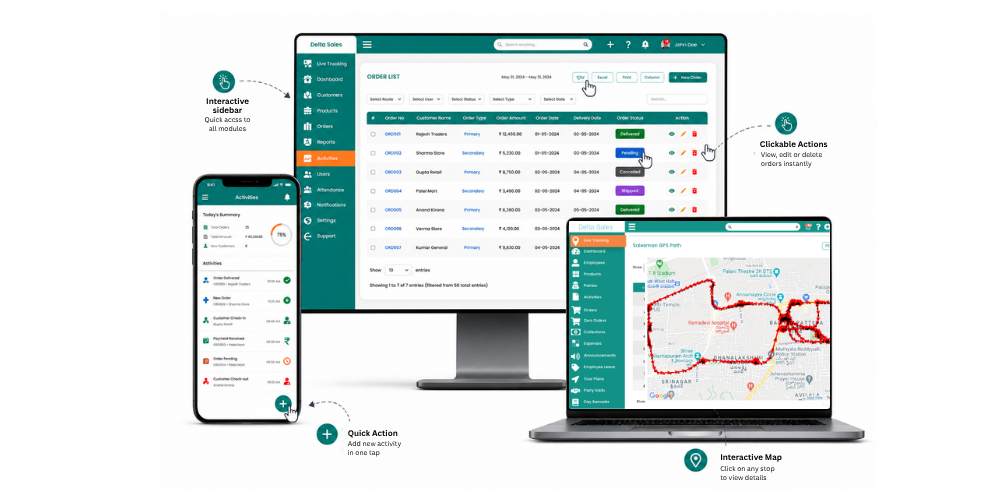
Building material companies need reliable field data to understand dealer visits, monitor orders, and identify gaps in territory coverage. Delta Sales App brings field sales activities into a centralized platform, helping manufacturers, distributors, and wholesalers manage their outside sales teams.
-
Beat planning and visit tracking for dealer calls
Delta Sales App supports beat planning, GPS-based location tracking, and field activity reporting. Sales managers can use it to organize dealer visits, review field movement, and spot the accounts that aren't getting the attention they're supposed to, which matters especially for reps covering multiple towns or a large territory. Recorded field activity also makes it easy to catch recurring missed visits and adjust the schedule once a pattern shows up.
-
Order booking and dealer-level reporting from the field
Delta Sales App supports field order booking and sales reporting, so reps can record dealer requirements without depending on handwritten notes or a spreadsheet that updates a day late. Managers can monitor sales performance and get real-time field visibility, which makes it easier to catch declining orders early and prioritize follow-ups before they slip through. Its offline-first design also keeps field operations running in areas with weak connectivity, syncing everything once a signal comes back.
-
Live field tracking to see which dealers your reps actually reach
A visit plan only helps if you can tell whether it was followed. Delta Sales App shows where your reps are during the day and which dealers they have already visited. If a rep skips a dealer on the beat, you see it the same day and can reassign the call. You also get a visit record to check when a dealer says nobody has come by in months.
Conclusion
Improving dealer coverage requires building material companies to identify neglected accounts, prioritize dealers by potential, and organize field visits around clear schedules.
A reliable dealer database, practical beat planning, clear account ownership, and consistent follow-ups help representatives use their time more effectively. Tracking visit compliance, dealer-level sales, reactivation, and new dealer additions shows whether these changes are producing results.
As dealer networks grow, manual reporting becomes harder to manage. Delta Sales App helps companies organize field activity, track dealer visits, book orders, and improve visibility into sales execution. Give your field sales team better visibility into dealer visits, orders, and territory coverage with Delta Sales App. See How Delta Sales App Work