How to Manage Sales Territories For Industrial Distribution

Managing sales territories in industrial distribution takes more than drawing lines on a map and assigning a rep to each one. Industrial distributors usually serve a mix of dealers, retailers, contractors, factories, maintenance teams, and procurement departments, and every one of those accounts has a different purchasing pattern, product requirement, order value, and service expectation.
A territory can look balanced on paper and still create a lopsided workload. One rep might handle a handful of large industrial accounts with complicated ordering requirements, while another is out visiting dozens of smaller dealers every week. Without clear account ownership, planned visits, and reliable field reporting, distributors lose sales opportunities, miss follow-ups, and end up unable to say which territories are actually performing.
A good territory management app connects customer potential with sales capacity, visit schedules, order activity, and revenue targets. It gives reps a clear plan for the field and gives managers what they need to spot coverage gaps and make real decisions about where to put their resources.
For industrial distributors looking to improve account coverage, increase order consistency, and gain better visibility into field operations, this blog explains how to design, manage, and measure sales territories effectively.
Why Territory Management Breaks Down in Industrial Distribution
Industrial distribution creates territory problems that don't always show up in a standard sales report. Different types of buyers purchase the same products. Order sizes swing wildly. Some accounts need frequent technical conversations, and others just need routine restocking. When territories get managed informally, these differences turn into real operational problems that drag down sales productivity and customer relationships.
-
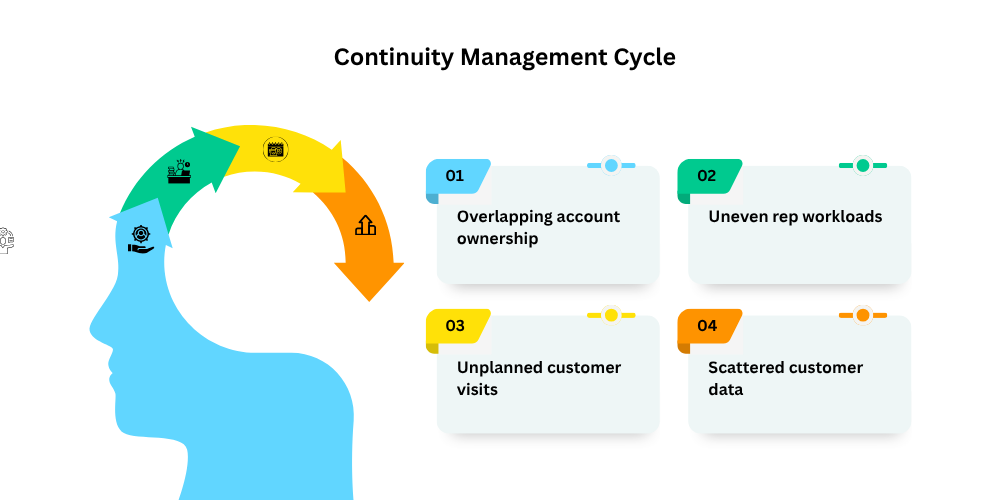
Overlapping accounts and reps calling on the same buyer
Industrial buyers typically interface with several people in the distributor’s sales organization. One dealer might discuss regular orders with one rep, a new product line with another, and pricing or credit terms with a manager. No clear ownership means two reps could be calling on the same customer while another account gets no attention, wasting travel time, creating inconsistent communication, and making sales accountability difficult. Distributors should assign one owner per account, with documented exceptions for key accounts with multiple representatives providing support.
-
Uneven workloads between high-volume and low-volume areas
Geographic size alone doesn't say much about how demanding a territory actually is. One industrial zone with a few large manufacturing customers can generate serious revenue from a handful of visits. A wider territory full of small dealers and contractors can need far more travel and follow-up for less revenue. Managers should weigh account potential, historical order frequency, average visit duration, travel time, collection responsibilities, and service requirements when assigning territories, not just split the map into equal-sized chunks or give everyone the same account count.
-
Dealer and contractor visits with no fixed schedule
Industrial distributors depend on regular contact with dealers, contractors, fabricators, workshops, and purchasing teams, but unstructured visits leave important accounts untouched for weeks at a stretch. Reps also end up crossing the same industrial zone two or three times because customer visits never got grouped properly in the first place. A structured beat plan sets out which customers to see, when, and what needs to happen at each one, while still leaving room for an urgent request or an unexpected opportunity to come up.
-
Territory data that lives in spreadsheets and memory
Spreadsheets hold up fine for a small customer base. They stop working as account numbers grow and reps rotate between territories. Customer records drift out of date, purchase histories get incomplete, account classifications stop matching each other, and visit updates and follow-up commitments end up scattered across notebooks and messages. Bringing account information, field activity, orders, and reporting into one place is what lets a manager actually tell weak demand apart from poor coverage, instead of guessing from whatever data happens to be in front of them.
How to Design Sales Territories That Work
A good territory structure lets each rep cover the right accounts, finish their work within normal hours, and still have time to go after new business. The aim isn’t a set of permanent boundaries. It’s clear account ownership and workloads a rep can manage, with room to adjust as customer demand changes. If you want the general steps before applying them to industrial accounts, our five-step territory planning guide covers the basics.
-
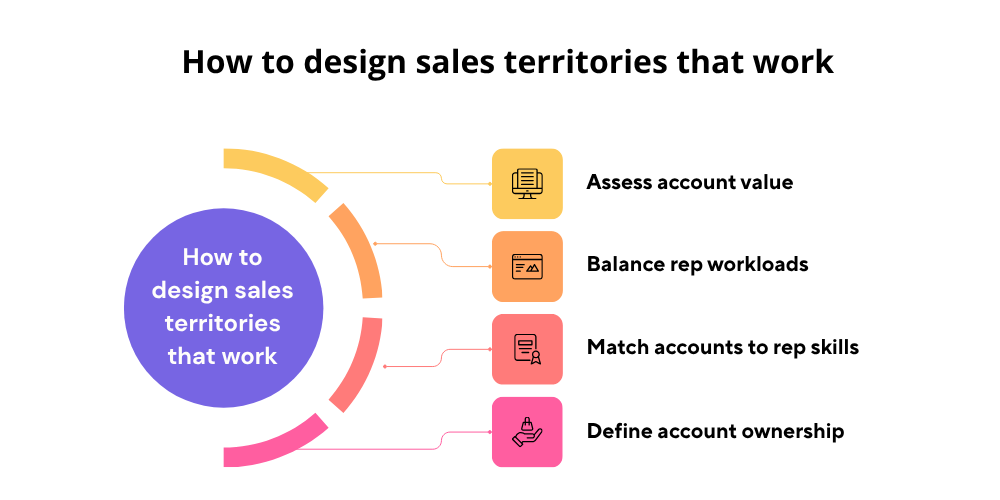
Start with account value and order frequency
Start by building a reliable account list: active customers, inactive accounts, prospects, and customers with room to buy more product categories than they currently do. Evaluate each one on commercial value and service requirements: annual sales, order frequency, product range, growth potential, collection requirements, and how complicated the interactions tend to be. A large industrial buyer might place fewer orders than a local dealer and still bring in far more revenue. A smaller dealer might carry real potential for additional SKU sales even if its numbers look modest today. Both should shape territory assignment and visit frequency, not just last year's revenue figure.
-
Balance territories by workload, not just geography
Once account value is clear, work out the actual workload behind managing each group: planned visits, average travel time, technical discussions, quotation prep, order entry, collection follow-ups, and admin work. A rep handling large industrial accounts might need longer appointments and more prep time per visit. One covering smaller dealers might rack up more visits but lose more time to travel between them. Historical field reports and route data help here; they show realistic capacity, flag schedules that are consistently overloaded, and set territory boundaries based on actual travel conditions instead of raw geographic size.
-
Assign accounts based on rep skill and product knowledge
Industrial distribution often means technical products, specialized equipment, spare parts, electrical components, construction materials, or maintenance supplies, so account assignments should factor in each rep's product knowledge and customer-handling experience, not just who's available. A rep with contractor experience might fit project-based opportunities better. Someone with deeper technical knowledge might be the right person for manufacturing plants that need detailed product discussions. When accounts do change hands, managers should hand over proper training, customer history, and a structured transition, so specialization improves service without making the territory depend entirely on one person staying in the role.
-
Set clear rules for shared and key accounts
Large industrial customers can run multiple plants, buy through several branches, and need both a territory rep and a key account manager involved. Distributors should define one primary account owner and spell out who's responsible for what: routine visits and order booking to the territory rep, and say, "Group-level negotiations to the key account manager. " Branch-level activity, pricing discussions, and order history should all get recorded consistently so customers get accurate information and two reps don't end up competing for the same account without realizing it. Clear ownership also makes handovers much easier when territories shift, or someone leaves.
Manage Sales Territories Day to Day
A well-designed territory only pays off if the rep actually has a practical routine to follow day to day. That means connecting planned customer visits with what really happens in the field: orders booked, stock checked, and follow-ups completed. A consistent process like that keeps existing accounts covered and still leaves room to go after new business.
-
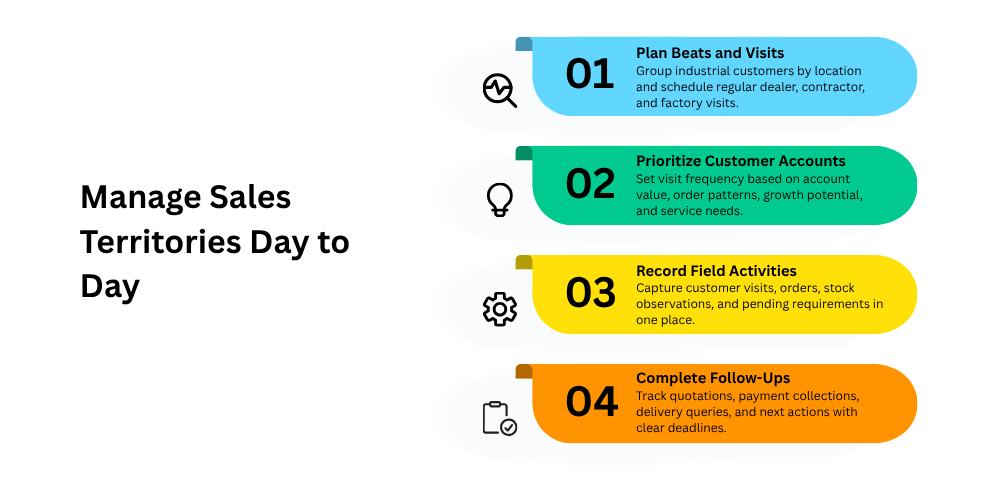
Build beat plans and visit schedules for each territory
A beat plan turns territory boundaries into a workable schedule by specifying which accounts to visit on which days. Industrial distributors should factor in customer locations, expected order requirements, business hours, appointment availability, and how much time a technical discussion actually takes when building these schedules. Customers in the same industrial estate can usually be grouped to cut travel. Certain days can be reserved for established dealers, manufacturing accounts, or new prospects. And managers should check planned visits against completed ones regularly, adjusting the schedule when customer needs, travel conditions, or workload make the original plan unworkable.
-
Set visit frequency by customer tier
Not every customer needs the same attention, so visit frequency should follow account value, purchasing patterns, growth potential, and service needs, not a flat schedule applied to everyone. Strategic accounts might need scheduled reviews and proactive follow-ups. High-potential dealers benefit from regular product and order conversations. Routine buyers can just be visited on their own replenishment cycle. Low-activity accounts need a periodic check to find out why demand is dropping, and new prospects need planned introductory visits and follow-ups of their own. Managers should revisit these tiers as purchasing behavior shifts, rather than let reps keep running an outdated schedule that no longer fits what the customer actually needs now.
-
Track field visits, orders, and stock checks in one place
Reps should record the outcome of every customer interaction, orders booked, product enquiries, stock observations, and follow-up commitments so managers know what happened on the visit and what needs to happen next. For industrial distributors, these records can show whether a dealer can't order because a SKU is unavailable, a manufacturing customer is sitting on a pending quotation, or an account is buying less because a competitor moved in. Worth keeping on record: the customer visited, the visit outcome, order quantities, the relevant SKUs, stock observations where they're available, and the next action required. Keeping all of it together helps managers tell distributor inventory apart from what's actually sitting with individual dealers or industrial customers, which is a distinction that gets lost fast when everything's scattered.
-
Handle collections and follow-ups within the territory
A territory's responsibilities go past just booking orders, overdue payment follow-ups, quotation updates, delivery questions, and reactivating a dormant account. These should be scheduled around account payment terms, outstanding balances, due dates, and agreed next steps, so they don't constantly derail the planned sales visits. Reps should have the information they need for their part of this, while credit approvals and financial decisions stay with authorized staff. Recording each follow-up with an owner and an expected completion date is what lets managers catch delayed collections, unresolved quotations, and missed opportunities before two different reps end up calling the same customer about the same thing.
How to Measure and Adjust Territory Performance
Territory mapping should be reviewed using measures that explain both the results achieved and the field activities that produced them. Revenue is important, but it does not show whether customer coverage is sustainable, whether representatives are spending their time effectively, or whether potential accounts are being overlooked.

-
Track coverage, visit-to-order conversion, and revenue per territory
A useful territory review combines field activity with commercial outcomes, not just one or the other, so managers can see whether reps are actually reaching assigned accounts and converting those visits into sales. Territory coverage measures how well scheduled or eligible accounts get visited. Visit-to-order conversion shows what share of eligible visits actually turn into an order. Revenue per territory sets actual sales against targets, previous periods, and account potential. Other numbers worth tracking: average order value, order frequency, new account activation, collection follow-up completion, and SKU penetration. And the DSR behind all of this should capture enough to explain the activity and the outcome; without turning into another chore the rep represents filling out.
-
Spot underserved accounts and coverage gaps
Setting the customer master list against actual visit history, order frequency, and planned schedules shows which accounts have slipped past their expected visit cycle, which prospects are waiting on follow-up, and which dealers have purchasing activity that’s quietly declining. Geographic patterns can also surface opportunities: several inactive customers clustered in one industrial area, say, that could all be covered on one dedicated visit day instead of scattered across the week. Managers should also look at accounts getting frequent visits with nothing to show for it. That usually points to low account potential, the wrong product mix, a pricing problem, or a sales approach that just isn’t working there. The point isn’t to rack up more visits. It’s to put field effort where it actually has a shot at generating business.
-
When and how to rebalance territories
Territories should get reviewed when a major account comes on board, a distribution agreement changes, a new industrial zone opens up, a workload becomes unmanageable, or repeated missed visits make it obvious the current structure isn't working anymore. Before moving accounts around, managers should look at revenue, customer potential, visit history, travel requirements, pending quotations, and collection responsibilities to actually understand what's causing the imbalance rather than guess at it.
A structured adjustment process looks like this: identify the problem, model the proposed change, document the new account ownership, communicate it to the reps affected, and review coverage and performance afterward. Rebalance based on workload and opportunity, not on making account counts look even on paper, since a handful of complex industrial accounts can take more effort than a much larger group of routine buyers.
How Delta Sales App Supports Territory Management For Industrial Distributors
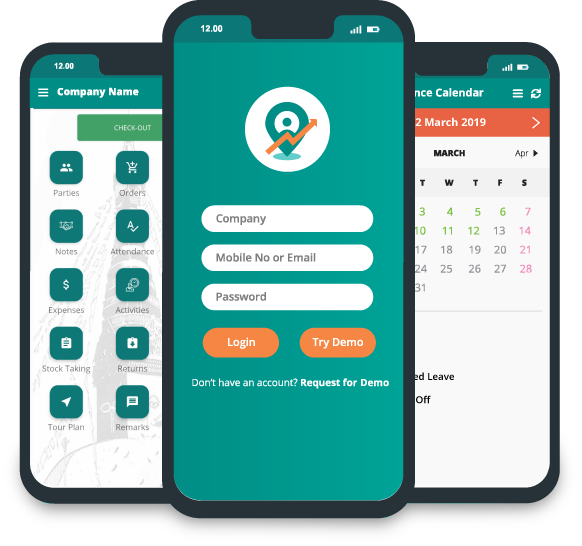
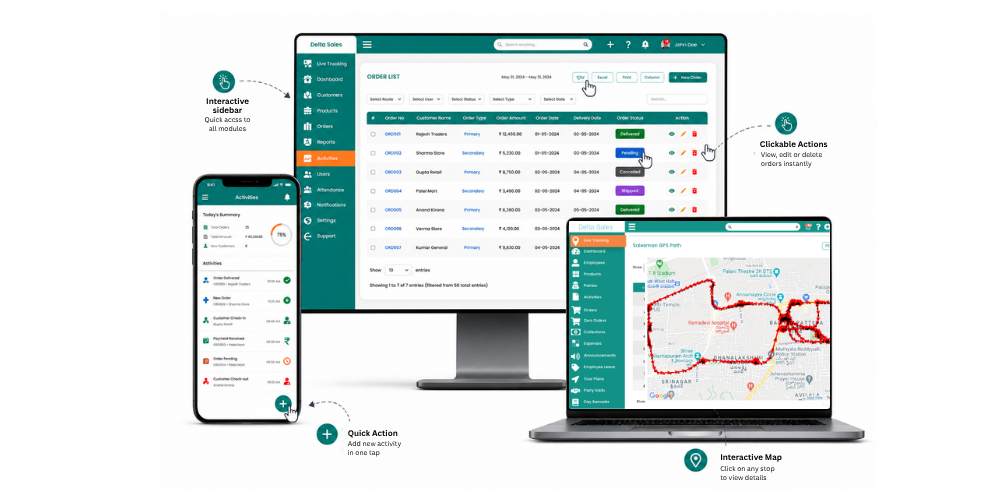
Once territories are clearly defined, distributors still need a reliable way to turn those assignments into actual daily field activity. Delta Sales App supports that through beat planning, employee location tracking, order management, and sales reporting, giving industrial distributors clearer territory ownership and a real view of how reps execute their assigned schedules.
-
Beat planning and route assignment by territory
Delta Sales App supports beat planning, so field teams work from organized routes and schedules instead of leaving it up to each rep to decide where to go every morning. For industrial distributors, that means grouping dealer visits, planning coverage across industrial estates, and setting up recurring schedules for accounts that need regular contact. Organized routes cut unnecessary travel and free up more time for actual sales conversations, order booking, and prospecting, and managers can still adjust the schedule whenever priorities shift. The goal is structure that holds up day to day without losing the flexibility a rep needs when something urgent comes up.
-
Visit tracking and field activity visibility.
Delta Sales App gives managers GPS-based location tracking and field activity visibility, so they can actually see whether reps are carrying out their assigned responsibilities. That matters especially when a territory spans several industrial locations and reps spend most of the day outside the office, since managers can check field activity against the planned visits instead of relying on a verbal update or an end-of-day summary. Combine the visit records with what actually came out of each interaction, and managers get a clearer answer to whether scheduled accounts got real attention, whether sales opportunities moved forward, and whether travel demands or scheduling are hurting coverage. Location on its own doesn't say anything about the quality of a visit, which is exactly why consistent activity reporting still matters alongside the GPS data.
-
Order booking and reporting by territory and rep
Delta Sales App supports order booking and sales reporting, so distributors can keep field sales information organized and review activity across reps and territories in one place. Managers can use these records to watch customer orders, product demand, rep activity, and territory-level performance and set visit history against actual sales outcomes.
A territory with frequent visits and declining order values might need a closer look at product availability, account requirements, or sales conversion. A territory pulling strong revenue from just a few accounts might need a plan to widen coverage instead. Centralized reporting also cuts out the effort of pulling data together from separate spreadsheets and manual updates, which makes it easier to make real decisions about targets, account assignments, and follow-up priorities.
Conclusion
Managing sales territories for industrial distribution requires a balance between customer potential, representative workload, geographical coverage, and commercial performance. Simply dividing an area between sales representatives does not guarantee that important accounts receive regular attention or that field resources are used effectively.
A stronger approach begins with accurate account classification and clear ownership, followed by practical beat plans, customer-based visit frequency, consistent field reporting, and regular performance reviews. These practices help distributors identify underserved accounts, improve route efficiency, and recognise when territories need to be adjusted as the business grows.
Delta Sales App helps bring beat planning, field tracking, order booking, and sales reporting into a more organised workflow. Book a free demo to explore how Delta Sales App can support territory management and field sales operations.