Top 10 Van Sales Software Solutions for FMCG Distributors
FMCG distributors that sell directly from delivery vehicles need more than a basic order-taking application. Every van carries inventory, follows an assigned route, visits multiple retailers, processes sales, and collects payments throughout the day. Without a connected system, keeping track of stock movement, invoices, returns, collections, and daily sales becomes difficult.
Van sales software helps distributors manage these activities from a single platform. It gives salesmen access to product and customer information, supports transactions at retail outlets, and provides managers with visibility into route execution and van-level performance. However, not every sales or inventory management platform offers the same capabilities.
In this blog, we compare ten van sales software solutions for FMCG distributors, covering their features, suitability, and key considerations. If you want to understand the operational benefits in more detail, read our guide to Van Sales Management Software: Simplifying Route & Stock.
Key Features to Look for in Van Sales Software
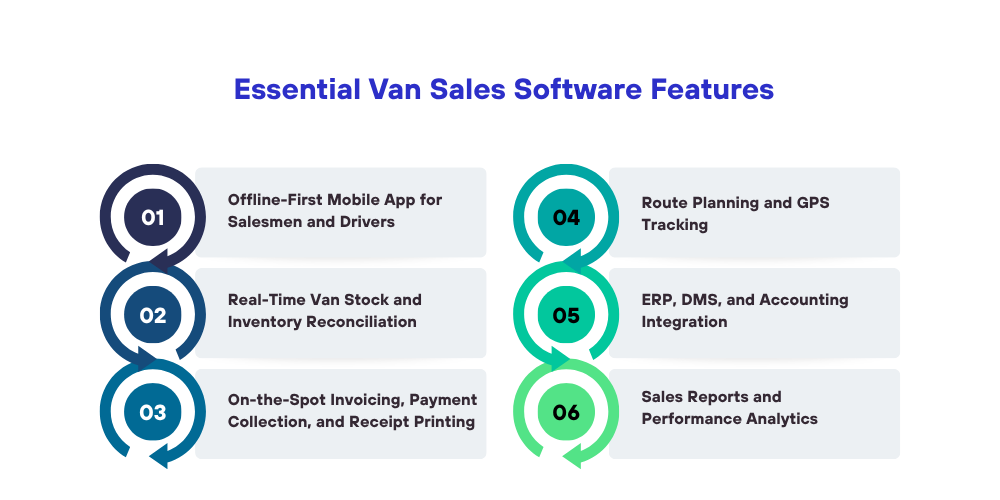
Choosing van sales software requires looking beyond basic order booking. A suitable platform should connect field sales activities with inventory, billing, payment collection, and back-office operations. Here are the capabilities worth evaluating before selecting a solution.
Offline-First Mobile App for Salesmen and Drivers
Van sales reps often travel through rural markets, remote territories, and areas where mobile coverage is patchy. If the app needs a constant internet connection, salesmen may not be able to record transactions or pull up customer information while they're on their routes. An offline-first mobile app lets reps open their assigned customers, product information, and relevant sales records without a connection. They should also be able to record orders, sales, collections, and other permitted activities.
Once connectivity returns, the app should sync pending transactions with the central system. That prevents duplicate entries and cuts the manual reporting needed at the end of the day.
Real-Time Van Stock and Inventory Reconciliation
Every sales vehicle functions as a mobile warehouse. Distributors need to know which SKUs were loaded before departure, which products were sold, and what remains after completing the route.
Look for software that supports:
-
Van-wise opening and closing stock records.
-
Automatic stock deductions after completed sales.
-
Product returns, damages, and replacements.
-
Stock transfers between warehouses and vehicles.
-
SKU-level inventory reconciliation.
-
Batch and expiry tracking, where required.
These controls help distributors identify stock discrepancies, prevent unauthorized movements, and plan replenishment more accurately.
On-the-Spot Invoicing, Payment Collection, and Receipt Printing
Van sales means completing the transaction right at the retailer's location. Salesmen shouldn't have to go back to the distributor's office to generate invoices or record payments. The software should support mobile order booking, automatic price calculation, applicable discounts, and instant invoice generation. Bluetooth printer compatibility is useful too, for distributors that hand retailers a physical bill.
Payment collection should cover whichever methods the business accepts, such as cash, cheque, and digital payments. Each transaction should be recorded against the right retailer and invoice, which makes reconciliation much simpler.
Route Planning and GPS Tracking
A well-defined beat plan helps van salesmen cover their assigned outlets without burning time on unnecessary travel. Route planning should let managers assign customer visits, organize daily routes, and monitor actual movement through GPS tracking. Useful capabilities include:
-
Daily route and beat assignment
-
Customer location mapping
-
Live vehicle or salesman location tracking
-
Visit history and route deviation monitoring
-
Planned versus actual route comparison
-
Territory and outlet coverage reports
Together, these show managers whether vehicles are following their assigned routes and whether important outlets are getting regular service.
ERP, DMS, and Accounting Integration
Van sales cannot operate independently of the distributor's back-office processes. Product information, pricing, customer records, stock availability, and financial transactions need to remain consistent across systems. Check whether the software integrates with your existing ERP, Distributor Management System (DMS), and accounting platform. The integration should support relevant data exchange, including:
-
Product and SKU information.
-
Retailer and distributor records.
-
Pricing, discounts, and promotional schemes.
-
Inventory and stock movements.
-
Sales orders and invoices.
-
Payment collections and outstanding balances.
A well-connected system reduces duplicate data entry and gives management a more consistent view of primary sales, secondary sales, and van-level transactions.
Sales Reports and Performance Analytics
Daily reporting shows distributors how well each van is performing. Instead of gathering spreadsheets and handwritten Daily Sales Reports (DSRs), managers should be able to pull consolidated information straight from the software. The reports that matter most are van-wise sales, salesman-wise performance, SKU-wise sales, outlet coverage, payment collections, returns, and stock reconciliation. Comparing planned targets against actual achievement also helps managers spot underperforming routes, outlets that keep getting missed, and products whose demand is changing.
Top 10 Van Sales Software Solutions for FMCG Distributors
The van sales software market includes specialized FMCG sales automation platforms, direct store delivery (DSD) solutions, and broader ERP systems with mobile sales and inventory capabilities.
The following ten solutions serve different operational requirements. Some are designed specifically for consumer goods distribution, while others provide building blocks that businesses can configure for van-based selling
1. Delta Sales App
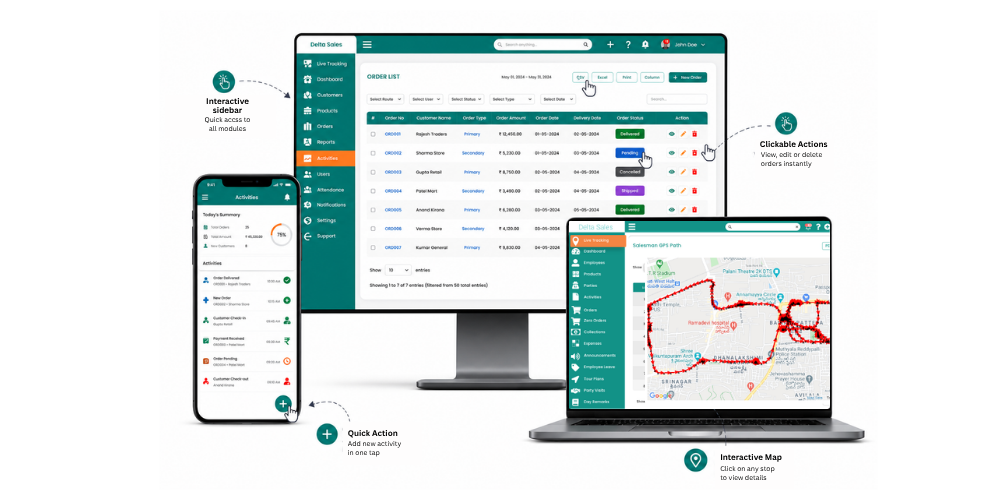
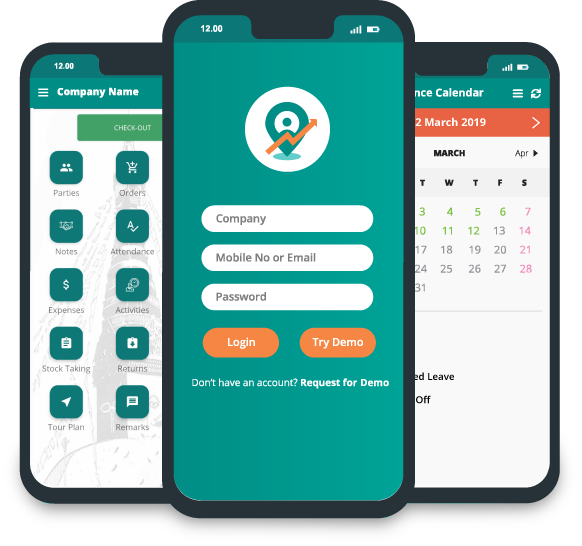
Delta Sales App is a field sales force automation and employee tracking platform designed to help FMCG companies, distributors, manufacturers, and wholesalers manage their field operations. Its van sales capabilities bring order booking, invoicing, vehicle inventory, payment collection, and route monitoring into one platform.
Key features:
-
GPS and route tracking: Monitor vehicle movement, sales representative locations, route deviations, and customer visits.
-
Mobile order booking and invoicing: Record customer orders and generate invoices directly from the mobile application.
-
Van-level inventory management: Track vehicle stock, sales, returns, replacements, damaged goods, and remaining inventory.
-
Payment and expense tracking: Record cash, cheque, and digital collections alongside van-related expenses.
-
Offline functionality: Continue recording sales activities without internet access and synchronize data when connectivity returns.
-
End-of-day reporting: Review daily sales, route performance, beat coverage, collections, and target achievements.
Suitable for: FMCG distributors, manufacturers, wholesalers, and businesses managing van-based sales teams.
2. Bizom
Bizom offers sales force automation and distribution management capabilities for consumer goods businesses. Its platform supports field sales execution, retail operations, and distribution visibility.
Key features:
-
Van sales and direct order management
-
Beat planning and route execution
-
Inventory and sales visibility
-
Retail execution and reporting
Suitable for: FMCG companies and distributors managing extensive retail distribution networks.
3. FieldAssist
FieldAssist offers sales force automation, distributor management, and van sales for consumer goods businesses. Its van sales module covers billing, inventory management, and order processing.
Key features:
-
Offline billing and order processing
-
Vehicle stock reconciliation
-
Invoice generation and payment collection
-
Integration with distribution systems
Suitable for: FMCG manufacturers and distributors looking to connect field sales and distribution operations.
4. Salesforce Consumer Goods Cloud
Salesforce Consumer Goods Cloud supports consumer goods sales and distribution activities, including direct store delivery and van-based operations. It connects field execution with customer and sales management processes.
Key features:
-
Route and visit planning
-
Vehicle inventory management
-
Order and delivery execution
-
Payment collection and returns management
Suitable for: Large consumer goods businesses with complex sales operations and existing Salesforce requirements.

5. Ivy Mobility
Ivy Mobility provides solutions for consumer goods companies and distributors, covering sales execution, distribution management, and supply chain operations.
Key features:
-
Sales force automation
-
Distribution and order management
-
Inventory visibility
-
Retail execution and analytics
Suitable for: FMCG and consumer goods businesses managing complex distribution networks.
6. Repsly
Repsly focuses on field team management, retail execution, and sales performance tracking. It helps businesses organize field activities and monitor customer-facing operations.
Key features:
-
Field team and visit management
-
Order entry and product tracking
-
Route and territory management
-
Retail execution reporting
Suitable for: Businesses that prioritize field team visibility, retail execution, and sales representative productivity.
7. Odoo
Odoo is an integrated business management platform with applications for inventory, sales, accounting, and other business processes. Its modular structure allows businesses to configure workflows around their distribution requirements.
Key features:
-
Inventory and warehouse management
-
Sales order processing
-
Invoicing and accounting
-
Integration across business applications
Suitable for: Small and medium-sized distributors seeking an integrated business management system.
8. Microsoft Dynamics 365 Business Central
Microsoft Dynamics 365 Business Central is an ERP system for managing financials, inventory, purchasing, sales, and operations. Its inventory and sales management features can support distribution workflows.
Key features:
-
Inventory and warehouse management
-
Sales order and invoice processing
-
Financial management
-
Integration with Microsoft business applications
Suitable for: Growing distributors that need broader ERP and financial management capabilities.
9. SAP Business One
SAP Business One is an ERP platform designed for small and midsize businesses. It provides tools for managing inventory, sales, purchasing, accounting, and business reporting.
Key features:
-
Inventory and stock management
-
Sales and purchasing management
-
Financial reporting
-
Business process integration
Suitable for: Distributors looking for an ERP system to manage inventory, finance, and sales operations.
10. Zoho Inventory with Zoho CRM
Zoho Inventory and Zoho CRM can work together to manage inventory, customer information, sales orders, and related business activity. Used as a pair, they give businesses a connected way to handle sales and stock.
Key features:
-
Inventory and order management
-
Customer relationship management
-
Invoicing and sales tracking
-
Integration with other Zoho applications
Suitable for: Small and growing distributors that want connected inventory and customer management tools.
How to Choose the Right Van Sales Software for Your Business
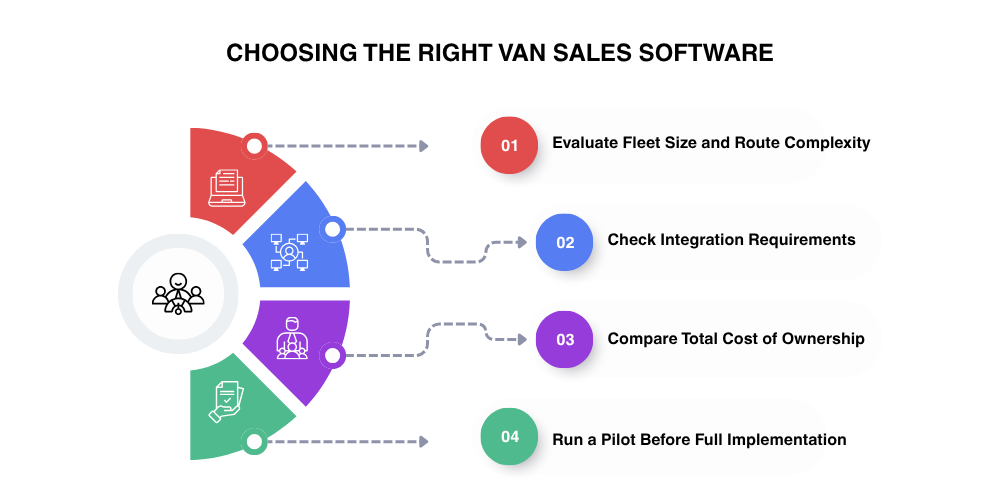
The right solution should match your distribution model, vehicle operations, sales process, and existing technology. Consider the following factors before making a decision.
1. Evaluate Fleet Size and Route Complexity
Consider how many vehicles and sales representatives your business manages. Check whether the software can support your routes, territories, customer visits, and vehicle-level operations as your distribution network grows.
2. Check Integration Requirements
Identify the systems your business already uses, such as ERP, DMS, accounting, or inventory software. Choose a solution that can exchange relevant information with these systems to reduce duplicate data entry.
3. Compare Total Cost of Ownership
Look beyond the subscription price. Consider implementation, customization, training, integrations, maintenance, and support costs. Compare the overall investment with the operational improvements the software can deliver.
4. Run a Pilot Before Full Implementation
Test the software with a small group of sales representatives and vehicles before rolling it out across the business. Evaluate order processing, stock reconciliation, offline performance, invoicing, reporting, and ease of use.
Conclusion
Van sales software helps FMCG distributors bring vehicle inventory, order processing, invoicing, payment collection, and route monitoring into a more organized workflow. The right platform can improve stock visibility, reduce manual reporting, and give managers better control over daily distribution activities.
The solutions covered in this guide serve different business requirements. Some focus on field sales and retail execution, while others provide broader ERP, inventory, or business management capabilities.
For FMCG distributors looking for a platform that connects van sales with field team tracking, order management, inventory monitoring, and sales reporting, Delta Sales App is worth considering.
Explore Delta Sales App's van sales software and get a personalized product demo to see how it can support your distribution operations.