
Van Sales: A Comprehensive Guide to Growing Your Business
Van sales is a field-sales and distribution model in which sales representatives carry products in a van and sell or deliver them directly to retailers. This model is widely used by FMCG manufacturers, distributors, wholesalers, food and beverage companies, and other businesses that need efficient retail distribution.
Managing van sales manually can become challenging as businesses expand their sales teams, product portfolios, retail outlets, and territories. Sales managers need to monitor routes, van inventory, retailer visits, orders, payments, deliveries, and daily performance while ensuring that field representatives remain productive.
Van sales software helps businesses manage these activities through a centralized digital system. It enables sales representatives to manage field activities from their mobile devices while giving managers better visibility into routes, inventory, sales, payments, and overall field performance.
In this comprehensive guide, we will explore how van sales works, the challenges businesses face, the role of technology, key features of van sales software, and how it can help improve sales and distribution operations.
What Is Van Sales?
Van sales is a direct selling and distribution method where a sales representative carries products in a vehicle and visits retailers to sell or deliver products directly.
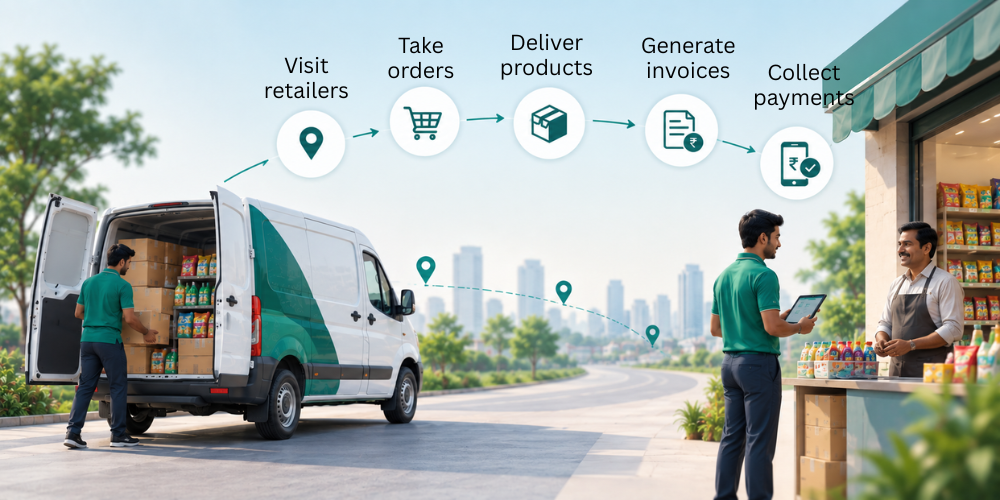
The sales van acts as a mobile stock point. Instead of taking an order and waiting for a separate delivery process, the representative can carry inventory, visit retailers, sell products, generate invoices, deliver goods, and collect payments during the field visit.
This model is particularly useful for FMCG and distribution businesses where retailers require frequent product replenishment and fast order fulfillment.
Businesses can combine van sales with field sales automation to reduce manual work and improve visibility across their sales operations. Digital tools allow representatives to record activities in real time while managers can monitor field execution from a centralized platform.
How Does the Van Sales Model Work?
A typical van sales process involves multiple activities that need to work together efficiently.
1. Plan Sales Routes
Sales managers assign representatives to specific territories and retailer routes based on outlet locations, visit schedules, business priorities, and expected demand. Effective route planning helps representatives reduce unnecessary travel and spend more time visiting productive outlets.
2. Load Products Into the Van
Before beginning the day's route, the required products are loaded into the van according to the planned sales activities and expected retailer demand. The sales team needs accurate information about the products and quantities available in each vehicle to avoid stock discrepancies.
3. Visit Retailers
The representative follows the assigned route and visits retailers according to the planned schedule. During each visit, the representative can review retailer requirements, recommend products, check stock availability, and capture sales.
4. Take Orders and Process Sales
The representative records the retailer's requirements using a mobile application. Orders can be processed directly from the field without relying on paper-based forms. A digital mobile order booking process helps reduce manual data entry and allows sales information to reach managers more quickly.
5. Deliver Products
Because products are already available in the sales van, eligible orders can be fulfilled immediately during the retailer visit. This can shorten the order-to-delivery cycle and improve product availability at retail outlets.
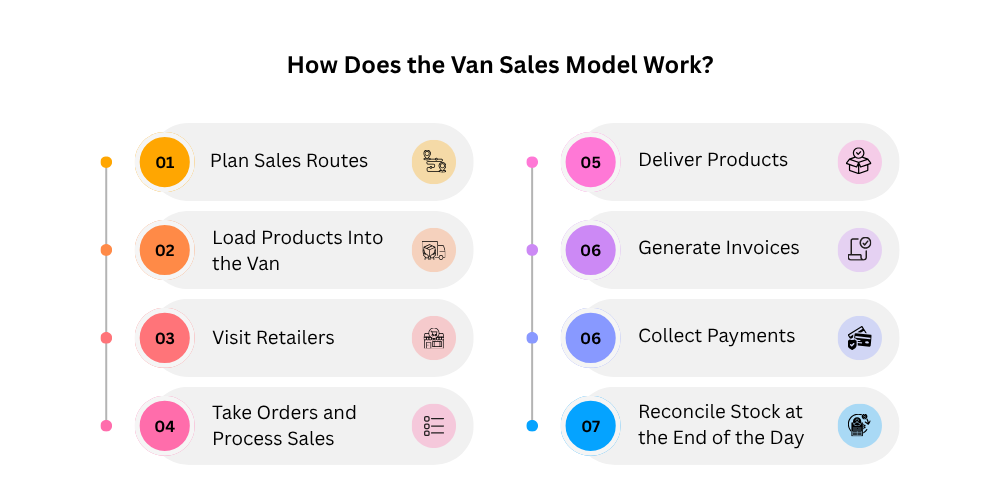
6. Generate Invoices
Digital invoicing allows representatives to generate accurate bills during or after the sales transaction. This reduces paperwork and provides retailers with transaction records without requiring additional administrative processes.
7. Collect Payments
Representatives can collect and record payments during retailer visits. A digital system can help businesses maintain accurate records of collections, outstanding amounts, and retailer transactions.
8. Reconcile Stock at the End of the Day
After completing the assigned route, representatives need to reconcile sold products, remaining inventory, returns, and collected payments. With digital van inventory management, businesses can maintain better visibility into stock movement between warehouses, sales vans, and retail outlets.
Why Van Sales Matter for Your Business?
Vans are much more than just a mode of transport; they are vital assets for many companies. From delivering goods to carrying tools and equipment, vans play an integral role in facilitating daily operations. If you are considering van sales, it’s crucial to recognize that a vehicle can significantly impact your business operations in terms of logistics, branding, and customer service.
The van you choose could affect:
-
Efficiency: The right van ensures that your team can transport goods and equipment smoothly, saving time and minimizing delays.
-
Branding: Many businesses use their vans as mobile billboards, showcasing their branding while on the road.
-
Employee Productivity: A van that is designed for comfort and utility can improve the productivity of your employees.
-
Cost-Effectiveness: With the right van, you can reduce maintenance costs, fuel consumption, and downtime, which ultimately boosts your profitability.
The rise of e-commerce and on-demand services has led to a significant increase in the demand for commercial vans. Whether it's small local businesses or large corporations, investing in the right van can take your business to the next level.
Key Activities in Van Sales Operations
Effective van sales management involves several connected activities.
Route and Beat Planning
Representatives need clear routes and retailer schedules to maximize daily outlet coverage. A structured beat plan helps sales teams organize retailer visits according to territory, frequency, outlet priority, and business requirements.
Van Inventory Management
Each sales van functions as a mobile inventory point. Managers need visibility into opening stock, sales, returns, transfers, and closing stock.
Retailer Visit Management
Sales representatives need to record planned and completed visits to understand outlet coverage and ensure that priority retailers receive regular service.
Order and Sales Management
Orders need to be captured accurately and processed quickly to avoid delays and errors.

Payment Collection
Sales representatives may collect payments during retailer visits, requiring accurate transaction records and reconciliation.
Returns Management
Products returned by retailers should be recorded correctly so that inventory and financial records remain accurate.
End-of-Day Reconciliation
At the end of the working day, sales, inventory, payments, returns, and other transactions need to be reconciled. A digital sales reporting system can consolidate this information and provide managers with timely visibility into daily performance.
Challenges in Managing Van Sales
Managing a growing van sales operation manually can create several operational challenges.
1. Limited Inventory Visibility
When inventory is tracked manually, managers may not have accurate information about the stock available in individual vans. This can lead to stock discrepancies, overstocking, understocking, and missed sales opportunities.
2. Inefficient Routes
Poor route planning can increase travel time and fuel expenses while reducing the number of retailers representatives can visit.
3. Manual Order Processing
Paper-based orders can result in incorrect entries, lost information, delayed reporting, and additional administrative work.
4. Difficult Payment Reconciliation
Managing collections from multiple representatives manually can make reconciliation complicated and time-consuming.
5. Limited Field Visibility
Without digital tracking, managers may struggle to determine whether representatives are following assigned routes or visiting planned retailers.
6. Delayed Reporting
When field teams submit information manually at the end of the day, managers may not have timely information for making operational decisions.
7. Difficult Performance Management
Without centralized data, comparing representative performance, outlet coverage, sales, and route execution becomes more difficult.nThese challenges become more significant as the number of sales representatives, vans, products, and retailers increases.
Understanding the Types of Vans Available for Sale
Van sales are not a one-size-fits-all situation. There is a variety of vans available on the market, each catering to different business needs. Below are the most common types of vans you may encounter in the van sales market:
1. Panel Vans
Panel vans are a staple in the business world. They are enclosed vehicles with solid sides and no windows, designed primarily for transporting goods. Panel vans are the best option if your business involves deliveries, storage, or moving bulky items.
Popular examples of panel vans include the Ford Transit, Mercedes-Benz Sprinter, and Volkswagen Transporter. These vans offer substantial cargo space and security for goods.
2. Crew Vans
Crew vans are designed for businesses that require both cargo space and seating for employees. They have a separate cabin area for the driver and passengers, with additional space in the back for transporting goods. Crew vans are often used by construction companies, service industries, and tradespeople.
Notable examples of crew vans include the Renault Trafic Crew Van and Volkswagen Transporter Kombi. They are ideal for businesses where workers need to travel to different job sites while also carrying equipment.
3. Mini Vans
Mini vans are perfect for businesses that require a small amount of cargo space or need to transport a small team of people. They are often used by businesses that offer local delivery services or have small teams.
Examples of mini vans include the Ford Transit Connect and Nissan NV200. They are highly fuel-efficient and easy to maneuver, making them a top choice for businesses that operate in urban areas with heavy traffic.
4. Luton Vans
Luton vans are large vehicles with a boxy, fully enclosed cargo area. The design of the Luton van offers a significant amount of storage space, making them ideal for businesses involved in moving and transportation. The large, flat loading area makes it easier to load and unload heavy items.
Popular examples of Luton vans include the Iveco Daily Luton and Ford Transit Luton. They are often used by removals companies or businesses that need to transport large volumes of goods.
5. Chilled Vans (Refrigerated Vans)
If your business involves the transportation of perishable goods, chilled or refrigerated vans are the best choice. These vans have insulated bodies and refrigeration units to maintain temperature-sensitive products like food, medicine, and other perishables.
Refrigerated vans such as the Mercedes-Benz Sprinter Refrigerated Van and Ford Transit Refrigerated Van are commonly used by food delivery services, catering businesses, and pharmacies.
6. Dropside Vans
Dropside vans are equipped with a flatbed and sides that can be lowered or removed for easy unloading. They are typically used in industries like construction, landscaping, and waste management, where materials or debris need to be loaded and unloaded quickly.
Key Factors to Consider When Buying a Van for Your Business
When considering van sales, several factors must be taken into account to ensure you make the best decision for your business. Buying a van is a significant investment, and understanding your needs is crucial for finding the right vehicle.
1. Purpose of the Van
What will the van primarily be used for? Is it for transporting goods, employees, or both? Understanding the main purpose of your van will help narrow down your options.
2. Cargo Capacity
How much cargo will the van need to carry? Knowing the required load capacity will help ensure that the van you purchase has enough space and weight capacity to meet your needs.
3. Fuel Efficiency
Fuel costs can be a significant part of running a business, especially for companies with a fleet of vans. Opting for a fuel-efficient model can help reduce operational costs in the long term.
4. Size and Maneuverability
Consider the size of the van based on the area in which your business operates. If your company operates in a congested city with tight streets, a smaller van may be more practical. Conversely, larger vans may be ideal for businesses that require more cargo space.
5. Reliability and Maintenance Costs
Choose a van from a reputable manufacturer with a good track record for reliability. Also, research the cost of maintenance and repairs to avoid unexpected expenses in the future.
6. Technology and Features
Modern vans come equipped with various technologies, such as GPS navigation, parking sensors, Bluetooth connectivity, and backup cameras. Assess which features are important for your business operations.
7. Budget and Financing Options
Van prices can vary greatly depending on the model, age, and specifications. Determine your budget beforehand and explore financing options such as loans, leasing, or hire purchase agreements.
How Van Sales Software Improves Sales Operations
Van sales software digitizes the major activities involved in van-based selling and distribution. Instead of managing routes, inventory, orders, payments, visits, and reporting through separate manual processes, businesses can connect these activities through a centralized system.
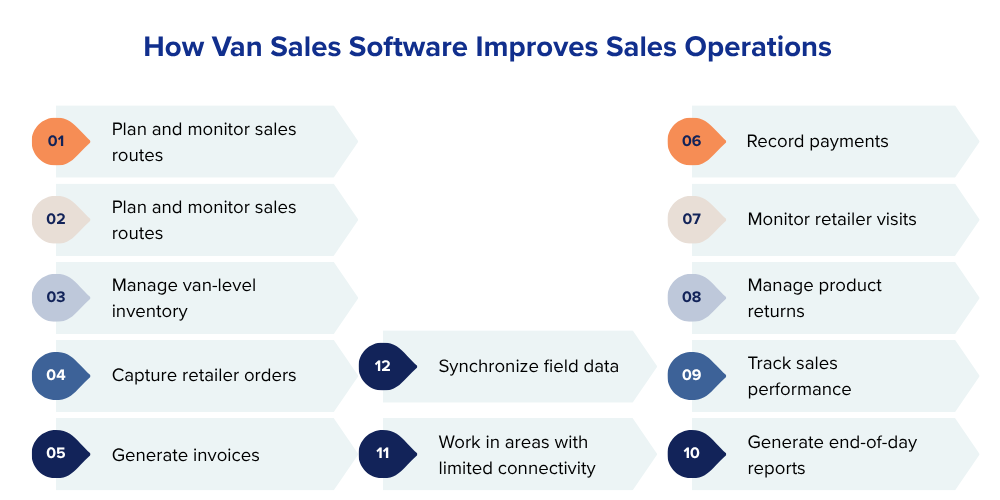
A modern van sales solution can help businesses:
-
Plan and monitor sales routes
-
Track field representatives
-
Manage van-level inventory
-
Capture retailer orders
-
Generate invoices
-
Record payments
-
Monitor retailer visits
-
Manage product returns
-
Track sales performance
-
Generate end-of-day reports
-
Synchronize field data
-
Work in areas with limited connectivity
For businesses managing large field teams, sales force tracking provides greater visibility into representative activity, route execution, outlet visits, and productivity.
Key Features of Van Sales Software
When evaluating van sales software, businesses should look for features that support the complete field-sales and distribution workflow.
1. GPS Tracking and Route Monitoring
GPS tracking helps managers monitor representative movement and understand whether planned routes and retailer visits are being completed.
2. Route and Beat Planning
Managers can assign territories, routes, and retailer visit schedules to sales representatives.
3. Van Inventory Management
Businesses can track inventory assigned to each van, monitor stock movement, record sales, and manage returns.
4. Mobile Order Booking
Sales representatives can capture retailer orders directly from their mobile devices while working in the field.
5. Digital Billing and Invoicing
Digital billing allows representatives to generate invoices during field transactions and reduces dependency on paperwork.
6. Payment Collection Management
The system can record payments collected from retailers and provide visibility into outstanding balances and collections.
7. Retailer Visit Tracking
Managers can monitor planned, completed, and missed retailer visits to understand field coverage.
8. Offline Functionality
Sales representatives may work in areas with poor or unstable internet connectivity. Offline functionality allows them to continue recording sales activities and synchronize data when connectivity becomes available.
9. End-of-Day Reporting
Managers can review daily sales, stock, collections, returns, and other field activities through consolidated reports.
10. Sales Analytics and Dashboards
Dashboards can help managers analyze sales trends, representative productivity, outlet coverage, inventory movement, and other performance indicators.
11. ERP and Business System Integration
Integration with ERP, accounting, CRM, or other business systems can connect field sales data with broader business operations.
Benefits of Using Van Sales Software
Implementing the right van sales solution can provide measurable improvements across field-sales and distribution operations.
Improve Sales Representative Productivity
Representatives spend less time completing paperwork and manual reports and more time selling and serving retailers.
Increase Retail Outlet Coverage
Better route planning and visit management can help representatives cover more outlets efficiently.
Improve Inventory Accuracy
Digital inventory records provide greater visibility into stock loaded into vans, products sold, returned products, and remaining stock.
Reduce Manual Errors
Digital order capture, billing, payment records, and inventory updates reduce dependency on manual data entry.
Strengthen Payment Control
Businesses can maintain better records of payments collected and outstanding amounts.
Improve Field Visibility
Managers can monitor sales activities, representative locations, retailer visits, and route execution from a centralized system.
Support Data-Driven Decisions
Real-time information helps managers identify sales trends, underperforming territories, inventory issues, and field execution gaps.
Scale Distribution Operations
A standardized digital workflow makes it easier to manage additional sales representatives, vans, retailers, territories, and products as the business grows.
Financing Options for Van Sales
Buying a van for your business is a significant investment, and understanding the different financing options available can help you manage your cash flow more effectively. Here are some of the most popular financing options:
1. Outright Purchase
If you have the funds available, purchasing a van outright is a straightforward option. This means you own the van immediately and don't have to worry about monthly payments or interest rates. However, it can put a strain on your finances if you're not prepared for the upfront cost.
2. Hire Purchase
With a hire purchase agreement, you can spread the cost of the van over a set period, usually between 1 to 5 years. At the end of the agreement, you own the van outright. This option allows you to manage your cash flow while benefiting from ownership of the vehicle.
3. Leasing
Leasing involves renting the van for a specified period, usually 2-5 years. At the end of the lease term, you can choose to purchase the van, return it, or lease a new one. Leasing can be a good option if you prefer to update your vehicles regularly and avoid the hassle of ownership.
4. Van Finance via Dealerships
Many van dealerships offer financing options directly, either through loans or leasing agreements. These finance packages may come with special terms and promotions, which can make them a convenient option for businesses looking to buy multiple vans or finance over a shorter period.
5. Government Grants and Incentives
Depending on your location, there may be government grants or tax incentives available to help businesses purchase new or eco-friendly vans. For instance, some programs offer grants to companies investing in electric or low-emission vehicles.
Benefits of Buying a Van for Your Business
Investing in the right van for your business offers numerous advantages:
-
Increased Efficiency: A van tailored to your business needs can improve operational efficiency by enabling quicker deliveries and smoother transportation.
-
Brand Visibility: Customizing your van with logos and branding turns it into a mobile advertisement, increasing brand awareness.
-
Tax Benefits: Businesses can often claim tax deductions for van purchases and operating costs, improving your bottom line.
-
Improved Customer Service: A reliable van can ensure that your goods and services are delivered on time, enhancing your customer satisfaction.
Van Sales vs. Pre-Sales
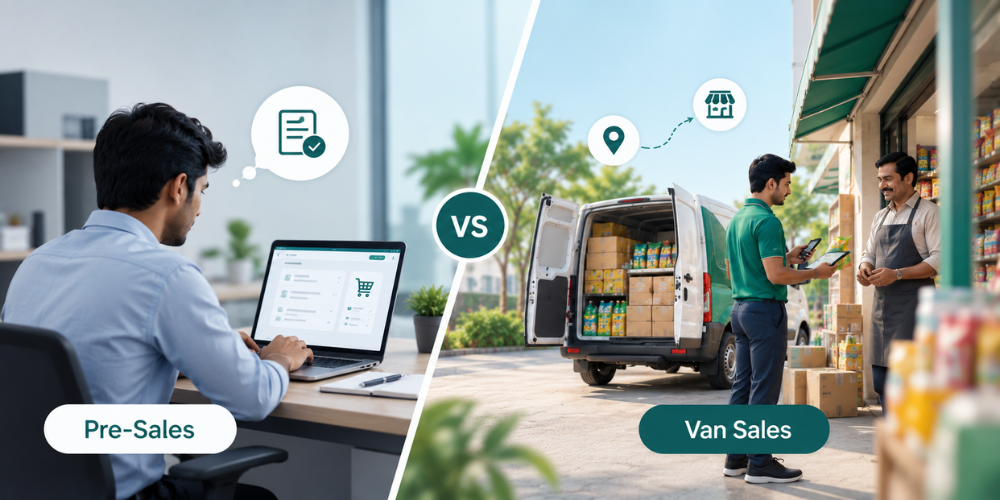
Van sales and pre-sales are two different approaches to field distribution.
Van Sales
In van sales, the representative carries inventory and can sell, invoice, deliver products, and collect payments during the retailer visit.
Typical process:
Van Stock → Retailer Visit → Sale/Order → Billing → Delivery → Payment
Pre-Sales
In a pre-sales model, the representative generally visits retailers to capture orders. The products are then delivered later through a separate delivery process.
Typical process:
Retailer Visit → Order → Order Processing → Warehouse/Distributor → Delivery
The right approach depends on product type, distribution structure, market requirements, retailer expectations, and delivery processes. Businesses that require immediate product availability and direct retailer fulfillment may find the van sales model particularly useful.
Who Can Benefit From Van Sales Software?
Van sales software can benefit businesses that manage mobile sales and distribution teams, including:
-
FMCG manufacturers and distributors
-
Food and beverage companies
-
Consumer goods businesses
-
Dairy and beverage companies
-
Pharmaceutical distributors
-
Personal care businesses
-
Household product companies
-
Wholesale and distribution businesses
-
Direct-to-retailer sales organizations
It is particularly useful for companies where sales representatives manage products, retailer visits, orders, payments, and deliveries directly from the field.
How to Choose the Right Van Sales Software
Choosing the right solution requires businesses to evaluate both current requirements and future scalability.
Check Field-Ready Functionality
The software should support mobile field operations and allow representatives to complete their daily activities without unnecessary complexity.
Evaluate Offline Capabilities
If representatives work in areas with unreliable connectivity, offline access should be an important consideration.
Review Inventory Management
The system should provide visibility into stock assigned to vans and support sales, transfers, returns, and reconciliation.
Check Route and GPS Features
Route planning and GPS tracking can help businesses improve field coverage and monitor execution.
Evaluate Reporting
Managers should have access to reports covering sales, inventory, payments, visits, routes, and representative performance.
Consider Integrations
The software should integrate with relevant ERP, CRM, accounting, or business systems when required.
Consider Scalability
The solution should be capable of supporting additional users, products, vans, territories, and retailers as the business grows.
Conclusion:
Van sales is more than transporting products from one location to another. It is a complete field-sales and distribution model that connects sales representatives, inventory, retailers, orders, deliveries, and payments.
As businesses expand their distribution networks, managing these activities manually can become increasingly difficult. Van sales software provides a centralized way to manage routes, inventory, retailer visits, orders, payments, and field reporting.
For FMCG and distribution businesses, the right technology can improve sales execution, strengthen inventory control, increase field visibility, and create a more efficient distribution process.
With a structured van sales strategy and the right software, businesses can give their field teams the tools they need to serve retailers more effectively while giving managers greater control over daily sales and distribution operations.
Ready to streamline your van sales operations?
Book a demo for van sales operations and see how Delta Sales App can help manage field sales, inventory, routes, orders, payments, and reporting from one platform.