What Should Sales Software for a Paint Company Actually Track?

Paint sales rarely happen through one interaction. Manufacturers rely on distributors and dealers to reach customers, while painters and contractors often influence which product gets chosen. Field reps have to maintain dealer relationships, collect orders, monitor stock, communicate schemes, and follow up on outstanding payments, all at once.
That's what makes choosing sales tracking software for paint companies different from picking a basic reporting tool. Recording monthly revenue isn't enough. Managers need visibility into dealer visits, product demand, territory coverage, collections, and field execution too.
Sales can decline in one territory even while distributor billing holds steady. The actual cause might be missed dealer visits, a product that's out of stock, or weak secondary sales- three very different problems with the same symptom. Without reliable field data, managers are stuck working off phone calls and guesswork to figure out which one it actually is.
The right sales software connects these activities, helping paint manufacturers, distributors, and wholesalers improve dealer coverage, monitor field performance, and make better-informed sales decisions.
Why Generic Sales Tracking Falls Short For Paint Companies
Generic sales software usually focuses on leads, calls, deals, revenue, and the standard B2B sales funnel. Paint companies need something more specific, since their sales depend on dealer relationships, product availability, seasonal demand, and consistent market coverage, none of which a generic CRM is really built to track.
-
Sales happen through dealers and painters, not direct buyers
Paint manufacturers typically reach customers through distributors and dealers, and painters and contractors influence which product gets picked through their own preferences and recommendations. Sales software should track dealer interactions, order history, and follow-ups, so reps can keep relationships going and know which accounts need more attention. Where painter and contractor engagement is part of the sales process, tracking those relationships too can help companies understand what's actually driving product preference locally.
-
Thousands of SKUs, shades, and pack sizes complicate orders
Paint portfolios run across multiple product categories, SKUs, pack sizes, and shade options. Tracking only the total order value makes it hard to see what's actually driving demand. Sales software should capture product details, quantities, pack sizes, prices, and discounts, with shade-level tracking where that's supported. That's what lets managers spot the popular products, compare demand across territories, and actually investigate why a particular range is underperforming instead of just seeing a lower number.
-
Seasonal demand makes late data expensive
Construction work, remodeling projects, holidays, and local weather all affect how much paint people need. Late reports from the field make it harder to meet what dealers need as their needs change. Getting updates on visits, orders, and payments on time helps managers spot changes in demand and work with distributors to restock before there's a shortage. Looking at sales with what's happening now also helps a business get ready for the same patterns that come every year instead of always reacting for the first time.
What Should Paint Sales Software Track at the Dealer Level?
Dealer-level information shows managers where sales are actually coming from, which accounts need attention, and where distribution opportunities are slipping through. It also gives reps real context before they walk into a dealer visit, so they can talk through previous orders, stock requirements, and pending payments instead of starting the conversation from zero.
-
Dealer visits and coverage gaps

Sales software should record dealer details, assigned territories, visit schedules, completed visits, and visit history. A GPS-based tracking system can verify that the field activity actually happened and flag outlets that keep getting overlooked. Managers can then compare planned coverage with actual visits to see whether reps are reaching the right dealers at all. This matters most in territories with large dealer networks, where inconsistent visits quietly weaken relationships and hand an opening to whichever competitor shows up more reliably.
-
Orders by product, shade range, and pack size
Order tracking should capture SKUs, quantities, pack sizes, prices, discounts, and order values. Shade-level data, where it's available, lets managers compare product demand across dealers and territories directly. A dealer might order interior emulsion regularly and barely touch exterior paint, for instance. Reviewing product-level order history is what shows a rep whether there's a cross-selling opportunity there and whether the low demand comes down to dealer preference, product availability, or just not having been promoted enough.
-
Dealer stock and secondary sales

Primary sales track manufacturer-to-distributor movement. Secondary sales track distributor-to-dealer or retailer movement, a different number entirely, and tracking both is what catches the situation where distributor stock looks fine while dealer-level demand is actually weak underneath it. Sales software should give access to dealer stock and secondary sales data, whether that's captured directly or pulled in through an inventory or distributor management system. Comparing stock levels against order history is what surfaces slow-moving products, real replenishment needs, and inventory sitting unbalanced somewhere in the channel.
-
Credit limits and outstanding payments
Unpaid invoices and credit limits shape dealer relationships and collection planning both. Sales software should give reps access to outstanding balances and payment records, subject to how the company's financial data is set up. Before a dealer visit, a rep can check payment status and actually prepare for the collection conversation instead of walking in blind. Managers can monitor collection performance across accounts and territories from the same data, while still validating outstanding balances and credit exposure against the company's approved financial records.
-
Scheme participation and shade card or display compliance
Trade schemes, shade cards, and product displays help paint companies keep dealers interested and keep products visible. Sales software should log trade scheme participation, promotional follow‑ups, and display observations whenever these tasks are required. Representatives can report whether promotional materials are available and whether the agreed display activities have been finished. Managers can use these observations to spot outlets that need shade cards, more merchandising support, or a clear explanation about current trade schemes.
What Should Paint Sales Software Track About the Field Team?
Dealer records show what is happening in the market. Field-team tracking helps managers understand whether representatives are completing planned activities and contributing to territory growth. It also provides a more consistent basis for reviewing performance than relying exclusively on end-of-day reports.
-
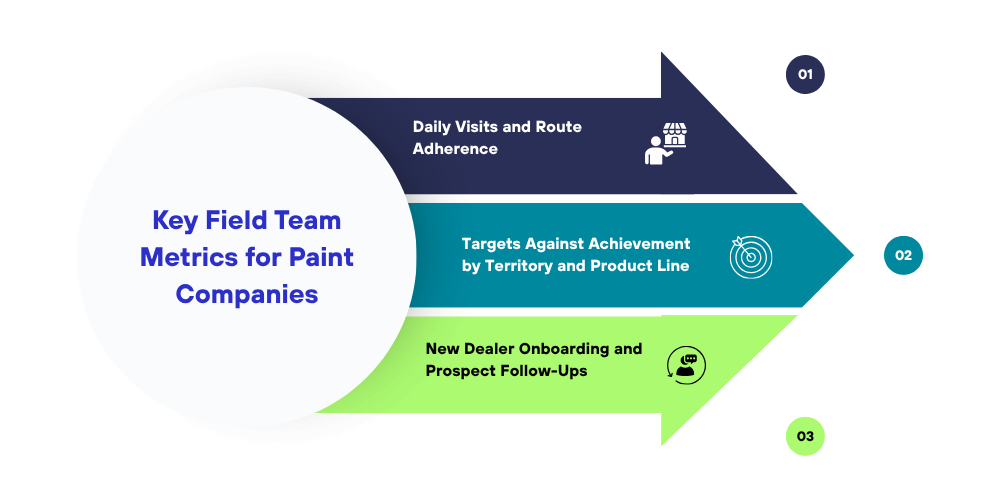
Daily visits and route adherence
Sales software must keep track of planned visits, completed visits, the times they happen, and the places where they take place. Beat planning and route monitoring allow managers to find accounts that were not visited and see where travel is not in spot areas that are not covered properly. When real visits are not the same as the plan, managers can look into why. Change the schedule as needed. This lets representatives spend time on useful dealer meetings instead of going over the same accounts again or missing important stores.
-
Targets against achievement by territory and product line
Managers need to compare sales targets with achievements across representatives, territories, and product categories. Managers can also add order values, collections, and active dealer counts to reports when the data exists. These comparisons help managers spot territories and product lines before the reporting period ends. Managers can then look into whether the gap's caused by limited dealer coverage, weak demand, stock availability, or insufficient follow-up instead of just looking at total revenue.
-
New dealer onboarding and prospect follow-ups
New dealer acquisition requires consistent follow-up. Sales software should record prospect details, assigned representatives, contact history, next follow-up dates, and onboarding status. Managers can review how many prospects are progressing toward their first order and identify opportunities that have stalled. This helps sales teams focus on promising accounts and build distribution coverage in underserved areas.
How Delta Sales App Supports Paint Sales Tracking
Paint manufacturers, distributors, and wholesalers need a practical way to connect field activity with sales reporting. Managing visits, orders, and collections through separate processes can delay reporting and reduce visibility.
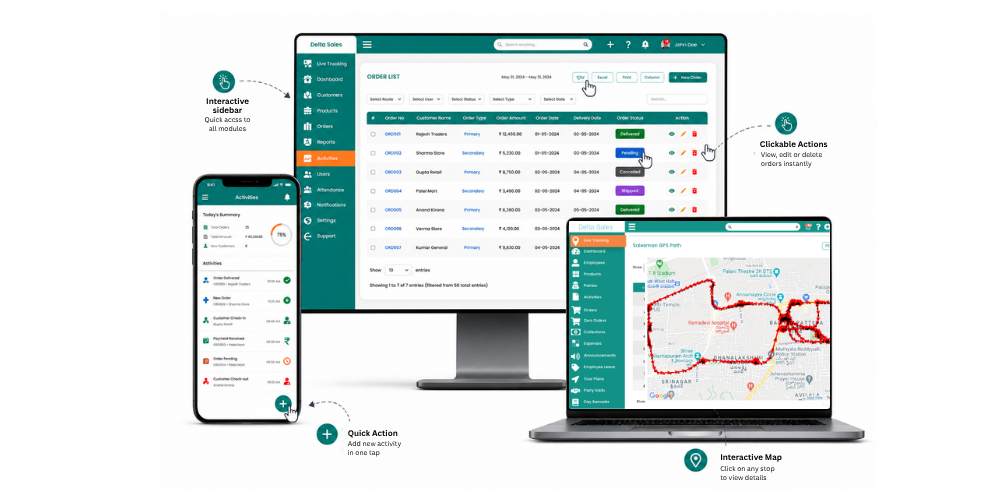
Delta Sales App is a field sales and distribution management app for teams that sell through dealers and distributors, and it also works as paint field force software, supporting GPS-based employee location tracking, visit tracking, beat planning, mobile order management, attendance, payment collection, and sales reporting.
-
Visit, beat, and order tracking from one app
Delta Sales App helps teams plan and manage their trips to the field, track where their employees are, and record sales using sales processes. Managers can see what activities were planned, what visits were completed, and what orders were sent in. For paint companies, this data helps find dealers who haven't had the expected visits and areas where sales aren't steady. Product lists and order processes should also show the items, package sizes, and colors that the business needs.

-
Dealer outstanding, stock, and scheme visibility
Delta Sales App supports order management, payment collection, distributor or party management, and reporting. These capabilities help teams record dealer transactions and review relevant account information, depending on the company's configuration. Outstanding balances, stock levels, secondary sales, and scheme compliance may require appropriate data sources, configured fields, or integration with existing business systems. Establishing these requirements during implementation helps ensure that representatives and managers work with useful, consistent information.
-
Reports managers can use without chasing the field
Delta Sales App provides reporting and dashboard visibility into field activities and sales performance. Managers can review relevant information about employee activity, visits, orders, collections, and territory performance based on configured reports. Instead of repeatedly contacting representatives for updates, managers can use available reports to identify missed visits, review order activity, and assign follow-up actions. This makes daily sales reviews more structured and helps teams respond to operational issues sooner.
Conclusion
Choosing the right sales tracking software helps paint companies improve dealer coverage, monitor product demand, track field-team performance, and maintain real visibility into orders and collections. With accurate field data and structured reporting, managers can spot sales gaps, strengthen dealer relationships, and make real decisions about territory coverage and growth, instead of working off assumptions.
Delta Sales App connects daily field activity to sales reporting through GPS-based employee tracking, beat planning, order management, payment collection, and sales analytics. For paint manufacturers, distributors, and wholesalers, that's what a more organized and accountable sales process actually looks like.
Book a free personalized demo to see how Delta Sales App fits your distribution network, field sales workflow, and reporting needs, and how it can give your managers better visibility into sales performance where it actually matters.