
Common Sales Challenges and How to Overcome Them?

Sales is the backbone of every business. Regardless of industry or company size, achieving consistent sales growth remains a top priority. However, modern sales teams face numerous obstacles that prevent them from reaching their targets. From poor Lead Management and inaccurate Sales Forecasting to communication gaps and inefficient field operations, these Sales Challenges can significantly impact revenue and customer satisfaction.
As markets become more competitive, businesses need smarter strategies and advanced technologies to overcome these hurdles. Implementing Sales Force Automation, Field Sales Management App, and data-driven decision-making can help organizations streamline processes and improve Sales Performance.
This article explores the most Common Sales Challenges businesses face today and practical ways to overcome them.
Understanding Today's Sales Landscape
The modern sales environment has evolved significantly. Customers have access to more information than ever before, competition is increasing, and purchasing decisions are becoming more complex. To stay competitive, businesses need stronger Sales Management processes and smarter technology solutions.
Today's sales teams depend on:
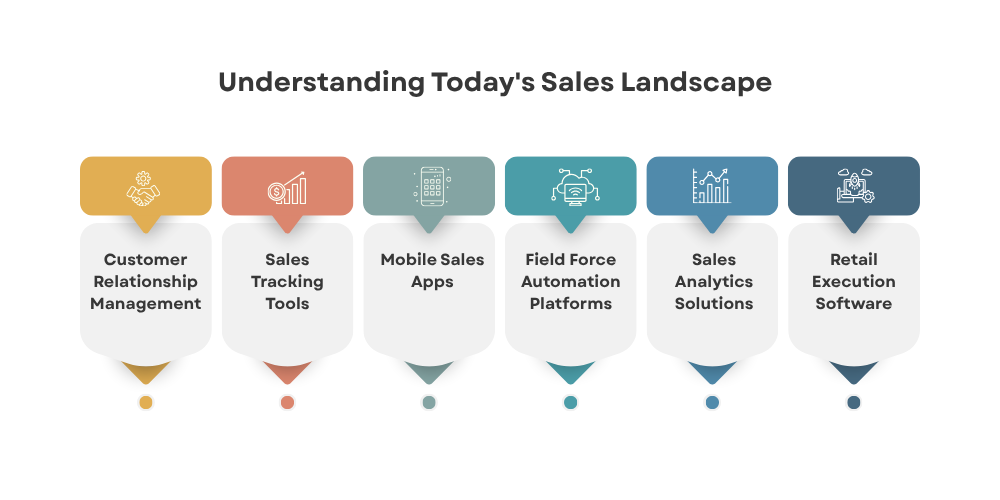
- Customer Relationship Management (CRM Software): Centralizes customer data, tracks interactions, manages sales pipelines, and helps teams build stronger customer relationships effectively.
- Sales Tracking Tools: Monitor sales activities, measure performance metrics, identify opportunities, and provide real-time visibility into team productivity levels.
- Mobile Sales Apps: Enable sales representatives to access customer information, update records, manage orders, and work efficiently anywhere.
- Field Force Automation Platforms: Automate field operations, track employee activities, optimize routes, and improve accountability across distributed sales teams.
- Sales Analytics Solutions: Transform sales data into actionable insights, helping businesses improve forecasting, strategy development, and decision-making accuracy.
- Retail Execution Software: Ensures proper product availability, merchandising compliance, store audits, and consistent execution of retail sales strategies.
Organizations that fail to adapt often experience declining productivity and slower Revenue Growth.
Why Sales Teams Struggle to Meet Targets
Many businesses assume poor sales performance is caused by market conditions alone. In reality, inefficient internal processes are often the primary reason behind missed targets.
Common causes include:
- Poor Lead Qualification: Sales teams often pursue unqualified prospects, wasting valuable time and resources on leads unlikely to convert.
- Weak Lead Management: Without organized lead tracking, opportunities can be overlooked, resulting in missed sales and reduced conversion rates.
- Lack of Visibility into Sales Operations: Managers struggle to monitor activities, making it difficult to identify performance gaps and improvement areas.
- Ineffective Territory Management: Poor territory allocation creates workload imbalances, reducing market coverage and limiting overall sales potential.
- Delayed Customer Follow-Ups: Slow responses allow competitors to engage prospects first, significantly lowering the chances of successful conversions.
- Manual Reporting Processes: Time-consuming manual reporting reduces selling time and often leads to inaccurate or incomplete business data.
- Limited Customer Insights: Insufficient customer information makes it difficult to personalize interactions and address specific customer needs effectively.
- Poor Team Collaboration: Communication gaps between departments create inefficiencies, inconsistent customer experiences, and missed revenue opportunities.
Addressing these issues is essential for improving Sales Productivity and achieving sustainable growth.
Common Sales Challenges and Their Solutions
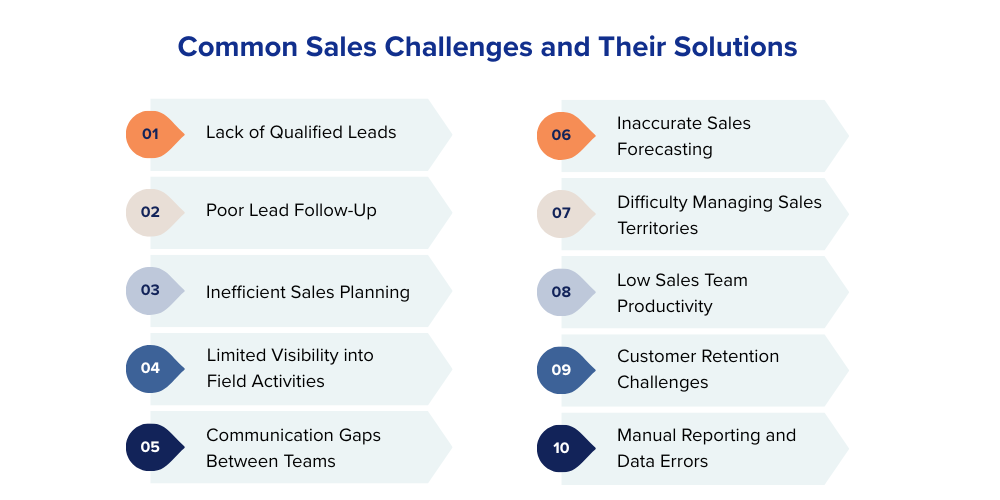
Lack of Qualified Leads
One of the most common Sales Challenges businesses face is generating high-quality leads that are genuinely interested in their products or services. Many sales representatives spend considerable time pursuing prospects who lack purchasing intent, budget, or decision-making authority. This not only reduces efficiency but also impacts overall conversion rates and revenue generation.
How to Overcome It
- Define your ideal customer profile to target the right audience effectively.
- Use structured Lead Qualification frameworks to identify high-potential prospects.
- Implement advanced Lead Management systems to organize and prioritize leads.
- Align sales and marketing teams to ensure consistent lead quality.
- Analyze lead sources using Sales Analytics to identify the most profitable channels.
Focusing on qualified leads helps businesses improve conversion rates, optimize resources, and enhance overall Sales Performance.
Poor Lead Follow-Up
Many promising opportunities are lost because sales representatives fail to follow up promptly with prospects. Delayed responses can reduce customer interest and increase the likelihood of prospects choosing competitors. Consistent and timely follow-up is critical for nurturing leads through the sales funnel.
How to Overcome It
- Use CRM Software to track customer interactions and follow-up schedules.
- Automate reminders to ensure timely communication.
- Establish clear response-time benchmarks for sales teams.
- Monitor engagement activities through Sales Tracker App.
A structured follow-up process ensures every opportunity receives the attention needed to improve conversion success.
Inefficient Sales Planning
Without effective planning, sales teams often spend excessive time on administrative activities rather than customer interactions. Poor planning can result in missed opportunities, inefficient resource allocation, and lower productivity levels.
How to Overcome It
- Implement effective Route Planning systems to optimize travel schedules.
- Set measurable and realistic sales objectives.
- Utilize Sales Analytics to identify trends and opportunities.
- Conduct regular performance reviews to improve execution.
Better planning enables teams to maximize selling time, improve efficiency, and strengthen customer relationships.
Limited Visibility into Field Activities
Managing a remote Field Sales Team becomes challenging when managers cannot monitor employee activities in real time. Limited visibility often leads to accountability issues and reduced operational control.
Common challenges include:
- Unknown customer visit status
- Inconsistent route adherence
- Delayed reporting
- Limited accountability
How to Overcome It
Modern Field Sales Management solutions provide:
- GPS Tracking for location verification
- Real-time activity monitoring
- Customer visit verification
- Optimized Route Planning
- Real-Time Reporting capabilities
These features help managers improve oversight, accountability, and operational efficiency.
Communication Gaps Between Teams
Poor communication between sales, marketing, operations, and distribution teams often creates inefficiencies and negatively impacts customer experiences. Misaligned objectives and inconsistent information can result in missed revenue opportunities.
How to Overcome It
- Centralize information using Customer Relationship Management platforms.
- Schedule regular cross-functional team meetings.
- Implement collaborative Sales Management Software.
- Standardize communication and reporting procedures.
Effective communication strengthens Sales Operations, improves coordination, and enhances customer satisfaction.
Inaccurate Sales Forecasting
Many organizations struggle with Sales Forecasting because they rely on assumptions rather than data-driven insights. Inaccurate forecasts can affect budgeting, inventory management, and strategic planning.
Common consequences include:
- Inventory shortages
- Budgeting inaccuracies
- Missed business opportunities
- Reduced profitability
How to Overcome It
- Leverage advanced Sales Analytics tools.
- Analyze historical sales performance data.
- Continuously monitor the Sales Pipeline.
- Adopt predictive forecasting technologies.
Accurate forecasting helps businesses make informed decisions and achieve sustainable Revenue Growth.
Difficulty Managing Sales Territories
Poor Territory Management often leads to uneven workload distribution and insufficient market coverage. Some representatives may become overloaded while others have underutilized territories.
How to Overcome It
- Implement specialized Territory Management App.
- Regularly assess regional performance metrics.
- Balance workloads among sales representatives.
- Adjust territories based on market potential and customer concentration.
Well-managed territories improve resource utilization and contribute directly to better Sales Performance.
Low Sales Team Productivity
Sales professionals frequently spend valuable time on administrative tasks instead of engaging customers and closing deals. Excessive manual work can significantly reduce efficiency and performance.
Common productivity barriers include:
- Manual reporting
- Data entry
- Administrative documentation
- Travel planning
How to Overcome It
Improve Sales Productivity through:
- Sales Force Automation
- Mobile Sales Apps
- Automated workflows
- Integrated Order Management systems
Automation minimizes repetitive tasks, allowing sales teams to focus on customer engagement and revenue generation.
Customer Retention Challenges
While attracting new customers is important, retaining existing customers is often more cost-effective and profitable. Poor Customer Retention can negatively impact long-term business growth and profitability.
How to Overcome It
- Develop stronger Customer Engagement strategies.
- Personalize customer communications and experiences.
- Utilize Customer Relationship Management tools effectively.
- Regularly monitor customer satisfaction levels.
Strong customer relationships help businesses improve loyalty, increase repeat purchases, and drive sustainable growth.
Manual Reporting and Data Errors
Manual reporting processes consume valuable time and frequently introduce inaccuracies into business records. These errors can lead to poor decision-making and reduced operational efficiency.
How to Overcome It
- Implement digital reporting solutions.
- Enable Real-Time Reporting across sales operations.
- Automate data collection and synchronization.
- Adopt cloud-based Sales Management Software.
Accurate and automated reporting improves visibility, supports informed decision-making, and enhances overall business performance.
The Impact of Sales Challenges on Business Growth
Unresolved Sales Challenges can have a significant impact on an organization's growth, profitability, and long-term sustainability. When businesses fail to address issues such as poor lead management, ineffective communication, inaccurate forecasting, and low productivity, the effects are often felt across multiple departments. These challenges not only hinder daily operations but also limit a company's ability to compete and expand in the market.
Reduced Revenue Growth
When sales teams struggle to generate qualified leads, follow up effectively, or close deals efficiently, overall sales decline. This directly impacts Revenue Growth and makes it difficult for businesses to achieve their financial goals.
Lower Customer Satisfaction
Poor communication, delayed responses, and inconsistent service can frustrate customers. As customer expectations continue to rise, businesses that fail to provide a positive experience risk losing valuable clients to competitors.
Poor Sales Performance
Without proper tools, processes, and visibility into sales activities, teams often fail to meet their targets. Weak Sales Performance can affect profitability, market positioning, and overall business stability.
Increased Operational Costs
Manual processes, inefficient workflows, and poor resource allocation increase operational expenses. Businesses may spend more time and money managing problems that could be solved through automation and better planning.
Reduced Employee Morale
Constant pressure to meet targets without adequate support can lead to frustration and burnout among sales representatives. Low morale often results in decreased productivity, higher turnover rates, and reduced team performance.
Missed Market Opportunities
Limited customer insights and poor Sales Forecasting can prevent businesses from identifying emerging trends and new opportunities. As a result, competitors may capture market share that could have been yours.
By proactively addressing these Sales Challenges through improved processes, Sales Automation, and data-driven decision-making, businesses can enhance Sales Performance, strengthen customer relationships, and position themselves for sustainable long-term success.
How Technology Helps Overcome Sales Challenges
Technology has become a critical component of modern Sales Management. As sales processes become more complex, businesses need advanced tools to improve efficiency, increase visibility, and enhance decision-making. Modern technologies help organizations automate repetitive tasks, manage customer relationships more effectively, and gain valuable insights into sales performance.
Solutions such as Sales Force Automation and Field Force Automation play a crucial role in overcoming common Sales Challenges by streamlining operations and improving productivity.
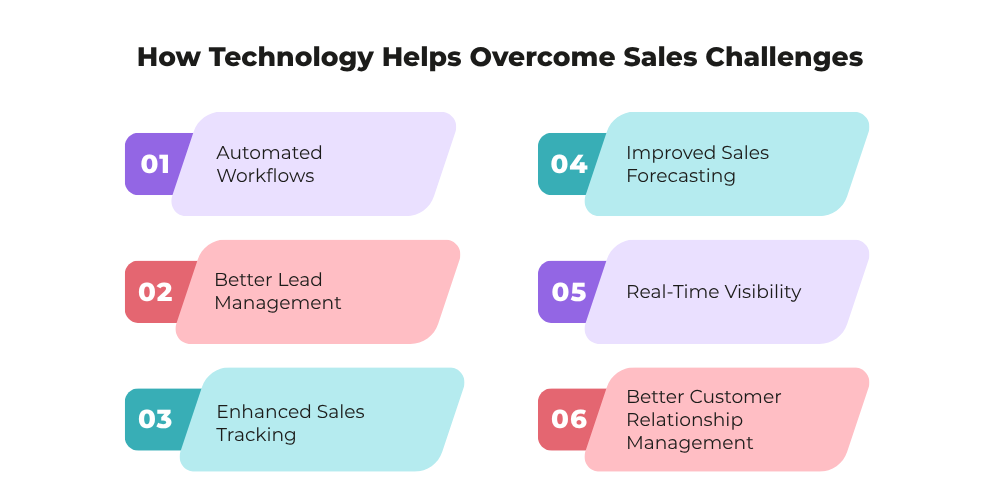
Automated Workflows
Automation reduces the need for manual tasks such as data entry, reporting, and follow-up scheduling. By automating routine activities, sales representatives can focus more on customer interactions and revenue-generating activities.
Better Lead Management
Advanced Lead Management systems help businesses capture, organize, and prioritize leads efficiently. This ensures that sales teams focus on high-potential opportunities and improve conversion rates.
Enhanced Sales Tracking
Modern Sales Tracking tools provide real-time visibility into sales activities, customer interactions, and team performance. Managers can quickly identify bottlenecks and take corrective actions when necessary.
Improved Sales Forecasting
Using Sales Analytics and historical performance data, businesses can generate more accurate Sales Forecasting reports. This helps organizations make informed decisions regarding inventory, budgeting, and resource allocation.
Real-Time Visibility
Technology provides managers with real-time insights into field activities, customer visits, and sales progress. Features such as GPS Tracking, live dashboards, and Real-Time Reporting improve transparency and accountability across teams.
Better Customer Relationship Management
Modern Customer Relationship Management (CRM Software) solutions centralize customer information, track interactions, and help sales teams deliver personalized experiences. Stronger customer relationships often lead to higher retention rates and increased sales opportunities.
By leveraging technologies such as Sales Force Automation, Field Force Automation, CRM Software, and Sales Analytics, businesses can overcome operational challenges, improve Sales Productivity, and achieve stronger Sales Performance. Technology empowers sales teams to work smarter, respond faster, and drive sustainable business growth.
Best Practices for Building a High-Performing Sales Team
Building a successful sales team requires more than hiring talented representatives. Organizations must create an environment that promotes accountability, continuous learning, collaboration, and data-driven decision-making. A high-performing team consistently achieves targets, adapts to market changes, and delivers exceptional customer experiences.
Organizations seeking higher Sales Performance should focus on the following best practices:
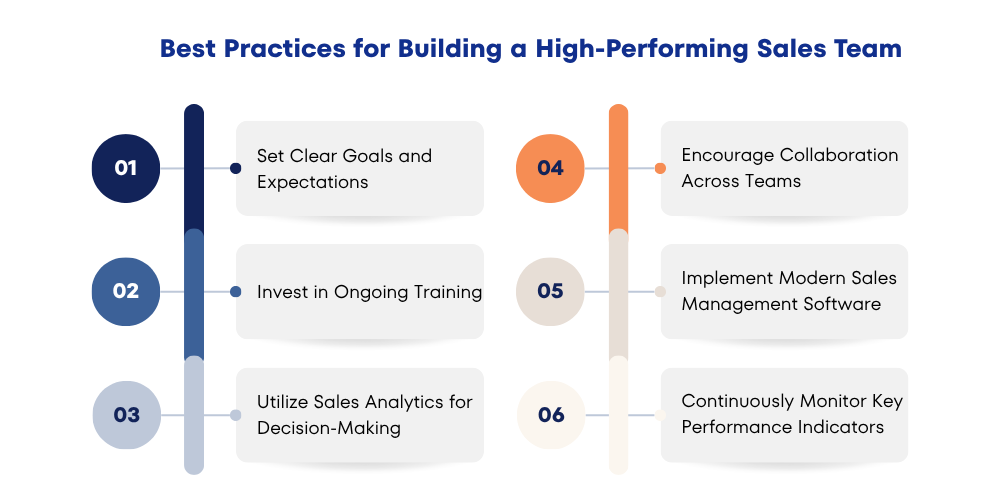
Set Clear Goals and Expectations
Sales teams perform better when they have clearly defined objectives and measurable targets. Establishing realistic expectations helps representatives understand their responsibilities and stay focused on achieving business goals.
Invest in Ongoing Training
Continuous training helps sales professionals improve product knowledge, communication skills, negotiation techniques, and customer engagement strategies. Regular learning opportunities ensure teams remain competitive in changing markets.
Utilize Sales Analytics for Decision-Making
Modern Sales Analytics tools provide valuable insights into customer behavior, sales trends, and team performance. Data-driven decisions help managers identify opportunities and optimize sales strategies more effectively.
Encourage Collaboration Across Teams
Strong collaboration between sales, marketing, customer support, and operations teams improves communication and ensures a consistent customer experience throughout the sales journey.
Implement Modern Sales Management Software
Advanced Sales Management Software helps automate workflows, improve visibility, streamline reporting, and enhance overall productivity. Technology enables teams to focus more on selling and less on administrative tasks.
Continuously Monitor Key Performance Indicators
Tracking KPIs such as conversion rates, sales cycle length, revenue generation, customer retention, and team productivity helps businesses measure success and identify areas for improvement.
By adopting these best practices, organizations can create a culture of continuous improvement, strengthen team performance, and achieve sustainable business growth.
Key Features to Look for in a Sales Management Solution
Choosing the right Sales Management Software is essential for improving efficiency, visibility, and overall sales effectiveness. The ideal solution should provide tools that simplify daily operations while supporting long-term business growth.
When evaluating a sales management solution, prioritize the following features:
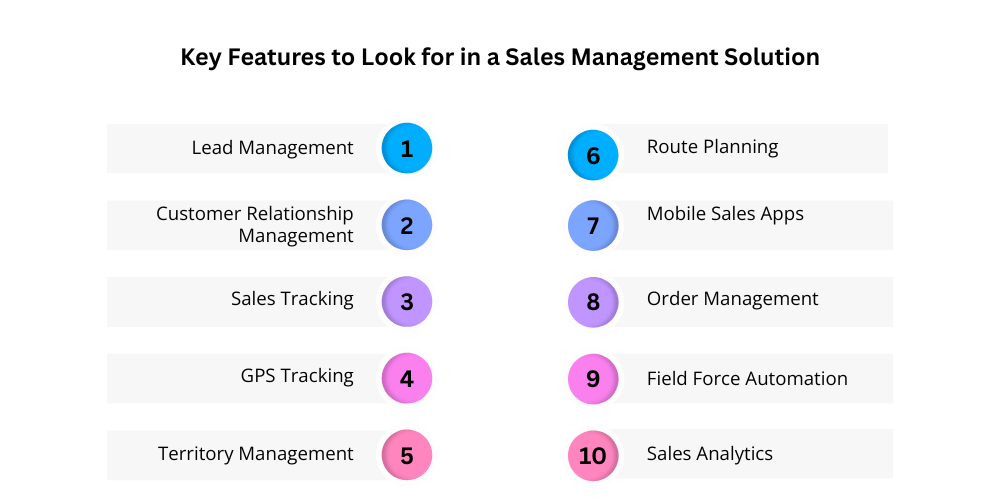
Lead Management
Helps businesses capture, organize, track, and nurture leads throughout the sales cycle, ensuring no opportunity is missed.
Customer Relationship Management
A robust Customer Relationship Management (CRM) system centralizes customer information, tracks interactions, and helps build stronger customer relationships.
Sales Tracking
Provides real-time visibility into sales activities, team performance, and pipeline progress, enabling managers to make informed decisions.
GPS Tracking
Allows organizations to monitor field representatives' locations, verify customer visits, and improve accountability across mobile sales teams.
Territory Management
Optimizes sales territory allocation, balances workloads, and ensures efficient market coverage for improved performance.
Route Planning
Helps field sales representatives plan efficient travel routes, reduce travel time, and increase customer visit frequency.
Mobile Sales Apps
Empower sales teams to access customer information, update records, manage orders, and work efficiently from any location.
Order Management
Streamlines order processing, reduces errors, and improves coordination between sales, inventory, and distribution teams.
Real-Time Reporting
Provides instant access to performance metrics, sales data, and operational insights, enabling faster decision-making.
Field Force Automation
Automates field operations, improves activity tracking, and enhances visibility into daily sales activities.
Sales Analytics
Transforms sales data into actionable insights, helping businesses improve forecasting, performance monitoring, and strategic planning.
These capabilities support scalable and efficient Sales Operations, enabling organizations to improve productivity, enhance customer experiences, and drive sustainable growth.
How Sales Automation Improves Sales Performance
Sales Automation plays a critical role in modern Sales Management by eliminating repetitive manual tasks and streamlining end-to-end sales workflows. By automating routine processes such as data entry, lead assignment, follow-ups, and reporting, organizations can significantly improve efficiency and allow sales teams to focus more on selling and relationship building.
When implemented effectively, Sales Automation directly enhances overall Sales Performance and strengthens business outcomes.
Faster Lead Response Times
Automation ensures that new leads are instantly assigned to the right sales representatives. This reduces response delays and increases the chances of converting prospects into customers before competitors engage them.
Improved Sales Productivity
By reducing time spent on administrative tasks, sales representatives can focus on high-value activities such as client meetings, negotiations, and closing deals. This leads to improved Sales Productivity across the team.
Enhanced Sales Performance
With structured workflows and better visibility, teams can track progress more effectively and identify gaps in performance. This helps organizations consistently achieve or exceed sales targets.
Better Sales Forecasting
Automation tools integrated with Sales Analytics provide accurate and real-time data, enabling more reliable Sales Forecasting. Businesses can make better decisions regarding planning, budgeting, and resource allocation.
Increased Operational Efficiency
Automated systems reduce manual errors, eliminate redundant tasks, and ensure smoother coordination between teams. This leads to more efficient Sales Operations overall.
Improved Customer Experiences
With faster responses, personalized communication, and accurate order handling, customers receive a more seamless and satisfying experience. This strengthens Customer Relationship Management and improves long-term retention.
Organizations that embrace Sales Automation gain a strong competitive advantage by improving efficiency, increasing revenue potential, and building stronger customer relationships in a highly competitive market.
How Delta Sales App Helps Businesses Overcome Sales Challenges
Delta Sales App is an end-to-end solution designed to address modern Sales Challenges and significantly improve overall Sales Performance. It enables organizations to digitize field operations, streamline workflows, and gain real-time visibility into sales activities. By combining automation, analytics, and mobility, it helps businesses build a more efficient and data-driven sales ecosystem.

The platform is especially effective for managing distributed sales teams, improving execution accuracy, and ensuring better coordination across sales, distribution, and management functions.
Key Capabilities of Delta Sales App
- Sales Force Automation – Automates routine sales tasks, reduces manual effort, and improves operational efficiency across the sales cycle.
- Field Sales Management – Provides complete visibility into field activities, helping managers track performance and improve accountability.
- GPS Tracking – Enables real-time location tracking of sales representatives to ensure route adherence and visit verification.
- Lead Management – Helps capture, assign, and track leads efficiently to improve conversion rates and reduce missed opportunities.
- Distributor Management – Streamlines distributor operations, order handling, and communication between sales teams and channel partners.
- Route Planning – Optimizes travel routes for field teams, reducing travel time and increasing customer coverage.
- Order Management – Simplifies order creation, processing, and tracking to reduce errors and improve fulfillment speed.
- Sales Tracking – Provides real-time insights into sales activities, performance metrics, and pipeline progress.
- Retail Execution – Ensures better in-store execution, improved product availability, and compliance with merchandising standards.
- Sales Analytics – Converts sales data into actionable insights for better forecasting and strategic decision-making.
- Customer Relationship Management – Strengthens customer engagement by centralizing interactions and improving communication history tracking.
- Real-Time Reporting – Enables instant access to sales data and field updates for faster and more informed decisions.
- Field Force Automation – Automates field operations and improves coordination between on-ground teams and management.
By delivering complete visibility into sales operations and automating critical workflows, Delta Sales App helps businesses improve productivity, enhance Sales Performance, optimize operational efficiency, and drive sustainable Revenue Growth. It empowers organizations to overcome complex sales challenges and build a scalable, future-ready sales process.
Final Thoughts
Every business faces Sales Challenges, but those challenges do not have to limit growth. Organizations that combine strong processes with advanced technologies such as Sales Force Automation, Field Sales Management, CRM Software, Sales Analytics, and Field Force Automation can overcome operational bottlenecks and improve overall Sales Performance.
By investing in smarter tools, strengthening Customer Engagement, improving Lead Management, and leveraging data-driven insights, businesses can build high-performing sales teams, increase Customer Retention, and achieve long-term success.
If you are looking to streamline your sales operations and eliminate manual inefficiencies, Delta Sales App can help you transform your field sales process.
Book a Free Demo of Delta Sales App today to see how it can improve your sales tracking, boost productivity, and drive consistent revenue growth for your business.