
Common Distributor and Consumer Management Challenges (And How to Solve Them)
Managing distributors and consumers simultaneously has become increasingly complex as businesses expand their operations across multiple markets and sales channels. Distributors play a critical role in ensuring products reach retailers on time, while consumers expect consistent product availability, faster service, and a seamless buying experience. Meeting the expectations of both groups requires efficient coordination, accurate data, and complete visibility across the distribution network.
However, many businesses still rely on manual processes, disconnected systems, or outdated methods to manage distributors, inventory, orders, and customer interactions. These inefficiencies often result in delayed order processing, poor inventory planning, communication gaps, limited visibility into sales activities, and inconsistent customer experiences. Over time, these challenges can reduce operational efficiency, weaken distributor relationships, impact customer satisfaction, and ultimately slow business growth.
The good news is that these challenges are not impossible to overcome. By adopting modern Distributor Management Software and Sales Force Automation software, businesses can streamline distribution operations, automate routine tasks, improve collaboration, and make faster, data-driven decisions. A centralized platform not only helps businesses manage distributors more effectively but also enables them to deliver better experiences to retailers and end consumers.
In this blog, we'll explore the most common distributor and consumer management challenges businesses face today, understand how they impact day-to-day operations, and discuss practical ways to solve them using the right technology and sales automation tools.
Why Distributor and Consumer Management Matters
Distributors and consumers are two important stakeholders in any distribution-driven enterprise. Distributors make sure goods move from manufacturers to retailers efficiently, but it is consumers who generate demand and ultimately decide a company’s long-term success. Effective management of both is critical to the smooth running of the supply chain, to increasing the efficiency of operations, and to delivering a consistent customer experience.
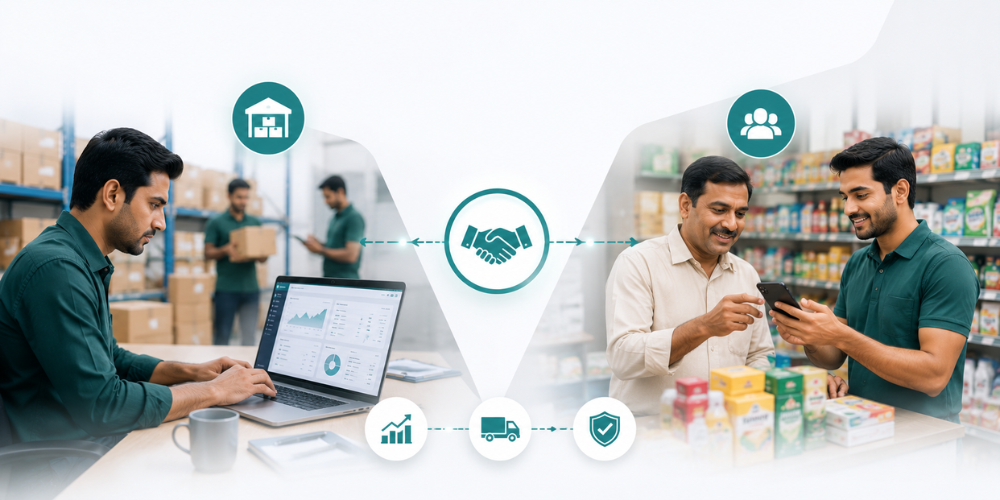
Accurate inventory information, streamlined order processing, and timely communication allow distributors to serve retailers more efficiently. At the same time, consumers benefit from better product availability, faster deliveries, and reliable service. This results in a more resilient distribution network where all parties involved, from manufacturers and distributors to retailers and end customers, cooperate more efficiently.
However, poor coordination between distributors and consumers can create several operational challenges that directly impact business performance, including:
- Inventory mismatches and inaccurate stock levels
- Delayed order processing and deliveries
- Inefficient field sales operations
- Poor communication across the distribution network
- Limited visibility into distributor and sales performance
- Inconsistent customer experiences
- Declining distributor confidence and engagement
- Lost sales opportunities and reduced customer loyalty
By implementing the right processes and leveraging modern sales automation tools, businesses can improve collaboration, gain real-time visibility into operations, and make faster, data-driven decisions. This not only strengthens distributor relationships but also enhances customer satisfaction, helping businesses scale their distribution network and achieve sustainable growth.
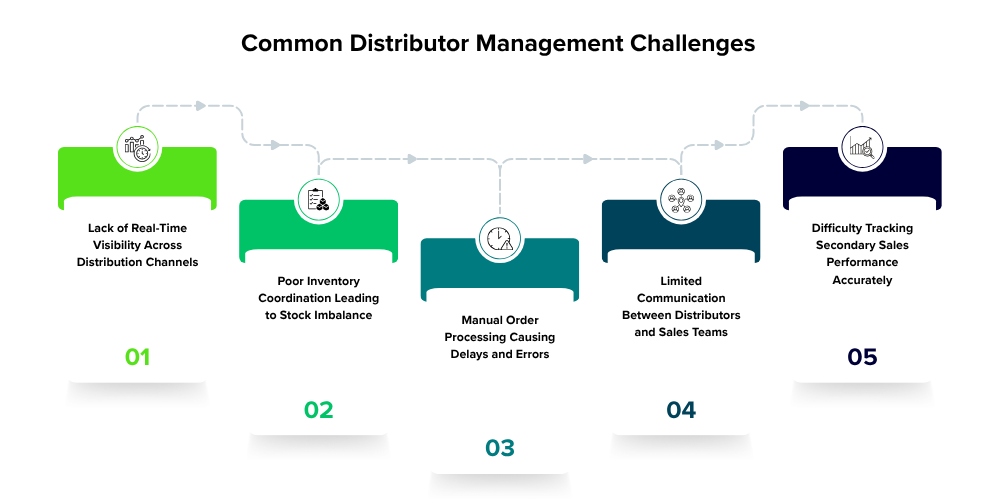
Common Distributor Management Challenges
-
Lack of Real-Time Visibility Across Distribution Channels
Many businesses still rely on spreadsheets, phone calls, or manual reports to monitor distributor activities. As a result, managers don't have a clear view of distributors. performance, inventory movement, order status, or sales trends. This lack of visibility slows decision-making, delays responses to market changes, and makes it difficult to identify issues before they impact business operations. Using a Distributor Management System (DMS) can help businesses gain real-time insights across their distribution network.
-
Poor Inventory Coordination
Without synchronized inventory data, one distributor may run out of stock while another has excess inventory. This imbalance often leads to stock-outs, overstocking, higher carrying costs, delayed deliveries, and missed sales opportunities. Poor inventory coordination also makes demand forecasting more difficult, reducing overall supply chain efficiency.
-
Manual Order Processing
Many distributors still place orders through calls, WhatsApp, emails, or paper forms. These manual processes increase the risk of duplicate orders, data entry errors, delayed approvals, and billing inaccuracies. As order volumes increase, managing them manually becomes even more challenging, slowing down the entire order-to-delivery process. An automated order management system helps streamline order collection and improve accuracy.
-
Limited Communication with Distributors
When communication is spread across multiple channels, distributors can easily miss important updates about pricing, promotions, product launches, or sales targets. Poor communication creates inconsistencies, delays execution, and weakens collaboration across the distribution network.
-
Difficulty Monitoring Secondary Sales
Many businesses have visibility into primary sales but struggle to track secondary sales from distributors to retailers. Without this data, it becomes difficult to measure actual market demand, evaluate distributor performance, identify fast-moving products, or forecast future sales accurately. Effective secondary sales tracking provides the insights needed to make better inventory and business decisions.
Common Consumer Management Challenges
-
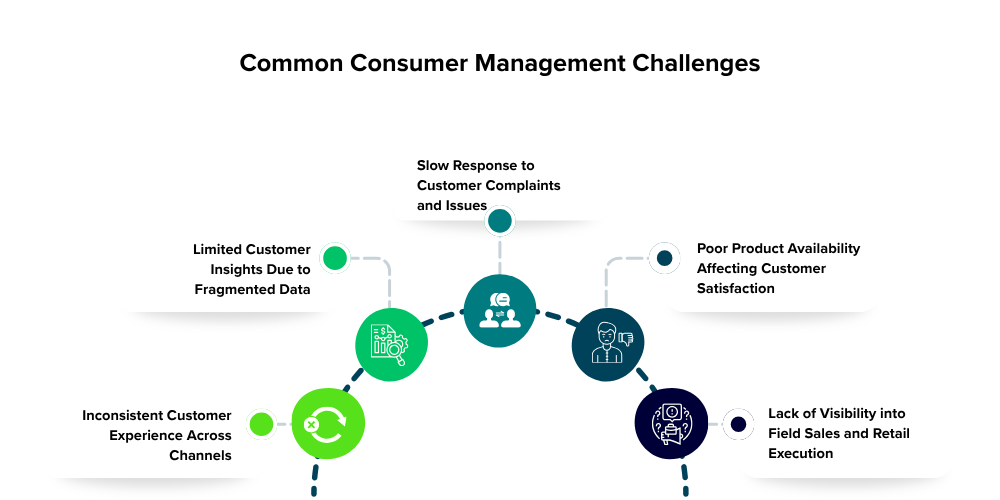
Inconsistent Customer Experience
Today's consumers expect the same level of service regardless of where they purchase products. However, inconsistent distributor performance can result in delayed deliveries, product shortages, and varying service quality. These issues negatively affect customer satisfaction, reduce brand trust, and increase the likelihood of consumers switching to competitors.
-
Limited Customer Insights
Customer data is often scattered across different systems, making it difficult to understand purchasing behavior, preferences, and buying patterns. Without a centralized Customer Relationship Management (CRM) system, businesses struggle to personalize customer experiences, identify market trends, and make informed sales and marketing decisions.
-
Slow Response to Customer Complaints
Without a centralized complaint management process, customer issues can take days to resolve. Delayed responses reduce customer trust, damage brand reputation, and may result in lost business. Efficient complaint tracking is essential for improving customer satisfaction and retention.
-
Poor Product Availability
Products that are unavailable at the right place and time often drive consumers toward competing brands. Poor inventory visibility, inaccurate demand forecasting, and inefficient stock management are common causes of frequent stock-outs, directly impacting sales and customer loyalty.
-
Ineffective Field Sales Monitoring
Businesses often struggle to monitor field sales activities, making it difficult to verify outlet visits, measure sales representative productivity, or ensure planned routes are being followed. Without proper Sales Force Automation (SFA) and GPS-based employee tracking, managers have limited visibility into field operations, which can affect retailer engagement and overall sales performance.
Effective Ways to Solve Distributor and Consumer Management Challenges
Addressing distributor and consumer management challenges requires more than manual processes and disconnected systems. Businesses need a combination of automation, real-time visibility, and data-driven decision-making to improve efficiency across the entire distribution network. Here are some effective ways to overcome these challenges:
1. Digitize Distributor Management Processes
Managing distributors through spreadsheets, phone calls, or paper records often leads to delays and errors. Implementing distributor management software centralizes distributor information, order tracking, inventory visibility, and payment records, making collaboration more efficient and transparent.
2. Automate Order Collection and Processing
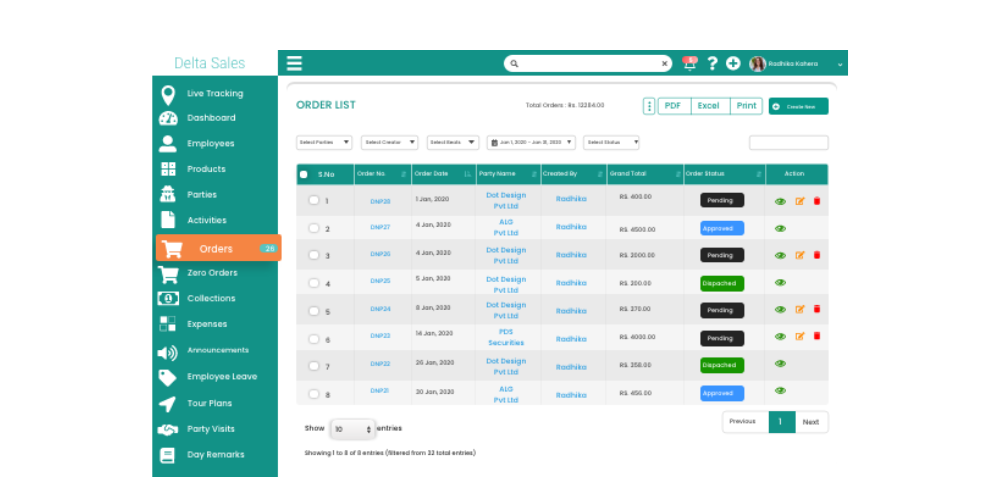
Manual order taking slows down operations and increases the possibility of mistakes. Digital ordering features in order management systems allow distributors and field sales reps to order digitally, leading to reduced processing time, fewer errors, and faster order fulfillment.
3. Improve Inventory Visibility Across the Supply Chain
Real-time inventory visibility helps businesses prevent stock-outs and avoid excess inventory. By using inventory management software, companies can monitor stock levels across distributors and warehouses, ensuring products are always available where demand exists.
4. Strengthen Customer Relationship Management
Improving customer satisfaction means you must understand better what your customers want and how they behave when they buy. A customer relationship management (CRM) system can collect customer data and help companies improve their service, resolve issues more quickly, and develop long-term customer loyalty.
5. Optimize Field Sales Operations
"Better performance of field sales teams is the result of effective planning and monitoring of activities. A Sales Force Automation (SFA) solution includes beat planning software, GPS employee tracking, and attendance management to help managers monitor outlet visits, optimize route efficiency, and measure the productivity of sales teams in real time.
6. Track Secondary Sales for Better Business Decisions
Tracking secondary sales gives you a clear picture of how products travel from the distributor to the retailer. Companies can use secondary sales tracking to better forecast demand, identify top-performing products, and make smarter inventory and production decisions.
7. Enhance Communication Across the Distribution Network
Keeping distributors, retailers, and sales teams connected improves coordination and reduces misunderstandings. A centralized platform enables businesses to share pricing updates, promotional campaigns, product launches, and sales targets instantly, ensuring everyone stays aligned.
8. Use Reporting and Analytics to Drive Continuous Improvement
Data-driven decisions lead to better business results. Sales Reporting & Analytics: Enables businesses to track key performance indicators, assess distributor performance, spot sales trends, and discover ways to boost operational efficiency and profitability.
Why Choose Delta Sales App for Distributor and Consumer Management?
Successfully managing distributors and consumers goes beyond just monitoring sales. It’s about having complete visibility into your distribution network, seamless communication between stakeholders, and the ability to make informed decisions based on real-time data. Manual processes or the use of multiple disconnected tools can lead to delays, inefficiencies and missed opportunities for growth.
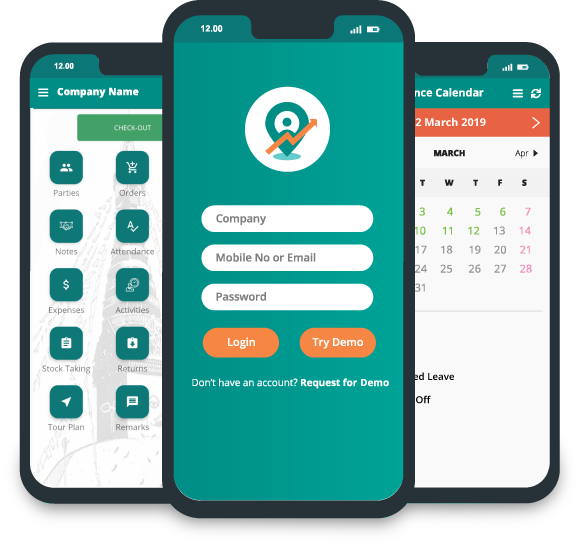
The Delta Sales App is a bundled Sales Force Automation (SFA) & Distributor Management Software that aids businesses to get over these challenges. By integrating distributor management, field sales operations, order processing, inventory visibility and customer management on one platform, it enables businesses to simplify day-to-day operations and better collaborate across the entire supply chain.
-1782992909.png)
-
Simplify Distributor Management
Manage all distributor-related activities from a centralized platform. Delta Sales App helps businesses organize distributor information, monitor performance, track outstanding payments, and maintain stronger relationships with channel partners, making distributor management more efficient and transparent.
-
Digitize Order Collection and Processing
Replace manual order-taking methods with an integrated order management system. Sales representatives and distributors can place orders digitally, reducing paperwork, minimizing errors, speeding up approvals, and ensuring quicker order fulfillment.
-
Gain Visibility into Primary and Secondary Sales
Track both primary and secondary sales from a single dashboard to understand how products move across your distribution network. These insights help businesses forecast demand, identify high-performing products, and make better inventory and sales decisions.
-
Improve Inventory Management
Maintain optimal inventory levels across distributors and retailers with real-time stock visibility. Delta Sales App helps reduce stock-outs, prevent overstocking, and ensure products are available when and where customers need them.

-
Optimize Field Sales Operations
Improve your sales team productivity with inbuilt Sales Force Automation (SFA) features like beat planning, GPS employee tracking and attendance management. Managers can track field activities in real time, confirm outlet visits and verify that sales reps are on planned routes.
-
Strengthen Customer Relationships
Build customer loyalty for the long term with integrated Customer Relationship Management (CRM) tools. Centralizing customer data allows businesses to understand buying behavior, manage follow-ups, resolve customer issues quickly, and deliver better service.
-
Make Data-Driven Business Decisions
Access real-time sales reporting & analytics to monitor key performance indicators, evaluate distributor performance, identify sales trends, and uncover opportunities to improve operational efficiency and profitability.
-
Enhance Communication Across the Distribution Network
Keep distributors, retailers, field sales teams, and managers connected through a single platform. Share pricing updates, promotional campaigns, product launches, and sales targets instantly to ensure everyone stays informed and aligned.
-
Scale Your Business with Confidence
As your distribution network expands, Delta Sales App grows with your business. Its scalable features help automate routine processes, improve operational control, and support sustainable business growth without increasing management complexity.
Final Thoughts
Effectively managing distributors and consumers is essential for building a resilient and profitable distribution network. Challenges such as limited visibility, poor inventory coordination, manual order processing, inconsistent communication, and ineffective field sales management can hinder business growth and impact customer satisfaction. The good news is that these challenges can be addressed with the right combination of processes and technology.
The implementation of a modern Distributor Management Software and Sales Force Automation (SFA) solution enables businesses to improve operational efficiency, foster collaboration across the supply chain, gain real-time visibility, and deliver an improved experience to both distributors and end consumers. The result is more efficiency, better business relationships and sustainable long-term growth.
Ready to transform your distribution operations?
Book a free demo of Delta Sales App today and discover how our all-in-one sales automation solution can help you improve efficiency, strengthen distributor relationships, and accelerate business growth.