
Exploring FMCG Distribution Channels
The Fast-Moving Consumer Goods (FMCG) sector is one of the largest and most competitive industries worldwide, covering everyday products such as food, beverages, personal care items, and household essentials. To ensure these products reach customers quickly and efficiently, businesses rely on strong FMCG distribution channels, effective distribution networks, and well-managed supply chain operations.
An efficient FMCG distribution strategy plays a crucial role in ensuring products are available at the right place, at the right time, and in the right quantity. From manufacturers and FMCG distributors to wholesalers, retailers, and consumers, each channel partner contributes to the smooth movement of products through the market.
In this guide, we will explore how FMCG distribution channels work, their key components and types, common distribution challenges, and strategies businesses can use to improve market reach, retail coverage, inventory management, and distribution efficiency.
What is an FMCG Distribution Channel?
An FMCG distribution channel refers to the system or process through which FMCG products are delivered from the manufacturer to the final consumer. This process typically involves several intermediaries, each playing a crucial role in the distribution, logistics, and sales operations. The success of FMCG companies is often tied to how well their distribution channels are managed, as effective distribution directly impacts market reach, sales volume, and customer satisfaction.
FMCG products are typically sold in high volumes at low prices, meaning companies need an efficient distribution strategy to maintain profitability. The faster a product can reach consumers, the more likely it is to succeed in the competitive FMCG market.
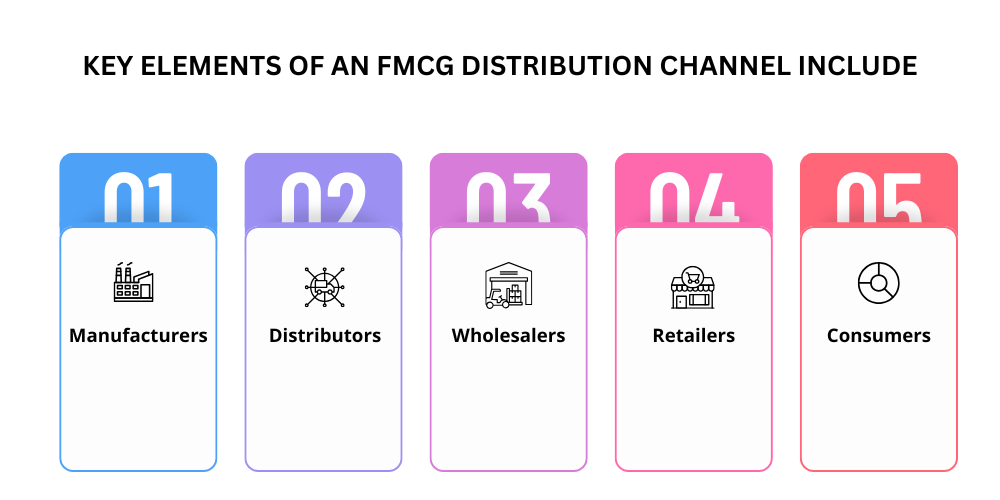
Key elements of an FMCG distribution channel include:
-
Manufacturers: Produce FMCG products and supply them to distributors, wholesalers, retailers, or consumers through different distribution models.
-
Distributors: Purchase products from manufacturers and ensure efficient product movement across assigned territories and retail markets.
-
Wholesalers: Buy products in bulk and supply smaller quantities to retailers, helping brands expand their market reach efficiently.
-
Retailers: Sell FMCG products directly to consumers through grocery stores, supermarkets, convenience stores, and e-commerce platforms.
-
Consumers: The final buyers whose purchasing behavior, preferences, and demand influence the entire FMCG distribution network.
How Does an FMCG Distribution Channel Work?
An FMCG distribution channel connects manufacturers with consumers through a network of distributors, wholesalers, retailers, and sales representatives. The process begins when manufacturers produce and supply goods to distributors or wholesalers. These channel partners then distribute products to retail outlets, supermarkets, convenience stores, and other sales channels where consumers can purchase them.
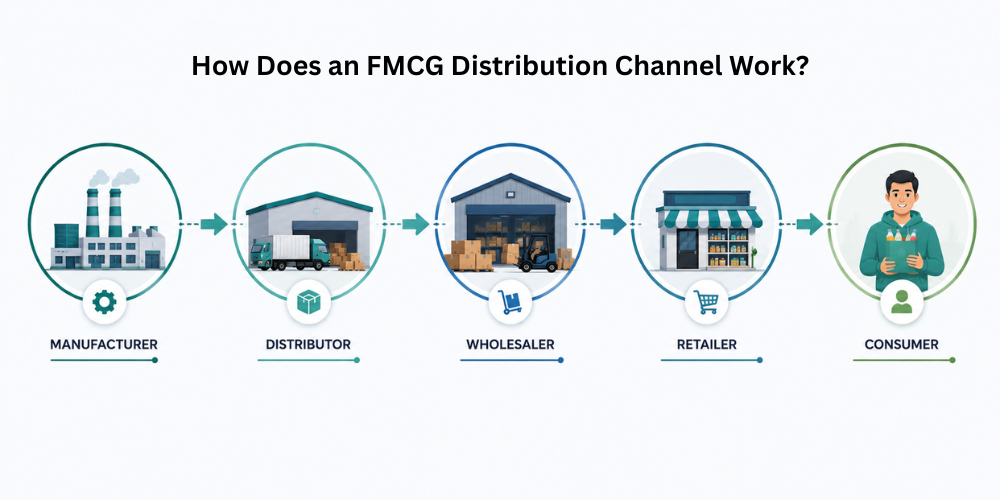
The typical flow of an FMCG distribution network is:
Manufacturer → Distributor → Wholesaler → Retailer → Consumer
Depending on the business model, some brands may use a shorter route:
Manufacturer → Distributor → Retailer → Consumer
Others may sell directly through company-owned stores, e-commerce platforms, or direct-to-consumer (D2C) channels.
An effective distribution channel ensures that the right products are available at the right outlets, at the right time, and in the required quantities. Businesses must continuously monitor inventory levels, product availability, retailer orders, outlet coverage, and sales performance to keep the distribution network efficient.
Strong coordination between manufacturers, distributors, and field sales teams also helps businesses improve market reach, product availability, order fulfillment, and retail execution. By combining efficient distribution processes with real-time sales data, FMCG companies can identify demand patterns, reduce stockouts, and respond faster to changes in the market.
Key Components of an FMCG Distribution Channel
The FMCG distribution process involves several key components:
- Manufacturer/Producer: The company that produces the FMCG products. Manufacturers are responsible for the production of goods in bulk.
- Wholesalers: These are the intermediaries who buy goods from manufacturers in large quantities. They act as a bridge between manufacturers and retailers, buying products in bulk and selling them in smaller quantities to retailers or distributors.
- Distributors: Distributors are responsible for getting FMCG products from wholesalers to retail outlets. They usually handle the logistics, inventory, and transportation to ensure that goods reach retailers or sometimes directly to consumers.
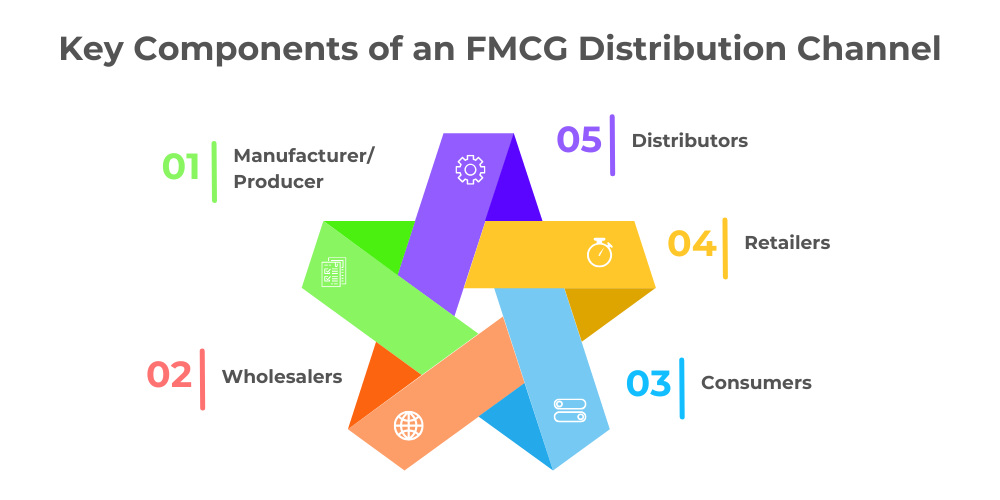
- Retailers: Retailers are businesses that sell FMCG products directly to consumers. These could be supermarkets, convenience stores, online platforms, or even local stores.
- Consumers: The final link in the distribution channel, consumers purchase FMCG products from retailers and use them.
Each stage in the distribution chain is essential to ensuring products are available to end consumers, and delays or inefficiencies in one link can lead to missed sales opportunities.
Types of FMCG Distribution Channels
FMCG companies can choose from several distribution channel types depending on their products, market reach, and business goals. Below are the most commonly used distribution channels in the FMCG sector:
1. Direct Distribution Channels
In a direct distribution channel, FMCG companies sell their products directly to consumers without using intermediaries like wholesalers or retailers. This is commonly done through company-owned stores, e-commerce websites, or direct sales teams.
Direct distribution provides several advantages:
-
Control over branding and pricing: Manufacturers have greater control over how their products are marketed and priced.
-
Faster market response: FMCG companies can quickly adjust their pricing, inventory, and marketing strategies without relying on intermediaries.
-
Higher profit margins: By cutting out the middlemen, businesses can potentially increase profit margins.
Examples of Direct Distribution Channels:
-
Online Sales: Direct-to-consumer e-commerce websites, such as Amazon or company-specific stores like Nestlé’s or Coca-Cola’s websites, are perfect examples of direct distribution.
-
Brand-Owned Stores: Companies like Apple and Nike, which sell their FMCG products directly through their own retail stores, are examples of businesses utilizing direct distribution.
2. Indirect Distribution Channels
An indirect distribution channel involves multiple intermediaries, including wholesalers, distributors, and retailers, who help deliver products to the final consumer. In the FMCG industry, indirect distribution is the most common method due to the vast reach it provides.
Indirect distribution is ideal for companies looking to expand their market presence across different regions without investing in infrastructure or retail stores. However, it does come with challenges such as loss of control over pricing, inventory management, and branding.
Examples of Indirect Distribution Channels:
-
Wholesalers: Wholesalers purchase products from manufacturers and sell them in bulk to retailers or other businesses.
-
Distributors: Distributors are often specialized in logistics and sales, ensuring products reach specific retail outlets.
-
Retailers: Large retailers like Walmart, Tesco, or small local convenience stores play a significant role in indirect distribution by providing easy access to consumers.
3. Multi-Channel Distribution
Multi-channel distribution combines both direct and indirect channels, allowing companies to sell products through multiple touchpoints. This approach provides flexibility and reaches different types of consumers who prefer buying products through different mediums.
An FMCG company using multi-channel distribution may sell products through both retail stores and online platforms while also having direct sales teams or exclusive partnerships with wholesalers. By doing so, businesses can expand their market reach and increase sales opportunities.
Examples of Multi-Channel Distribution:
-
Coca-Cola: Coca-Cola sells its products through retail outlets, its own vending machines, and online platforms, creating a multi-channel distribution strategy.
-
Unilever: Unilever distributes products through supermarkets, convenience stores, direct-to-consumer platforms, and wholesalers.
4. Exclusive Distribution
Exclusive distribution involves limiting the number of outlets through which FMCG products are sold. This model is commonly used by premium or high-end FMCG brands that want to maintain control over their brand image and customer experience.
In this model, manufacturers partner with select retailers or distributors, offering exclusivity in exchange for a commitment to high-quality service and better shelf space. This is a less common distribution model in the FMCG sector due to the nature of mass-market products but can be used for luxury or niche goods.
Examples of Exclusive Distribution:
-
Luxury Goods: Certain premium FMCG brands, like high-end perfumes or cosmetics, use exclusive distribution to maintain a premium market position.
-
Specialty Stores: Some FMCG products may be available only in exclusive retail outlets or specific geographic areas.
Traditional Trade vs Modern Trade Distribution
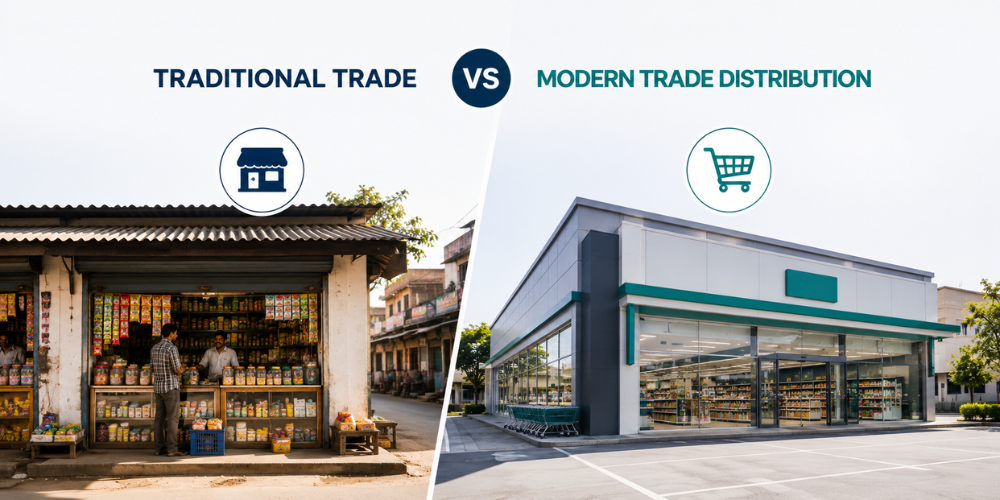
FMCG brands typically distribute their products through different retail channels, with traditional trade and modern trade being two of the most important. Understanding the difference between these channels helps businesses develop the right distribution strategy and manage their sales operations effectively.
Traditional Trade
Traditional trade includes small and independently operated retail outlets such as kirana stores, neighborhood shops, local grocery stores, and small retailers. These outlets usually depend on distributors and field sales representatives for product supply and order placement.
Field sales teams play an important role in traditional trade by visiting retailers, collecting orders, checking stock availability, and maintaining retailer relationships. Effective outlet coverage, beat planning, route planning, and retailer management are essential for maintaining consistent product availability.
Modern Trade
Modern trade includes organized retail formats such as supermarkets, hypermarkets, department stores, and large retail chains. These businesses generally operate through centralized purchasing systems and structured supply chains.
Modern trade often involves larger order volumes, standardized pricing, centralized inventory management, and formal agreements between brands and retailers. FMCG companies typically need strong inventory planning, supply chain coordination, merchandising, and retail execution to succeed in this channel.
Key Difference
The main difference is that traditional trade relies heavily on a broad network of distributors, wholesalers, and field sales representatives, while modern trade operates through organized retail chains and centralized purchasing processes.
Many FMCG companies use a combination of both channels to maximize distribution reach, market penetration, and sales growth. Managing both effectively requires businesses to understand the unique requirements of each channel and maintain strong visibility across their entire distribution network.
Key Factors Affecting FMCG Distribution Channels
The success of an FMCG distribution channel depends on various factors. Understanding these variables will help businesses optimize their channel strategy and improve their distribution effectiveness.
1. Market Demand
The type of FMCG distribution channel chosen will depend heavily on market demand and consumer preferences. For instance, if a company is targeting urban consumers who prefer shopping online, an e-commerce-focused distribution channel may be ideal. Conversely, a business targeting rural consumers might benefit from traditional retail outlets and local distributors.
2. Product Type
Different types of FMCG products require different distribution strategies. For instance, perishable goods like food or beverages may need a more efficient distribution system, such as refrigerated trucks and fast logistics, to avoid spoilage. On the other hand, non-perishable goods like cleaning supplies can have a more flexible distribution process.
3. Geographical Reach
Companies need to evaluate their distribution channels based on the geographical reach required. A local business might prefer selling directly to consumers or using local retailers and wholesalers. In contrast, a global FMCG company will need a well-organized network of distributors and retailers to ensure worldwide availability.
4. Cost of Distribution
Distribution costs can significantly impact a company’s profitability. Businesses must assess the financial implications of different distribution strategies, from warehousing and transportation costs to intermediary commissions. A combination of direct and indirect channels often helps balance costs and benefits.
5. Technology and Automation
In today’s digital age, technology plays a significant role in optimizing FMCG distribution. From inventory management to order fulfillment, technology can streamline processes, enhance efficiency, and reduce errors. Companies that leverage technologies like Warehouse Management Systems (WMS), Enterprise Resource Planning (ERP), and Supply Chain Management (SCM) software can improve their distribution channel effectiveness.
Challenges in FMCG Distribution
Although FMCG distribution channels are essential for business success, several challenges can hinder the effectiveness of these channels:
1. Supply Chain Disruptions
Unexpected events like natural disasters, political instability, or transportation delays can disrupt FMCG distribution channels, affecting logistics, delivery schedules, and supply chain optimization, potentially causing stock shortages, higher costs, and reduced customer satisfaction in fast-moving consumer goods.
2. Inventory Management
Efficient FMCG distribution requires maintaining optimal inventory levels across manufacturers, distributors, and retailers. Poor inventory management can lead to stockouts or overstocking, undermining supply chain optimization, increasing costs, and impacting the overall effectiveness of FMCG logistics and distribution strategies.
3. Channel Conflict
Operating multiple FMCG distribution channels can create conflicts between manufacturers, wholesalers, and retailers over pricing, market territories, or product availability. Proper coordination is essential to prevent disruptions in FMCG logistics and maintain smooth supply chain operations.
4. High Competition
In the highly competitive FMCG sector, companies must optimize distribution strategies and logistics operations. Efficient, cost-effective FMCG distribution channels ensure timely delivery, strong market presence, customer satisfaction, and sustainable growth in fast-moving consumer goods.
Role of Technology in FMCG Logistics
Technology has become a cornerstone of modern FMCG distribution, transforming how products move from manufacturers to end consumers. In an industry where speed, accuracy, and efficiency directly impact profitability, technology-driven logistics solutions offer companies a competitive edge.
Key technological solutions in FMCG logistics include:
-
Warehouse Management Systems (WMS):
WMS software enables FMCG companies to monitor inventory in real time, optimize storage space, and manage order picking and packing efficiently. For instance, automated shelving systems combined with a warehouse security camera system can help companies monitor inventory movement, prevent theft, and ensure products are dispatched accurately and quickly, especially for high-demand items like beverages and packaged foods. -
Enterprise Resource Planning (ERP) Systems:
ERP platforms integrate all business processes, including inventory, procurement, sales, and finance. By providing a centralized system for data, ERP solutions help FMCG companies plan production according to demand, minimize stockouts, and reduce unnecessary warehouse holding costs. -
Automated Inventory Tracking and IoT Sensors:
RFID tags and IoT-enabled devices allow FMCG companies to track products throughout the supply chain. Real-time monitoring of stock levels, expiration dates, and storage conditions ensures that perishable goods like dairy, meat, or frozen foods are delivered fresh and in optimal condition. -
Mobile Apps for Field Teams and Distributors:
Mobile applications empower sales teams and distributors to place and track orders instantly, report stock shortages, and update delivery statuses in real time. This reduces communication delays and ensures faster replenishment for retail outlets, thereby improving customer satisfaction. -
Real-Time Analytics and Data-Driven Decisions:
Advanced analytics tools help FMCG companies forecast demand, plan distribution routes, and identify supply chain bottlenecks. For example, by analyzing sales data across regions, a company can prioritize high-demand areas and optimize its delivery routes to reduce transportation costs and delivery times.
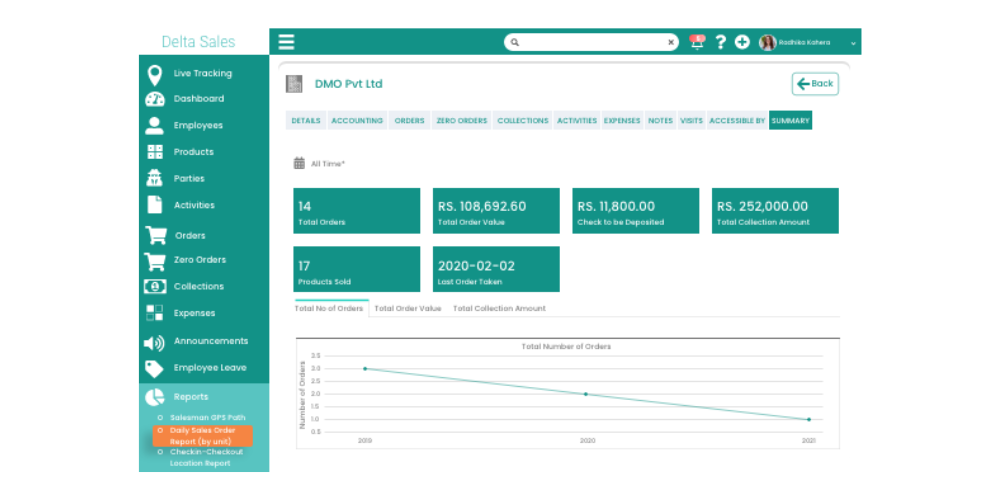
By adopting these technologies, FMCG companies can achieve supply chain optimization, streamline logistics operations, minimize operational costs, and enhance overall distribution efficiency. In a fast-moving sector, technology not only improves operational performance but also helps businesses respond swiftly to market changes and consumer demands.
How Field Sales Automation Improves FMCG Distribution
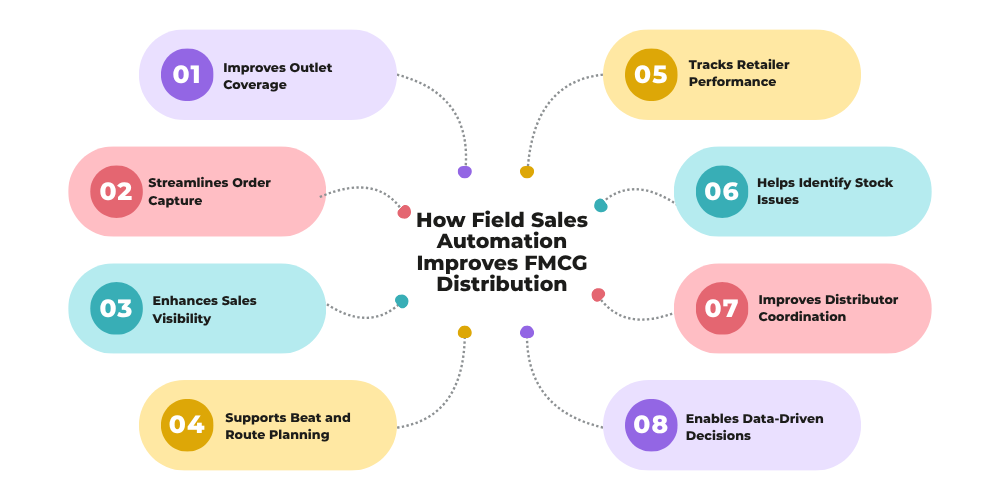
Managing a large FMCG distribution network can become difficult when businesses rely on manual reporting, spreadsheets, and disconnected communication. Field sales automation helps businesses improve distribution efficiency by giving managers better visibility into market activities, retailer visits, orders, and sales performance.
Key ways field sales automation can improve FMCG distribution include:
-
Improves Outlet Coverage: Businesses can plan and monitor retailer visits, helping sales representatives cover more targeted outlets and improve market reach.
-
Streamlines Order Capture: Sales representatives can record retailer orders directly from the market, reducing manual errors and speeding up the order management process.
-
Enhances Sales Visibility: Managers can monitor field activities, sales visits, and order data in real time, providing better visibility into distribution performance.
-
Supports Beat and Route Planning: Sales teams can organize daily routes and retailer visits more efficiently, reducing unnecessary travel and improving sales productivity.
-
Tracks Retailer Performance: Businesses can monitor order frequency, sales activity, and retailer engagement to identify high-performing and underperforming outlets.
-
Helps Identify Stock Issues: Regular outlet visits and real-time sales reporting can help businesses identify stockouts, low product availability, and slow-moving products earlier.
-
Improves Distributor Coordination: Centralized sales and retailer data helps manufacturers, distributors, and sales teams stay aligned on orders, market demand, and product availability.
-
Enables Data-Driven Decisions: Sales dashboards and analytics help managers identify distribution gaps, evaluate territory performance, and make informed decisions about inventory and market coverage.
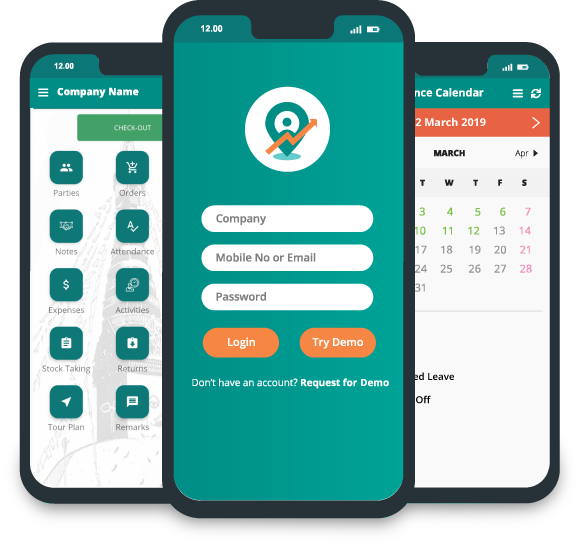
By using field sales automation software, FMCG companies can connect their distribution strategy with real-time market activities. Solutions such as Delta Sales App help businesses track sales representative activities, retailer visits, outlet coverage, order capture, and field sales performance, enabling better control over their distribution network and improving overall sales force productivity.
Optimizing FMCG Distribution Channels for Success
To remain competitive in the fast-moving FMCG market, companies must continuously optimize their FMCG distribution channels. Effective distribution strategies enhance supply chain efficiency, improve customer satisfaction, and ensure products reach the market faster. Here are key strategies for success:
1. Leverage Technology for FMCG Logistics
Adopting advanced technology solutions such as automated warehouses, mobile ordering apps, and real-time tracking systems can streamline FMCG logistics, optimize inventory management, and reduce operational inefficiencies across the supply chain.
2. Focus on Customer Experience
Providing a seamless shopping experience across both online and offline channels ensures that FMCG products are easily accessible. Optimizing FMCG distribution channels to match consumer preferences boosts satisfaction, loyalty, and repeat purchases.
3. Improve Logistics and Delivery Speed
Efficient FMCG logistics and timely delivery are critical for maintaining a competitive edge. Partnering with reliable distributors and leveraging advanced route planning and tracking systems ensures products are delivered accurately and on schedule.
4. Build Strong Relationships with Intermediaries
Fostering strong partnerships with wholesalers, distributors, and retailers enhances collaboration across FMCG distribution channels. Effective communication and support reduce supply chain disruptions and strengthen overall distribution performance.
5. Expand Channels Strategically
Carefully expanding FMCG distribution channels into emerging markets or untapped regions maximizes market reach. Strategic channel growth ensures wider product availability, supports revenue growth, and strengthens brand presence.
By implementing these FMCG distribution strategies, companies can achieve greater supply chain optimization, improve operational efficiency, and maintain a competitive advantage in the rapidly evolving fast-moving consumer goods market.

Conclusion
An efficient FMCG distribution channel is essential for improving market reach, product availability, customer satisfaction, and long-term business growth. By choosing the right distribution model, optimizing supply chain management, and using technology to improve distribution visibility, FMCG companies can streamline operations and respond faster to changing market demands.
Whether you rely on direct, indirect, multi-channel, or exclusive distribution, continuously monitoring inventory management, outlet coverage, retailer performance, and sales activities can help strengthen your distribution network and improve overall efficiency.
Ready to improve your FMCG distribution and gain better visibility into your field sales operations?
Book a demo of Delta Sales App today to discover how you can track retailer visits, monitor outlet coverage, capture orders from the market, and manage your sales team more efficiently.