
Field Force Applications: Smarter Way to Manage Your Mobile Workforce

Let’s face it, managing a field force is no walk in the park. Whether you’re overseeing a sales team, delivery personnel, or service technicians, keeping track of who’s doing what, where, and how efficiently is a logistical nightmare. Enter Field Force Applications, the digital superheroes that are quietly revolutionizing how businesses operate in the real world.
But wait, there’s more! We’re not just talking about basic tracking tools here. We’re diving into the world of Field Force Automation, where technology meets strategy to create seamless, efficient, and downright impressive workflows. And because we like to keep things interesting, we’ll also introduce you to a game-changer in this spac, Delta Sales App.
So, grab a cup of coffee (or tea, if that’s your vibe), and let’s explore how field force applications and automation are transforming businesses, one GPS pin at a time.
What Exactly is a Field Force Application?
Imagine this: You’re the manager of a sales team spread across multiple cities. Your team is out there, meeting clients, closing deals, and making magic happen. But how do you know if they’re actually where they’re supposed to be? Are they following up with leads? Are they maximizing their time?
This is where a Field Force Application comes in. It’s a software solution designed to manage, track, and optimize the activities of your field workforce. Think of it as your eyes and ears on the ground, providing real-time insights into what’s happening in the field.
From tracking location and attendance to managing tasks and generating reports, these applications are the ultimate multitaskers. They’re not just tools; they’re your business’s best friend.
Why Field Force Applications Are Essential for Modern Businesses
In today’s hyper-competitive and fast-moving business environment, managing a mobile workforce without technology is no longer sustainable. Whether you operate in FMCG, pharma, logistics, or service industries, your field teams are the backbone of your operations and how effectively you manage them directly impacts your revenue and customer experience.
This is where field force applications become essential.
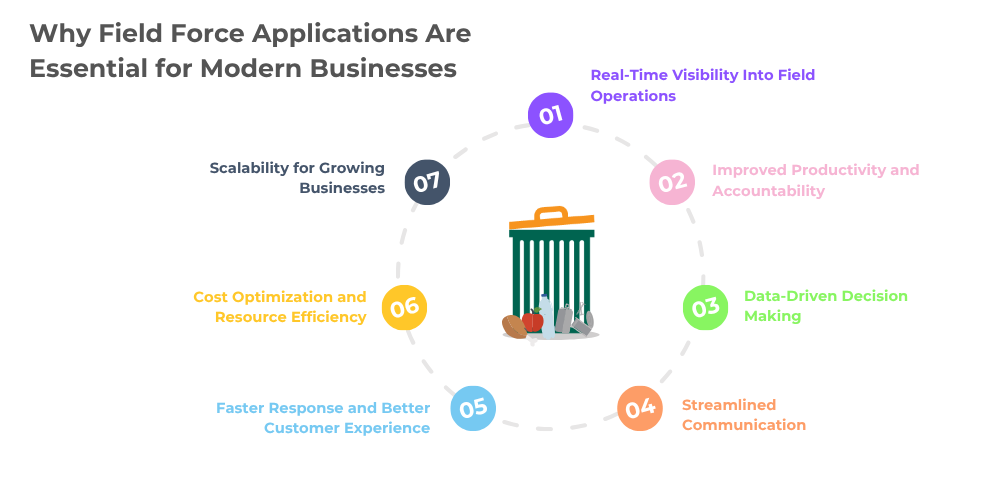
1. Real-Time Visibility Into Field Operations
One of the biggest challenges businesses face is the lack of transparency in field activities. Without a proper system, managers rely on delayed reports or manual updates.
Field force applications eliminate this gap by offering:
- Live GPS tracking of field employees:
Track field employees in real time using GPS, ensuring visibility, accountability, and optimized daily operations. - Real-time attendance and check-ins:
Record attendance instantly with geo-tagged check-ins, reducing manual errors and ensuring accurate workforce management efficiency. - Instant activity updates:
Capture and update field activities instantly, enabling managers to monitor progress and make faster decisions.
This ensures that managers always know who is working, where they are, and what they are doing, enabling faster and smarter decision-making.
2. Improved Productivity and Accountability
Manual processes often lead to inefficiencies, missed visits, and unproductive work hours.
With a field sales force management app it:
- Tasks are assigned digitally:
Assign tasks digitally to field teams, ensuring clarity, faster execution, and seamless coordination across operations. - Visit plans are tracked:
Track daily visit plans efficiently, ensuring field staff follow schedules and maximize customer engagement opportunities. - Performance is monitored in real time:
Monitor team performance in real time with actionable insights to improve productivity and overall efficiency.
This creates a culture of accountability where employees stay focused and aligned with business goals. As a result, businesses experience higher productivity and better output from field teams.
3. Data-Driven Decision Making
Modern businesses thrive on data not assumptions.
Field force applications collect valuable data such as:
- Sales visits:
Track and record all sales visits to measure productivity, coverage, and overall field team performance effectively. - Customer interactions:
Capture every customer interaction to understand behavior, improve relationships, and deliver more personalized service experiences. - Travel routes:
Monitor travel routes to optimize movement, reduce time wastage, and improve overall field workforce efficiency. - Order history:
Maintain complete order history for better analysis, repeat sales opportunities, and improved customer relationship management.
This data is transformed into actionable insights through dashboards and reports, helping businesses:
- Identify performance gaps
- Optimize sales strategies
- Improve territory planning
4. Streamlined Communication
Communication gaps between field teams and managers can lead to confusion, delays, and missed opportunities.
Field force applications solve this by enabling:
- Instant notifications:
Send instant notifications to field teams for updates, ensuring quick responses and improved operational coordination. - In-app messaging:
Enable seamless in-app messaging between teams, reducing communication gaps and improving collaboration across field operations. - Real-time updates:
Provide real-time updates on tasks and activities, keeping managers informed and teams aligned with business goals.
This ensures seamless coordination between on-ground teams and office staff, reducing dependency on calls, emails, or manual follow-ups.
5. Faster Response and Better Customer Experience
Customers today expect quick responses and efficient service.
With real-time tracking and updates, businesses can:
- Provide accurate ETAs:
Deliver accurate ETAs using real-time tracking, improving planning, transparency, and overall customer satisfaction levels. - Respond quickly to service requests:
Enable faster response to service requests, reducing delays and enhancing customer trust and service efficiency. - Ensure timely deliveries and visits:
Ensure timely deliveries and scheduled visits, improving reliability, customer experience, and overall operational performance.
This significantly enhances the overall customer experience, leading to better retention and brand loyalty.
6. Cost Optimization and Resource Efficiency
Inefficient routing, unnecessary travel, and manual errors increase operational costs.
Field force applications help businesses:
- Optimize travel routes:
Optimize travel routes using smart algorithms to reduce distance, save time, and increase daily field productivity. - Reduce fuel and time wastage:
Minimize fuel consumption and time wastage by planning efficient routes and eliminating unnecessary travel activities. - Minimize manual errors:
Reduce manual errors through automation, ensuring accurate data entry, reporting, and improved operational efficiency overall.
This leads to lower operational costs and better resource utilization, making your business more profitable.
7. Scalability for Growing Businesses
As your business grows, managing a larger field team manually becomes nearly impossible.
Field force applications are built to scale, allowing you to:
- Manage multiple locations:
Easily manage operations across multiple locations with centralized control and real-time visibility into field activities. - Handle large teams efficiently:
Efficiently manage large field teams with structured workflows, task allocation, and performance tracking tools. - Maintain consistency in operations:
Ensure consistent processes and standardized workflows across teams, improving efficiency and maintaining service quality everywhere.
This makes them a long-term solution for sustainable business growth.
Key Features of Field Force Applications
To truly understand the power of field force applications, it’s important to explore the features that make them indispensable for modern businesses.
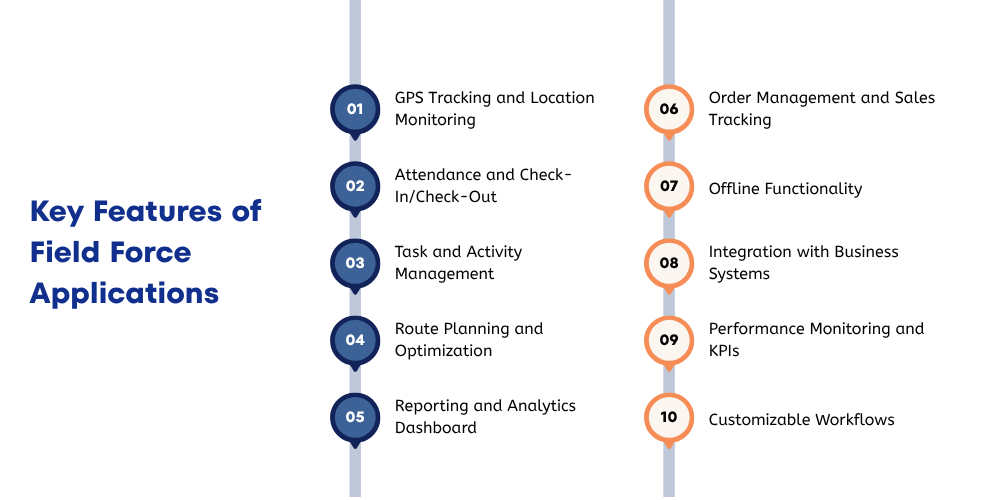
1. GPS Tracking and Location Monitoring
This is one of the core features of any field force application.
It allows managers to:
- Track employee location in real time:
Monitor employee movements in real time using GPS to improve visibility, accountability, and operational efficiency. - Verify visit authenticity:
Ensure visits are genuine with geo-tagging and timestamps, eliminating fake check-ins and improving reporting accuracy. - Monitor travel routes:
Track travel routes to analyze efficiency, reduce unnecessary travel, and optimize overall field workforce performance effectively.
This ensures complete transparency and eliminates guesswork.
2. Attendance and Check-In/Check-Out
Managing attendance for field employees can be challenging.
Field force applications simplify this with:
- Geo-tagged attendance:
Capture attendance with location tagging to ensure accuracy, prevent fraud, and improve workforce tracking transparency. - Mobile-based check-ins:
Enable employees to check in via mobile devices, simplifying attendance tracking and improving real-time workforce visibility. - Automated timesheets:
Generate timesheets automatically based on activities, reducing manual effort and ensuring accurate work hour tracking consistently.
This ensures accurate tracking of work hours without manual intervention.
3. Task and Activity Management
Efficient task management is critical for field operations.
With this feature, businesses can:
- Assign tasks instantly:
Assign tasks instantly to field teams, ensuring quick execution, clear instructions, and improved operational efficiency. - Set priorities and deadlines:
Define task priorities and deadlines clearly, helping teams focus on important activities and complete work on time. - Track task completion:
Monitor task completion in real time, ensuring accountability, timely execution, and better overall field team performance.
This helps teams stay organized and ensures timely execution of activities.
4. Route Planning and Optimization
Unplanned routes lead to wasted time and increased costs.
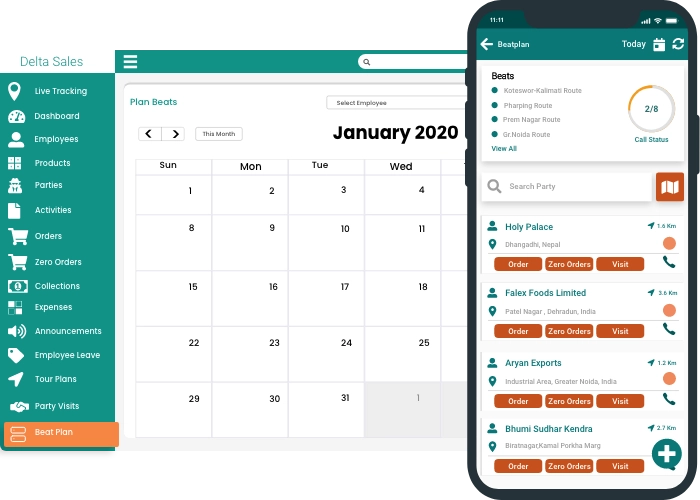
Field force applications use smart algorithms to:
- Suggest optimal routes:
Suggest the most efficient routes using smart algorithms to minimize distance, save time, and improve productivity. - Reduce travel time:
Reduce travel time by optimizing routes and schedules, allowing field teams to complete more tasks daily. - Increase daily visit efficiency:
Increase daily visit efficiency by planning smarter routes, enabling more customer visits and better field performance.
This directly boosts productivity and reduces operational expenses.
5. Reporting and Analytics Dashboard
Data is only useful when it is easy to understand and act upon.
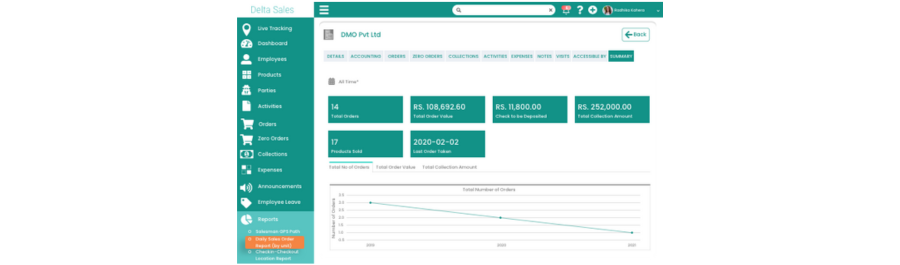
These applications provide:
- Real-time dashboards:
Access real-time dashboards to monitor activities, track performance, and make quick data-driven business decisions effectively. - Performance reports:
Generate detailed performance reports to evaluate team productivity, identify gaps, and improve overall operational efficiency. - Sales and activity insights:
Gain valuable sales and activity insights to understand trends, optimize strategies, and drive better business outcomes.
Managers can quickly analyze data and make informed decisions to improve outcomes.
6. Order Management and Sales Tracking
For sales-driven organizations, this feature is crucial.
Field force applications enable:
- On-the-go order placement:
Enable field teams to place orders instantly from anywhere, improving speed, accuracy, and overall sales efficiency. - Real-time order tracking:
Track orders in real time to ensure transparency, reduce delays, and keep customers informed throughout delivery. - Sales performance monitoring:
Monitor sales performance continuously to evaluate results, identify trends, and improve overall revenue generation strategies.
This streamlines the entire sales process and reduces delays.
7. Offline Functionality
Field teams often work in areas with limited internet connectivity.
A good field force application ensures:
- Offline data entry:
Allow field teams to capture data offline, ensuring uninterrupted work even in low or no connectivity. - Automatic sync when online:
Automatically sync stored data once online, ensuring accuracy, consistency, and real-time system updates without manual effort. - Continuous workflow without disruption:
Maintain continuous workflow without disruptions, enabling teams to stay productive regardless of network availability or location constraints.
8. Integration with Business Systems
To maximize efficiency, field force applications integrate with:
- CRM systems:
Integrate with CRM systems to manage customer data, track interactions, and improve relationship management effectively. - ERP platforms:
Connect with ERP platforms to streamline operations, synchronize data, and enhance overall business process efficiency. - Inventory management tools:
Integrate inventory tools to track stock levels, manage supply efficiently, and avoid stockouts or overstock situations.
This creates a unified ecosystem where all business operations are connected.
9. Performance Monitoring and KPIs
Tracking performance is essential for growth.
Managers can monitor:
- Daily activity levels: Monitor daily field activities, visits, check-ins, and task completion to ensure consistent performance tracking.
- Sales targets vs achievements: Compare assigned sales targets with actual achievements to identify gaps and improve overall sales performance.
- Employee productivity: Evaluate employee productivity using real-time data, task efficiency, and output to drive better performance outcomes.
This helps in identifying top performers and areas that need improvement.
10. Customizable Workflws
Every business has unique requirements.
Field force applications offer customization options such as:
- Role-based access: Control data visibility and permissions by assigning access levels based on user roles and responsibilities.
- Custom forms and reports: Create tailored forms and reports to capture relevant data and generate actionable business insights easily.
- Industry-specific workflows: Design workflows aligned with industry requirements to streamline processes and ensure efficient field operations consistently.
This ensures the software adapts to your business not the other way around.
What is Field Force Automation?
Field force automation refers to the use of technology to automate and optimize field operations. It’s about leveraging tools like AI, machine learning, and IoT to create a seamless, efficient workflow.
Think of it as putting your field force on autopilot. From scheduling and route optimization to performance analytics and predictive maintenance, automation handles the heavy lifting so your team can focus on what they do best, getting the job done.

Benefits of Field Force Automation
- Smarter Scheduling
Automation tools can analyze data to create optimized schedules based on factors like location, traffic, and workload. This means fewer wasted hours and more time spent on productive tasks. - Predictive Analytics
By analyzing historical data, automation tools can predict future trends and potential issues. This allows you to proactively address challenges before they become problems. - Cost Savings
Automation reduces manual errors, minimizes downtime, and optimizes resource allocation. The result? Significant cost savings for your business. - Scalability
As your business grows, so does your field force. Automation makes it easy to scale operations without compromising efficiency or quality. - Enhanced Customer Experience
With faster response times, accurate ETAs, and personalized service, automation helps you deliver a superior customer experience.
How Field Force Applications and Automation Work Together?
Field force applications and automation are like peanut butter and jelly, they’re great on their own, but together, they’re unstoppable.
Here’s how they complement each other:
- Data Collection vs. Data Analysis: Field force applications collect data, while automation tools analyze and act on that data.
- Task Execution vs. Task Optimization: Applications help your team execute tasks, while automation ensures those tasks are optimized for maximum efficiency.
- Real-Time Tracking vs. Predictive Insights: Applications provide real-time updates, while automation offers predictive insights to guide future actions.
Together, they create a powerful ecosystem that drives business growth and success.
Common Challenges Without Field Force Applications
In the absence of a dedicated field force management system, organizations especially in FMCG, pharma, and retail, struggle with operational inefficiencies, poor visibility, and inconsistent execution. Below is a detailed breakdown of the most critical challenges businesses face when they rely on manual processes or disconnected tools.
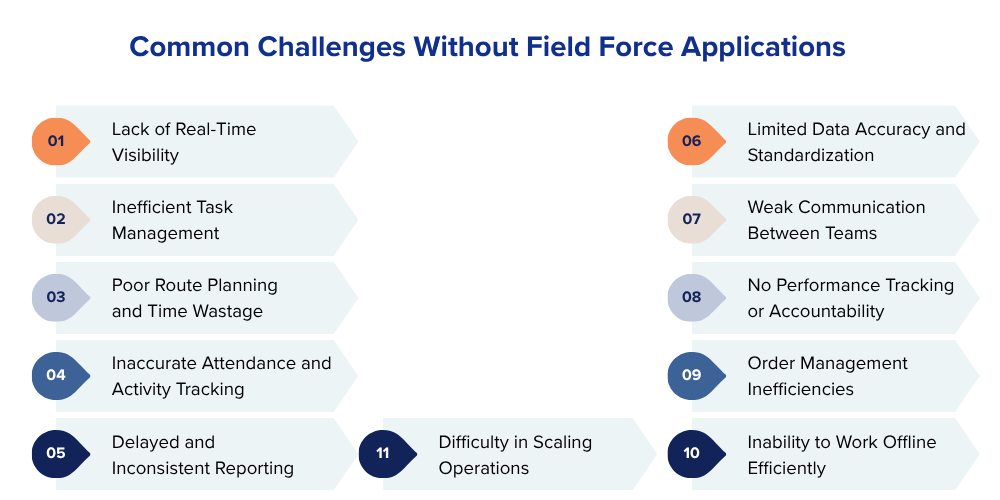
1. Lack of Real-Time Visibility
Without a centralized field force application, managers operate in the dark. They have no accurate way to track where their sales representatives are, which outlets they’ve visited, or what activities they’ve completed.
This leads to:
- Blind decision-making based on assumptions rather than data
- Delayed response to on-ground issues
- Inability to monitor field productivity in real time
As a result, businesses lose control over their field operations and struggle to maintain execution standards.
2. Inefficient Task Management
Manual task allocation, through calls, messages, or spreadsheets creates confusion and inefficiencies. There is no structured way to assign, prioritize, or track tasks.
Common issues include:
- Missed or duplicated tasks
- Lack of clarity on responsibilities
- No tracking of task completion status
This directly impacts field productivity and reduces overall team efficiency.
3. Poor Route Planning and Time Wastage
Without intelligent route optimization, field representatives often follow inefficient travel paths, leading to unnecessary time and fuel consumption.
Consequences:
- Fewer customer visits per day
- Increased operational costs
- Reduced coverage of target areas
Inefficient routing significantly limits the potential of your field force.
4. Inaccurate Attendance and Activity Tracking
Traditional attendance methods such as manual check-ins or paper logs are prone to manipulation and errors.
Challenges include:
- Buddy punching or fake check-ins
- No geo-verification of location
- Difficulty in tracking actual working hours
This creates accountability issues and makes performance evaluation unreliable.
5. Delayed and Inconsistent Reporting
Without mobile-based reporting tools, field data is often collected manually and submitted at the end of the day, or worse, at the end of the week.
This leads to:
- Delayed insights
- Incomplete or inaccurate data
- Difficulty in analyzing trends and performance
By the time reports reach management, the information is often outdated and less actionable.
6. Limited Data Accuracy and Standardization
Manual data entry across multiple formats (Excel sheets, WhatsApp messages, emails) leads to inconsistencies and errors.
Problems include:
- Duplicate or missing data
- Lack of standardized reporting formats
- Difficulty in consolidating and analyzing data
Poor data quality ultimately impacts strategic decision-making.
7. Weak Communication Between Teams
Field teams and managers often rely on fragmented communication channels, which leads to misalignment and delays.
Common issues:
- Instructions not reaching field reps on time
- No centralized communication history
- Lack of coordination between sales, distribution, and management teams
This results in execution gaps and missed opportunities.
8. No Performance Tracking or Accountability
Without automated tracking systems, measuring individual and team performance becomes extremely difficult.
Challenges:
- No visibility into KPIs like daily visits, order value, or conversion rates
- Difficulty in identifying top and underperformers
- Lack of accountability among field staff
This prevents organizations from optimizing team performance and driving growth.
9. Order Management Inefficiencies
When orders are taken manually, errors and delays are inevitable.
Typical problems:
- Incorrect order entries
- Delayed order processing
- No real-time stock visibility
This affects customer satisfaction and disrupts the supply chain.
10. Inability to Work Offline Efficiently
In many regions, especially rural or remote areas, internet connectivity is unreliable. Without offline-enabled systems, field operations come to a halt.
Issues include:
- Incomplete data capture
- Lost information
- Interrupted workflows
A lack of offline capability severely limits field productivity.
11. Difficulty in Scaling Operations
As businesses grow, managing a larger field force becomes increasingly complex without automation.
Scaling challenges:
- Increased dependency on manual processes
- Higher chances of errors and inefficiencies
- Lack of centralized control across regions
This restricts business expansion and operational scalability.
Delta Sales App the Right Field Force Application
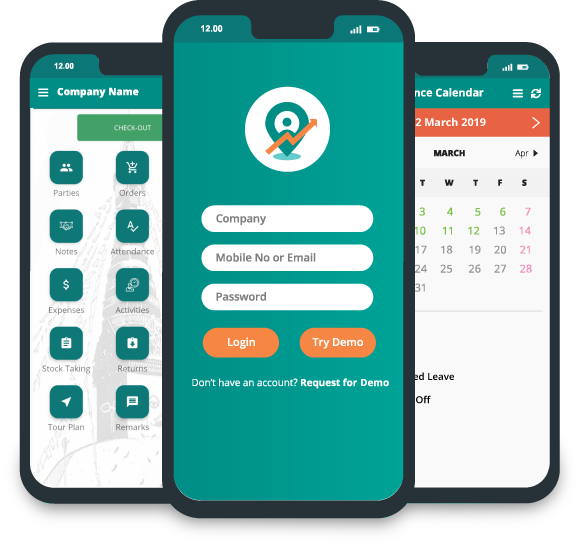
Delta Sales App is a cutting-edge field force management solution designed to simplify and streamline your field operations. Whether you’re managing a sales team, delivery personnel, or service technicians, this app has got you covered.
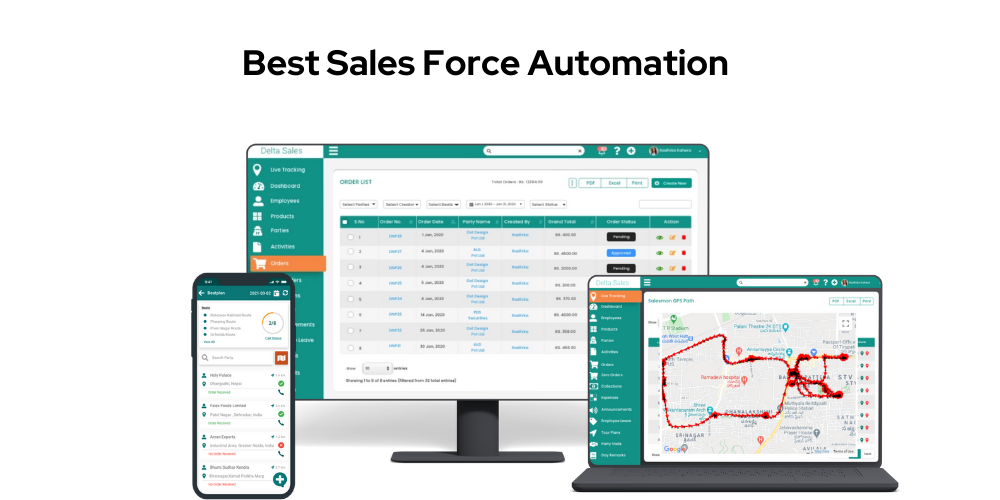
Key Features of Delta Sales App
- Real-Time Tracking
Know exactly where your team is and what they’re doing with real-time GPS tracking. - Task Management
Assign tasks, set deadlines, and monitor progress all from a single, user-friendly dashboard. - Route Optimization
Save time and fuel with intelligent route optimization that ensures your team takes the most efficient path. - Performance Analytics
Get detailed insights into your team’s performance with comprehensive analytics and reporting tools. - Seamless Integration
Delta Sales App integrates effortlessly with your existing systems, making implementation a breeze.
Why Choose Delta Sales App?
- User-Friendly Interface: No complicated setups or steep learning curves. Delta Sales App is designed to be intuitive and easy to use.
- Customizable Solutions: Every business is unique, and Delta Sales App offers customizable features to meet your specific needs.
- Affordable Pricing: High-quality features at a price that won’t break the bank.
In a world where efficiency is king, Delta Sales App is the crown jewel of field force management.
The Future of Field Force Management
As technology continues to evolve, so too will field force applications and automation. We’re talking about advancements like AI-driven decision-making, augmented reality for remote assistance, and even drone-powered deliveries. The possibilities are endless, and the future is bright.
But one thing is certain, businesses that embrace these tools today will be the leaders of tomorrow.
Final Thoughts
Field force applications and automation have moved from being optional add-ons to mission-critical systems for modern businesses. In an environment where speed, accuracy, and real-time decision-making define success, relying on manual processes simply isn’t sustainable. From live tracking and streamlined task management to intelligent route planning and predictive insights, these solutions are fundamentally reshaping how field operations are executed.
If you’re aiming to bring all these capabilities into a single, unified platform, Delta Sales App stands out as a comprehensive solution. It goes beyond basic functionality, enabling complete visibility, tighter control, and higher productivity across your field force.
Now is the right time to upgrade your operations and eliminate inefficiencies that hold your team back.
Book a demo with Delta Sales App today and experience how it can transform your field operations in real time.