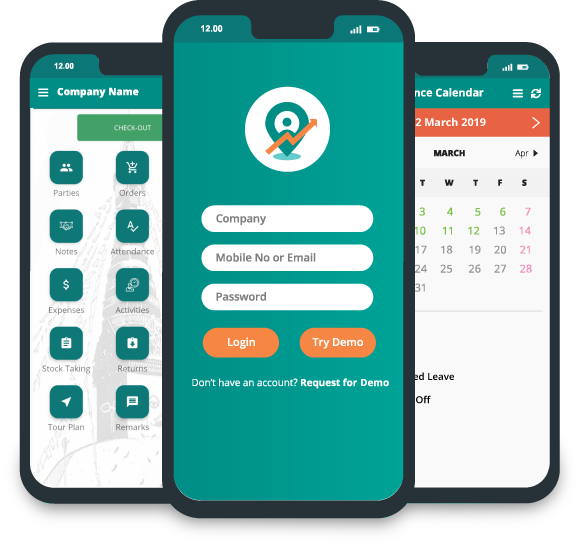

What Are the Key Challenges Faced by Field Sales Employees?

Field sales is not a desk job with fixed routines or predictable outcomes. It is a constantly moving role where every hour brings a new location, a new customer, and a new challenge. Field sales employees spend their entire day on the road, meeting clients, taking orders, solving customer issues, and trying to close targets in real-world conditions that rarely go as planned.
From early morning travel to late evening reporting, their work is a continuous cycle of movement and multitasking. A single day may include visiting multiple outlets, handling unexpected cancellations, dealing with traffic delays, and still trying to ensure every visit is recorded, every order is captured, and every expense is tracked accurately.
What often goes unnoticed is the effort behind these activities. Beyond selling, field sales employees are also responsible for maintaining reports, managing order entries, tracking expenses, recording travel details, and following up with customers, all while being physically present in the field. Much of this work is still handled manually in many organizations, which adds extra pressure after long working hours.
This blog takes a closer look at the real, on-ground challenges faced by field sales employees, highlighting the daily struggles that impact their productivity, efficiency, and overall work experience.
Why Field Sales Employees Face Unique Challenges
Field sales roles operate in a completely different environment than office-based roles. Success depends on not just their skills but external factors, which they often can’t control. “Every day in the field is a different set of circumstances. It’s not as easy as it looks on paper to plan and execute.
Unlike structured desk jobs, field sales work involves constant movement between locations, real-time decision-making, and direct customer interaction. Employees must balance multiple responsibilities such as customer visits, order collection, follow-ups, and reporting, all while working under strict timelines and sales targets.
Another major reason that field sales is uniquely hard is the reliance on real-world conditions. Traffic delays, customers not being available, last-minute cancellations, and distance to travel can all greatly affect productivity. Even the best-laid schedule can change within minutes when the employee is in the field.
In addition, manual reporting of orders, expenses, and travel details is still used for many field sales processes. This translates to more work after long work hours and often results in errors or delays in reporting due to the lack of a structured customer relationship management (CRM) system and proper expense management workflow.
When you combine all of these factors, field sales employees must be adaptable, time-efficient, and organized in highly dynamic conditions, where no two days are ever the same.
Real-Life Challenges Faced by Field Sales Employees in Day-to-Day Work
Employees working in the field, field sales employees, face a lot of practical challenges on a day-to-day basis. These are not theoretical issues but real-life situations that directly affect their productivity, efficiency, and ability to close sales. They face added complexity with each task, including travel challenges, customer visit scheduling, manual order entry, expense tracking, and reporting.
Here are the top challenges field sales reps face on a daily basis that have the biggest impact on their work.
1. Spending Too Much Time Traveling
Field sales employees spend a significant part of their day traveling from one customer location to another. Since customers are often spread across different areas, sales reps frequently have to cover long distances and navigate heavy traffic, congested routes, and unfamiliar locations. In many cases, a large portion of the working day is spent on the road rather than in actual selling activities.
The challenge becomes even greater when visits are not properly planned. Employees may end up taking longer routes, revisiting the same area multiple times, or traveling to meet customers who are unavailable. These inefficiencies reduce the number of productive customer interactions they can complete in a day and make it difficult to cover their assigned territory effectively.

Over time, continuous travel under traffic conditions and long distances increases fatigue, reduces energy levels, and limits the number of meaningful field interactions a sales employee can complete in a day. The absence of a smart route optimization tool further intensifies these inefficiencies in daily field operations.
2. Managing Multiple Customer Visits in a Single Day
Employees in the field must be able to visit several customers during a working day, often at different locations, in different time slots and different categories of customers. Field conditions in the real world are almost never as planned. Customers may not be available, meetings may take longer than expected, or a pressing priority may emerge. These disturbances often affect the whole chain of scheduled visits.
As a result, employees may miss scheduled meetings, rush through important discussions, or struggle to maintain proper coverage across their assigned territory. The lack of a structured visit management system makes it even more difficult to maintain consistency in daily field execution.
3. Managing Daily Order Reporting
Order reporting is one of the most critical responsibilities in field sales operations, but it becomes increasingly complex when handled manually throughout a busy field day. The details are often noted in notebooks, mobile notes, or messaging apps during continuous travel and meetings. By the end of the day, all collected information needs to be compiled and structured for reporting.
This process leads to duplication of work, especially when the same data is first written in the field and then re-entered later into another system. It also increases the risk of missing product details, incorrect quantities, or delayed submission. The absence of a sales order management system often amplifies these challenges in field operations.
4. Expense Reporting and Reimbursement Delays
Field sales employees regularly incur multiple expenses throughout the day, including travel costs, food expenses, and other operational spending related to field activities. In most cases, employees rely on memory or scattered receipts to record expenses at the end of the day or month. This often leads to incomplete documentation or forgotten transactions, especially during hectic field schedules.
Over time, these inconsistencies create delays in reimbursement processing and increase dependency on manual verification. The absence of a field expense tracking system makes it harder to maintain structured financial records in field operations.
5. Measuring Travel Distance
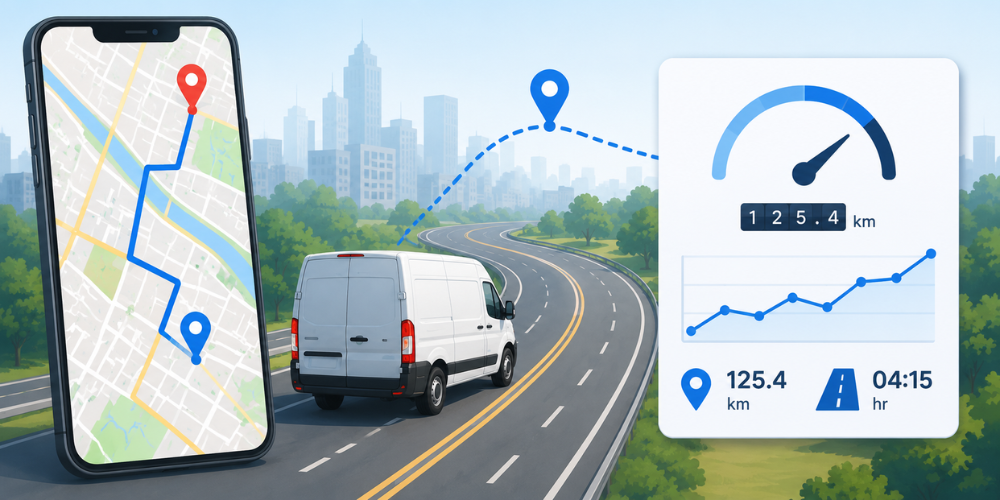
Field sales people often have to travel to several customer locations in one day, so it is important to keep track of the total distance traveled. However, in many field operations there is no reliable way of accurately measuring travel distance other than by using odometer readings.
This can make it difficult to keep accurate records of travel, especially when you make several stops in one day. Over time, field employees face challenges in verifying the actual distance travelled in field activities, leading to inconsistencies in travel documentation and reporting.
6. Remembering Customer Information and Follow-Ups
Field sales employees interact with multiple customers every day, each with different requirements, purchase histories, and communication patterns. Over time, managing and remembering every detail becomes increasingly challenging.
As a result, follow-ups may be missed, conversations may lack continuity, and customer interactions may feel disconnected. The absence of a customer relationship management system for field sales makes it difficult to maintain consistent customer-level tracking.
7. Handling Rejections and Customer Objections Daily
Rejection is part and parcel of the field sales work. Often, employees are confronted with customers who are not interested, already work with competitors, or are not ready to make a purchase decision.
Repeated exposure to objections and rejections over time can take a toll on confidence, motivation, and approach to communication. Without a sales productivity tool, it’s harder to structure interactions and navigate rejection-heavy environments effectively.
8. Manual Reporting Challenges
Manual reporting is one of the most time-consuming and repetitive challenges in field sales operations. Field employees are expected to record daily activities such as visits, orders, and customer interactions after completing their fieldwork.
When employees are handling multiple visits in a single day, recalling exact details such as timings, order quantities, and customer feedback becomes difficult. This often leads to delays in reporting and inconsistencies in field data. The absence of a daily work log feature intensifies these manual reporting challenges in field sales environments.
9. Pressure to Achieve Sales Targets
Field sales employees operate in a highly target-driven environment where daily, weekly, and monthly sales expectations are consistently monitored. These targets remain fixed regardless of external market conditions. Even after long working hours and multiple field visits, achieving targets can be uncertain due to customer behavior, demand fluctuations, and competition. This creates ongoing performance pressure throughout the month.
In many cases, employees need to continuously adjust their efforts while balancing time, travel, and customer availability. The absence of a sales performance tracking system often makes it harder to evaluate progress in real time.
10. Completing Administrative Work After Field Visits
After completing an entire day of field visits, employees still need to handle several administrative responsibilities. These include recording visit details, updating order information, and documenting daily activities. Since these tasks are completed after returning from the field, they often extend working hours into the evening. This additional workload increases fatigue after an already physically demanding day.
In many situations, delayed reporting also leads to reduced accuracy due to memory gaps from earlier field interactions. The absence of a field sales automation tool makes this post-field workload more time-consuming and repetitive.
11. Dealing with Unpredictable Customer Availability
Field sales employees often structure their daily schedules based on expected customer availability. However, real-world conditions are highly unpredictable, and customers may not always be available at planned times.
As a result, employees may experience wasted travel time and incomplete coverage of assigned customers. The absence of a structured visit planning tool makes these disruptions more frequent in field operations.

12. Maintaining Work-Life Balance
Field sales roles require continuous travel, multiple customer visits, and long working hours throughout the day. On top of field activity, employees also need to complete reporting and administrative tasks after returning. This combination often results in extended working hours that go beyond standard office time. Over a period of time, this makes it difficult to separate professional responsibilities from personal life.
The continuous workload cycle leads to fatigue and reduces time available for rest and personal activities. The absence of a field force management system further contributes to difficulty in maintaining balance.
13. Managing Large Territories and Too Many Accounts
Field sales employees are often responsible for covering large geographical areas and managing a high number of customer accounts spread across different locations. Their responsibilities include visiting existing customers, following up with inactive accounts, and identifying opportunities with potential customers, all within limited working hours.
As the number of accounts increases, it becomes difficult to prioritize which customers need immediate attention and which areas should be visited more frequently. Long travel distances and scattered customer locations further add to the complexity of managing daily schedules.
This often leads to uneven customer coverage, missed follow-ups, and delayed visits, with some accounts receiving regular attention while others are unintentionally neglected. Over time, managing large territories without proper beat planning and structured territory management creates significant challenges in maintaining consistent customer engagement and ensuring complete market coverage.
14. Constantly Adapting to Changing Market Conditions
Field sales employees operate in dynamic market environments where conditions change frequently. These changes include competitor activities, pricing updates, stock availability issues, and shifts in customer demand.
Continuous adaptation becomes a part of daily routine, as market conditions rarely remain stable for long periods. The absence of a real-time field sales management system makes it harder to respond effectively to these ongoing changes.
How Technology Helps Solve Field Sales Challenges
Technology plays a crucial role in reducing the day-to-day struggles of field sales employees by replacing manual work with automation, improving visibility, and simplifying field operations. Below are the key ways it helps, broken down into clear areas with real impact on field performance.
-
Automating Manual Reporting Work
The biggest improvements in technology are the elimination of manual reporting. Field sales staff no longer have to spend time writing notes, filling spreadsheets, or updating several systems after finishing their field visits. Instead, a field sales automation system enables them to capture visits, orders, and activities instantly from their mobile device while still out in the field. This avoids duplication of effort, minimizes errors, and captures all information in real-time with no effort after working hours.
-
Improving Travel Efficiency with Smart Planning
Field sales employees often waste significant time traveling between scattered customer locations. Without proper planning, routes become inefficient and reduce the number of daily visits. A smart route planning tool helps optimize travel paths based on location, distance, and priority. This allows employees to complete more visits in less time, reduce travel fatigue, and improve overall productivity throughout the day.
-
Simplifying Order Management in Real Time
Order collection is an integral part of field sales, yet manual order taking can cause delays and errors. Technology makes this easy because you can enter orders instantly while you’re with the customer. A digital sales order management system also ensures that every order is captured accurately in real time, reducing the need for re-entry later and helping improve order processing speed and reliability.
-
Streamlining Expense Tracking and Reimbursements
One of the most time-consuming activities for field employees is to manually track daily expenses. Keeping receipts, noting down small transactions and tallying totals at the end of the day often leads to confusion and delays. A field expense tracking system lets employees record expenses as soon as they happen. It also has the advantage of being transparent and reducing the amount of paperwork and time taken to reimburse.
-
Automating Travel Distance and Odometer Tracking
It creates a lot of unnecessary work and is prone to arguments and inaccuracies when it comes to travel claims. Employees may forget to record readings or may struggle to record them accurately during busy schedules. A field tracking system based on GPS automatically records the distance traveled and movement during the day. This eliminates manual dependency and ensures accurate, reliable travel records for reporting and reimbursement.
-
Centralizing Customer Information and Follow-Ups
Field salespeople see a lot of customers, and without proper systems, it is difficult to keep track of information like previous orders, preferences, and follow-up schedules. A mobile CRM for field sales keeps all customer data in one place: notes, interaction history, and reminders. This allows employees to be more prepared for each visit and build better customer relationships.
-
Enhancing Productivity and Focus
Field sales employees spend a lot of their day on non-selling activities like reporting and data entry without the right systems. Technology relieves this burden and enables them to focus more on the real selling. Sales productivity tools help you organize daily tasks, prioritize high-value activities, and make better use of your time during the day.
-
Providing Real-Time Visibility and Updates
Things change a lot in the field, and often employees need updated info about customers, pricing, or products on the move. A real-time field sales management system guarantees that all updates are instantly available on mobile devices, allowing employees to make faster, more informed decisions while in the field.
-
Bringing All Field Activities into One Platform
Earlier, field sales staff were using a mix of notebooks, Excel sheets, WhatsApp messages, and separate apps for different functions. Modern systems combine everything into one platform where you can manage visits, orders, expenses, and reports all in one place. This reduces confusion, improves accuracy, and creates a smoother workflow for field teams.
Delta Sales App Solves Field Sales Employee Challenges with Ease
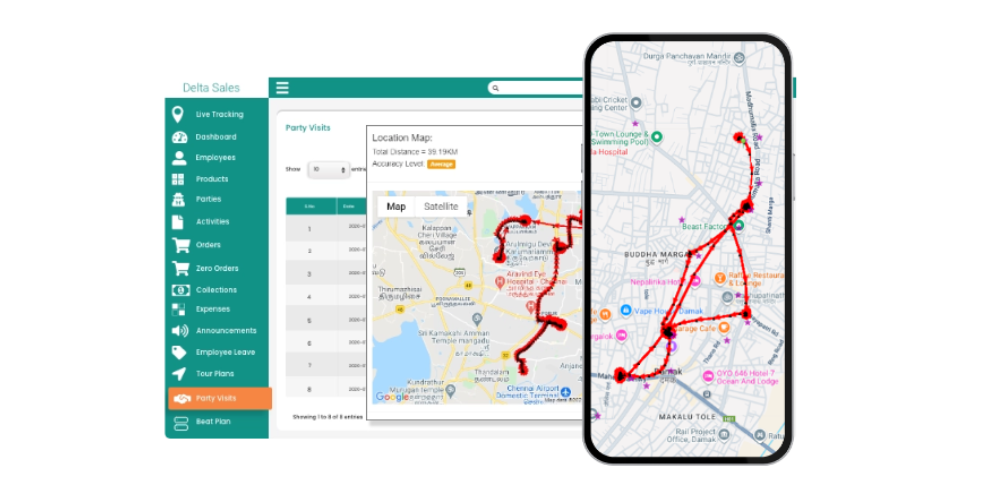
The Delta Sales App is a complete field sales automation platform that is designed to make the daily work of field sales employees easier. It helps remove manual reporting, reduce travel inefficiencies, and bring structure to the critical field activities of visit planning, order capture, expense tracking, and customer management. It allows sales reps to be more efficient in the real world by putting all field operations into one mobile-based system and concentrating on real sales instead of administrative burden.
Here is how Delta Sales App solves the most common troubles of field sales employees with the help of automation and smart field tools.
-
Reduces Time Spent on Manual Reporting
Updating reports, visit details, and order summaries hours after fieldwork is one of the biggest challenges field sales employees face. This manual reporting process often causes fatigue and reporting data delays. With a field sales automation system, employees can instantly log their daily activities, customer visits, and orders from the field. Real-time data entry eliminates the need for end-of-day reporting, reduces human errors, and ensures all field activity is captured accurately without additional effort post-working hours.
-
Improves Travel Efficiency with Smart Planning
Field sales staff often spend valuable working hours on unplanned travel routes and scattered customer locations. Poor planning means more unnecessary travel, fewer visits, and increased fatigue. A smart route optimization and beat planning system helps employees plan their daily visit routes based on location and priority. This enables efficient travel planning, less nonproductive travel between locations, and allows field reps to make more productive customer visits within the same working hours.
-
Simplifies Order Management in Real Time
Field sales employees have an important task of collecting orders, but manual recording of orders often leads to duplication, errors, and delays in processing. Field reps can instantly capture orders from customers when visiting them through a digital sales order management system. Orders are taken in real time, eliminating the need for paper notes or WhatsApp updates and ensuring faster processing of orders with complete accuracy.
-
Makes Expense Tracking Hassle-Free
The costs of travel, food, and other field expenses are daily for field sales employees. Doing this manually is time consuming and can lead to missed records and delayed reimbursements. The expense reporting feature enables employees to record expenses immediately from their mobile device. This translates into transparent recording of expenses, no more paperwork, and faster approval cycles for reimbursement, making financial management much smoother for field teams.
-
Automates Travel Distance Tracking
Many organizations require field employees to maintain odometer readings for travel verification, which can be stressful and error-prone in busy field conditions.
An odometer automatically records travel distance throughout the day. This removes the need for manual odometer entries, reduces disputes in travel claims, and ensures accurate and reliable travel reporting without extra effort from employees.
-
Organizes Customer Information Efficiently
Field sales employees meet many customers a day. Manually keeping track of customer history, order patterns, and follow-up schedules can be difficult. Mobile CRM for field sales helps you keep the complete customer data in one place, including purchase history, interaction notes, and follow-up reminders. This helps employees be more prepared for each visit and improves customer engagement and relationship management.
-
Reduces Administrative Workload
Employees still have to do administrative work, such as updating reports, inputting orders, and recording expenses after field visits that extend their working hours. A field sales management software takes the burden off your shoulders by automating reporting workflows and easing manual data entry. This helps employees to complete their daily tasks faster and saves them extra after-office workload.
-
Improves Field Productivity and Focus
A lot of time of field sales employees is spent on activities other than selling such as reporting, data entry, and so on. This reduces the selling time for field sales employees. A sales productivity system helps streamline daily operations and prioritize core selling activities. By reducing manual tasks, employees can spend more time engaging with customers and improving conversion rates in the field.
-
Provides Real-Time Updates and Visibility
The conditions for field sales are changing constantly and the employee needs immediate access to up-to-date information such as pricing, customer details or product availability while on the move. A real-time field sales tracking system ensures that all updates are instantly available on mobile devices. This helps employees make faster decisions during field visits and respond effectively to market changes.
Conclusion
Field sales employees encounter a plethora of challenges on a day-to-day basis, such as long travel hours, manual order reporting, expense tracking, odometer entries, customer follow-ups, and target pressure. Most of these problems aren't about selling in itself but about not having the right systems in place to support fast field operations.
“Manual processes waste valuable time, increase errors, and reduce productivity overall. However, with the right field sales automation approach, these challenges can be made simpler and more efficiently managed. Having a structured system in place helps field reps stay organized, reduce workload, and focus more on building customer relationships and closing sales.
If your field sales team is still struggling with manual reporting and disconnected workflows, it’s time to move to a smarter way of working.
Book a Free Demo of Delta Sales App today and see how you can simplify field sales operations, improve productivity, and empower your field team to perform better every day.