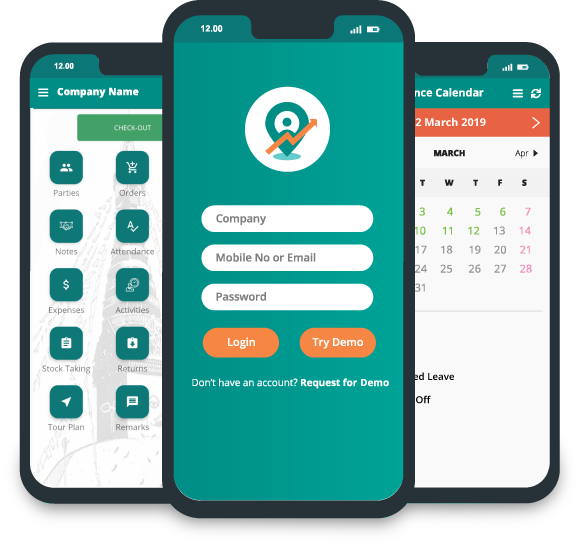

How Industrial Distributors Can Automate Field Sales
Sales in industrial distribution rarely happen from a desk. Reps spend most of the day out visiting dealers, contractors, plants, workshops, project sites, and other business customers. They book orders, chase requirements, collect payments, check stock, and keep relationships running across their territories.
As the dealer network grows, running all of that through phone calls, spreadsheets, paper notes, and WhatsApp stops working. A manager can know the team is out there in the field and still not be able to answer the basic questions. Which dealers got visited today? Who got missed? What orders came in? How much of the territory actually got covered? Who needs a follow-up call?
That's where field sales automation earns its place for industrial distributors. It takes the routine field activity, beat planning, customer visits, and order booking and puts it into a structured system. Reps record it from wherever they are. Managers get visibility they didn't have before.
Below you'll find which tasks to automate, how to roll it out, what to look for in an app, and how to measure the results.
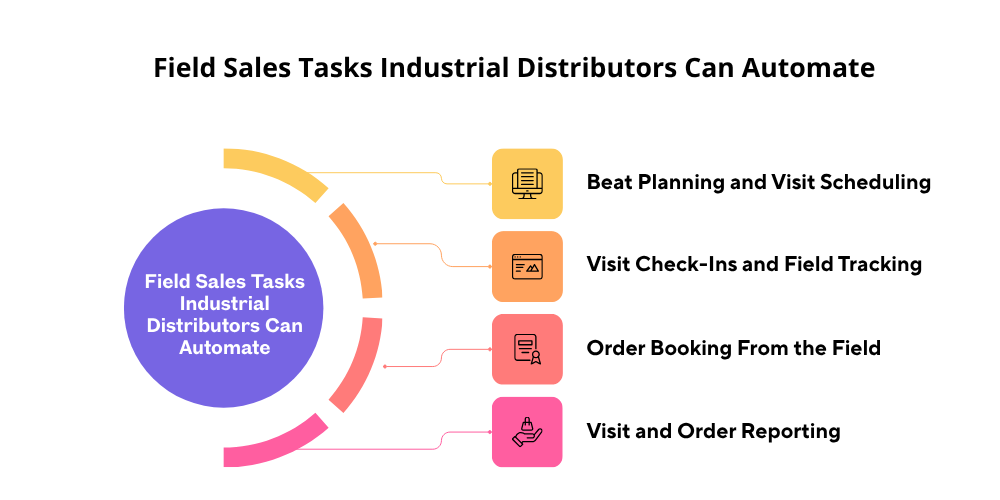
Field Sales Tasks Industrial Distributors Can Automate
Industrial sales teams run through the same operational tasks day after day. When those stay manual, reps burn time writing reports and sending updates, and managers burn time collecting them. The right automation doesn't rewrite the sales process; it just gets the busywork out of the way.
-
Beat Planning and Visit Scheduling
A rep can easily be responsible for dozens, sometimes hundreds, of dealers, contractors, plants, workshops, and other accounts. Without a structured beat plan, the day turns reactive, and the rep goes wherever the latest request pulls them instead of following planned territory coverage. A digital beat plan lets sales managers organize customers by territory, location, visit frequency, customer type, and business priority. A high-value dealer might need a visit every week. A smaller account might only need one a month.
-
Visit Check-Ins and Field Tracking
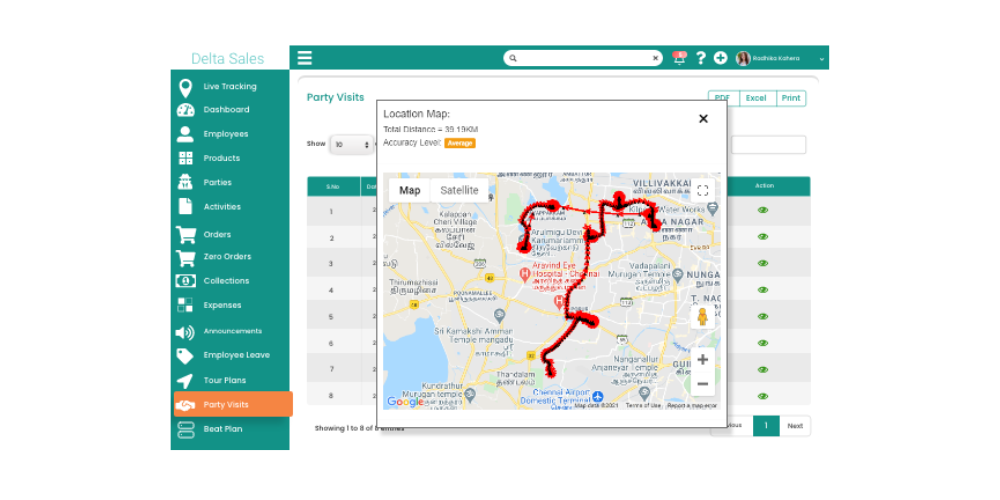
Manual reporting tends to leave a gap between what was planned and what actually happened in the field. GPS tracking closes that gap. Managers see visits and rep movement as they happen, not a verbal summary at the end of the week. A rep checks in at the customer location, notes the purpose of the visit, adds whatever's relevant, and moves to the next stop. For industrial distributors with territories spread out geographically, that's a far more reliable record than anyone's memory. Managers can hold planned visits up against completed ones and spot coverage gaps without calling a rep to ask where they've been.
-
Order Booking From the Field
Most industrial orders get written down during the visit and passed on later by WhatsApp, a call, or an email. Someone in the office then reads it and types it into another system, which is where a wrong SKU, quantity, or customer name slips in. With mobile order booking, the rep picks products from the catalog, enters quantities, adds notes, and submits the order at the customer's site.
-
Visit and Order Reporting
Field reporting is often the biggest admin headache a sales manager has. Reps send scattered updates through the day, then a Daily Sales Report (DSR) at the end of it, and the manager has to piece together what happened across the whole territory from a dozen separate messages. Automated reporting connects the field activity straight to management dashboards. Managers can see visits, orders, sales, collections, attendance, and everything else without waiting on every rep to file their own summary. And because it's captured close to when it actually happened, it's more accurate than anything rebuilt from memory at the end of the day.
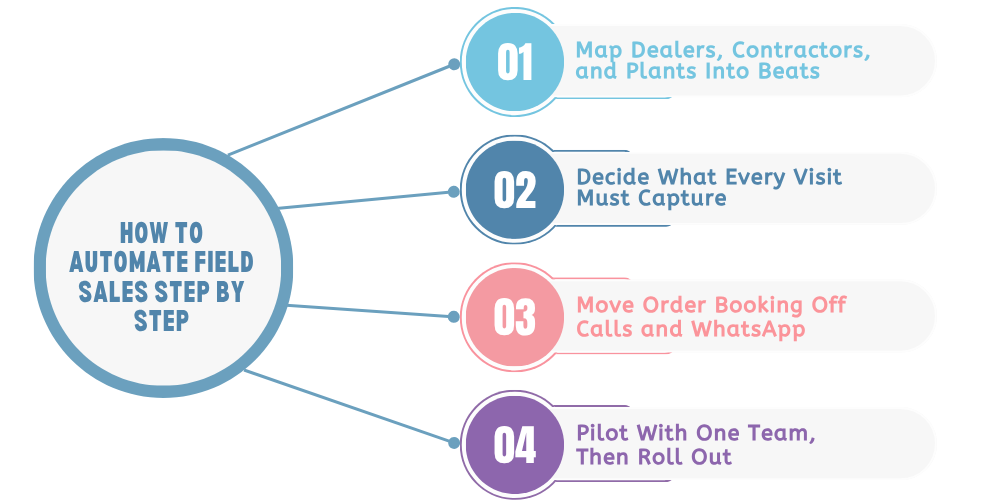
How to Automate Field Sales Step by Step
Field sales automation does not need to happen all at once. Start with the most repetitive tasks, standardize the workflow, and gradually expand automation across the sales team.
-
Map Dealers, Contractors, and Plants Into Beats
Start with a clean customer database: locations, customer types, territories, assigned reps, and visit frequency, all accurate. Group dealers, contractors, and plants into beats based on location and business priority. High-value accounts or ones that order often get more regular visits, and route planning cuts the wasted travel between them.
-
Decide What Every Visit Must Capture
Keep visit reports on what managers actually need: customer, location, check-in, purpose, requirements, products discussed, order details, follow-up, collection status, and notes. Skip the long forms. A simple workflow is the kind reps actually fill out every single time, not just when they remember to.
-
Move Order Booking Off Calls and WhatsApp
Every order placed through the app is stored with the customer, products, and quantities. After a few months, that history shows which dealers reorder, how often, and which SKUs move in which territory.
-
Pilot With One Team, Then Roll Out
Start with one sales team or one territory, not the whole organization at once. Track a few numbers that actually matter: visits, orders, sales value, customer coverage, reporting time, and use what the pilot team tells you to simplify the workflow before rolling it out further. Smaller start, easier adoption, and you get a real baseline to measure against before you scale it.
What to Look for in a Field Sales Automation App
When comparing industrial distributor sales software, don't pick one just because it has a long list of features. The more important question is whether the software fits the actual conditions under which representatives work. An effective field sales management app should support territory coverage, customer visits, order booking, reporting, and communication between field representatives and managers without creating unnecessary administrative work.
-
Offline Access for Plants, Warehouses, and Sites
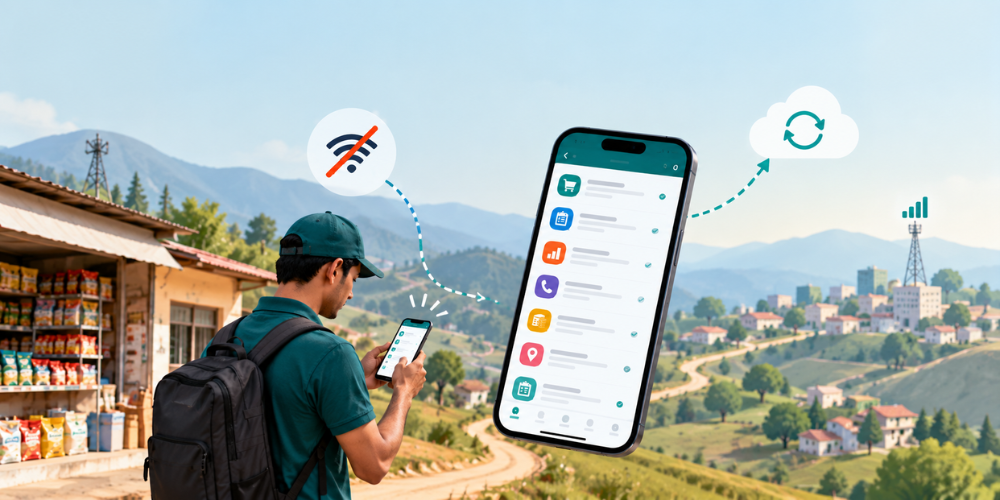
Industrial reps don't always have reliable connectivity. Manufacturing plants, warehouses, construction sites, industrial corridors, and rural territories are all places where the signal often isn't there. An offline-first workflow means the rep keeps working anyway, and the data syncs once there's a connection again. No separate paper backup, no waiting until they're back at the office to log what happened.
-
Support for Industrial Catalogs and Repeat Orders
Industrial distributors can carry hundreds, sometimes thousands, of SKUs across different categories, and a lot of them have near-identical names, specs, sizes, or configurations. Getting the order right matters. A good field sales app makes product selection practical: a searchable catalog, clean SKU info, a record of the customer's previous orders, and quick quantity entry for repeat orders. That also hands managers clean SKU-level data they can actually use to see which products are moving in which territories or with which customers.
-
Live Reports for Managers
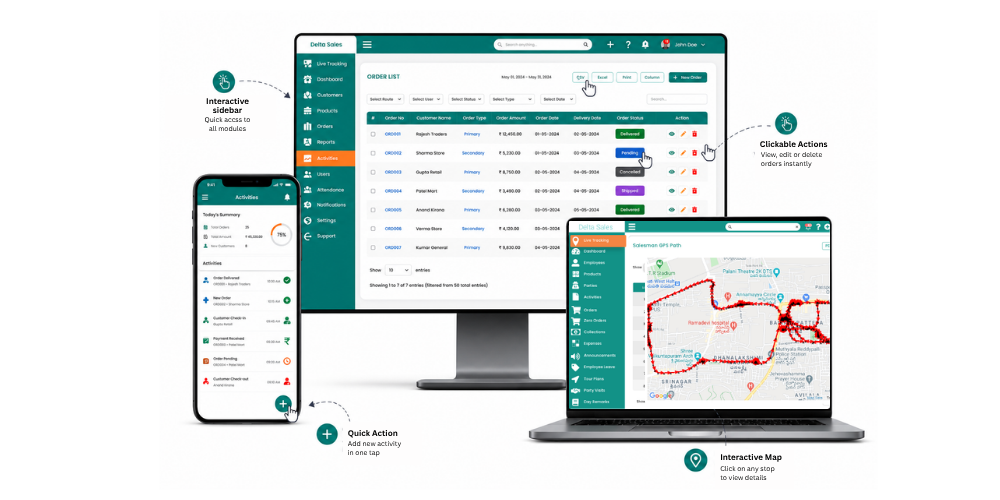
A list of submitted orders doesn't tell a manager what led to them. The useful dashboards show sales by rep, sales by territory, orders by customer, planned versus completed visits, customer coverage, product and SKU movement, collection activity, attendance, field and route activity, all connected.
That connection is what makes investigation possible. Sales dip in a territory; check whether visits dipped too. A dealer's orders drop off; check their recent visit activity, what they've been asking for, and whether follow-up actually happened. A number sitting by itself doesn't explain anything. The activity behind it does.
Why Delta Sales App Fits Industrial Distributors
An industrial rep covers plants, workshops, contractors, and dealers spread across a wide territory, and each visit can end in an order, a payment, or a follow-up. Delta Sales App puts those jobs in one mobile app, so reps don't switch between a notebook, WhatsApp, and a spreadsheet. Orders are booked at the customer's site, and the app keeps working without a signal and syncs when the connection returns. Here is how the main pieces help an industrial sales team.
-
GPS-Based Employee Location Tracking
GPS-based employee tracking provides managers with better visibility into field activity. It can help management understand where representatives are working and compare field movement with planned customer visits. For teams covering large territories, this provides a clearer picture of actual field operations without requiring constant phone calls and manual updates.
-
Beat Planning and Route Optimization
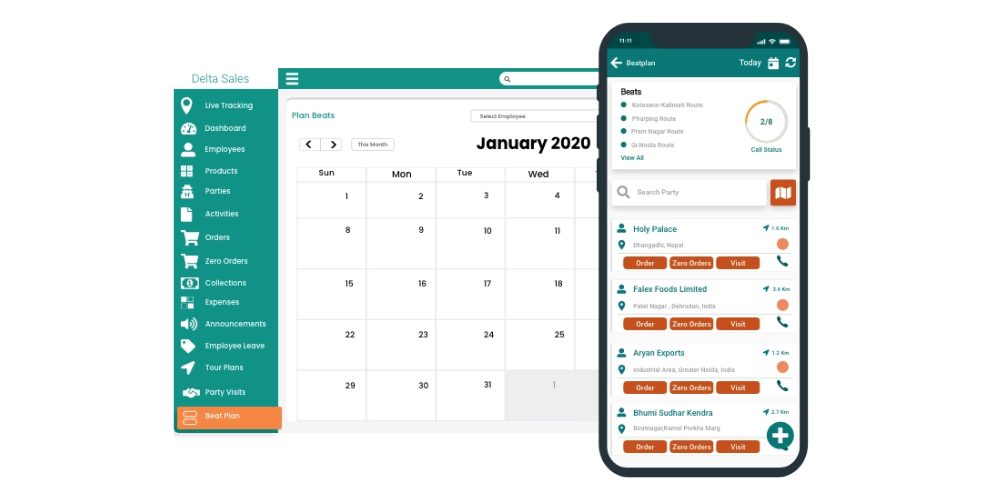
Sales managers can group dealers, contractors, and plants into structured beats based on territory and how often each needs a visit. Route optimization gives the rep a sensible order to visit them in, less wasted travel, and better odds that every customer actually gets covered on schedule.
-
Field Visit Tracking
Representatives can record customer visits directly from the field. Visit information can include the customer, location, activity, notes, and follow-up requirements. This gives managers a more structured record of customer coverage and helps identify missed visits or accounts that may require additional attention.
-
Mobile Order Booking
Reps can book the order while they're standing at the customer's site, no more calling it in or texting the details later. Products and SKUs get picked right in the mobile workflow, so the order comes out structured, and nobody in the office has to decode it and type it in a second time.
-
Distributor and Party Management
Industrial distributors deal with a wide net of dealers, distributors, contractors, and other parties, and centralized party management keeps all of that organized. The rep gets consistent account information in hand wherever they are, not whatever version happens to be in their head or an old spreadsheet.
-
Offline-First Mobile Functionality
Reps often work where connectivity just isn't reliable. Delta Sales App's offline-first design means the field activity doesn't stop for it; the rep keeps going, and everything syncs once there's a connection again. No dead zone in the day because the signal dropped.
-
Automated Sales and Collection Reporting
Sales and collection information can be captured as part of the field workflow and used in reports and dashboards. This reduces the need for managers to manually consolidate updates from multiple representatives and provides faster visibility into sales and collection activity.
-
Real-Time Sales Dashboards
Sales managers can monitor important field activities without waiting for individual representatives to submit separate reports. Dashboards can provide visibility into orders, sales, visits, collections, employee activity, and other relevant KPIs, helping managers identify issues and take action sooner.
How to Measure the Results
Field sales automation should be measured through operational improvements rather than software usage alone. Before implementation, establish a baseline for field activity, territory coverage, reporting time, order processing, and sales performance. After implementation, compare the same metrics over a consistent period.
-
Visit Productivity
Compare planned visits with completed visits to understand whether representatives are following assigned beat plans. This can reveal under-covered territories and help managers determine whether sales teams are spending enough time with priority customers.
-
Order Conversion
Measure how many customer visits result in orders or productive sales opportunities. A higher visit count does not automatically mean better performance. Comparing visits with productive calls and orders provides a clearer picture of field effectiveness.

-
Sales Per Representative
Track sales generated by each representative over a defined period and compare performance across territories. This can help identify high-performing teams, weaker territories, and areas where coaching or additional support may be required.
-
Territory Coverage
Measure how consistently priority dealers, contractors, plants, and other customers are being visited according to their planned frequency. Consistent coverage helps reduce missed opportunities and gives managers a better understanding of whether the sales team is reaching the right accounts.
-
Order Processing Time
Track the time between an order being captured in the field and the order reaching the relevant office or operations team. Digital order booking can reduce delays caused by calls, handwritten notes, and scattered messages.
-
Reporting Time
Measure how much time representatives spend preparing DSRs and how much time managers spend collecting and consolidating reports. If field information is captured during the day's activities, less time may be required for repetitive end-of-day reporting.
-
Data Accuracy
Monitor errors in customer information, product selection, quantities, pricing, and order details. A structured digital workflow reduces the amount of information that needs to be manually re-entered, which can improve the reliability of sales data.
Final Thoughts
Automating field sales does not mean changing how industrial distributors sell. It means making the work around selling easier to manage, from planning customer visits and tracking territory coverage to booking orders and reviewing daily performance.
The right system gives representatives a simpler way to record field activity while giving managers timely information to make better decisions. Starting with one team, measuring the results, and expanding from there can make the transition easier and more practical.
For industrial distributors looking to bring field visits, orders, employee tracking, and sales reporting into one workflow, Delta Sales App provides the tools to support that process. See how Delta Sales App can fit your field sales workflow. Request a personalized demo.