
How Packaging Companies Can Manage Field Sales

Packaging companies run field sales across a wide range of business customers, from small retailers all the way up to large manufacturers. Each one can need different packaging specifications, order quantities, and purchasing schedules. Reps are expected to hold relationships together, follow up on quotations, coordinate samples, and keep repeat orders coming in across their territory.
All of that gets harder when customer information is scattered across spreadsheets, phone calls, messaging apps, and handwritten DSRs. A sales manager ends up unable to say which visits got missed, which quotations are sitting pending, or which customers are actually ready to reorder.
A structured field sales process helps packaging companies improve customer coverage, maintain consistent follow-ups, and gain better visibility into sales performance. This blog explains how to manage packaging field sales, organize customer relationships, and use field sales automation to improve daily operations.
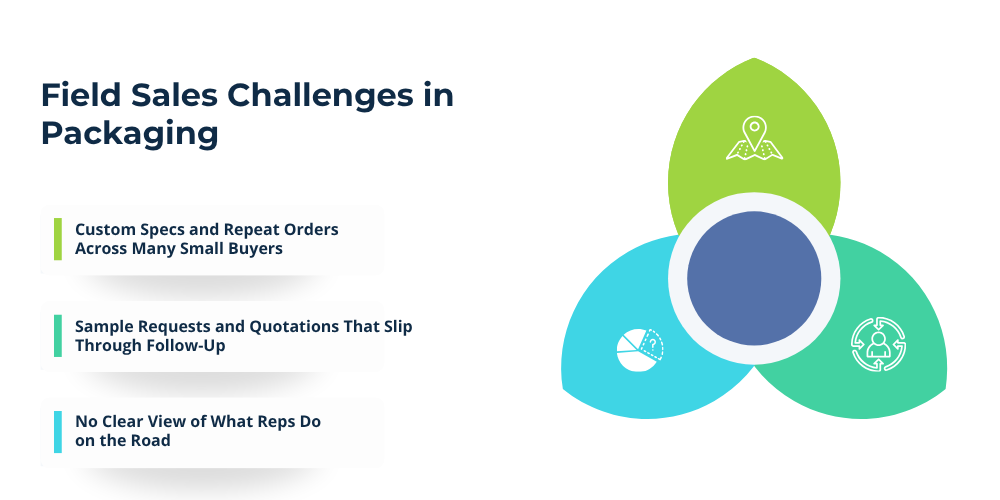
Why Field Sales Is Hard to Manage in Packaging
Packaging sales involves more than visiting customers and collecting orders. Representatives must understand product requirements, coordinate samples, follow up on quotations, and maintain relationships with buyers across different industries.
-
Custom Specs and Repeat Orders Across Many Small Buyers
Packaging orders can involve specific dimensions, materials, thicknesses, printing requirements, and quantities; a food manufacturer needs printed pouches, an e-commerce business needs corrugated boxes in several sizes, and none of that is interchangeable. Managing those details across dozens of smaller buyers gets hard fast when the specs live in notebooks, old quotations, or a messaging thread somewhere. Missing information delays orders. Untracked reorder cycles quietly cost the sales team repeat business they never saw go. Organized customer records are what let a rep pull up the right specs and know which customers are due for their next order, instead of relying on memory or a lucky search through old messages.
-
Sample Requests and Quotations That Slip Through Follow-Up
Packaging buyers often want a sample or a quotation before they'll confirm anything. They need time to check quality, compare prices, or get internal sign-off. When all that gets tracked across separate spreadsheets and messages, follow-ups fall through easily; nobody's watching the whole pipeline in one place. Reps need a consistent way to log sample requests, quotation status, and the next follow-up date so a potential order doesn't just sit forgotten while the buyer waits to hear back.
-
No Clear View of What Reps Do on the Road
Packaging reps often cover industrial areas, manufacturing clusters, and customers scattered across a wide geography. Without a clear beat plan, they lose too much of the day to travel, or important accounts just get skipped over. Manual reporting makes it worse, since managers can't really see which visits got completed or how coverage is holding up. Tracking field activity against the plan is what lets managers catch missed opportunities, fix the routes, and actually understand where the working day is going.
How to Bring Structure to a Packaging Field Sales Team
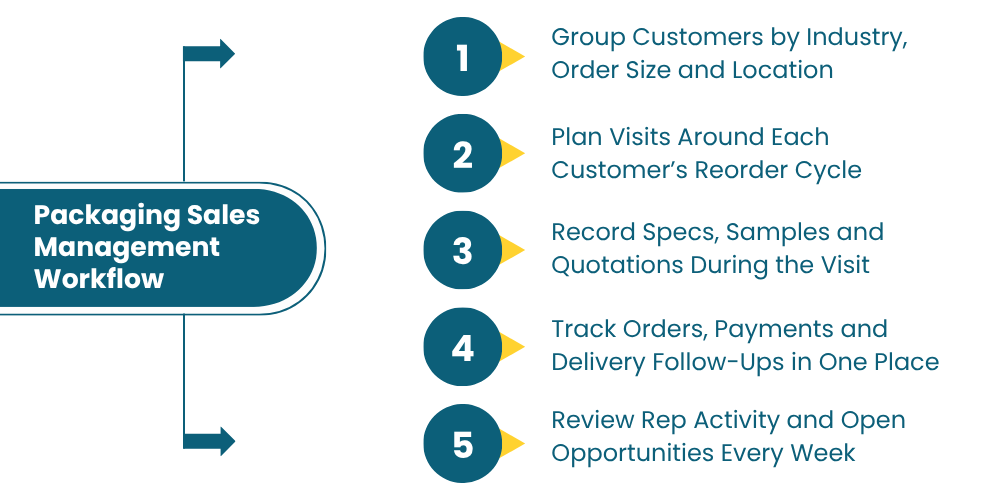
Packaging companies can tighten up field sales by getting customer information organized, planning visits around actual purchasing patterns, and giving follow-ups clear ownership. Together, that's what lets reps prioritize their time well and keep customer relationships from going quiet.
-
Group Customers by Industry, Order Size, and Location
Packaging customers don't all buy the same way. A large manufacturer might need regular account reviews. A smaller buyer might only order when existing supplies run low, and nothing in between. Group customers by industry, order potential, and geographic location: food and beverage, pharmaceuticals, cosmetics, and e-commerce, each with its own packaging requirements worth understanding separately. From there, assign clear account ownership and visit priorities. Grouping nearby customers also helps reps plan efficient routes and keep territory coverage from falling apart.
-
Plan Visits Around Each Customer’s Reorder Cycle
A fixed visit schedule doesn't suit every packaging buyer. Purchasing frequency usually follows production schedules, inventory levels, and seasonal demand, which shift on their own timeline, not the rep's calendar. Check previous order dates and quantities to find the typical reorder pattern, then schedule regular visits for high-priority accounts, follow-ups for repeat customers, and introductory meetings for new prospects. Group the visits by location to cut unnecessary travel, and keep the beat plan loose enough to make room for an urgent request or an opportunity that wasn't on the schedule.
-
Record Specs, Samples, and Quotations During the Visit
Accurate customer records mean a rep doesn't have to ask a buyer for the same information twice. Record product type, dimensions, material preferences, printing requirements, estimated quantities- the real specifics that actually matter for a packaging order. Log sample requests and quotation status alongside the next action and follow-up date. Keep it accessible, and anyone on the team can pick up a customer conversation with the right context already in hand, instead of starting from scratch. The deeper technical specs and quotation revisions can still live in a dedicated product or ERP system where that level of detail belongs.
-
Track Orders, Payments, and Delivery Follow-Ups in One Place
Sales work doesn't stop once the order's booked. Reps still need to confirm details, follow up on payments, and coordinate anything related to delivery. Keep clear records of confirmed orders, collection updates, and outstanding customer requests, and assign each follow-up to someone so it doesn't just sit unresolved because nobody owned it. Connecting field sales reporting to order and collection records is what actually gives managers visibility here. Production scheduling and shipment tracking at the detailed level can still stay in separate operational systems; that's not what this process needs to own.
-
Review Rep Activity and Open Opportunities Every Week
Daily work logs show completed activities, but weekly reviews help managers understand whether fieldwork is producing results. Compare planned and completed visits, review orders generated, and identify quotations or sample requests awaiting follow-up. Check whether important accounts are receiving sufficient attention and whether representatives are covering their assigned territories.
How Delta Sales App Supports Packaging Field Sales
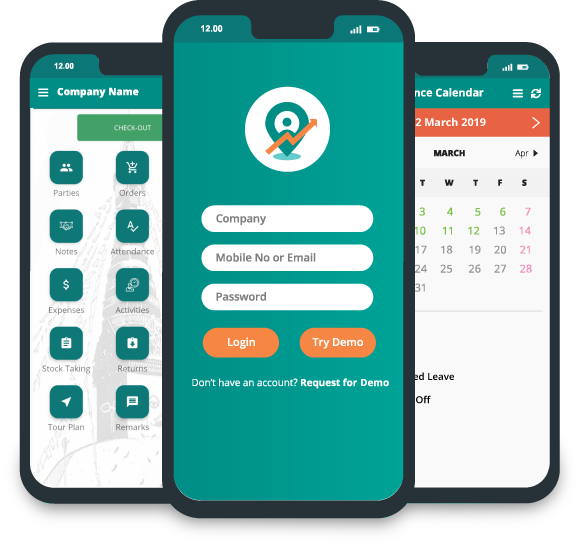
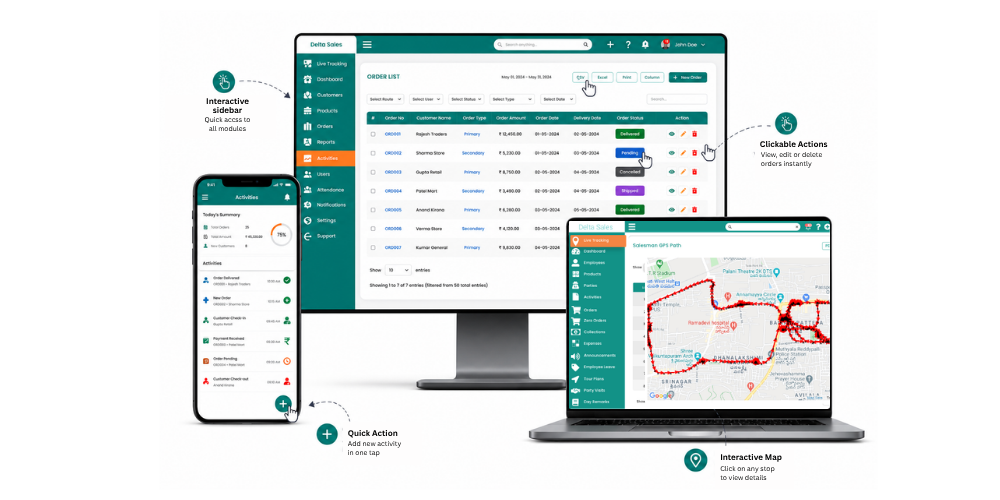
Field sales automation helps packaging companies manage representative activity, customer visits, order booking, and reporting through a more organized process. Delta Sales App provides field sales force automation and employee tracking capabilities that support these day-to-day activities.
-
Beat Planning and Visit Tracking for Every Rep
Delta Sales App supports beat planning and route management, helping representatives organize customer visits across assigned territories. GPS-based employee location tracking and field activity records give managers better visibility into representative movement and visit completion. These insights help identify missed visits, review territory coverage, and improve route planning.
-
Order Booking and Customer Records From the Field
Delta Sales App supports mobile order reporting and sales reporting, so reps can record sales activity right there during the field visit. Its offline-first design keeps that working in areas with unreliable connectivity, and everything syncs once there's a connection again. Customer and distributor management features support more organized account handling on top of that. Packaging companies may still need dedicated systems for the deeper technical specs, sample approvals, and quotation revisions; depending on how their workflow is set up, this tool isn't meant to replace that layer.

-
Reports That Show Coverage, Orders and Gaps
Delta Sales App provides sales reports and dashboards so managers can monitor field activity, order performance, and collection-related information in one place. They can review visit coverage, spot territories with gaps, and set field activity against order outcomes to see where the two don't line up. That's usually where the real issues surface: missed visits, low order conversion, and follow-ups that slipped. Regular report reviews are what let sales teams adjust routes, reprioritize accounts, and keep accountability from slipping across the team.
Conclusion
Packaging companies can manage field sales more effectively by organizing customer records, planning visits around reorder cycles, and tracking quotations, orders, and follow-ups consistently. Field sales automation software adds visibility into representative activity, customer coverage, and sales performance. With structured processes and the right tools, packaging companies can reduce missed follow-ups and build stronger customer relationships. Delta Sales App helps field sales teams manage beat plans, track field activity, book orders, and monitor performance through centralized reporting.
Looking to improve territory coverage, track customer visits, and manage packaging sales more efficiently? Book a personalized demo of Delta Sales App to see how field sales automation can support your team's daily operations.