How to Measure Sales Rep Performance in Packaging Companies

Revenue alone can't measure sales performance in packaging companies. A rep can pull big orders from a few established customers while neglecting the smaller accounts, missing follow-ups, and never developing new business in the territory. Another rep generates less revenue up front and builds a far stronger pipeline of repeat orders and high-potential customers along the way.
Both can look identical in a monthly sales report, even though their long-term value to the business is nothing alike. Packaging sales teams run into their own specific challenges. Customer requirements vary by industry, order quantities swing widely, and purchasing decisions hinge on product specifications, pricing, delivery schedules, and repeat consumption patterns. Reps manage multiple SKUs, coordinate with distributors, visit manufacturing units, and follow up with customers whose ordering cycles are rarely predictable.
Monitoring field sales rep performance here takes customer development, order conversion, field activity, and reporting accuracy together, not any one of them alone. This piece covers which KPIs actually matter, how to track them, and how packaging businesses can use performance data to improve sales execution.
Why Measuring Sales Rep Performance Matters in Packaging Companies
Packaging businesses often serve customers across several industries, including food and beverage, pharmaceuticals, cosmetics, e-commerce, electronics, and industrial manufacturing. Each segment has different purchasing patterns, packaging requirements, and order volumes. A representative handling established FMCG accounts may generate frequent repeat orders, while another responsible for industrial packaging may spend weeks developing a new customer before receiving the first purchase order. Comparing their performance using monthly revenue alone can produce misleading conclusions. A structured performance measurement system helps sales managers understand the reasons behind these differences.
-
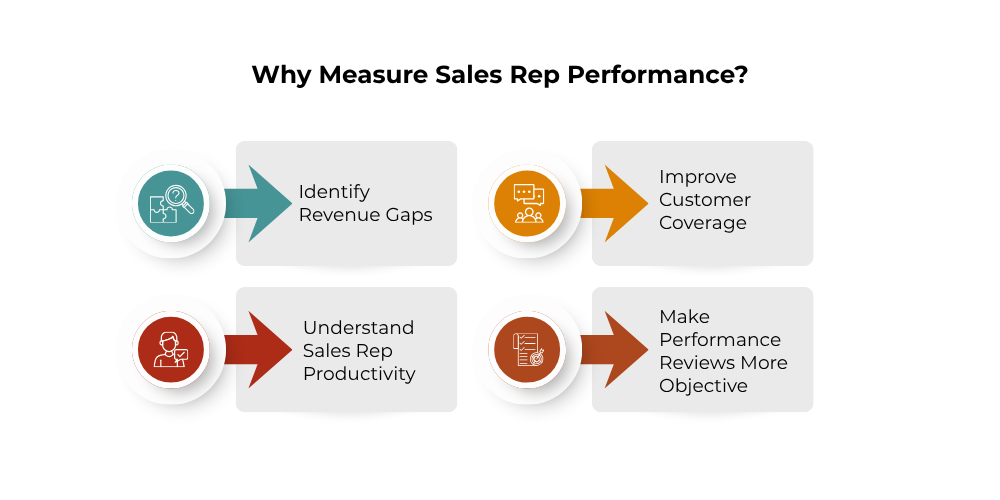
Identify Revenue Gaps Before They Become Serious
Sales targets give you a baseline, nothing more; they don't explain why a rep is falling behind. Tracking order value, conversion rates, customer visits, and pipeline movement is what catches the problem early. Declining sales might come from fewer customer visits, delayed follow-ups, a lost account, or orders shrinking in size- four completely different problems that look identical on a target report. Each one needs its own response, and you can't pick the right one without knowing which it actually is.
-
Improve Customer Coverage
Packaging sales run on keeping existing buyers while also finding new businesses that need suitable packaging materials or solutions. Tracking customer visits and active accounts shows managers which territories have thin coverage. It also surfaces the reps who keep visiting the same established customers over and over without ever developing anything new.
-
Understand Sales Rep Productivity
Two reps can hit the same revenue number through completely different processes. One builds it on a balanced customer portfolio. The other leans almost entirely on one large account that could walk away tomorrow. Measuring productivity is what reveals which situation you're actually looking at, whether the result rests on consistent activity, a healthy pipeline and repeat business, or on one account doing all the work.
-
Make Performance Reviews More Objective
When reviews run on personal observation or an end-of-month report, managers miss things- important things. Defined KPIs give a consistent basis for evaluating reps, setting expectations, and planning out what coaching actually needs to happen.
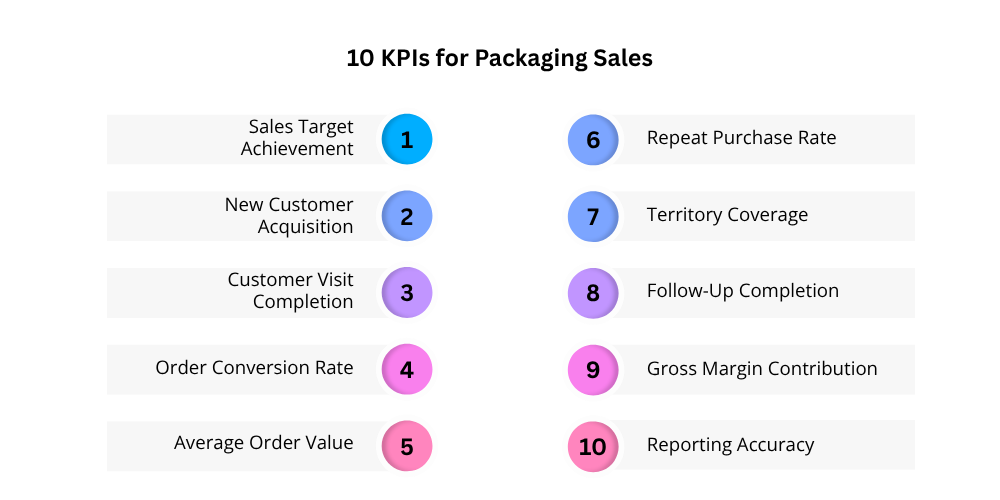
10 KPIs to Measure Sales Rep Performance in Packaging Companies
Measuring sales rep performance involves more than checking monthly sales figures. Packaging companies need to understand how effectively representatives visit customers, generate orders, maintain relationships, and manage their assigned territories. The following KPIs help sales managers track daily field activities and evaluate sales results.
1. Sales Target Achievement
Sales target achievement shows whether a representative is meeting the sales target assigned for a specific period. Sales managers can compare actual sales with monthly or quarterly targets to identify who is performing well and who needs support. Tracking this KPI regularly helps managers address sales gaps before the end of the month.
2. New Customer Acquisition
New customer acquisition measures how many new customers a sales representative brings to the business. In packaging companies, this may include finding manufacturers, wholesalers, or retailers that need cartons, labels, or other packaging materials. Tracking new customers helps managers understand whether representatives are expanding their customer base instead of relying only on existing accounts.
3. Customer Visit Completion Rate
Customer visit completion rate measures how many planned customer visits a representative actually completes. Sales managers can compare the assigned beat plan with recorded visits to identify missed appointments and areas with poor coverage. This helps ensure representatives spend their field time reaching the right customers and maintaining regular contact.
4. Order Conversion Rate
Order conversion rate shows how effectively a representative turns customer enquiries and sales opportunities into confirmed orders. For example, a customer may request a packaging quotation but place an order only after receiving the right price and product specifications. Tracking conversion helps managers identify whether representatives need better follow-ups, product knowledge, or sales negotiation skills.
5. Average Order Value
Average order value measures the average amount customers spend on each confirmed order. Sales managers can use it to understand whether representatives are developing larger accounts, increasing order quantities, or identifying relevant additional products for existing customers. Comparing this KPI across customers and territories helps identify opportunities to grow sales without relying entirely on new customers.
6. Repeat Purchase Rate
Repeat purchase rate measures how many existing customers place additional orders within a defined period. Packaging businesses often serve customers who regularly need materials for production, shipping, or product packaging. Tracking repeat orders helps managers identify representatives who maintain customer relationships and follow up on upcoming requirements before customers switch to another supplier.
7. Territory Coverage
Territory coverage shows how effectively a representative reaches the potential customers within an assigned area. Sales managers can track the number of unique customers visited against the total target accounts in the territory. This helps identify locations where representatives are spending too much time with existing customers while overlooking new business opportunities.
8. Follow-Up Completion Rate
Follow-up completion rate measures whether representatives complete promised customer follow-ups on time. These activities may include sharing quotations, arranging product samples, confirming order details, or checking when a customer needs the next delivery. Tracking follow-ups helps managers identify neglected opportunities and ensure customer enquiries do not remain unanswered.
9. Gross Margin Contribution
Gross margin contribution helps sales managers understand whether the orders generated by a representative are profitable, not just whether they generate high revenue. Packaging products may have different production costs, and excessive discounts can reduce the value of an order. Reviewing margins alongside sales figures helps managers assess whether representatives are generating business within the company's pricing and profitability expectations.
10. Reporting Accuracy and Timeliness
Reporting accuracy and timeliness measure whether representatives record their field activities and sales information correctly and on schedule. This includes customer visits, orders booked, follow-up requirements, and payment collections where applicable. Accurate Daily Sales Reports (DSRs) give managers better visibility into field performance and help them make decisions without repeatedly chasing representatives for updates.
How to Evaluate Field Sales Activities Beyond Revenue
Sales KPIs become more useful when managers understand what representatives do between orders. Field activity data can reveal problems before they appear in monthly revenue figures.
-
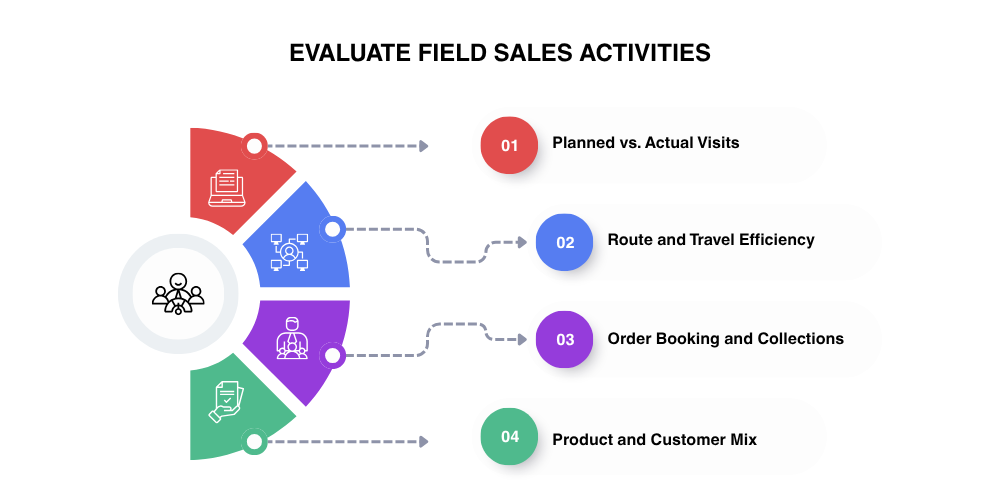
Monitor Planned and Actual Customer Visits
Compare the beat plan with actual visits to see whether reps are actually following their assigned schedule. Review missed visits, accounts getting visited repeatedly while others go untouched, and customers who haven't been contacted within the expected window. This is what separates a weak sales strategy from execution that just isn't happening. GPS-based visit verification can back this up with evidence, but location data shouldn't stand in for actually assessing what happened during the customer interaction itself; being there isn't the same as the visit mattering.
-
Evaluate Route Planning and Travel Efficiency
Reps covering large territories can lose a lot of time just traveling between customers. Poor route planning eats into the time available for prospecting, product discussions, follow-ups, and the actual selling. Compare planned routes with actual travel patterns, distance covered, and productive visits achieved. Route optimization cuts unnecessary travel and improves coverage. Travel efficiency shouldn't become a target on its own, though. A shorter route only matters if it still supports real customer coverage and real sales outcomes; otherwise you've just optimized for the wrong thing.

-
Track Order Booking and Collection Activities
For packaging businesses operating through distributors or managing recurring customer accounts, order reporting and payment collection can be important parts of the sales role. Monitor confirmed orders, pending quotations, overdue payments, and collection commitments where these responsibilities fall within the representative's scope. Separate order value from collected payments. A representative who generates substantial credit sales may still leave the business exposed to delayed collections if payment follow-ups are neglected.
-
Review Product and Customer Mix
Sales performance should reflect the quality of business generated, not just its volume. Look at which customers drive the most revenue, which packaging categories are growing, and whether reps are developing opportunities across the full product range they're supposed to sell. A rep selling cartons to an existing customer might spot an opening for protective packaging or labels too, as long as those products actually fit what the customer needs. Cross-selling should get measured through real product-category growth and customer value, not by pushing purchases a customer doesn't actually need just to hit a number.
How to Set Sales Performance Targets For Packaging Representatives
Performance targets should reflect the commercial potential of each territory and the responsibilities assigned to each representative. Applying the same revenue target to every sales representative may create unrealistic expectations when customer portfolios, order sizes, and sales cycles differ.
-
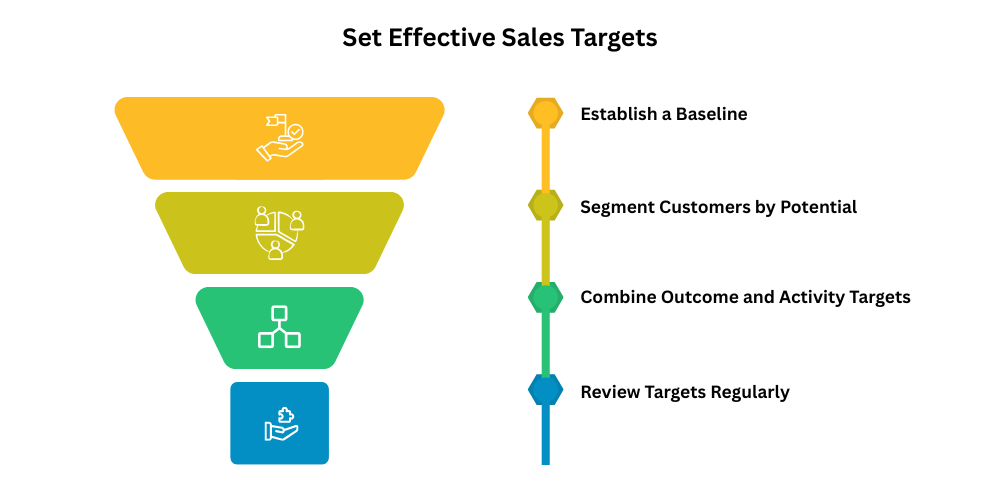
Establish a Baseline
Review historical sales, average order values, repeat purchase patterns, customer acquisition, gross margins, and seasonal demand. That's what shows you what each territory is currently delivering, and from there, what improvement is actually realistic to expect, not a number pulled out of thin air.
-
Segment Customers by Potential
Classify accounts according to factors such as expected packaging consumption, order frequency, growth potential, industry fit, and commercial value. High-potential manufacturers may require more frequent engagement than smaller accounts. This segmentation helps representatives prioritize their time and gives managers a stronger basis for setting visit and revenue expectations.
-
Combine Outcome and Activity Targets
Revenue and gross margin measure the result. Customer visits, qualified opportunities, follow-up completion, and territory coverage explain how that result got there, which matters just as much when something's going wrong. A balanced scorecard might weigh 40% on sales and margin outcomes, 25% on customer acquisition and retention, 20% on field execution, and 15% on reporting and follow-up discipline, though these numbers are illustrative, not a universal benchmark to copy. Adjust them to fit the actual sales model, and watch for double-counting the same commercial result across two different KPIs.
-
Review Targets Regularly
Evaluate performance weekly for operational issues and monthly for broader sales outcomes. Quarterly reviews can help assess territory potential, account development, and changes in market demand. When a representative misses a target, investigate the cause before changing the target or imposing corrective measures.
How Delta Sales App Helps Track Sales Rep Performance
As packaging companies expand their customer base and field sales operations, managing performance through separate spreadsheets, messaging apps, and manual reports can become increasingly difficult.
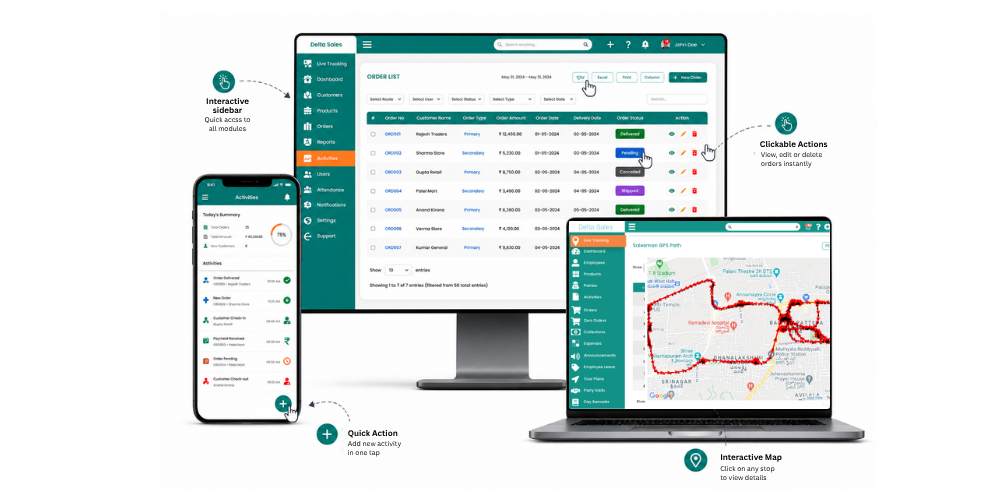
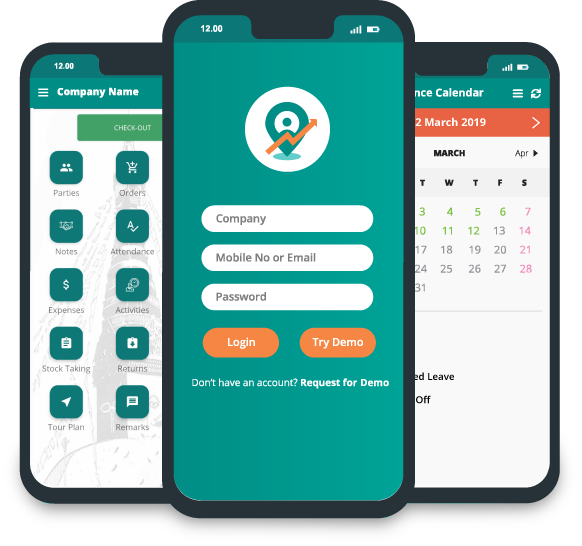
Delta Sales App provides field sales automation and employee tracking capabilities that help businesses organize field activities and access sales information in one place.
-
GPS-Based Employee Location Tracking
GPS-based location tracking helps managers understand field movement and verify whether reps are actually reaching the customer locations they're assigned to. That's useful support for field activity reviews, but only when it sits alongside visit records and customer outcomes; GPS data alone doesn't tell you what happened once the rep got there.
-
Beat Planning and Route Management
Beat planning helps organize customer visits across assigned territories. Better route planning can reduce unnecessary travel and help representatives cover more relevant accounts within their working hours.
-
Order and Collection Reporting
Digital order booking and collection reporting help businesses capture sales activity more consistently. Managers can review recorded transactions and collection updates instead of waiting for scattered manual reports.
-
Attendance and Daily Reporting
Attendance tracking and structured reporting help managers maintain visibility into field operations. Consistent DSRs make it easier to review completed activities, sales progress, and pending follow-ups.
Conclusion
Measuring sales rep performance in packaging takes more than comparing monthly sales against a target. Revenue achievement, customer acquisition, order conversion, repeat purchases, territory coverage, follow-up completion, gross margin, and reporting accuracy- each one reveals a different part of the sales process on its own, and none of them alone tells the whole story. The strongest approach combines these into one balanced scorecard, and from there a manager can actually tell whether a rep needs better prospecting support, tighter route planning, stronger follow-up discipline, or help developing the accounts they already have.
Consistent reporting matters just as much. When customer visits, orders, opportunities, and collections get recorded accurately, performance reviews stop being a guessing game, and corrective action gets a lot easier to plan. As packaging sales operations grow, a centralized field sales management system helps businesses see daily execution clearly and make real decisions about their sales teams, instead of working off whatever happened to get written down.
Request a personalized demo of Delta Sales App to explore how field sales tracking, beat planning, and digital reporting can support sales performance management.