
How to Reduce Lead Time from Order to Store Shelf
When a customer places an order, the salesperson quickly enters it into a mobile app, giving the impression of a fast and efficient process. Unfortunately, many times the order gets stuck in the back office, waiting to be processed. This leads to delays in assigning vehicles, optimizing routes, and preparing stock. By the time the products reach the retailer, valuable sales opportunities may have already slipped away.
Many businesses find themselves losing precious time in this phase. Although they have digital tools that facilitate quicker order booking, they often overlook the crucial steps that follow order confirmation. The true challenge lies in getting products onto the shelves promptly. To reduce the time from order to shelf, it’s essential to optimize every stage of fulfillment; this includes verifying orders, preparing the warehouse, managing transportation, ensuring timely delivery, and confirming receipt at retail locations. By streamlining this entire process, businesses can enhance retailer satisfaction, reduce stockouts, and boost sales without needing additional resources.
In this blog, we will explore common causes of delays, share effective strategies to overcome them, and demonstrate how field sales automation and distribution management can significantly shorten the journey from order to store.
What Is Lead Time from Order to Store Shelf?
Lead time from order to store shelf refers to the entire journey a product takes from the moment a retailer places an order until it’s ready for customers to purchase on the store shelf. This process encompasses every step involved in fulfilling that order, starting right after it’s confirmed.
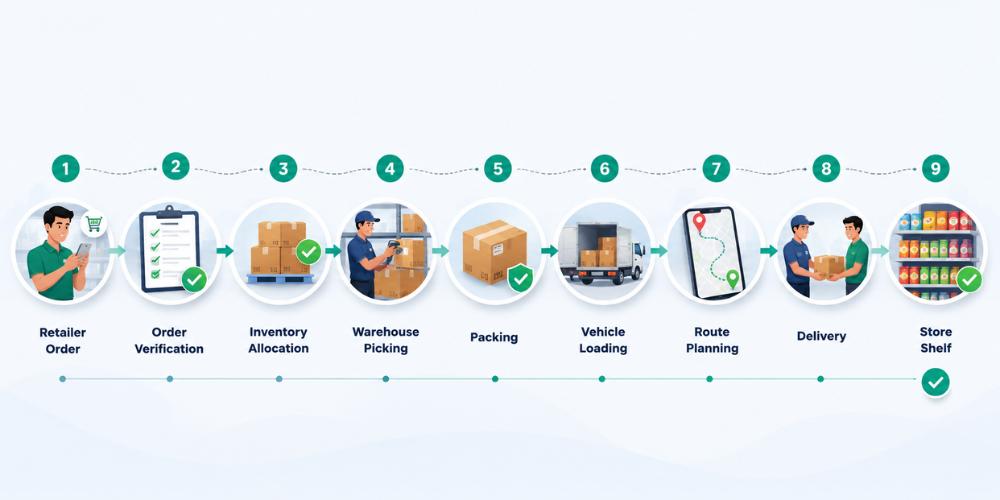
Many businesses mistakenly believe that lead time starts when products leave the warehouse. In truth, it begins much earlier when the order is first entered into the back-office system. From that point, the order navigates through several important stages, such as verifying details, allocating inventory, picking items from the warehouse, packing them up, loading onto vehicles, planning delivery routes, dispatching, and finally, replenishing the shelves. If any of these steps experience delays, the overall lead time can stretch longer than anticipated.
The typical workflow involves several key steps:
- A sales representative books the order
- The order is verified and approved
- An inventory check is conducted to ensure availability
- The warehouse team picks and packs the items
- A loading sheet is generated for the shipment
- Vehicles are allocated for delivery
- Delivery routes are planned for efficiency
- The order is dispatched from the warehouse
- The products are delivered to the retailer
- Confirmation of delivery is received, and shelves are replenished
Each step in this process adds to the overall lead time. By automating order processing, enhancing warehouse operations, optimizing transportation, and tracking deliveries in real time, businesses can significantly reduce this cycle and boost the efficiency of their supply chain.
Why Reducing Lead Time Matters
Reducing lead time goes beyond just speeding up deliveries; it’s about enhancing the entire order fulfillment journey. From the moment an order is placed to when products finally reach a retailer's shelf, each step plays a crucial role in how quickly customers can access those items. For FMCG manufacturers, distributors, and wholesalers, shorter lead times foster smoother operations, improved inventory management, and stronger partnerships with retailers.
A well-coordinated order-to-shelf process also helps eliminate unnecessary delays between teams. When sales, warehouse, dispatch, and delivery personnel collaborate seamlessly, orders flow through the supply chain without hiccups, enabling businesses to meet retailer expectations while keeping operational costs in check.
Some of the key benefits of reducing lead time include:
-
Improved product availability:
Timely order fulfillment means that products are restocked before shelves run dry. This not only helps retailers keep their stock levels steady but also prevents customers from facing empty shelves, enhancing their shopping experience. Shoppers appreciate having their favorite items readily available, making their visits more enjoyable and satisfying.
-
Higher retailer satisfaction and loyalty:
Retailers depend on prompt deliveries to meet customer needs efficiently. Regularly fulfilling orders on time fosters trust, minimizes complaints regarding delays, and motivates retailers to maintain relationships with suppliers that provide reliable service.
-
Increased sales opportunities:
Every moment a product lingers in the warehouse represents a lost chance for revenue. By shortening lead times, products can arrive at stores more swiftly, enabling businesses to swiftly adapt to customer needs, enhance product availability, and capitalize on sales during high-demand periods.
-
Lower inventory and warehousing costs:
Faster inventory movement means products spend less time occupying valuable warehouse space. This improves inventory turnover, reduces storage and handling expenses, minimizes the risk of overstocking, and helps businesses maintain healthier inventory levels.
-
Better warehouse and transportation efficiency:
Efficient picking, packing, loading, vehicle assignment, and dispatch processes help minimize delays in the fulfillment cycle. When paired with well-planned delivery routes, companies can make better use of their vehicles, cut down on fuel usage, increase the number of deliveries made in a single trip, and ultimately lower logistics expenses.
-
Enhanced visibility and operational oversight:
Keeping track of orders, deliveries, and field operations in real-time allows managers to stay connected with the fulfillment process at every step. This transparency helps them spot potential delays early, tackle challenges head-on, and make sure that orders reach customers on time.
Where Most Businesses Lose Time After Order Booking
For many companies today, the order booking process has evolved beyond being the primary hurdle. Thanks to innovative field sales automation tools, sales reps can now quickly capture and submit orders right from their mobile devices in just a few minutes. Yet, the moment an order lands in the back office, a whole new set of challenges arises, and this is where delays often pile up.
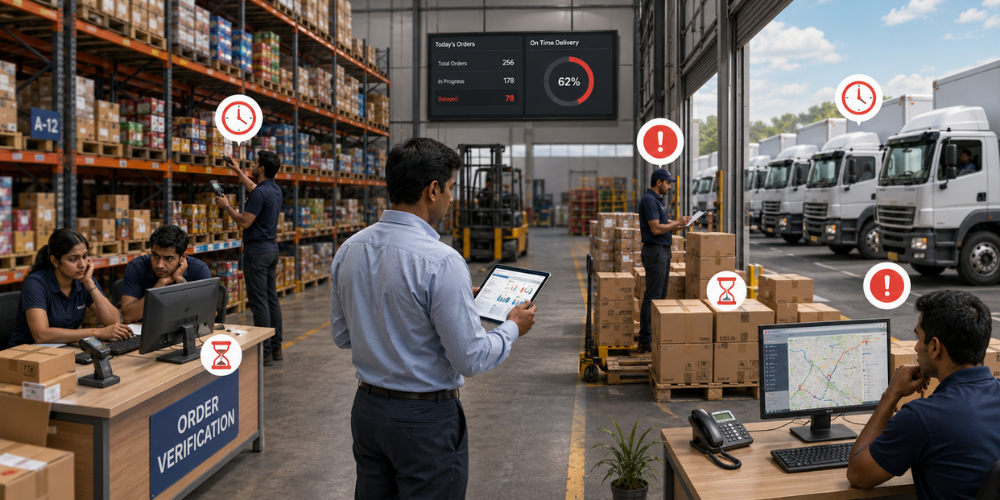
Rather than flowing smoothly from one phase to another, orders often get stuck due to manual approvals, lack of coordination between teams, discrepancies in inventory, inefficient warehouse operations, and unexpected delivery issues. While each of these delays might seem trivial on its own, collectively they can significantly prolong the time it takes for products to hit the shelves.
Here are some of the typical bottlenecks that can stretch the order-to-shelf timeline:
-
Manual Order Verification
Many businesses continue to depend on their employees to personally verify orders before they are processed. Teams diligently check product availability, customer credit limits, outstanding payments, pricing, and promotional schemes for each order individually. During peak times, these manual checks can lead to long queues, causing delays in warehouse processing and dispatch. By automating order validation, businesses can reduce unnecessary waiting times and ensure that approved orders move into fulfillment more swiftly, allowing their teams to focus on more meaningful tasks.
-
Poor Inventory Visibility
Orders frequently experience delays due to warehouse teams lacking real-time insight into stock levels. An order might be processed even when specific items are out of stock, compelling teams to either wait for restocking or make urgent changes. Keeping precise, up-to-date inventory records enables businesses to allocate stock promptly and initiate fulfillment without avoidable disruptions.
-
Slow Warehouse Picking and Packing
Even after an order gets the green light, unexpected delays can still happen within the warehouse. Picking teams might rely on printed order lists, hunt for products by hand, or tackle orders without a clear priority. As the number of orders rises, these challenges can bog down the packing and dispatch process, lengthening the overall time it takes to fulfill orders.
-
Inefficient Vehicle Allocation
Manually assigning delivery vehicles can result in inefficient use of resources. Some vehicles might be carrying too much weight, while others sit idle, leading to mismatched delivery schedules that don't consider vehicle capacity or destination. By implementing smarter vehicle allocation strategies, businesses can enhance delivery efficiency, minimize unnecessary trips, and reduce delays in dispatching, ultimately creating a smoother experience for everyone involved.
-
Unoptimized Delivery Routes
Inefficient delivery routes can lead to wasted time, fuel, and resources. Drivers might find themselves taking longer paths than needed or going back to the same locations repeatedly. With a route planning system, businesses can help their drivers make more deliveries in a shorter amount of time, all while keeping transportation costs down. This not only improves efficiency but also enhances the overall experience for both drivers and customers.
-
Lack of Delivery Tracking and Validation
In the absence of real-time delivery tracking, dispatch teams struggle to see where their vehicles are or if deliveries have been successfully completed. Often, delays slip under the radar until retailers raise concerns about missing or late orders. By utilizing GPS tracking and digital proof of delivery, businesses can receive instant updates, allowing them to keep an eye on deliveries, swiftly address any issues, and ensure their delivery records are precise.
The Complete Workflow After an Order Reaches the Back Office
After a sales representative submits an order, the focus shifts from the sales team to the operations and logistics teams. This marks the beginning of the fulfillment journey. Each order navigates through a series of connected steps before the products reach the retailer and find their way onto store shelves. If any part of this process experiences a delay, be it waiting for approval, tracking down inventory, assigning a delivery vehicle, or confirming delivery, the overall time from order to shelf extends. This is why businesses aiming to enhance fulfillment speed must refine each step, rather than just concentrating on the order booking phase.
Now, let’s explore the entire workflow that unfolds once an order arrives at the back office.
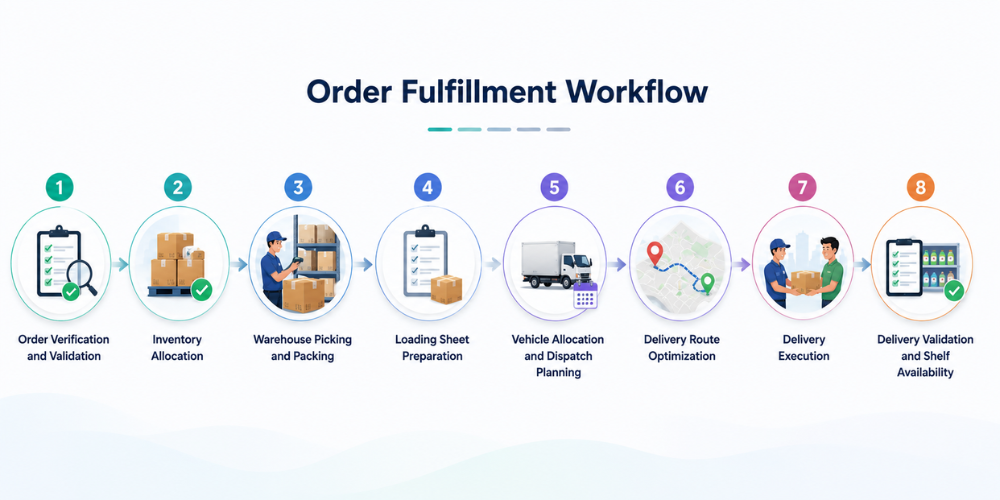
Step 1: Order Verification and Validation
The initial stage involves ensuring that the order is correct and prepared for processing. The operations team carefully reviews various details, including product availability, customer information, pricing, any applicable discounts or promotions, credit limits, and outstanding payments. When these checks are done manually, it can lead to orders being stuck in limbo for hours or even days, especially during busy times.
By implementing a sales order management system, this process can be automated, allowing for immediate order validation. This not only minimizes human errors but also enables approved orders to seamlessly transition into the fulfillment pipeline.
Step 2: Inventory Allocation
Once an order is approved, the required products must be reserved in the warehouse. This step ensures that inventory is allocated specifically for that order and cannot be assigned elsewhere. In the absence of real-time stock visibility, businesses frequently find themselves in challenging situations where they accept orders only to discover that the products are out of stock. This can result in frustrating delays, partial deliveries, or backorders that disappoint customers.
Implementing an integrated inventory management system offers precise stock information, empowering warehouse teams to quickly reserve inventory and start fulfilling orders without unnecessary disruptions. This not only streamlines operations but also enhances customer satisfaction by ensuring that products are available when promised.
Step 3: Warehouse Picking and Packing
Once the inventory is allocated, the dedicated warehouse team starts the important task of picking the ordered products from their designated storage spots. Each product is carefully checked, securely packed, and readied for dispatch. This stage of picking and packing is crucial; even a minor delay can ripple through the entire process, impacting everything that follows.
Companies that embrace digital picking lists, utilize barcode scanning, and maintain well-organized warehouse layouts find themselves able to handle more orders efficiently. This not only speeds up the process but also reduces the chances of picking mistakes and ensures that shipments arrive in perfect condition.
Step 4: Loading Sheet Preparation
Before products are placed onto delivery vehicles, our team creates loading sheets to ensure that shipments are organized in a thoughtful manner. These sheets detail which products are designated for each retailer, delivery route, or vehicle, guiding our warehouse staff to load items in the most effective order.
This careful approach to loading not only minimizes the time spent during the loading process but also facilitates quicker unloading at each retailer. As a result, our drivers can complete their deliveries more smoothly and efficiently throughout the day.
Step 5: Vehicle Allocation and Dispatch Planning
As shipments are prepared, it's essential for businesses to choose the appropriate delivery vehicle, taking into account factors like order size, delivery destination, route capacity, and vehicle availability. Relying on manual vehicle assignment can often result in fleets that aren't fully utilized, delays in dispatching, or unnecessary trips that waste time and resources. By leveraging digital planning tools, companies can enhance vehicle usage, ensuring that orders are delivered promptly while also cutting down on transportation expenses.
For those businesses that utilize direct store delivery models, Van Sales Software can streamline this process even further. It empowers sales representatives to manage inventory, place orders, and complete deliveries all in one visit to the retailer, making the entire operation more efficient and customer-friendly.
Step 6: Delivery Route Optimization
Before vehicles head out from the warehouse, it's important to carefully plan delivery routes. This helps ensure that travel time is kept to a minimum while maximizing the number of deliveries made in one trip. Considerations like the urgency of deliveries, current traffic conditions, the locations of retailers, and the capacity of each vehicle play a crucial role in this planning process.
By optimizing these routes, businesses can save on fuel, reduce delivery times, enhance driver efficiency, and reliably meet their delivery commitments.
Step 7: Delivery Execution
Once the products are dispatched, our dedicated delivery team takes charge of transporting them to retailers as per the planned schedule. At this crucial stage, our operations teams need to have clear visibility into the locations of our vehicles and the progress of each delivery. This way, they can swiftly address any unexpected delays or changes in the route.
With a GPS-enabled tracking system, our managers can keep a close eye on deliveries in real time. They can easily communicate with drivers when necessary and ensure that retailers are kept in the loop about when to expect their orders.
Step 8: Delivery Validation and Shelf Availability
The fulfillment journey continues even after the vehicle arrives at the retailer. Businesses need to ensure that the right products have been delivered and are ready to grace the store shelves. Using digital proof of delivery, such as electronic signatures, geo-tagged photos, timestamps, and GPS verification, can help resolve disputes and create a transparent record of successful deliveries.
Once the delivery is verified and the products are neatly arranged on the shelves, the cycle from order to store shelf comes to a satisfying close.
How Van Sales Can Reduce Lead Time
For many FMCG distributors and wholesalers, the traditional fulfillment process involves multiple handoffs. A sales representative books an order, the order is sent to the back office for processing, the warehouse prepares the shipment, a vehicle is assigned, and only then is the product delivered to the retailer. While this workflow works well for planned deliveries, it can significantly increase lead time, especially for retailers that need urgent replenishment.
This is where Van Sales Software offers a faster and more efficient alternative.
In a van sales model, delivery vehicles are preloaded with inventory before leaving the warehouse. Sales representatives or van sales executives carry stock with them, allowing them to book orders and fulfill them during the same retailer visit. Instead of waiting for the order to go through the traditional fulfillment cycle, products move directly from the delivery vehicle to the retailer's shelves.
The simplified workflow looks like this:
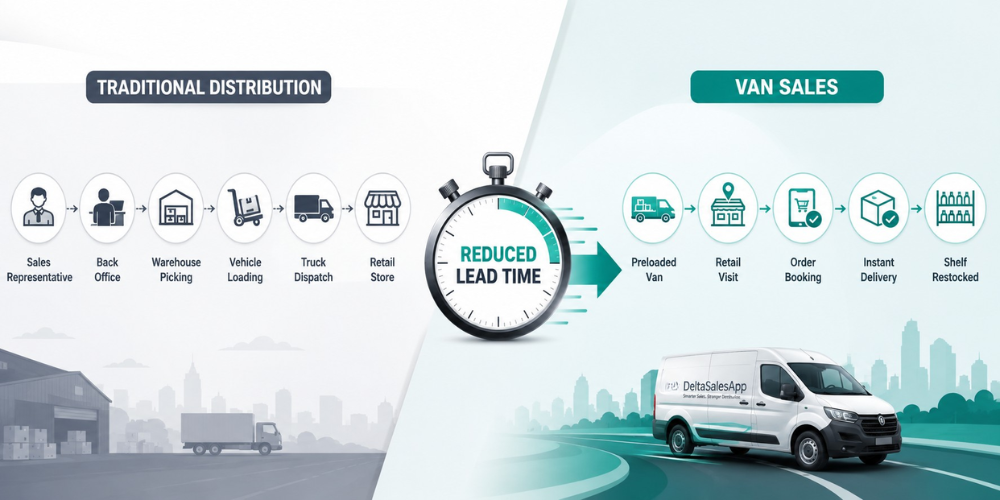
By eliminating several intermediate fulfillment stages, van sales significantly reduces the time between order placement and product availability.
Some of the key ways van sales software helps reduce lead time include:
-
Enables same-day order fulfillment:
Delivery vehicles carry a ready supply of products, allowing retailers to bypass the usual delays of warehouse processing or dispatch. Once an order is made, items can be delivered immediately, ensuring shelves are restocked swiftly and efficiently.
-
Less reliance on warehouses:
Orders can often be fulfilled right from the delivery vehicle, eliminating the need for a return trip to the warehouse. By stocking popular items in the vehicle, businesses can ease the burden on their warehouses and concentrate on handling larger or scheduled orders more effectively.
-
Enhances retailer service:
Retailers gain from quick access to products, particularly during urgent restocking needs. Swift deliveries minimize stockout risks and foster stronger partnerships with retail associates.
-
Streamlines delivery processes:
A single delivery vehicle can make stops at various retailers, picking up orders, dropping off products, and even handling payments all in one trip. This not only maximizes the use of the vehicle but also cuts down on the number of individual delivery runs needed.
-
Offers real-time visibility into inventory:
Van sales software empowers field teams by providing them with real-time access to vehicle stock, enabling them to update inventory immediately after each sale. This seamless synchronization with the central system helps eliminate stock discrepancies and keeps inventory records precise.
-
Facilitates quicker billing and payment collection:
Alongside delivering products, sales representatives can create invoices, log payments, and provide digital receipts during their visit, making life easier by cutting down on paperwork after delivery.
The Role of Distribution Management
Reducing lead time is a team effort that goes beyond just one department. Even when sales representatives are quick to collect orders, and the warehouse operates efficiently, delays can still happen if there’s a lack of coordination among inventory, dispatch, transportation, and delivery teams. This highlights the importance of effective distribution management in ensuring that products transition smoothly from the warehouse to the retailer.
A well-coordinated distribution process links every part of the fulfillment cycle. Rather than working in silos, teams from sales, warehouse, logistics, and the field share information effortlessly. This collaboration leads to faster order processing, accurate inventory allocation, timely vehicle dispatch, and on-schedule deliveries. Such synchronization minimizes unnecessary waiting times throughout the order-to-shelf journey.
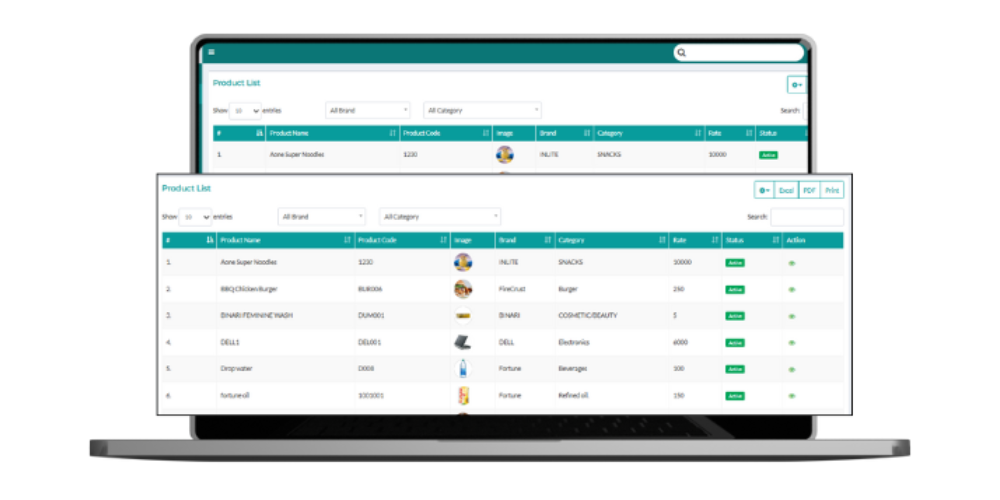
Moreover, a centralized Distribution Management System (DMS) provides businesses with a clear view of their distribution operations. Managers can easily track order statuses, warehouse activities, delivery progress, and inventory movements from one platform, allowing them to spot potential bottlenecks before they impact retailer deliveries.
Some of the key ways distribution management helps reduce lead time include:
-
Improves coordination across departments:
Sales, warehouse, logistics, and delivery teams work from the same real-time data, reducing communication gaps and ensuring orders move seamlessly from one stage to the next without unnecessary delays.
-
Accelerates order processing:
Orders received from the field are instantly shared with warehouse and dispatch teams, allowing fulfillment activities to begin immediately instead of waiting for manual updates or paperwork.
-
Optimizes inventory allocation:
A centralized system provides accurate inventory visibility across warehouses and distribution centers, ensuring products are reserved and dispatched without delays caused by stock discrepancies.
-
Enhances delivery planning:
Distribution managers can allocate vehicles, schedule deliveries, and assign routes based on order priority, delivery locations, and vehicle capacity, resulting in faster and more efficient deliveries.
-
Provides end-to-end visibility:
Real-time tracking of orders, shipments, and deliveries enables businesses to monitor the complete fulfillment process, quickly identify operational bottlenecks, and take corrective action before delays impact retailers.
-
Improves overall supply chain efficiency:
By integrating order management, inventory, warehouse operations, and logistics into a single workflow, businesses can reduce manual effort, eliminate duplicate processes, and consistently shorten order-to-shelf lead time.
How Field Sales Automation Supports Faster Fulfillment
While the physical movement of goods happens after an order is placed, the speed of the fulfillment process largely depends on how quickly and accurately that order reaches the back office. This is where field sales automation plays an important role. By digitizing order collection and eliminating manual paperwork, it ensures that operations teams can begin processing orders without unnecessary delays.
In many businesses, sales representatives still collect orders on paper or spreadsheets and submit them at the end of the day. This creates a gap between order booking and order processing, delaying every subsequent step in the fulfillment cycle. With field sales automation software, orders are captured digitally during the retailer visit and synced instantly with the back-office system. As soon as an order is submitted, warehouse and operations teams can begin verification, inventory allocation, and dispatch planning.
Some of the ways field sales automation helps reduce lead time include:
-
Captures orders instantly from the field
Sales representatives can create and submit orders during their retailer visits using a mobile application. Orders are immediately available to back-office teams, eliminating delays caused by manual data entry or paper-based reporting.
-
Reduces order errors and rework
Digital order capture minimizes mistakes related to product selection, pricing, quantities, or customer details. Fewer errors mean fewer order corrections, allowing fulfillment teams to process orders without interruptions.
-
Speeds up order processing
Since orders reach the operations team in real time, verification and inventory allocation can begin immediately instead of waiting for sales representatives to return to the office or submit reports at the end of the day.
-
Provides real-time visibility for managers
Sales managers and operations teams can monitor incoming orders as they are placed, helping them prioritize urgent deliveries, plan warehouse activities, and allocate resources more effectively.
-
Supports better coordination across teams
Sales, warehouse, and logistics departments work from the same centralized data, reducing communication gaps and ensuring every team has the latest order information throughout the fulfillment process.
-
Integrates with other business processes
By integrating with sales order management, inventory management, and distribution management systems, field sales automation fosters a smooth workflow that accelerates the transition of orders from booking to dispatch and delivery.

Best Practices to Reduce Order-to-Shelf Lead Time
To truly reduce order-to-shelf lead time, it's essential to recognize that this isn't just about making one change; it's about fine-tuning every part of the fulfillment journey. Businesses must work to remove manual hurdles, enhance collaboration among teams, and embrace technology that offers real-time insights into sales, inventory, warehouse, and delivery processes.
A unified solution like Delta Sales App can bridge these various functions on a single platform. By integrating field sales automation, sales order management, inventory management, van sales, and distribution operations, it empowers teams to access real-time information, minimizing delays between departments and speeding up the entire fulfillment process.
By embracing the following strategies, distributors and FMCG businesses can develop a quicker, more dependable fulfillment system that ensures products reach store shelves more swiftly:
-
Digitize order collection:
Transition from traditional paper-based order booking to a user-friendly field sales automation solution that captures orders digitally and shares them with the back office in real-time. This shift not only removes the burden of manual data entry but also speeds up processing times, enabling fulfillment activities to kick off without delay.
-
Automate order verification:
Implement a sales order management system that effortlessly checks customer details, product prices, credit limits, outstanding payments, and promotional offers. By speeding up this validation process, approved orders can move swiftly into fulfillment without unnecessary delays.
-
Maintain real-time inventory visibility:
Reliable inventory information allows businesses to quickly set aside stock when an order comes in, minimizing delays that can arise from stock mismatches or last-minute changes. This not only enhances inventory management but also helps avoid unnecessary backorders, ensuring a smoother experience for both the business and its customers.
-
Optimize warehouse operations:
Introduce user-friendly digital picking lists, thoughtfully designed warehouse layouts, and consistent packing methods to minimize picking mistakes and enhance the speed of order preparation. Streamlined warehouse operations ensure that products are promptly prepared for dispatch, creating a smoother experience for everyone involved.
-
Plan deliveries intelligently:
Create loading sheets effortlessly, assign vehicles according to their capacity and delivery areas, and enhance delivery routes to minimize travel time while maximizing vehicle efficiency. Thoughtful planning enables more deliveries to be completed with fewer resources, fostering a more sustainable approach to logistics.
-
Track deliveries in real time:
Keep an eye on your vehicles with GPS tracking and confirm deliveries through digital proof of delivery. Having real-time visibility helps businesses quickly spot any delays, enhance delivery accuracy, and ensure retailers are kept in the loop throughout the delivery journey.
-
Use integrated distribution software:
Instead of managing sales, inventory, warehouse, and logistics through separate systems, use an integrated platform that connects every stage of the fulfillment cycle. This improves collaboration across teams and eliminates communication gaps that often increase lead time.
Conclusion
Reducing lead time from order to store shelf is about more than just speeding up order booking; it’s about enhancing every part of the fulfillment journey. This includes everything from verifying orders and allocating inventory to managing warehouse operations, planning vehicle routes, and ensuring timely delivery. When all these elements work in harmony, businesses can not only shorten fulfillment cycles but also cut costs, boost inventory flow, and guarantee that products arrive at retailers precisely when they’re needed. The secret lies in removing manual hurdles and fostering collaboration across departments through a cohesive system. With the right technology in place, companies can enjoy real-time insights into orders, inventory, field activities, and deliveries, empowering them to make quicker decisions and provide a superior experience for both retailers and customers.
The Delta Sales App is designed to help businesses achieve these goals by integrating field sales automation, sales order management, inventory management, van sales, GPS-enabled field tracking, and distribution management into one user-friendly platform. By simplifying the entire order-to-delivery process, it helps reduce lead times, enhance operational efficiency, and drive business growth.
If you’re aiming to optimize your sales and distribution processes, the Delta Sales App can assist you in automating order management, boosting fulfillment efficiency, and getting products onto store shelves more quickly.
Schedule a free demo today and see how the Delta Sales App can support your business in reducing lead times, increasing retailer satisfaction, and creating a more effective distribution network.