
Why Is Sales Visit Quality More Important Than Visit Quantity?

A busy sales team isn't necessarily a productive one. In field sales, a full day of visits can look like a win on paper: territory covered, calls completed, and the daily report full of decent-looking numbers. But look past the visit count, and a different picture can show up. Were customers actually engaged? Did the rep understand what they needed? Did anything get ordered? Did anyone catch a stock issue? Did the rep leave with an actual next step, or just a checked box?
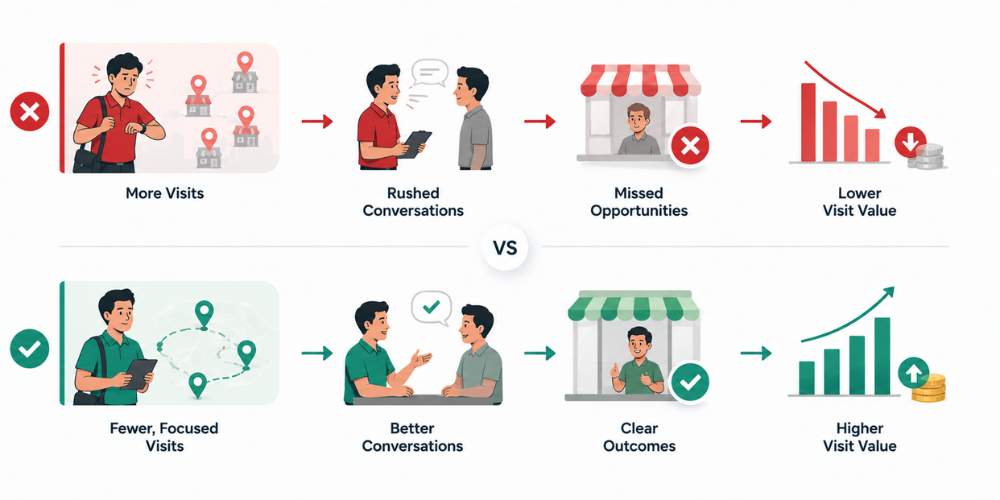
That's the real difference between visit quantity and visit quality. Visit volume has long been an easy way to measure field activity, and reaching enough outlets matters for maintaining market coverage. But lean too hard on the number of visits, and you end up encouraging rushed interactions that don't produce much. A visit that happens but leaves behind no order, no insight, and no follow-up opportunity doesn't really contribute much to performance, no matter what the tally says.
A quality visit looks different. It has a purpose, and it creates something during the interaction: an order, better product availability, a resolved issue, a stronger relationship, a new product introduced, and useful feedback from the market. For a modern field sales team, the real question isn't "How many visits did we complete?" It's "What did those visits actually achieve?"
Making that shift is what actually moves sales productivity, customer engagement, conversion rates, field performance, and revenue per visit, without just telling reps to move faster or squeeze in more stops.
The Problem With Chasing Visit Numbers
Sales visit targets are straightforward and easily tracked. A manager might ask, "How many stores did the representative visit today?" However, this figure alone fails to capture the essence of those interactions. A high number of visits can mask hurried discussions, overlooked chances, inadequate preparation, insufficient product knowledge, or encounters that yielded no significant results.
Why "More Visits" Became a Default Sales Metric
Sales teams have traditionally focused on activity-based KPIs because they’re easy to track. The field representative could be given a target of 20, 30, or more outlet visits per day. Managers can then compare completed visits to the target and quickly determine if a rep was active in the field. This makes some sense. Tracking sales activity is important because consistent field activity is required to maintain market coverage. But activity is not the same thing as productivity. A completed visit only tells a manager that a sales rep was at the outlet. It does not tell them if:
-
Contact was made with the right client
-
The salesperson talked about related products
-
Order Created.
-
Stock issues identified
-
A competitor activity was observed
-
A payment has been received
-
A follow-up was scheduled
-
The retailer’s relationship got better
Which is why quality of sales visits is so important.
The Hidden Price of Quantity-Driven Sales Calls
When reps get judged mainly on visit counts, they naturally optimize for speed. Instead of taking the time to understand what a retailer actually needs, a rep rushes through the conversation just to get to the next stop. Over time, that creates real problems: shallow customer interactions, missed sales opportunities, incomplete market information, weaker retailer relationships, wasted travel, lower order values, weak follow-up, and field data that isn't even accurate.
A team can look highly active while its actual field productivity stays flat. The goal isn't to scrap visit targets. It's to actually look at what those visits are producing.
What Actually Defines a "Quality" Sales Visit
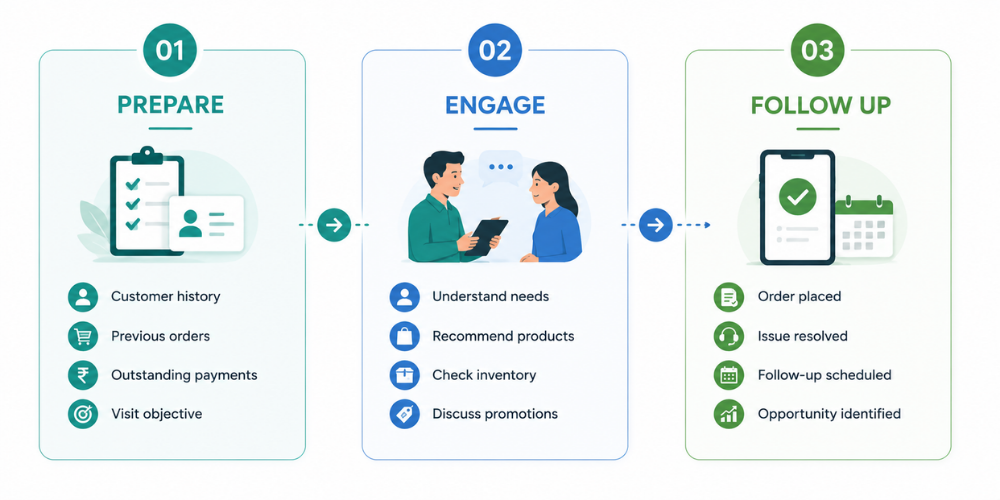
A successful sales visit is one that feels purposeful and leads to a significant result. This result doesn't always mean securing an immediate order. A meaningful visit might uncover a stockout, address a payment concern, showcase a new product, gather insights about competitors, enhance product visibility, or pave the way for a promising future sale. There are three key stages to focus on.
1. Preparation Before the Visit
Preparation is key before a salesperson steps into a store. A representative needs to understand who they are visiting, which products might need some attention, if there are any outstanding orders or payments, and what goals they aim to achieve during the visit. Utilizing historical sales data can enhance this preparation process.
For instance, if a retailer typically orders a specific product but hasn't placed an order recently, the representative can delve into the reasons behind this change. If a customer's last order was smaller than usual, the rep can tailor their conversation to address this. This is where thoughtful sales route planning, knowledge of customer history, order data, and effective retailer management come into play, leading to improved field performance. The better prepared the salesperson is, the higher the chances of the visit yielding positive outcomes.
2. Relevance and Personalization During the Visit
Not every retailer needs the same thing. A high-volume retailer usually cares about availability, promotions, and margins. A smaller outlet might just need help picking the right product mix. Someone else might mainly have a payment or stock issue on their mind. A quality visit adapts to whoever's in front of the rep instead of running the same script at every stop.
That can mean checking in on what the customer actually needs right now, recommending relevant products, checking inventory, talking through schemes or promotions, catching competitor activity, addressing whatever's bothering the customer, improving how the product's displayed, or just picking up feedback from the market. That's what makes the interaction actually mean something and gives it a real shot at a good outcome.
3. Clear Outcomes and Next Steps After the Visit
A meaningful visit should continue even after the salesperson leaves the outlet. It's essential to have a clear grasp of the next steps. This could involve:
-
An order being placed
-
A payment being processed
-
Resolving a stock issue
-
Replenishing a product
-
Making a follow-up call
-
Identifying a new product opportunity
-
Addressing a customer concern
With effective sales activity tracking, managers can shift from merely confirming if a visit occurred to truly understanding the outcomes that followed.
Quality vs. Quantity: What the Data Shows
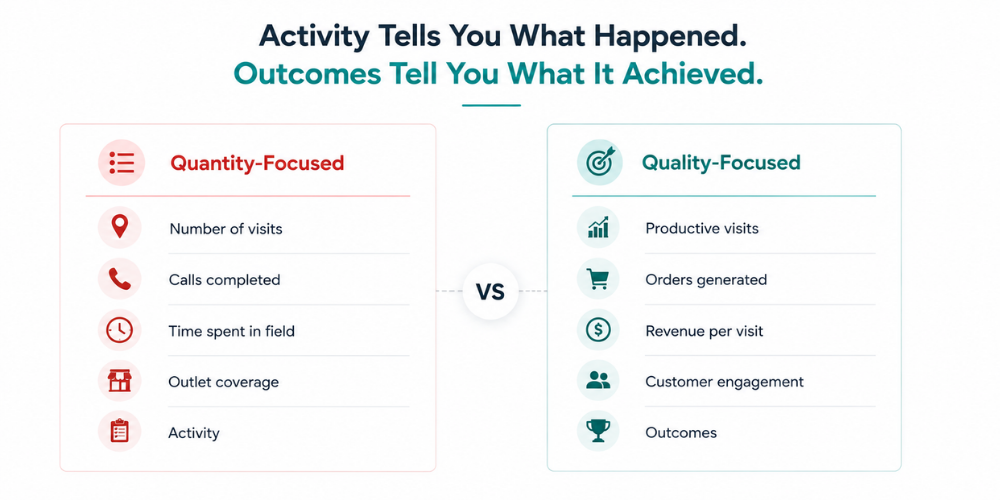
The distinction between quality and quantity becomes evident when sales teams focus on outcomes instead of just activities. Two representatives might have the same number of visits but yield significantly different results.
Conversion Rates Per Visit vs. Per Rep
Suppose Rep A completes 25 visits and generates 8 orders. Rep B completes 15 visits and generates 10 orders. If the team only tracks visit quantity, Rep A appears more productive. But when managers calculate sales conversion per visit, the picture changes.
Rep A: 8 orders ÷ 25 visits = 32% conversion
Rep B: 10 orders ÷ 15 visits = 67% conversion
Rep B may have made fewer visits, but the impact of those visits was significantly greater, as evidenced by a higher conversion rate. It's important to recognize that not every visit is about closing a sale; some interactions serve different purposes. By evaluating both the outcomes and the number of visits, we gain a more comprehensive understanding of a sales representative's effectiveness. Key metrics to consider include:
-
Orders generated per visit
-
Conversion percentage
-
Average value of orders
-
Revenue generated per visit
-
Productive interactions
-
Completion of follow-ups
-
Opportunities for new outlets
-
Collection value
-
Value of collections
These metrics empower managers to assess whether the efforts in the field are genuinely driving revenue growth.
Customer Relationship Impact Over Time
Sales success doesn't happen overnight. A representative who genuinely listens, offers thoughtful advice, addresses concerns, understands the unique needs of retailers, and keeps their promises can foster deeper connections with customers. These relationships can lead to:
-
More frequent orders
-
Greater acceptance of products
-
Increased customer loyalty
-
Opportunities for cross-selling
-
Embracing new products
-
Sustained revenue growth
While a hurried visit might secure a quick sale, meaningful interactions over time can cultivate lasting customer relationships that thrive for months or even years.
Why Quality Matters More Than Quantity in Sales Visits
While the number of visits is important, it's crucial to remember that a sales team can only thrive if representatives maintain their connections with customers. However, after reaching a foundational level of market coverage, simply increasing the number of visits may not lead to a corresponding rise in revenue. Instead, focusing on enhancing the quality and impact of each interaction can yield far better results.

Stronger Customer Relationships Over Time
Retailers engage with numerous sales representatives. Those representatives who take the time to understand the retailer's unique challenges and streamline their processes are more likely to be seen as trusted allies. A salesperson who prioritizes quality doesn't just ask, "Do you need an order?" Instead, they might inquire:
-
"Which products are flying off the shelves?"
-
"Are you running into any stock shortages?"
-
"What are your customers curious about?"
-
"Have you noticed any moves from competitors?"
-
"What should we ensure is stocked before our next visit?"
These meaningful conversations foster stronger customer relationships and provide insights that can enhance future strategies.
Higher Conversion and Revenue Impact Per Visit
When representatives engage in meaningful conversations and aim for clear results, each visit becomes a valuable opportunity to drive revenue. A productive visit can lead to larger orders, increased product placements, new product trials, repeat purchases, or essential follow-up opportunities. This highlights why revenue generated per sales visit is often a more insightful performance metric than merely counting visits. Rather than just asking, "How many outlets did the rep visit?" managers should also consider, "What outcomes did those visits achieve?"
Better Use of Rep Time and Resources
Field representatives often find themselves on the road for long stretches, moving from one outlet to another. When a representative invests hours in travel only to rush through brief, unproductive interactions, it signifies a misallocation of the company's most valuable field resource. By enhancing sales territory management and optimizing route planning, businesses can minimize unnecessary travel time, allowing representatives to connect more deeply with key customers. The goal is straightforward: reduce time spent on low-impact tasks and increase focus on meaningful customer engagements.
Why Sales Teams Still Default to Quantity
If quality is so important, why do so many teams continue to focus heavily on visit numbers? The answer usually comes down to measurement.
-
Pressure From Outdated KPIs
Tracking visit counts is simple. Managers can easily establish targets, assess actual visits against those targets, and monitor performance. However, measuring quality is more complex, as it encompasses outcomes and context. For instance, a 30-minute visit that successfully addresses a significant issue for a retailer could be far more impactful than three quick five-minute visits. Yet, if the KPI solely counts completed visits, those three brief interactions may seem more favorable. This leads to a challenge in measurement. When teams focus on what’s easiest to quantify, employees tend to prioritize that metric, potentially overlooking the true value of their engagements.
-
Lack of Visibility Into Visit Effectiveness
One significant hurdle is that managers frequently lack insight into the dynamics of field visits. A typical sales report might simply indicate Rep → Customer → Visit Completed. However, it often misses the nuances: Rep → Customer → 25-minute conversation → stock issue uncovered → order placed → follow-up arranged. Without comprehensive field data, managers struggle to grasp the true effectiveness of sales visits. This is where technology can play a vital role in enhancing understanding and connection.
How to Shift Your Sales Team Toward Quality-Focused Visits
Moving from quantity-focused sales management to quality-focused execution does not mean removing visit targets completely. It means combining activity metrics with outcome metrics.
Set Outcome-Based Goals Instead of Visit Counts
Rather than focusing solely on the number of visits, it's important to set meaningful goals that reflect the true impact of those visits. Consider what you want to achieve with each interaction, such as
-
Engaging and productive visits
-
Generating new orders
-
Maximizing revenue per visit
-
Increasing average order value
-
Meeting collection targets
-
Activating new outlets
-
Completing necessary follow-ups
-
Ensuring effective product distribution
-
Resolving retailer issues
This approach fosters a healthier balance between the quantity of sales activities and their overall productivity. While visit volume can still serve as a valuable operational KPI, it should not be the sole indicator of success.
Track What Happens During the Visit, Not Just That It Happened
A GPS check-in can confirm that a representative reached an outlet. But location alone cannot explain visit effectiveness. Teams should capture relevant field information such as:
-
Visit duration
-
Order details
-
Products discussed
-
Inventory status
-
Customer feedback
-
Images where required
-
Payment collection
-
Follow-up requirements
-
Visit outcome
This transforms basic field force tracking into a more useful source of business intelligence.
Use Data to Identify High-Impact Visits vs. Low-Value Ones
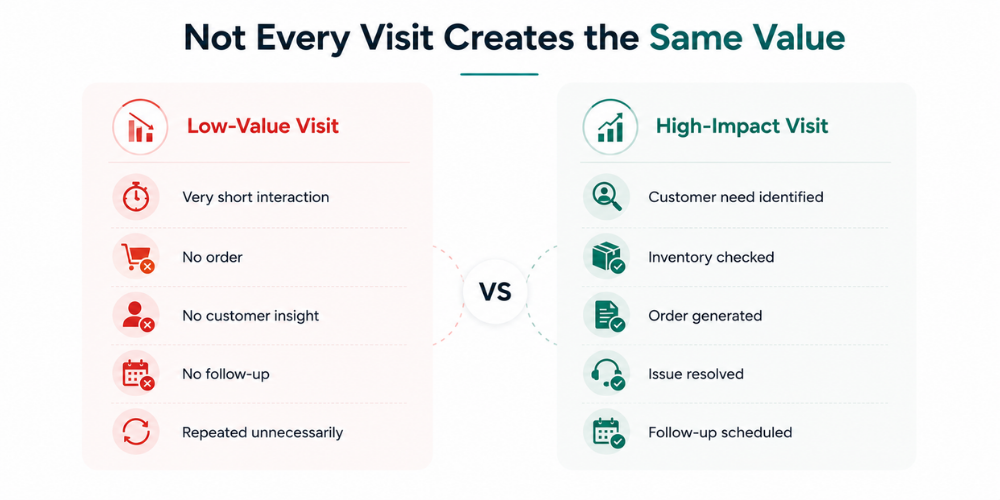
As visit and sales data come together, managers can begin to uncover meaningful trends. They might find that:
-
Extended visits at key locations lead to increased order values
-
Some regions see a lot of visits but struggle with conversions
-
Certain representatives consistently achieve higher revenue per visit
-
A few outlets need frequent attention but yield minimal business
-
Specific products shine when representatives take the time to explain them thoroughly
These revelations can enhance the optimization of sales territories, improve route planning, provide better coaching, and allocate resources more effectively. Rather than simply urging representatives to "visit more," managers can encourage them to ensure that each significant visit is impactful.
How GPS & Visit-Tracking Tools Help Improve Visit Quality
Technology can't make a sales conversation valuable on its own. What it can do is give managers the visibility to actually see field activity and improve it. A field sales tracking app pulls location, visit, order, and performance data together into a fuller picture of what's happening in execution.
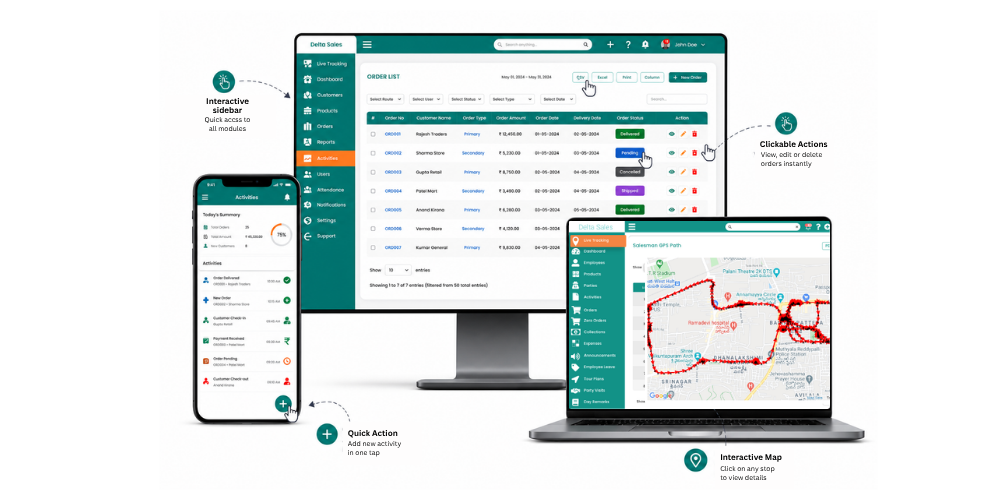
Delta Sales App, for instance, handles field activity through GPS-based tracking, visit management, order management, beat planning, and reporting. The real value isn't knowing where a rep is standing. It's connecting field activity to actual business outcomes.
-
Verifying Visit Duration and Location for Meaningful Insights
GPS tracking offers a way to confirm if a representative has arrived at their designated outlet and provides valuable insights into how long and when they visit. This information can assist managers in spotting any unusual behaviors. For example, if a representative frequently makes quick visits of one or two minutes to key outlets, it might raise a red flag, while extended visits to high-value clients could be perfectly reasonable. The intention behind GPS-based location tracking shouldn't be to micromanage representatives. Rather, it should serve as a tool that delivers trustworthy field data, enabling managers to better understand how their team's time is utilized.
-
Identifying Patterns Between Visit Quality and Sales Outcomes
By connecting visit information with order and sales data, businesses can look for correlations between field activity and commercial results. Not just visit counts, but visit duration + outlet type + order value + conversion that managers can compare. Over time, these patterns can indicate what types of visits are most valuable and where sales teams should focus effort. One of the key benefits of sales force automation software is that it makes field activity information that managers can actually use.
-
Giving Managers Visibility Without Micromanaging
Good sales technology should help managers manage better, not watch every move their team makes. With centralized dashboards and automated reports, managers can focus on the exceptions and trends instead of checking every single visit by hand. If a territory suddenly shows a drop in productive visits, that's worth digging into. If a rep is consistently pulling in high revenue per visit, that approach is worth studying and sharing with the rest of the team. That's what a data-driven approach to field sales management actually looks like, one that still lets reps work independently instead of feeling watched all day.
Conclusion
The number of sales visits your team makes is important, but it doesn’t tell the whole story. Ten well-spent visits are not better than twenty hurried visits. A more useful question is, “What value did each visit deliver?” Quality sales visits are about preparation, relevant conversations with customers, clear outcomes, and meaningful follow-up. By measuring these factors, as well as visit volume, companies can gain a much clearer picture of sales productivity.
The goal for field sales teams should not be to maximize activity at any cost. It should be to get the most business value from field activity. That’s more than just following a salesperson’s footsteps. It means knowing what happened, what was done, and what happened next.
Don’t measure field performance by the number of visits only. Use Delta Sales App to empower your team to track field activity, monitor visits, manage orders, and leverage real-time sales data to understand what is happening in the market. Book a free demo today and see how better field visibility can empower your sales team to turn daily visits into more productive client engagements.