
Strategies For Addressing Inventory Management Challenges In Consumer Packaged Goods Distribution
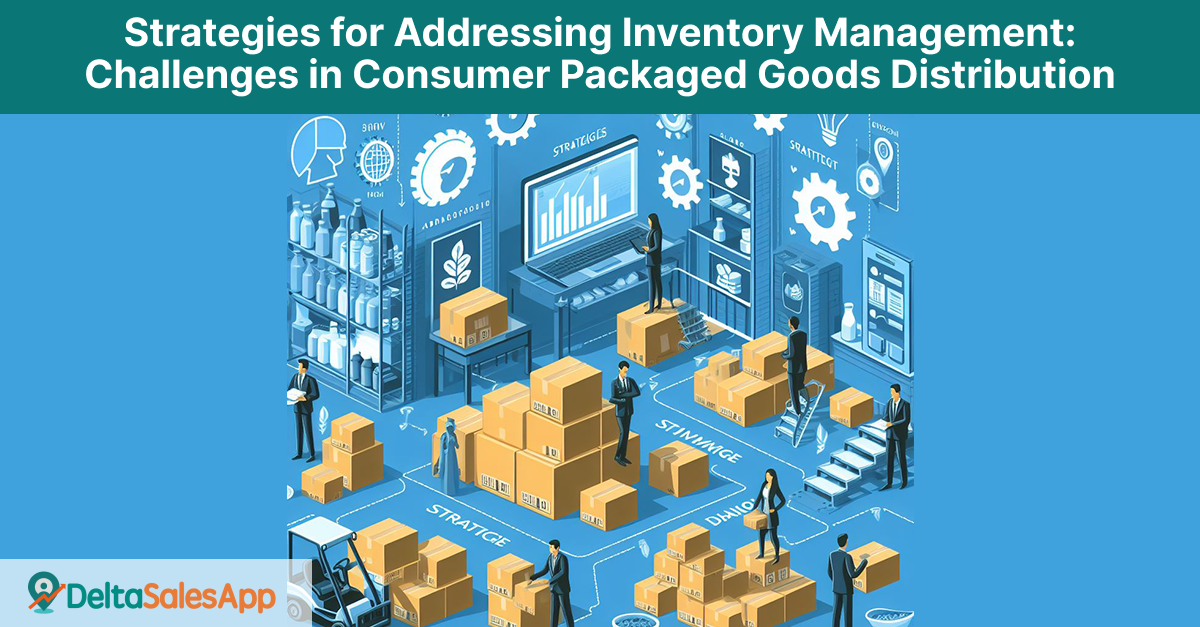
The world of Consumer Packaged Goods (CPG) distribution is fast-paced and increasingly complex, continuously influenced by shifting consumer preferences, evolving market trends, and global supply demand fluctuations. As the vital bridge between manufacturers and retailers, CPG distributors must operate a precise and well-optimized inventory management system that ensures product availability, enhances efficiency, and keeps costs under control. Achieving this balance is no small feat, inventory management in CPG requires innovative strategies and smart tools to successfully navigate the growing challenges in the CPG industry.
This guide breaks down the essentials of inventory management in cpg, highlights the key challenges distributors face, and outlines practical strategies to overcome them. By the end, you’ll have clear insights to improve your inventory processes and strengthen your CPG distribution operations.
Understanding Inventory Management in CPG
Inventory management in CPG plays a central role in ensuring smooth product flow from suppliers to retailers. With high-volume, fast-moving goods, even minor inefficiencies can lead to stockouts, excess inventory, lost sales, or wastage. Effective CPG inventory management involves precise forecasting, real-time visibility, and strong coordination between procurement, warehousing, sales, and distribution teams.
As the industry becomes more competitive, distributors must rely on automation, data analytics, and smart tools to maintain accuracy and agility across the supply chain.
Key Challenges in the CPG Industry
The Consumer Packaged Goods (CPG) industry is evolving rapidly, and distributors are under constant pressure to keep pace with shifting demand, rising operational costs, and increasing SKU complexities. As consumption patterns change and the market becomes more competitive, distributors face several challenges that directly impact profitability, efficiency, and customer satisfaction. These challenges often include:
1. Demand Volatility
Consumer buying patterns are constantly shifting due to trends, economic changes, competitor activity, and lifestyle shifts. This unpredictability makes it difficult for distributors to forecast demand accurately, often resulting in stock imbalances and missed opportunities.
-
Uncertain sales cycles leading to overstock or stockouts
-
Difficulty maintaining optimal inventory levels
-
Sudden shifts in customer preferences affecting SKU movement
-
Increased risk of expired or dead inventory
-
Challenges in planning promotions or replenishment schedules
2. Seasonality Pressures
The CPG market is driven by seasonal demand like festivals, climate changes, and regional events heavily influence purchase behaviors. Distributors must quickly adapt inventory and logistics to meet sudden market spikes.
-
Unpredictable demand during festivals or holidays
-
Sudden weather changes disrupting stock planning
-
Increased pressure on logistics and delivery timelines
-
Risk of understocking fast-moving seasonal items
-
Difficulty forecasting regional seasonal patterns accurately
3. SKU Proliferation
Brands constantly introduce new variants, flavors, pack sizes, and promotional bundles, expanding SKU lists. While great for consumer choice, this creates significant operational complexity for distributors.
-
Managing thousands of SKUs with varying demand patterns
-
Difficulty tracking expiry dates and batch-wise movement
-
Increased picking and dispatch errors in warehouses
-
Complex warehousing and space management requirements
-
Time-consuming manual tracking leading to slow operations
4. Rising Operational Costs
Operational costs from transportation to labor continue to climb in the CPG industry. These rising expenses directly affect margins and force distributors to seek more efficient and automated ways of working.
-
Increasing fuel costs impacting delivery budgets
-
Higher logistics and warehousing charges
-
Labor shortages leading to slower operations
-
Higher cost of compliance and regulatory requirements
-
Frequent route inefficiencies increasing delivery expenses
5. Lack of Real-Time Visibility
Without real-time insights into inventory, sales, and stock movement, distributors struggle to make quick and accurate decisions. This results in operational inefficiencies and a lack of coordination between teams.
-
Inaccurate stock data leading to order mismatches
-
Delayed communication with retailers and field teams
-
Slow response to market demand fluctuations
-
Higher chances of product unavailability
-
Difficulty tracking warehouse movement and van sales
Addressing these challenges in the CPG industry requires a strategic and tech-enabled approach.
Common Inventory Management Challenges
Before diving into solutions, it's imperative to acknowledge the hurdles that hinder efficient inventory management in the CPG industry. These challenges are not just quotidian discrepancies but significant bottlenecks that require deliberate interventions for resolution.
-
Forecasting Inaccuracies
In a market where consumer behavior is as capricious as the weather, forecasting remains the Achilles' heel of many CPG distributors. The unpredictability of what consumers will buy, when, and in what quantity often results in overstocking or stockouts, both of which can be costly.
-
Seasonality Impact
Seasonal variations and irregular demand patterns further complicate inventory planning. A hot summer can propel the demand for cold beverages, but an early frost may dampen the expected sales spike, leading to wasted inventory and missed opportunities.
-
SKU Proliferation
As consumer preferences evolve, so too does the number of products on the shelves. SKU (Stock Keeping Unit) proliferation can lead to inefficiencies as each new item increases the complexity of inventory tracking, ordering, and stocking.
Effective Strategies for Addressing Challenges
The following strategies serve as a toolbox for CPG distributors, providing approaches to mitigate inventory management challenges and streamline operations for enhanced performance.
-
Demand Forecasting Models
CPG distributors need ultra-modern forecasting models that can adapt to changing consumer behaviors and preferences. Leveraging machine learning and historical data insights can craft sophisticated algorithms that predict demand with higher accuracy.
-
Just-in-Time Inventory Management
Efficiency is the crux of just-in-time (JIT) inventory management. By stocking products that are needed on hand, precisely when they are needed, JIT minimizes excess stock while maintaining supply chain fluidity.
Optimizing SKU assortments is a strategic move to simplify the inventory process. By identifying and potentially culling less profitable or slower-moving items, CPG distributors can reduce complexity without compromising on variety.
-
Technological Solutions
The integration of advanced technologies has revolutionized inventory management, offering tools that not only address challenges but also push the boundaries of what's possible in CPG distribution.
-
Inventory Management Software
Smart inventory management software doesn't just track stock levels; it offers insights into inventory turnover, helps in optimizing reordering points, and provides visibility into stock movements, among other valuable features.
-
IOT Applications in Tracking
The Internet of Things (IOT) extends its reach to CPG warehousing and distribution, allowing for real-time tracking of products. This not only helps in keeping tabs on inventory but can also indicate potential tampering or damage during transit.
-
AI for Predictive Analytics
Artificial intelligence has emerged as a game-changer in predictive analytics. By analyzing vast datasets, AI can spot trends, forecast demand with unprecedented precision, and even identify inefficiencies within the inventory management process.
Conclusion
As the CPG landscape continues to evolve, mastering inventory management in CPG is more crucial than ever. By understanding the core challenges in the CPG industry, adopting smart forecasting techniques, rationalizing SKUs, and embracing modern technologies like AI, IoT, and advanced inventory systems, distributors can significantly enhance operational performance.
A proactive approach to optimizing inventory management in CPG not only minimizes losses but also strengthens supply chain responsiveness, boosts profitability, and ensures long-term growth in an increasingly competitive market.