
What Is the Future of FMCG Distribution?
Here's how today an FMCG product reaches a consumer. It can be ordered via a retailer’s mobile app, automatically refilled according to sales patterns, tracked in real-time while in transit, and delivered faster than ever before. This seamless experience is supported by a distribution network that is becoming smarter, faster, and more connected. The future of FMCG distribution is not about getting products from manufacturers to retailers. It’s about leveraging technology, data, and automation to deliver the right products to the right outlets at the right time, while keeping costs in check and customer satisfaction high.
There are a number of reasons why this is happening. Consumers want products to be available 24/7, retailers want faster deliveries, and companies are suffering from rising transportation costs, disruptions in their supply chains, and increased competition. Meanwhile, digital technologies like artificial intelligence (AI), real-time inventory tracking, and predictive analytics are transforming how FMCG companies plan, distribute, and manage their operations. Companies that are still working manually and reporting slowly may have difficulty keeping up with these changes. Conversely, companies that invest in digital distribution strategies can improve operational efficiency, increase product availability, gain better visibility into field sales activities, and make faster, data-driven decisions.
In this blog, we will be looking at what the future of FMCG distribution looks like, the trends that are impacting the industry, the challenges faced by distributors, and how modern distribution technology can help businesses create a more agile, resilient, and future-ready distribution network.
Why FMCG Distribution Is Changing
The FMCG distribution landscape is experiencing a remarkable shift, unlike anything we've seen in decades. Gone are the days when businesses could rely on predictable demand and manual processes through traditional distribution channels. Today, we find ourselves in a dynamic, technology-driven environment where adaptability is key. Companies must embrace new ways of working, seeking enhanced visibility, quicker decision-making, and streamlined operations to keep pace with the evolving needs of consumers.
Several factors are driving this shift, from evolving consumer behavior to rapid digital adoption and increasing operational costs. Understanding these changes is essential for businesses looking to build a future-ready distribution network.
-1786078386.png)
-
Changing Consumer Expectations
Modern shoppers are looking for a seamless experience, valuing convenience, speed, and product availability no matter where they shop. Whether they’re visiting a local store, browsing a supermarket, or exploring an online marketplace, they expect to find items readily available and delivered promptly. Just one instance of a product being out of stock can lead customers to explore other brands, which can hurt sales and diminish brand loyalty. To fulfill these needs, FMCG companies must focus on thoughtful inventory management, quicker restocking processes, and enhanced collaboration among manufacturers, distributors, and retailers. This shift has made having real-time insights into the distribution network more crucial than ever.
-
Rapid Digital Adoption
Digital transformation is revolutionizing all phases of FMCG distribution. Many companies are ditching paper-based processes, spreadsheets, and phone orders in favor of cloud-based platforms that make operations more efficient and accurate. Distributor management software, mobile order-taking apps, and real-time dashboards are all technologies that enable companies to digitize field sales, automate order management, monitor distributor performance, and get live business insights. They can see what's wrong and act on it right away, instead of waiting for reports at the end of the day or week.
-
Supply Chain Disruptions
Recent global events have underscored the fragility of our supply chains. Transportation delays, shortages of raw materials, shifting consumer preferences, and unforeseen disruptions have rendered traditional distribution planning increasingly unreliable. In response, FMCG companies are turning to more intuitive forecasting methods, real-time inventory tracking, and data-informed strategies to bolster supply chain resilience. Those businesses that can swiftly adjust to evolving demand are in a stronger position to prevent stockouts, manage excess inventory, and ensure that products remain consistently available for their customers.
-
Rising Operational Costs
As fuel prices, transportation expenses, warehouse operations, and labor costs continue to climb, businesses find themselves in a tough spot. They must balance the need to keep prices competitive while also safeguarding their profit margins. To tackle these challenges, many companies are turning their attention to enhancing operational efficiency. This includes optimizing delivery routes, automating order processing, managing inventory more effectively, and refining field sales strategies. By minimizing manual tasks and making the best use of their resources, businesses can reduce distribution costs while still providing excellent service to their customers.
-
The Need for Data-Driven Decision Making
One of the most significant transformations in FMCG distribution is the move from reactive decision-making to a more thoughtful, proactive approach. Rather than depending solely on past reports and gut feelings, businesses are now harnessing real-time sales data, automated reporting, and advanced analytics to shape their distribution strategies. This shift not only enhances efficiency but also allows companies to better understand and respond to the needs of their customers.
Key Trends Shaping the Future of FMCG Distribution
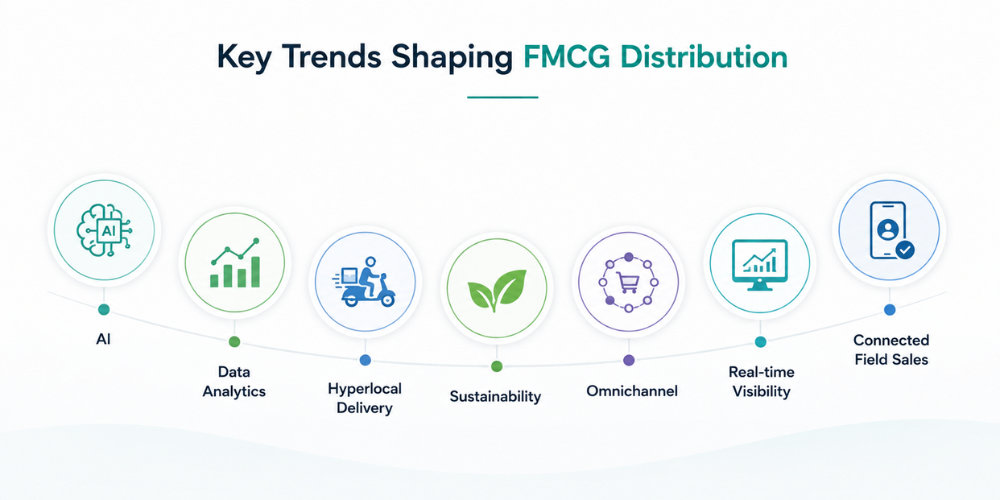
The evolution of FMCG distribution is increasingly influenced by innovative technologies and strategies that prioritize agility, data utilization, and customer focus. As consumer demands shift and competition grows fiercer, distributors are departing from conventional practices to adopt more intelligent approaches for inventory management, retailer support, and field operations enhancement. Below are key trends that are redefining FMCG distribution:
1. Data-Driven Decision Making
In today's fast-paced world of FMCG distribution, data has emerged as a crucial asset that can significantly impact business success. Rather than depending solely on past sales reports, companies are now harnessing real-time sales data to gain insights into market demand and uncover new growth opportunities. With the help of dynamic dashboards and automated reports, managers can swiftly address key questions that drive their strategies, such as:
-
Which products are selling the fastest?
-
Which distributors might need extra support to improve their performance?
-
Which products are flying off the shelves in sales?
-
Where are we facing stock shortages most often?
-
Which retailers should we reach out to right away?
2. Hyper-Local Fulfillment
Consumers and retailers are increasingly looking for quicker deliveries, making it essential for FMCG companies to adapt. To meet these growing demands, these companies are embracing hyper-local fulfillment. This means that products are stored closer to where they are needed, utilizing regional warehouses, micro-distribution centers, or local distributor networks. By adopting this strategy, delivery times are significantly reduced, transportation costs are lowered, and product availability at retail locations is enhanced. It also allows businesses to restock their inventory more often, which helps prevent stockouts and ensures that popular items are always on the shelves. The effectiveness of hyper-local fulfillment is further amplified when paired with smart technologies like route optimization, territory management, and GPS-based tracking systems. These tools enable businesses to plan more efficient delivery routes and maximize their reach to retail outlets each day.
3. Sustainability in Distribution
Sustainability has evolved from being merely a corporate initiative to an essential aspect of doing business. FMCG companies are feeling the weight of responsibility to lessen their environmental footprint while still operating efficiently. To embrace this shift, many organizations are implementing sustainable distribution practices that resonate with their values and the communities they serve:
-
They are fine-tuning delivery routes to cut down on fuel usage, showing care for the planet.
-
They are combining shipments to lower transportation costs, which not only benefits their bottom line but also reduces their overall impact on the environment.
-
Reducing product wastage through better inventory planning.
-
Using digital documentation instead of paper-based processes.
-
Improving warehouse efficiency to reduce energy consumption.
Technology plays a vital role in achieving these goals. Real-time inventory management helps reduce overstocking and product expiry, while route optimization minimizes unnecessary travel, benefiting both the environment and the bottom line.
4. Omnichannel Distribution
The traditional FMCG distribution model used to focus mainly on supplying general trade retailers. However, in today's dynamic market, businesses are reaching out to customers through various channels, such as modern trade, e-commerce platforms, wholesalers, convenience stores, and even direct-to-consumer (D2C) options. To effectively manage these varied sales channels, companies need to enhance their coordination and visibility. This means implementing centralized systems that can seamlessly synchronize inventory, pricing, promotions, and order management across all channels, ensuring that customers have a consistent and satisfying experience. Adopting an omnichannel distribution strategy allows businesses to be more responsive to evolving consumer behaviors while broadening their market presence.
5. AI-Powered Forecasting and Planning
In today's fast-paced FMCG landscape, artificial intelligence is transforming how businesses approach distribution. By leveraging AI-driven tools, companies can gain insights from past sales data, seasonal trends, promotional activities, weather changes, and market dynamics to create more precise demand forecasts. This enhanced forecasting capability empowers businesses to:
-
Keep inventory levels just right.
-
Minimize instances of running out of stock or having too much.
-
Streamline production and restocking processes.
-
Use resources in a smarter way.
-
Quickly adapt to changes in consumer demand.
6. Connected Field Sales Operations
Field sales teams are the backbone of FMCG distribution, and their role is becoming increasingly digital. Modern businesses are replacing manual reporting with mobile-first solutions that connect sales representatives, distributors, and managers in real time. Managers, in turn, gain instant visibility into field activities, sales performance, and retailer engagement without waiting for end-of-day reports. This connected approach improves productivity, reduces administrative work, and enables faster decision-making across the distribution network.
7. Greater Focus on Real-Time Visibility
One of the key aspects of a future-ready FMCG distribution system is having a clear view of the entire supply chain. Companies are eager to understand what’s happening at every step from the inventory in warehouses and stock levels with distributors to the activities of field sales teams and orders from retailers. Having real-time visibility allows businesses to swiftly pinpoint any bottlenecks, keep an eye on inventory movement, and tackle issues before they affect customers. This transparency fosters better collaboration among manufacturers, distributors, and sales teams, ensuring that everyone is on the same page with the latest information.
Role of AI and Automation in FMCG Distribution
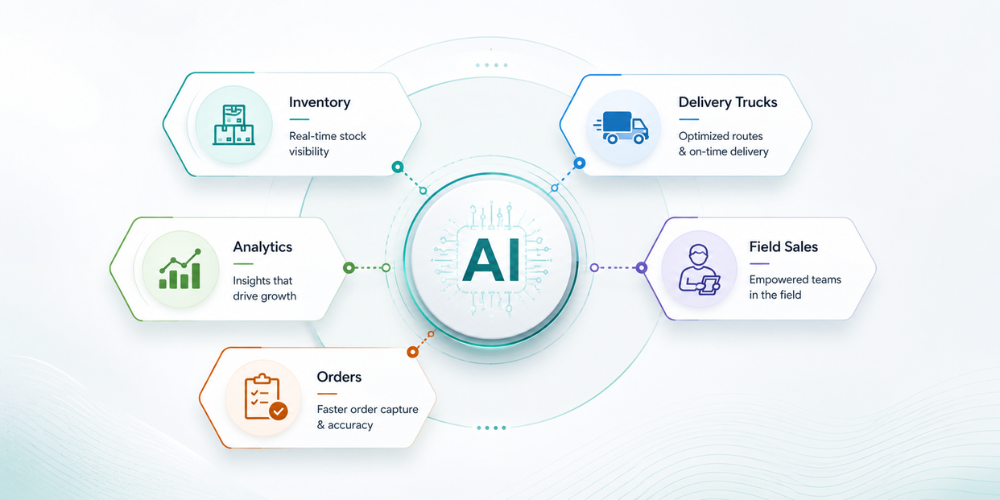
Artificial intelligence (AI) and automation have evolved from being mere buzzwords in the FMCG industry to becoming vital partners in creating distribution networks that are not only faster and smarter but also more resilient. As companies juggle larger product ranges, diverse distribution channels, and heightened customer expectations, relying solely on manual processes is no longer feasible.
AI empowers businesses to sift through extensive sales and operational data, uncovering patterns and forecasting demand, which leads to more informed decision-making. Meanwhile, automation takes care of repetitive tasks like order processing, inventory management, reporting, and field sales oversight. Together, these technologies help FMCG companies enhance their efficiency, lower operational costs, and adapt swiftly to market dynamics. Here are some impactful ways AI and automation are reshaping FMCG distribution.
-
Demand Forecasting
One of the biggest challenges in FMCG distribution is accurately predicting customer demand. Overstocking increases storage costs and product wastage, while understocking leads to missed sales opportunities and dissatisfied retailers. AI-powered demand forecasting uses historical sales data, seasonal trends, promotional activities, buying patterns, and even external factors like holidays or weather conditions to predict future demand more accurately. These insights help businesses maintain optimal inventory levels, improve production planning, and ensure products are available where they are needed most. More accurate forecasting also allows distributors to reduce inventory holding costs while improving service levels across their retail network.
-
Intelligent Route Optimization
For FMCG companies with extensive field sales and delivery teams, navigating inefficient routes can significantly impact their operations, resulting in increased fuel expenses, fewer customer interactions, and delays in deliveries. By leveraging AI-driven route optimization, businesses can take into account various elements like outlet locations, traffic patterns, delivery timelines, salesperson territories, and visit priorities. This technology suggests the most effective routes, enabling field teams to connect with more outlets in a shorter amount of time while minimizing travel distances and cutting down on operational costs.
-
Smarter Inventory Management
Keeping the right amount of inventory across warehouses and distributors is essential for ensuring that products are always available when customers need them. Relying on manual inventory management can often result in mistakes, such as incorrect stock counts, delays in restocking, and expensive shortages. By using modern inventory management software, businesses can track their stock in real time, update levels automatically, and receive notifications when it's time to restock. Additionally, AI plays a significant role in this by helping to spot items that aren't selling well, forecasting future inventory needs, and suggesting the best quantities to reorder.
-
Automated Reports and Analytics
Creating business reports by hand can be a tedious task, often requiring the gathering of data from various systems, tidying up spreadsheets, and putting together information in a way that makes sense. This lengthy process not only consumes valuable time but also raises the chances of making mistakes. With automation, reporting becomes much easier. It gathers and organizes data in real time, allowing businesses to access automated reports and analytics that deliver immediate insights into sales performance, inventory levels, distributor activities, order statuses, and field operations. Rather than waiting for weekly or monthly updates, decision-makers can keep an eye on key performance indicators (KPIs) through live dashboards, enabling them to respond quickly when problems arise. s.
-
Predictive Decision-Making
The future of FMCG distribution is moving beyond simply tracking what has already happened. AI enables businesses to anticipate future opportunities and challenges by identifying trends before they become problems. Predictive analytics can help businesses forecast sales growth, identify retailers at risk of reduced purchasing, detect unusual buying patterns, and recommend actions to improve distribution performance. This proactive approach allows companies to allocate resources more effectively, optimize inventory, and strengthen relationships with distributors and retailers.
Challenges FMCG Distributors Face Today
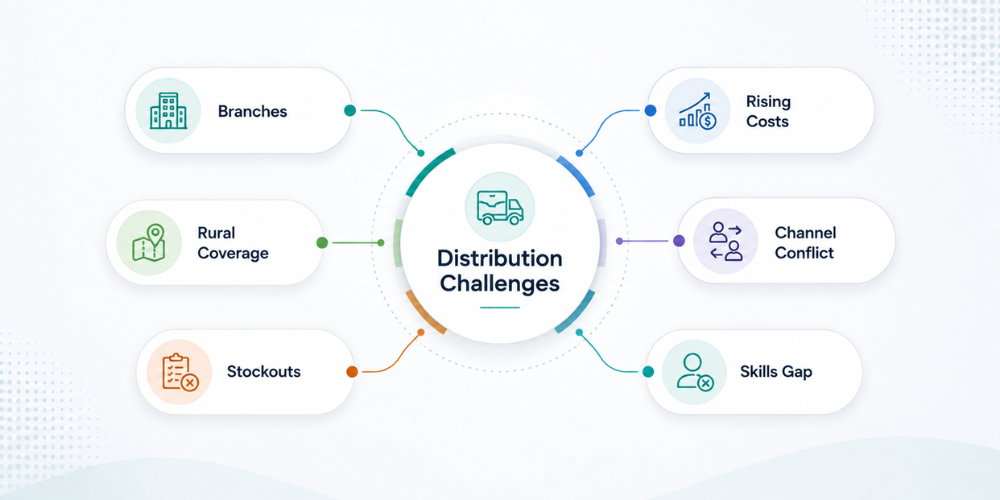
Even with the swift progress in technology, FMCG distributors are still grappling with a range of operational hurdles that can affect their efficiency, profitability, and the satisfaction of their customers. Running an expanding distribution network is about much more than just transporting goods from warehouses to stores. Distributors face the challenge of managing increasing operational costs, adapting to shifting consumer preferences, overseeing inventory, and navigating more intricate sales channels, all while ensuring that products are accessible when and where customers need them.
Recognizing these challenges is the crucial first step toward creating a distribution network that is not only resilient but also prepared for the future.
-
Rising Infrastructure and Operational Costs
Distribution costs have surged in recent years, affecting everyone involved. Rising fuel prices, warehouse rents, vehicle upkeep, labor expenses, and logistics fees are squeezing profit margins tighter than ever. Meanwhile, retailers are looking for quicker deliveries and enhanced service, all without wanting to pay more. Distributors are now faced with the challenge of finding smarter ways to operate efficiently while keeping costs in check. To tackle this, many businesses are turning to digital solutions that streamline order processing, enhance delivery route planning, and offer real-time insights into operations, enabling them to maximize their resources and serve their customers better.
-
Reaching Rural and Remote Markets
While urban markets often have well-developed distribution networks, serving rural and remote areas remains a major challenge. Longer travel distances, poor road infrastructure, and scattered retail outlets make deliveries more time-consuming and costly.
Field sales representatives may also struggle to visit every retailer according to schedule, resulting in missed opportunities and inconsistent market coverage. To improve rural distribution, businesses need better territory planning, optimized sales routes, and real-time tracking of field activities. These capabilities help ensure that even remote retailers receive regular visits and timely product replenishment.
-
Inventory Visibility and Stock Management
Effectively managing inventory levels across warehouses and distributor locations poses a significant challenge in the fast-moving consumer goods (FMCG) sector. Without the ability to see inventory in real-time, businesses can face issues like stockouts, surplus inventory, or slow-moving products that can strain their working capital. Inefficient inventory management can result in delayed deliveries, lost sales opportunities, higher storage costs, and decreased satisfaction among retailers. Given the rapid fluctuations in consumer demand, distributors must have access to accurate and current inventory data to make smart replenishment choices.

-
Managing Multiple Sales Channels
FMCG distributors today navigate a diverse landscape of sales channels, including traditional retail, modern supermarkets, wholesalers, online marketplaces, and direct-to-consumer options. Each of these channels comes with its own unique pricing models, order frequencies, marketing tactics, and customer needs. When these channels are managed manually, it can lead to pricing discrepancies, inventory mismatches, and operational challenges. This complexity can hinder the ability to provide a seamless and consistent experience for customers.
-
Limited Visibility into Field Sales Operations
Field sales teams play a crucial role in nurturing relationships with retailers, taking orders, ensuring product availability, and collecting valuable market insights. Yet, when these essential tasks are managed manually, it often leaves managers in the dark about the real happenings in the field. Without the benefit of real-time updates, it becomes challenging to confirm outlet visits, monitor sales performance, spot missed opportunities, or offer timely assistance to field representatives.
-
Skills and Technology Gaps
While the FMCG industry is rapidly advancing in digital transformation, not all distributors have fully adopted modern technologies. Numerous businesses continue to depend on manual record-keeping, paper processes, or unintegrated software systems. The implementation of new technologies necessitates that employees acquire new digital competencies. In the absence of adequate training and change management, companies may find it challenging to fully leverage the advantages of automation.
-
Keeping Up with Changing Consumer Demand
Consumer preferences are evolving at an unprecedented pace. With the introduction of new products, shifts in seasonal demand, promotional activities, and changing shopping behaviors, distributors face significant challenges in managing their inventory effectively and responding swiftly to market dynamics. Companies that depend on outdated reports or slow sales data often find themselves reacting too late, resulting in missed sales opportunities or surplus stock. By utilizing real-time sales data, predictive analytics, and automated reporting, distributors can spot trends early, fine-tune their inventory levels, and make informed decisions that align with the ever-changing market demands.
How Delta Sales App Helps FMCG Brands Stay Future-Ready
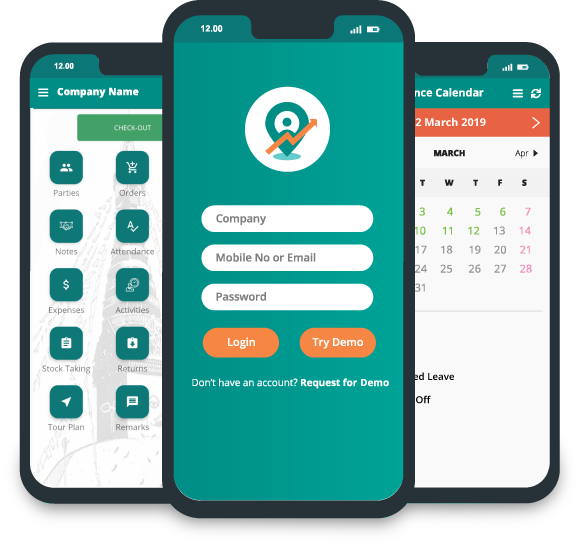
In today's fast-evolving FMCG landscape, businesses are realizing that relying solely on standalone software isn't enough to keep pace with the competition. They require a cohesive platform that seamlessly connects distributors, field sales teams, inventory, and management into one unified ecosystem. This is where the Delta Sales App steps in, empowering businesses to transform their distribution operations. Tailored for manufacturers, distributors, wholesalers, and FMCG brands, the Delta Sales App simplifies everyday distribution tasks and offers real-time insights across the entire sales and distribution network. Here’s how the Delta Sales App equips businesses to thrive in the future.
-1786078386.png)
-
Streamlines Order Management
Collecting orders manually can lead to frustrating delays, mistakes, and lost sales opportunities. Sales representatives often jot down orders on paper or take them over the phone, which complicates tracking order status and efficiently processing requests. The Delta Sales App transforms this experience with an intuitive digital order management system. It empowers field sales representatives to effortlessly capture retailer orders right from their mobile devices. Orders are shared instantly with distributors or the back office, significantly cutting down processing time and reducing the chances of human error.
-
Provides Real-Time Visibility into Distributor Performance
Managing a diverse network of distributors across various regions can be daunting without precise and prompt information. The Delta Sales App equips businesses with immediate insights into distributor operations, sales effectiveness, and order processing. With centralized dashboards, managers can track essential metrics like sales by distributor, coverage of outlets, product flow, and sales patterns. This facilitates the identification of top-performing areas, uncovers performance deficiencies, and enables proactive measures to address potential challenges before they hinder business expansion.
-
Improves Inventory Management and Product Availability
Ensuring product availability is crucial for keeping customers happy and driving sales. When shelves are empty, businesses miss out on potential revenue, and having too much stock can lead to higher storage costs and waste. The Delta Sales App offers a user-friendly way to keep track of inventory in real-time, allowing businesses to see stock levels across their distributors and warehouses. With reliable inventory data, companies can restock items when needed, minimize the risk of running out, and avoid the pitfalls of overstocking. By managing inventory effectively, retailers can consistently provide products to their customers while maintaining a healthier balance in their stock levels.
-
Automates Field Sales Operations
Field sales teams play a critical role in FMCG distribution, but manual reporting often limits productivity and visibility. Delta Sales App digitizes field operations by providing sales representatives with a mobile application to manage their daily activities. Using the app, field teams can:
-
Capture retailer orders.
-
Record outlet visits with GPS verification.
-
Mark attendance digitally.
-
Collect payments.
-
Update customer information.
-
Track daily tasks and sales targets.
-
Share market feedback instantly.
-
Supports Smarter Route Planning
Efficient route planning empowers field sales representatives to connect with more outlets while minimizing travel time and fuel costs. The Delta Sales App offers intuitive route optimization and beat planning features, allowing businesses to craft travel schedules that align with their designated territories. By fine-tuning daily routes, companies can enhance their outlet coverage, cut down on unnecessary travel, and boost the number of meaningful customer visits each day. This approach not only reduces operational expenses but also elevates service quality and fosters greater retailer satisfaction.
-
Delivers Automated Reports and Actionable Insights
Relying on outdated reports for business decisions can hinder growth and responsiveness. The Delta Sales App offers automated reports and analytics that turn operational data into valuable insights for your business. Managers can easily keep track of sales performance, distributor productivity, field activities, inventory flow, and retailer engagement through user-friendly real-time dashboards. Rather than wasting hours on spreadsheet compilation, they gain instant access to precise information that enables quicker and more assured decision-making. These insights empower businesses to spot trends, evaluate performance, optimize resources, and consistently enhance distribution efficiency.
Conclusion
The future of FMCG distribution will be shaped by businesses that can adapt quickly to changing consumer demands, market dynamics, and technological advancements. Success will no longer depend solely on expanding distribution networks, it will depend on how intelligently those networks are managed. Companies that embrace AI, automation, real-time data, and digital collaboration will be better equipped to improve operational efficiency, strengthen distributor relationships, and ensure consistent product availability. If you're looking to future-proof your FMCG distribution business, Delta Sales App provides everything you need to digitize field sales, streamline distributor management, automate routine processes, and gain real-time insights into your operations. Whether you're a manufacturer, distributor, or wholesaler, the platform helps you build a more efficient, connected, and scalable distribution network.
Book a free demo of Delta Sales App today and discover how our all-in-one sales force automation solution can help you improve distributor performance, increase field sales productivity, optimize inventory, and prepare your business for the future of fmcg distribution.

-1792906895-resized320.png)