
Why Every Distributor Needs Sales Automation to Stay Competitive ?
In today’s highly competitive distribution industry, businesses must continuously adapt to evolving customer demands, rising operational complexities, and growing pressure to maintain efficiency. Traditional methods of managing sales, such as manual processes, paperwork, and outdated communication systems, no longer suffice in this fast-paced environment. To stay competitive and thrive, distributors need to embrace sales automation.
Sales automation tools streamline sales operations, enhance efficiency, and provide real-time insights into performance. By automating tedious tasks and enabling better decision-making, distributors can boost productivity, improve customer relationships, and gain a competitive edge.
The Growing Challenges in the Distribution Industry
As distribution networks expand, so do the challenges associated with managing them. Some of the most pressing challenges include:
-
Increased Operational Complexity: As businesses scale, the complexity of managing orders, inventory, and customer interactions increases. Without proper systems in place, inefficiencies can creep into the process, leading to delays, errors, and lost sales.
-
High Customer Expectations: Customers today demand faster deliveries, accurate order processing, and seamless communication. Failing to meet these expectations can result in customer dissatisfaction and, ultimately, loss of business.
-
Competition and market saturation: The distribution sector is becoming more competitive, with businesses constantly seeking ways to differentiate themselves. To stand out, distributors need to provide a superior customer experience, faster service, and more efficient operations.
-
Data Overload: Managing large amounts of sales data manually can be overwhelming and prone to errors. Without accurate data and reporting, it’s difficult for managers to make informed decisions that can optimize sales strategies.
To address these challenges and remain competitive, distributors must look toward automation as the solution.
Top Challenges Distributors Face Without Automation
-
Order Delays and Errors: Manual processes often cause mistakes in order entry, resulting in delayed shipments, incorrect deliveries, and dissatisfied customers, affecting sales and retention.
-
Limited Visibility: Tracking field sales, inventory, and customer interactions without automation is difficult, leaving managers with outdated information and poor oversight of operations.
-
Poor Customer Experience: Slow responses, missed follow-ups, and generic communication reduce customer satisfaction and loyalty, giving competitors an edge in service quality.
-
Inefficient Resource Allocation: Without automated insights, managers struggle to optimize routes, territories, and workloads, wasting time and reducing team productivity.
-
Difficulty Scaling: Manual systems fail under growing demand, making it challenging to manage more orders, expand territories, or onboard new team members efficiently.
How Sales Automation Helps Distributors Stay Ahead
Sales automation refers to the use of technology to streamline, automate, and improve sales processes. From managing customer relationships to tracking sales activities, automation simplifies tasks that would otherwise consume time and resources. Here’s how sales automation can help distributors stay competitive:
1. Improved Efficiency and Productivity
One of the primary benefits of sales automation is the ability to streamline operations. By automating tasks like order entry, payment processing, inventory management, and customer communication, sales teams can focus more on high-value activities such as building relationships and closing deals. This leads to faster sales cycles and improved overall productivity.
2. Real-Time Sales Tracking and Reporting
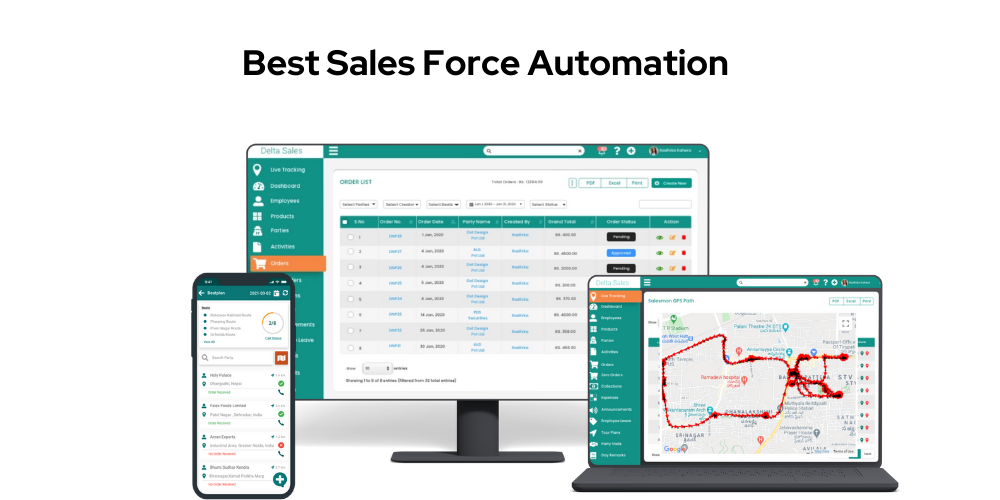
With sales automation, businesses can monitor their sales teams in real time. GPS tracking allows managers to see where field reps are, which customers they’re meeting, and how much time they spend at each location. Automated reporting tools also generate detailed performance reports, helping managers assess productivity and make data-driven decisions.
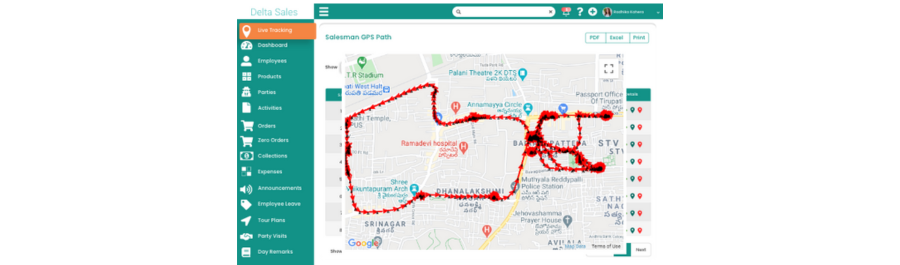
This real-time visibility ensures that sales teams are accountable for their actions, and management can quickly identify inefficiencies or underperformance to take corrective action.
3. Enhanced Customer Management
Sales automation tools allow businesses to capture, store, and manage customer information more effectively. With a centralized database, sales teams can access customer history, preferences, and order details at any time, ensuring personalized interactions and improved customer satisfaction.
Additionally, automation tools enable automated follow-ups, reminders, and updates, ensuring that customers are always in the loop and no leads are lost due to manual oversight.
4. Faster decision-making with data insights
Sales automation platforms offer robust data collection and reporting features. By analyzing sales trends, customer behaviors, and performance metrics, distributors can gain valuable insights into what’s working and what needs improvement. This data-driven approach enables faster, more informed decision-making, helping businesses adapt to market changes and capitalize on growth opportunities.
5. Better Sales Team Management
Sales automation tools help managers better allocate resources and optimize team performance. Automated scheduling, route planning, and task management features ensure that sales reps are focusing on the right customers and covering the most profitable areas. This level of organization leads to increased sales productivity and better territory management.
6. Optimized Inventory and Order Management
Inventory management is a critical aspect of distribution operations. Sales automation tools help businesses track inventory levels in real time, reducing the risk of stockouts or overstocking. Automated order processing ensures that orders are accurately captured and processed without delays or errors, providing a seamless experience for both the distributor and the customer.
Key Features of Sales Automation Tools for Distributors
-
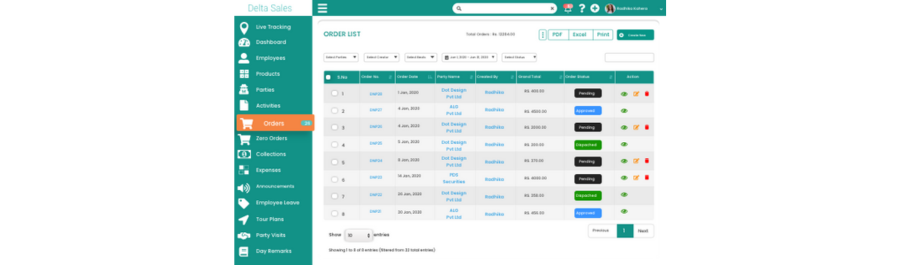
Order and Inventory Management: Automates order entry and inventory tracking, reducing errors, avoiding stockouts, and improving operational efficiency across the distribution network.
-
Real-Time Sales Tracking: Provides visibility into field team locations, customer visits, and sales activities, helping managers monitor performance and optimize operations immediately.
-
Customer Relationship Management (CRM): Centralizes customer data, tracks interactions, and enables personalized communication, boosting satisfaction and fostering long-term relationships.
-
Automated Reporting and Analytics: Generates insights on sales trends, productivity, and customer behavior, empowering managers to make informed, data-driven decisions quickly.
-
Route Planning and Beat Management: Optimizes sales routes and visit schedules, ensuring maximum coverage of high-priority customers while minimizing travel time and operational costs.
-
Attendance, Leaves, and Expense Management: Simplifies administrative tasks for field staff, reducing paperwork and allowing more focus on revenue-generating activities.
Choosing the Right Sales Automation Tool for Your Business
-
Scalability: Choose software that grows with your business, supporting more users, sales volumes, and territories without losing efficiency or requiring replacements.
-
Ease of Use: An intuitive interface ensures sales teams adopt the platform quickly, minimizing training needs and maximizing productivity across the organization.
-
Industry Fit: Select a tool designed for your sector, such as FMCG or distribution, ensuring it addresses specific operational challenges effectively.
-
Integration Capabilities: The software should seamlessly connect with ERP, CRM, and accounting systems, preventing data silos and ensuring smooth operations.
-
Support and Training: Reliable customer support and onboarding resources are essential for successful implementation, adoption, and long-term operational success.
-
Data Security: Protect sensitive customer and business data with secure systems that comply with regulations and industry best practices.
Common Mistakes When Implementing Sales Automation
-
Skipping Proper Training: Teams not trained fully may underutilize features, reducing the expected efficiency and return on investment from automation tools.
-
Overcomplicating Processes: Adding unnecessary workflows or features overwhelms staff, making automation harder to adopt and reducing productivity instead of improving it.
-
Ignoring Data Quality: Automation relies on accurate data; errors or outdated information can mislead decisions, resulting in poor performance and lost opportunities.
-
Neglecting Change Management: Failing to communicate benefits and manage resistance leads to low adoption and undermines the effectiveness of sales automation.
-
Lack of Clear KPIs: Without measurable goals, managers cannot track success, assess performance, or identify areas for improvement in sales automation.
-
Not Integrating With Existing Systems: Standalone tools that don’t sync with ERP or CRM create inefficiencies, data silos, and extra manual work for teams.
Why Automation is No Longer Optional
In today’s fast-paced distribution industry, competition is intensifying and customer expectations are higher than ever. Sales automation is no longer a luxury, it’s a critical necessity for distributors who want to stay competitive and profitable. Companies that continue to rely on manual processes risk falling behind in efficiency, customer satisfaction, and overall sales performance.
Embracing sales automation allows distributors to scale operations, reduce costs, and provide a superior customer experience. Here’s why automation has become indispensable:

-
Accelerated Sales Cycles
Automation reduces repetitive manual tasks such as order entry, inventory checks, and follow-ups. This allows sales teams to focus on high-value activities, closing deals faster, and improving overall revenue. -
Enhanced Customer Satisfaction
Automated follow-ups, real-time order tracking, and accurate data ensure customers receive timely updates and personalized service, which strengthens loyalty and long-term relationships. -
Improved Operational Efficiency
Automation streamlines processes across sales, inventory, and logistics. This reduces errors, prevents stockouts, and ensures smooth coordination between field teams and back-office operations. -
Data-Driven Decision Making
Sales automation platforms collect and analyze data in real time, giving managers actionable insights into team performance, sales trends, and customer behavior. These insights help make informed decisions quickly. -
Optimized Resource Allocation
Automated scheduling, route planning, and task management allow managers to assign the right resources to the right areas, ensuring maximum productivity and coverage. -
Future-Proofing Your Business
As technology and customer expectations evolve, businesses without automation risk obsolescence. Investing in sales automation ensures scalability, adaptability, and resilience against competitive pressures. -
Cost Reduction
By reducing manual errors, optimizing inventory, and streamlining operations, automation lowers operational costs while increasing output and revenue. -
Competitive Advantage
Distributors leveraging automation gain an edge over competitors still using manual processes. Faster service, accurate orders, and better customer management can become a key differentiator in the market.
By adopting sales automation, distributors can transform their operations from reactive to proactive, delivering faster, smarter, and more reliable service. In today’s competitive landscape, automation is no longer optional, it’s the foundation of sustainable growth and success.
Conclusion:
Stay ahead in the fast-paced distribution industry with Delta Sales App, a complete sales automation solution. Track your sales team in real time, automate orders and payments, manage beats, and streamline attendance, leaves, and expense reporting.
Empower your team, optimize operations, and gain actionable insights for smarter, data-driven decisions. Boost productivity, improve efficiency, and ensure your business stays competitive.
Ready to transform your distribution operations? Book a Demo with Delta Sales App today and experience seamless sales automation firsthand!