
Why Is Sales Process Standardization Important?

What makes the most successful sales teams different from those who constantly fail to achieve their goals, have inconsistent customer interactions, and deliver unreliable results? A lot of times it’s not the people; it’s the process.
As companies scale, sales become increasingly difficult to manage in the absence of a well-defined, repeatable workflow. Sales reps might not work the same as each other, meaning important follow-up is missed, and managers are left unaware of the status of deals. Such inconsistencies can stifle growth and hamper the ability to deliver a consistent customer experience.
That’s where standardizing the sales process comes in. Businesses can increase sales productivity, foster collaboration, and make sure that all salespeople are following the same winning process by establishing a structured sales workflow with clear phases, roles, and best practices. A standardized approach also lays the foundation for sales automation, accurate reporting, and better decision-making.
In this blog, you’ll discover the importance of standardizing your sales process, the challenges businesses face in the absence of a standardized sales process, how automation supports a standardized sales process, and how Delta Sales App helps organizations streamline sales operations and scale with confidence.
What Is Sales Process Standardization?
A sales process is what a sales rep does from the time they first talk to a customer to when they close a deal and keep a relationship with the customer after that. When every sales rep does things their way, the customer interactions are not the same, which makes it hard to get the same results every time.
Sales process standardization is when we make sure everyone does things in the same order. This means we have a plan that all sales reps follow. The sales process is how we sell things. We want all the teams in place to sell things the same way and be organized about it. The sales process is important for this.
Usually, a standardized approach will include:
-
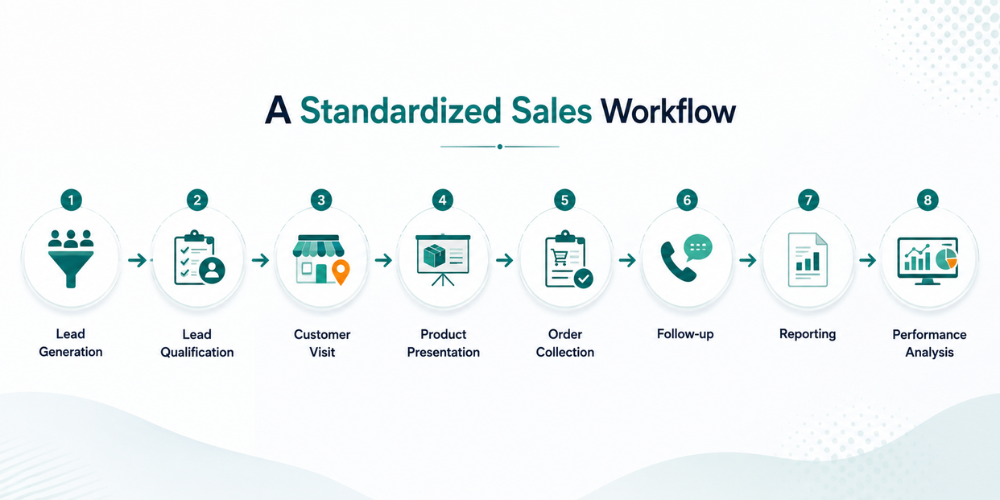
Define sales stages: Set clear steps from lead generation to order fulfillment so every opportunity takes the same journey.
-
Consistent customer experience: Ensure all prospects and customers receive the same level of service, regardless of which sales rep they interact with.
-
Standard Operating Procedures (SOPs): Capture the best practices for customer visits, product presentations, follow-ups, and reporting.
-
Defined roles and responsibilities: Sales reps and managers will understand their responsibilities at each stage of the sales cycle.
-
Performance measurement: Establish a common way to measure key sales metrics, making it easier to identify strengths, address gaps, and improve overall sales performance.
A structured sales workflow doesn't limit how sales reps build customer relationships. Instead, it provides a dependable framework that minimizes confusion, improves accountability, and ensures that important activities are completed in a timely manner.
Why Is Sales Process Standardization Important?
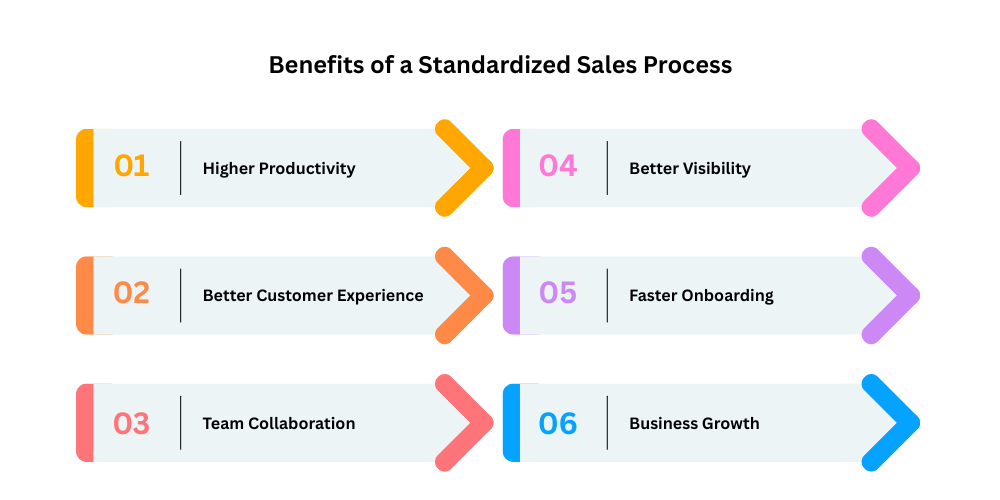
A well-defined sales process is essential for building a successful sales team. When each team member adheres to a reliable workflow, it helps businesses eliminate waste, foster teamwork, and enhance the customer experience at every interaction. Rather than depending on personal selling techniques, teams unite around common objectives, utilizing a systematic method that yields consistent and quantifiable outcomes. Here are the main reasons why this is important:
1. Improves Sales Productivity
A well-articulated sales process brings clarity to the daily activities of sales representatives. They gain a clear understanding of the steps to take at each phase, whether it's identifying potential leads, managing customer relationships, or finalizing sales. This clarity helps them avoid wasting time on unproductive tasks, reduces waiting periods, and empowers teams to concentrate on actions that truly drive revenue.
2. Delivers a Consistent Customer Experience
Customers value a seamless and dependable buying experience. When all salespeople adopt a unified approach, customers enjoy consistent product details, prompt follow-ups, and courteous service, no matter who they engage with. This reliability fosters trust, deepens connections, and boosts the chances of returning customers.
3. Enhances Team Collaboration
Sales is seldom a solo endeavor. It typically involves collaboration among representatives, managers, and support teams throughout the sales process. Implementing a standardized workflow allows all team members to access the same information, facilitating task coordination, update sharing, and issue resolution without delays or misunderstandings.
4. Increases Visibility Into Sales Performance
When sales activities are documented through a unified approach, managers obtain a holistic understanding of the dynamics in the field. They can track progress, pinpoint obstacles, assess both individual and team contributions, and leverage sales analytics to guide their decisions. This clarity empowers managers to offer timely support and enhance the overall effectiveness of the sales team.
5. Simplifies Training and Onboarding
Training is much easier when there is a documented process for every step of the sales journey. New sales reps can learn what the company expects, follow the same workflow, and become productive in less time. This further reduces reliance on informal training methods, which can vary greatly from one employee to the next.
6. Supports Business Growth
As businesses expand into new territories, add more sales representatives, or work with multiple distributors, maintaining consistency becomes increasingly challenging. A repeatable sales workflow helps every team follow the same standards, making it easier to scale operations while maintaining service quality, operational efficiency, and overall sales performance.
Common Challenges Without a Standardized Sales Process
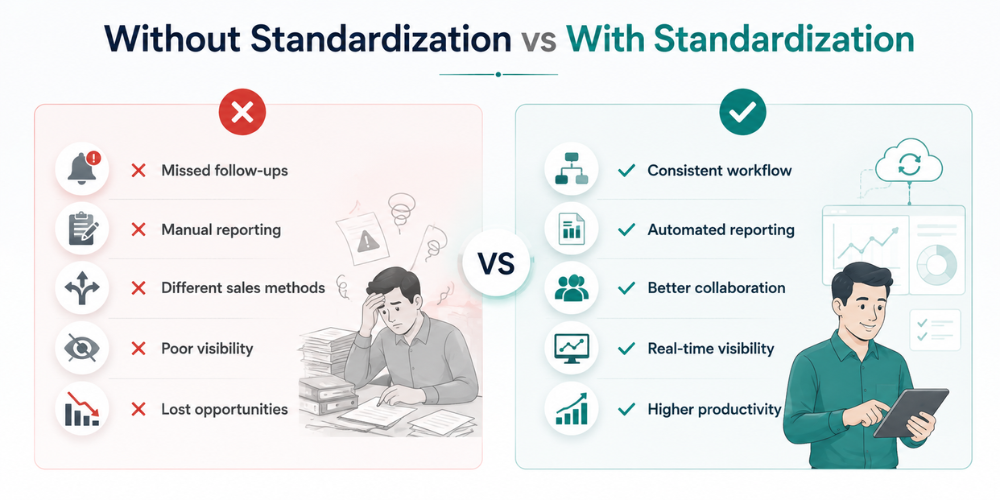
Without a clearly defined sales process, even experienced sales teams can struggle to achieve consistent results. When every representative follows a different approach, businesses often face operational inefficiencies, limited visibility, and missed revenue opportunities. Over time, these challenges can affect customer satisfaction, team performance, and overall business growth. Here are some of the most common challenges businesses face:
1. Inconsistent Sales Execution
When there is no standard workflow, each sales representative manages customer interactions differently. Some may follow up regularly, while others may skip important steps or overlook potential opportunities. This inconsistency makes it difficult to maintain service quality and deliver a reliable customer experience.
2. Missed Follow-Ups and Lost Sales Opportunities
Following up at the right time is essential for converting prospects into customers. Without a structured process, sales representatives may forget callbacks, delay customer visits, or fail to respond to inquiries promptly. These gaps can lead to lost deals and reduced customer trust.
3. Limited Visibility Into Field Activities
Managers need accurate information to support their teams and make informed decisions. However, when sales activities are tracked manually or inconsistently, it becomes difficult to know which customers have been visited, what actions have been completed, or where additional support is needed.
4. Inefficient Reporting and Decision-Making
When every salesperson records information differently, reports often become incomplete or inaccurate. Managers spend valuable time collecting data from multiple sources instead of analyzing performance and identifying opportunities for improvement. This slows down decision-making and affects business agility.
5. Difficulty Managing Multiple Teams or Distributors
As businesses grow, maintaining consistency across branches, territories, or distributor networks becomes increasingly challenging. Different teams may adopt different sales methods, making it harder to monitor performance and ensure everyone follows the same standards. Businesses working with distributors can overcome these challenges by implementing a consistent sales process across the distributor network, ensuring every sales channel operates with the same level of efficiency and accountability.
6. Slower Business Growth
Without a repeatable sales workflow, scaling operations becomes more complex. Training new employees takes longer, performance varies between teams, and managers spend more time solving operational issues than focusing on growth initiatives. As a result, businesses may struggle to expand efficiently while maintaining high service standards.
How Sales Automation Supports Process Standardization
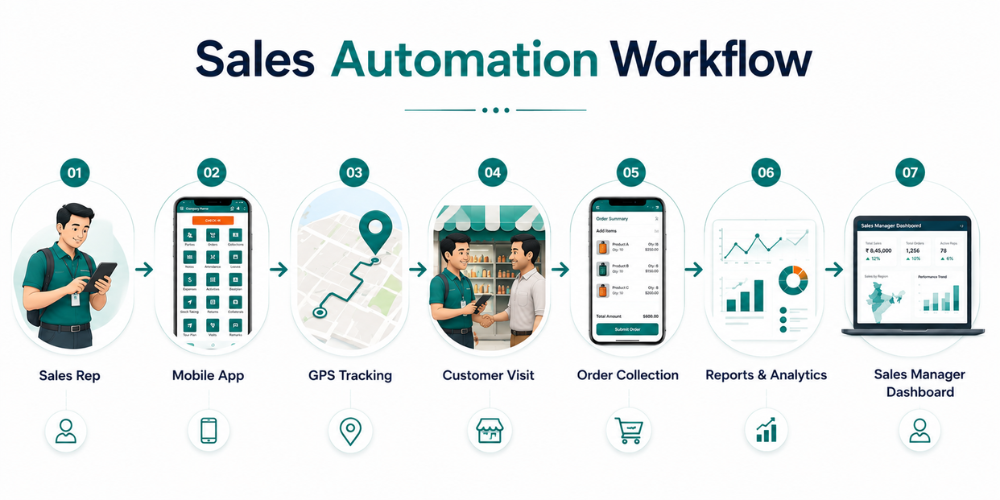
Creating a standardized sales process is the first step, but ensuring every team member follows it consistently is the real challenge. As businesses grow, manually managing customer visits, follow-ups, reporting, and order collection becomes increasingly difficult. This is where sales automation helps transform a documented process into a repeatable and scalable one.
Instead of relying on manual tracking or individual working styles, automation ensures that every sales activity follows the same workflow while providing managers with complete visibility into day-to-day operations. Here's how sales automation supports a standardized sales process:
1. Automates Routine Sales Activities
Tasks such as attendance, customer visit tracking, order collection, expense reporting, and follow-ups can be automated, reducing repetitive work for sales representatives. This allows them to spend more time building customer relationships and generating sales instead of handling administrative tasks.
2. Ensures Every Sales Representative Follows the Same Workflow
Automation guides sales representatives through predefined sales stages, ensuring that important activities are completed in the correct sequence. Whether it's scheduling outlet visits, capturing customer feedback, or recording orders, everyone follows the same process, resulting in greater consistency across the team.
3. Provides Real-Time Visibility
Managers no longer have to wait until the end of the day or week for updates. Automated systems provide real-time visibility into customer visits and sales activities and monitor team performance, making it easier to identify challenges, monitor progress, and make timely decisions.
4. Improves Data Accuracy and Reporting
Automated data collection reduces manual entry errors and ensures that sales information is captured consistently. Accurate data leads to reliable reports, helping managers analyze performance, measure KPIs, and make data-driven decisions with confidence.
5. Supports Scalable Sales Operations
As businesses expand into new territories or add more sales representatives, automation makes it easier to maintain the same standards across every team. New employees can quickly adapt to predefined workflows, while managers can monitor performance from a single platform without increasing administrative effort.
How Delta Sales App Helps Standardize Sales Processes
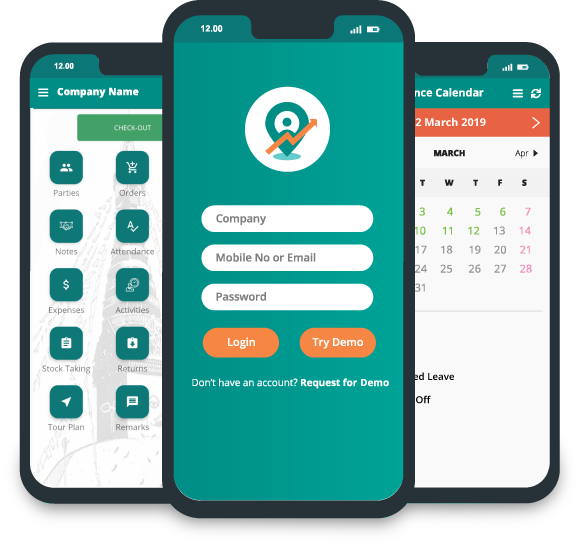
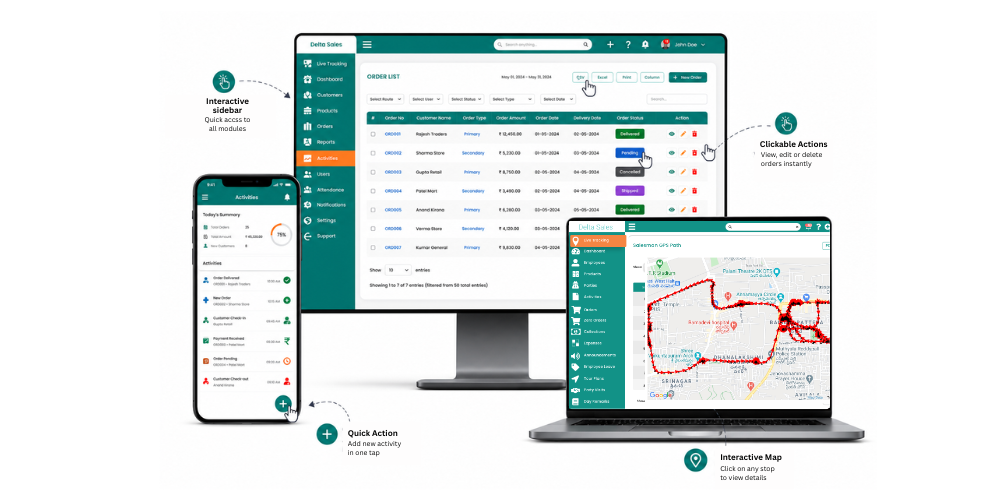
A well-defined sales process is only effective when teams follow it consistently. The Delta Sales App helps businesses put standardized workflows into action by digitizing daily sales operations, automating routine tasks, and providing real-time visibility into field activities. This enables sales teams to stay aligned, work more efficiently, and deliver a consistent customer experience. Here's how the Delta Sales App supports a standardized sales process:
1. Standardizes Daily Field Sales Activities
The app ensures every sales representative follows the same workflow for attendance, outlet visits, order management, and reporting. This reduces inconsistencies and helps managers maintain uniform sales execution across teams and territories.
2. Simplifies Beat Planning and Customer Visits
With Beat Planning, sales representatives receive a structured visit schedule, ensuring the right outlets are visited at the right time. This improves route planning, reduces missed visits, and helps teams stay organized throughout the day.
3. Provides Real-Time Field Visibility
Managers can monitor field activities as they happen through GPS tracking and live location updates. They can verify customer visits, track team movement, and quickly identify areas where additional support or action is required.

4. Automates Order Management and Reporting
The app digitizes order management, allowing representatives to capture orders accurately while eliminating paperwork. Automated reports & analytics provide real-time insights into sales performance, helping managers make faster and more informed decisions.
5. Tracks Secondary Sales Performance
For businesses working with distributors, the app simplifies secondary sales tracking by providing visibility into sales activities beyond primary distribution. This helps managers monitor product movement, identify performance gaps, and improve coordination across the distribution network.
6. Supports Business Growth with a Scalable Platform
Whether you're managing a small sales team or expanding across multiple regions, the Delta Sales App provides a centralized platform that keeps everyone aligned. By combining Sales Force Automation with real-time insights, businesses can improve operational efficiency, strengthen team collaboration, and scale sales operations with confidence.
Conclusion
A consistent sales process is not just a set of guidelines; it is the foundation of a productive and scalable sales organization. Standardizing how sales teams interact with customers, follow up on leads, report their activities, and execute field activities can help businesses become more efficient, improve collaboration, and provide a better customer experience.
Together with sales automation, this structured approach can help businesses gain greater visibility into their operations, reduce manual work, and make faster, data-driven decisions. This frees up sales teams to focus on building customer relationships and generating revenue, instead of repetitive administrative tasks.
If you want to get your sales reps working more efficiently and following a consistent workflow, the Delta Sales App has the tools you need. It helps businesses to standardize processes, increase field productivity, and scale with confidence. From Sales Force Automation and Beat Planning to Order Management, GPS Tracking, and Reports & Analytics, it is all covered.
Want to make your sales process more efficient? Book a free demo of the Delta Sales App and discover how you can standardize your sales operations, empower your field teams, and accelerate business growth.