
10 Proven Strategies To Increase “Order-per-outlet” Ratios in Competitive Markets
In today’s competitive FMCG and B2B distribution markets, acquiring new outlets is expensive and time-consuming. Most markets are already saturated, with multiple brands fighting for shelf space and retailer attention. In such an environment, sustainable growth comes from increasing the Order-per-Outlet (OPO) ratio, which measures how much business is generated from each active outlet.
Order-per-Outlet Ratio = Total Order Value / Number of Active Outlets
A higher ratio indicates stronger retailer relationships, better product penetration, and more efficient sales operations. Below are ten proven strategies that help businesses systematically improve this ratio even in highly competitive markets.
Why Order-per-Outlet Ratio Matters in Competitive Markets
In saturated FMCG and B2B markets, growth cannot rely only on adding new outlets. Improving the Order-per-Outlet Ratio (OPO) helps businesses generate more revenue from existing outlets while controlling acquisition and distribution costs.
Why it matters:
-
Higher revenue from existing outlets – Increasing order value boosts sales without expanding outlet count, improving overall business profitability significantly.
-
Stronger retailer relationships – Consistent value and reliable supply encourage retailers to consolidate orders and build long-term loyalty.
-
Better sales productivity – Larger orders per visit improve route efficiency, reduce travel costs, and enhance sales team performance.
-
Improved distribution efficiency – Higher order size lowers logistics cost per unit and optimizes delivery planning across distribution networks.
-
Sustainable competitive advantage – Businesses focusing on OPO maximize existing network potential and outperform competitors in saturated markets consistently.
Focusing on OPO enables smarter growth, stronger loyalty, and better profitability in competitive environments.
What is Order-per-Outlet Ratio and Why It Is a Critical Sales KPI
The Order-per-Outlet Ratio (OPO) measures the average order value generated from each active outlet in a given period.
Formula:
Order-per-Outlet Ratio = Total Order Value ÷ Number of Active Outlets
Why it is a critical KPI:
-
Measures outlet productivity – Shows how effectively each outlet generates revenue and contributes to overall sales performance consistently.
-
Indicates retailer loyalty and trust – Higher ratios reflect stronger relationships and deeper retailer commitment toward long-term business partnerships.
-
Reveals sales execution quality – Helps evaluate visit planning, upselling effectiveness, and overall retailer engagement across assigned sales territories.
-
Identifies performance gaps – Highlights underperforming outlets or regions requiring focused attention, corrective strategies, and execution improvement initiatives.
-
Supports strategic decisions – Guides sales planning, demand forecasting, and efficient resource allocation for sustained revenue growth effectively.
Tracking this KPI helps businesses improve sales efficiency and achieve consistent revenue growth.
10 Proven Strategies to Increase Order-per-Outlet
Improving the Order-per-Outlet Ratio requires a structured and consistent approach focused on retailer engagement, execution quality, and data-driven decision making.
The following proven strategies help businesses systematically increase order value per outlet, strengthen distribution efficiency, and drive sustainable growth in competitive markets.
-
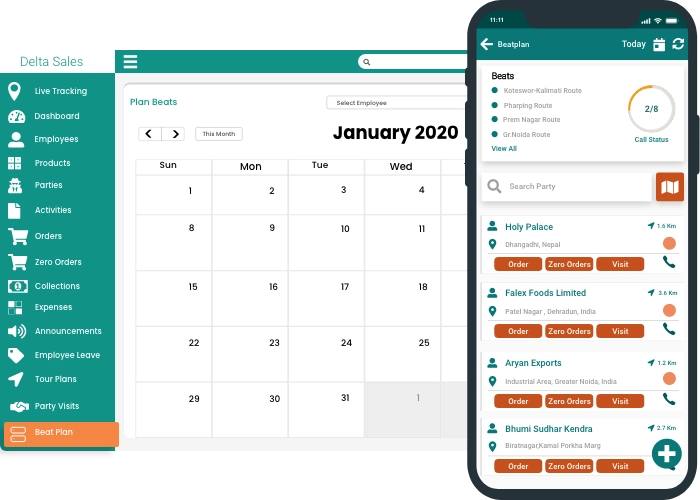
Consistent and Planned Sales Visits
Irregular sales visits create gaps that competitors quickly fill. When sales executives do not visit outlets consistently, retailers place smaller orders or shift demand to other suppliers who are more accessible.
A structured visit plan ensures that every outlet receives attention at the right frequency. Regular visits help sales executives track inventory levels, suggest replenishment, and introduce new SKUs at the right time.
Consistency improves both order frequency and order size. Retailers feel supported and are less likely to split orders. This directly contributes to a higher order-per-outlet ratio across the distribution network.
-
Deep Analysis of Outlet Buying Behavior
One of the most effective ways to increase order-per-outlet ratios is to understand how each outlet buys. In competitive markets, retailers often purchase small quantities from multiple suppliers to reduce dependency and risk. Without proper analysis, sales teams miss opportunities to increase order size.
By analyzing historical order data, such as order frequency, preferred SKUs, seasonal trends, and average ticket size, sales executives can identify gaps and opportunities. For example, if a retailer orders frequently but in low quantities, the focus should be on increasing order size. If orders are large but infrequent, improving order frequency becomes the goal.
This data-driven approach allows sales teams to recommend the right products at the right time. When retailers see that recommendations match their actual demand, they trust the supplier more and place larger, more consistent orders, directly improving the order-per-outlet ratio.
-
Strategic Product Bundling to Increase Basket Size
In competitive markets, price wars reduce margins and weaken brand value. Instead of competing solely on price, businesses can use product bundling to increase order size per outlet.
Product bundling involves combining fast-moving products with complementary or slow-moving items at a perceived value advantage. For example, a retailer ordering a popular SKU can be encouraged to include related SKUs that improve shelf variety or customer choice.
Bundling simplifies the buying decision for retailers and reduces comparison with competitors. When retailers receive more value in a single order, they are more likely to increase quantities. Over time, this significantly improves the average order-per-outlet ratio without adding new outlets.
-
Volume-Based Incentives and Schemes
Retailers in competitive markets are highly incentive-driven. If there is no reward for ordering higher quantities, they tend to place minimum orders and split purchases among multiple brands.
Volume-based incentives, such as quantity discounts, free products, loyalty points, or extended credit, encourage retailers to increase order size. These schemes should be clearly structured and easy to understand, so retailers know exactly what benefit they receive for ordering more.
When designed properly, such incentives push retailers to consolidate purchases with one supplier rather than spreading orders across competitors. This consolidation results in higher order values per outlet and improves the order-per-outlet ratio in a measurable way.
-
Strengthening Sales Executive-Retailer Relationships
In crowded markets, products can be similar, prices competitive, and promotions common. What truly differentiates suppliers is the relationship between the sales executive and the retailer.
Sales executives who maintain regular contact, understand retailer challenges, and provide timely support become trusted partners rather than just sellers. Retailers are more comfortable placing larger orders with someone they trust and rely on.
Strong relationships reduce order hesitation and increase loyalty. Retailers are also more open to trying new products and accepting upsell suggestions. Over time, this trust-based selling significantly increases order value per outlet, even in highly competitive environments.
-
Continuous Performance Tracking and Improvement
Without measurement, improvement is temporary. Tracking order-per-outlet ratios at the outlet and sales executive level helps identify strengths and gaps.
Regular performance reviews highlight high-performing outlets and sales practices that can be replicated elsewhere. Rewarding improvement further motivates sales teams to focus on increasing order value rather than just expanding outlet count.
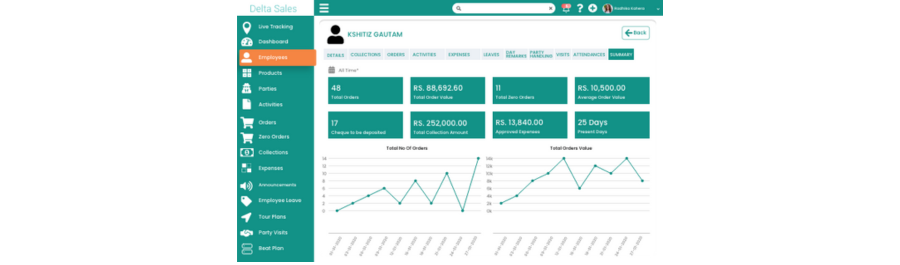
A culture of continuous monitoring ensures long-term growth in order-per-outlet ratios, even as competition evolves.
-
Ensuring Product Availability and Supply Reliability
In competitive markets, product availability is non-negotiable. Even loyal retailers will switch suppliers if products are frequently out of stock.
Ensuring consistent availability of fast-moving SKUs builds retailer confidence. When retailers know that a supplier can reliably fulfill orders, they are more willing to place larger and consolidated orders instead of spreading risk across competitors.
Clear communication about stock levels, delivery timelines, and new arrivals further strengthens trust. Reliable supply chains directly support higher order-per-outlet ratios by reducing lost sales and improving order completeness.
-
Targeted Promotions for High-Competition Areas
Uniform promotions across all markets often fail because competition intensity varies by region. In highly competitive zones, retailers need stronger motivation to increase order size.
Targeted promotions, designed based on outlet performance, location, and competitor presence, are more effective. High-potential outlets can be given customized offers, while stable outlets may receive loyalty-based benefits.
Such targeted efforts increase promotional efficiency and encourage higher order quantities where competition is strongest. This localized approach helps maintain and improve order-per-outlet ratios even in aggressive markets.
-
Upselling and Cross-Selling Using Sales Data
Many retailers order only familiar products, limiting overall order value. Upselling and cross-selling address this gap by expanding the product mix per order.
Using sales data, sales executives can identify complementary SKUs that match retailer demand. Educating retailers about product benefits, margins, and customer demand further supports these efforts.
When retailers see real value in adding new SKUs, they are more likely to increase order size. Over time, consistent upselling and cross-selling improve product penetration and raise the order-per-outlet ratio sustainably.
-
Simplifying the Ordering Process
In competitive markets, ease of doing business matters as much as product quality. Complex ordering processes discourage retailers from placing large or frequent orders.
Simplified ordering systems, such as digital order capture, clear pricing, and quick confirmations, reduce friction. Retailers prefer suppliers who save them time and effort.
When ordering becomes easy, retailers place orders more frequently and are comfortable increasing quantities. This convenience-driven behavior directly improves the order-per-outlet ratio.

Common Mistakes That Reduce Order-per-Outlet Ratio
Many businesses struggle to improve OPO due to execution gaps rather than market conditions. Avoiding these mistakes is essential for increasing order value.
Common mistakes:
-
Focusing only on adding new outlets – Reduces average order value if existing outlets remain underdeveloped and neglected regularly.
-
Lack of sales data analysis – Missed opportunities to increase order size, product penetration, and overall revenue consistently.
-
Irregular sales visits – Weak retailer engagement causes smaller, inconsistent orders and increases risk of lost business.
-
Stock-outs and supply inconsistency – Retailers shift purchases to competitors when products are unavailable or unreliable repeatedly.
-
Weak upselling and cross-selling – Limited product mix reduces overall order value and misses growth opportunities per outlet.
-
Complex ordering process – Difficult, time-consuming ordering discourages retailers from placing frequent or larger orders consistently.
Eliminating these gaps helps businesses strengthen retailer engagement and improve Order-per-Outlet Ratio.
How Technology Helps Improve Order-per-Outlet Ratio
Improving OPO requires data-driven execution, which modern sales automation and field force management tools enable. Technology improves visibility, planning, and retailer engagement.
How technology helps:
-
Structured visit planning – Consistent, data-driven outlet visit planning ensures engagement, timely product recommendations, and increased order values, enhancing the Order-per-Outlet Ratio.
-
Inventory visibility – Real-time inventory visibility ensures product availability, strengthens retailer confidence, and reduces stock-outs, positively affecting the Order-per-Outlet Ratio.
-
Digital order capture – Simplified digital ordering streamlines processes, increases order frequency, encourages larger purchases, and ultimately boosts the Order-per-Outlet Ratio efficiently.
-
Performance dashboards – Tracking outlet and regional performance through dashboards highlights gaps and opportunities, helping improve overall Order-per-Outlet Ratio systematically.
-
Automation & insights – Automation tools generate actionable insights, optimize sales execution, and continuously monitor performance to enhance the Order-per-Outlet Ratio consistently.
-
Sales data & analytics – Analyzing sales data identifies buying patterns, order gaps, and upselling opportunities, directly improving the Order-per-Outlet Ratio.
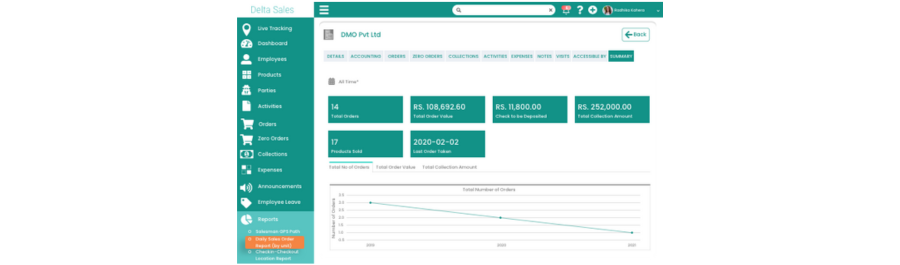
Solutions like Delta Sales App integrate sales automation, order management, and analytics, helping businesses systematically improve Order-per-Outlet Ratio and achieve sustainable growth.
Conclusion
In competitive markets, growing revenue isn’t just about adding outlets, it’s about increasing Order-per-Outlet Ratio. Focusing on each outlet maximizes sales, strengthens retailer loyalty, and reduces costs.
By analyzing buying behavior, improving product availability, and leveraging technology, businesses can turn every outlet into a high-performing revenue driver. Consistent execution, upselling, and data-driven strategies ensure sustainable growth even in saturated markets.
Start your free demo now and Boost your sales efficiency today with Delta Sales App. Track orders, optimize visits, and grow revenue per outlet smarter.