
Delta Sales App Vs Field Force Connect
Imagine it’s the peak sales season. Your team is scattered across the city, visiting retailers, and closing deals. You open your laptop, expecting to see a real-time dashboard of today’s performance. Instead, you see a blank map. Your best field executive forgot to check in this morning. The orders that came in were logged manually three hours after the visit, and two of them have the wrong product codes. Meanwhile, your distributor is calling because a key retailer is complaining about a missed delivery promised by the sales rep.
Does this gap between what your team does and what your system shows sound painfully familiar?
In the rush to digitize field sales, many companies make a critical mistake: they buy software and then try to force their ground-level reality to fit it. Today, we are comparing two distinct approaches to solving this problem: Delta Sales App vs. Field Force Connect. While both platforms fall under the broad umbrella of sales force automation, their core design philosophies, user experience, and business outcomes are miles apart.
Comparing Delta Sales App and Field Force Connect
To choose the right one, you have to stop looking at feature lists and start looking at who the software is actually built for:
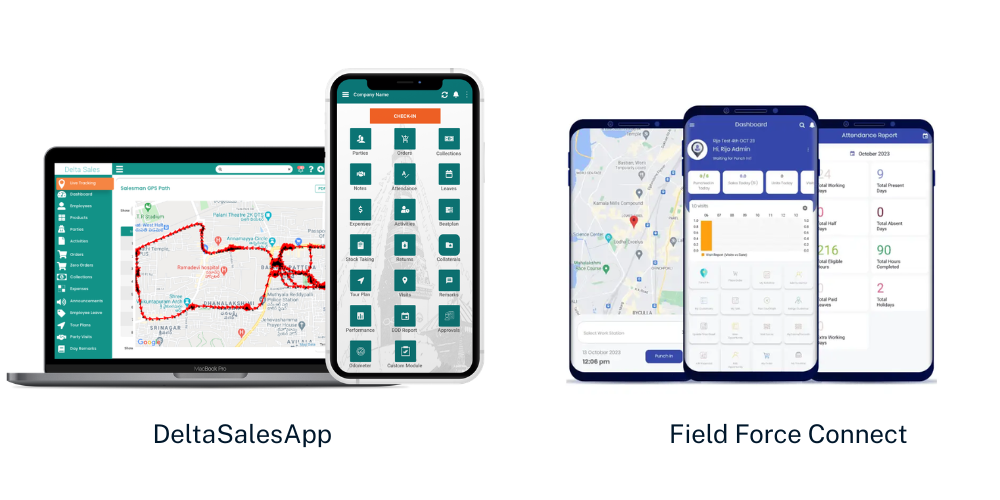
Tracking People vs. Powering Processes
Every software has a soul, defined by the problem it was originally coded to solve. Understanding this origin story is the fastest way to predict if a tool will help or hinder your operations.
Delta Sales App, in contrast, was born from the high-pressure reality of the FMCG (Fast-Moving Consumer Goods), pharma, and distribution management sectors. The original problem wasn't "How do we see our team?" but rather, "How do we capture a perfect order in 30 seconds while a shopkeeper is shouting at us?"
This approach is excellent for service industries, security agencies, or maintenance crews where the primary deliverable is the presence of the person. Did the technician show up? Did the guard complete their patrol? The data collected is largely behavioral.
However, for a revenue-generating sales team, presence alone doesn’t pay the bills. A rep can visit 20 stores, check in at all of them perfectly, and still leave with zero orders. This is where the philosophical gap widens.
Field Force Connect, as the name suggests, originates from the world of workforce management and team communication. Its DNA is rooted in the idea of "connecting" a dispersed team to a central hub. The primary goal is visibility: knowing where your employees are, what they are doing, and ensuring they are following their schedules. It functions as a digital tether between the office and the field.
This means the software's soul is transactional, not observational. It assumes the user is in a hurry, dealing with stock, cash, and demanding customers. It prioritizes speed and accuracy over check-in and work logs. Understanding this distinction is the first step to realizing why a tool designed for "connectivity" might actually slow down a sales process. Many businesses looking to solve this speed issue often research the Delta Sales App to see how it handles high-volume order capture.
The User Experience: For the Manager or for the Rep?
The success of any field sales software hinges on one thing: adoption. If your team hates using it, your data will be garbage. The user experience (UX) design dictates whether the app is seen as a helpful tool or a corporate spy.
While accountability is important, this creates a friction point. The rep must perform administrative tasks before they can start selling. This leads to "punch-list" behavior where reps rush through the checks just to get to the actual work, often entering inaccurate data just to clear the notification.
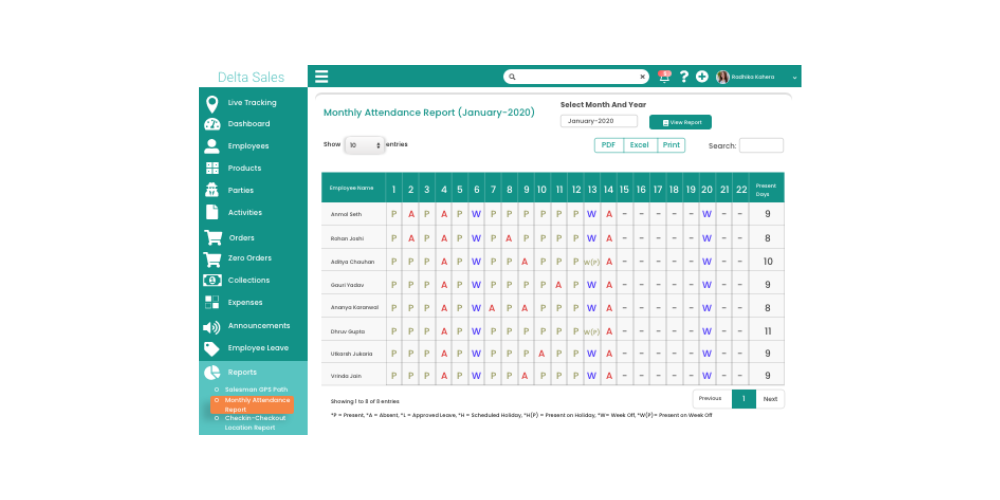
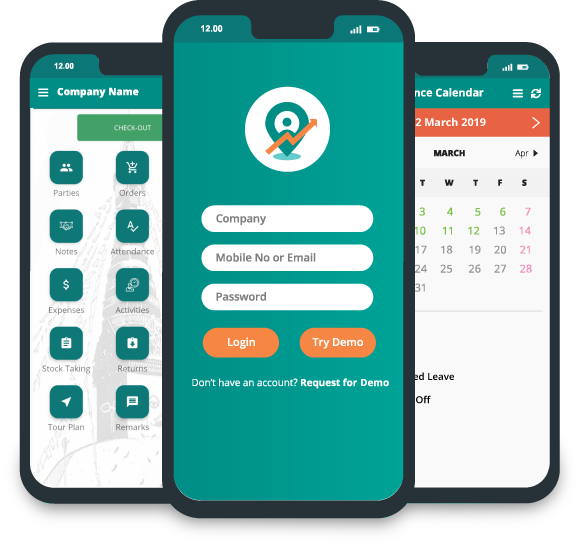
Delta Sales App flips this dynamic on its head. When a rep logs in, the fastest and most prominent button is the one that lets them book an order. The interface asks, "What can we do to help you sell?" before it asks for anything else.
Field Force Connect apps often suffer from what is known as the "Big Brother" syndrome. The interface is heavily skewed toward clocking in and attendance leave tracking. When a rep opens the app, the first thing they see is often a map asking them to verify their location, a timer counting their work hours, or a list of tasks assigned by the manager. The unspoken message is, "We are watching you."
Features like one-click reordering of a customer's last purchase, instant product search, and automatic discount calculations are front and center. The location tracking and visit logging happen passively in the background as a byproduct of the rep doing their job. The rep loves it because it makes them faster and reduces errors. The manager loves it because the data is accurate and willingly provided. This "rep-first" design is a core reason why adoption rates spike in transaction-heavy environments. You can see how this focus on user speed translates to daily efficiency by exploring the core features of the Delta Sales App.
Cloud-Dependent vs. Offline-First
We live in a world obsessed with the cloud, but the ground reality of sales is often dusty, remote, and disconnected.
The Delta Sales App was engineered for the reality of the field. It operates on an offline-first architecture. A sales rep can book a complex order involving 50 SKUs, apply a multi-layered discount scheme, capture a payment, and capture a signature all without a single bar of signal. The app stores the data locally and syncs it silently and instantly the moment a connection is found.
Field Force Connect tools are typically built on a "mobile-first, but cloud-dependent" architecture. They require a stable internet connection to function optimally. Checking in, uploading a photo, or logging a visit usually needs a live data connection. In a major city with 4G, this works fine. But what about the rural distributor warehouse in a basement? What about the industrial area with spotty coverage?
When the network drops, these apps often freeze or queue data to be sent later. This creates a "double-work" problem for the rep. They have to remember what they did and where they were and log it later when they find a signal. Data becomes delayed, and honest mistakes creep in.
For the sales rep, this is magical. They never have to say, "Sorry, the app is loading." They maintain eye contact with the customer and close the deal at the speed of conversation. For the business, it means the data in your system is a real-time reflection of reality, not a batch upload from 6 PM when the rep gets back to town. If your team operates in areas with less-than-perfect connectivity, understanding how the Delta Sales App handles offline scenarios is crucial for maintaining operational integrity.
Task Lists vs. Beat Plans
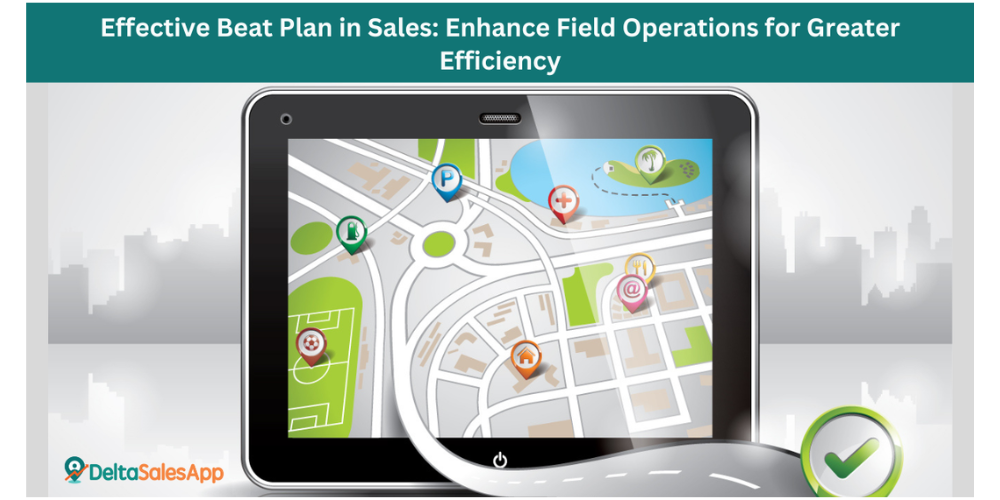
How does the software guide the rep through their day? This is where the operational logic differs significantly.
Delta Sales App manages the day through Beat Planning and Route Optimization. It understands that sales is a dynamic flow. The app allows managers to design better territory management based on store potential, visit frequency, and geographic logic. The rep follows the beat, but the app provides the intelligence to make the beat better.
This works well for discrete jobs (e.g., "Fix the AC at Customer A"). But sales isn't always linear. A high-value customer might call for an emergency order, disrupting the planned task list.
Field Force Connect usually manages the day through task management. A manager creates a list of tasks or visits for the day and assigns them to a rep. The rep then works through this checklist. It’s a linear, assignment-based model. The focus is on completion, checking off that a specific task at a specific location was done.
If a rep is running late, they can see which stores to prioritize. If a store is closed, they can mark it, and the system adjusts the plan. The focus isn't just on visiting the store but on selling to the store. It provides the rep with the store's purchase history, outstanding dues, and recommended order quantities right on the visit screen. This transforms the rep from an order-taker into a consultative seller. For field managers looking to move beyond simple task tracking, the route optimization capabilities of the Delta Sales App offer a path to significant productivity gains.
The Data Story: Activity Logs vs. Business Intelligence
At the end of the day, software is about data. But not all data is created equal.
Delta Sales App is designed to generate business intelligence. Every action taken in the app is tied to a commercial outcome. When a rep visits a store and books an order, the system immediately updates:
-
Secondary Sales: Real-time data on what is actually moving off the shelves.
-
Primary Sales: The order that goes to the distributor.
-
Scheme Effectiveness: Which promotions actually drove the order?
-
Receivables: How much cash was collected against outstanding dues?

The dashboard for the manager isn't just a map with dots; it's a revenue operations center. It answers questions like, "Which products are trending in this specific region?" Which retailer hasn't ordered in two weeks? Which scheme is causing the most cash discounts?
Field Force Connect excels at generating activity data. It can tell you with precision when your rep started work, how many kilometers they drove, how many hours they spent at a location, and how many photos they took. This is valuable for operational compliance and payroll verification.
However, activity data has a ceiling. Knowing that a rep spent 4 hours in the field doesn't tell you if the company made money. It measures effort, not outcome.
This shifts the conversation from "Did you do your job?" to "How can we sell more tomorrow?" If you want to move beyond tracking your team to actually growing your market share, you need to look at how the Delta Sales App converts field visits into actionable business insights.
Bridging the Supply Chain Gap
Perhaps the biggest differentiator lies outside the app itself: how it interacts with the physical supply chain. Delta Sales App is built to be the front end of the entire distribution ecosystem. It integrates seamlessly with back-end systems like Distributor Management Systems (DMS) and ERPs. This integration provides the rep with real-time visibility into distributor stock levels. They can confidently promise only what is available.
This creates a disconnect. The rep promises the retailer a delivery based on what they think is in stock, but the distributor is actually out of stock on that item. Chaos ensues.
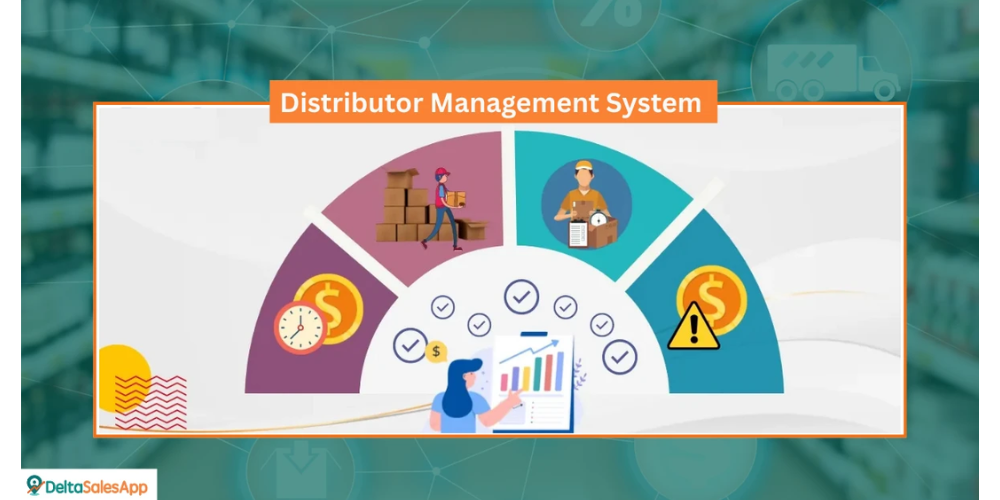
Field Force Connect typically stops at the retailer. It captures the visit and the intent, but the loop often closes there. The order taken in the field usually needs to be manually re-entered into an inventory system or emailed to a warehouse. This manual handoff is where errors happen: the wrong quantity, the wrong product, or a missed delivery promise.
Furthermore, the moment an order is punched in the app, it can appear on the distributor's invoice printing queue or the warehouse picklist. This collapses the time between the sale and the fulfillment, dramatically improving retailer satisfaction and reducing the administrative burden on office staff. To understand how this end-to-end visibility transforms channel relationships, it’s worth exploring how the Delta Sales App integrates with distributor workflows.
Conclusion
The comparison between Delta Sales App Vs Field Force Connect ultimately boils down to a single question: Are you trying to track your employees, or are you trying to optimize your revenue?
Delta Sales App was purpose-built to eliminate that specific chaos. It bridges the gap between the field and the office by making the transaction the center of the universe. It empowers the rep to sell faster, gives the manager intelligence to strategize better, and connects the distributor to close the loop on fulfillment. If your business lives and dies by the accuracy and speed of your field orders, the choice is clear.
Ready to turn your field force from a tracked asset into a revenue engine? Book a Demo Today and discover how the Delta Sales App can streamline your entire distribution network.