
15 Questions to Ask Before Buying a Field Sales Tracking App (Free Checklist)

Selecting the right field sales tracking app requires a careful evaluation of how well the solution aligns with your on-ground sales operations. Beyond basic features, businesses must assess whether the platform truly enhances visibility, improves accountability, and supports real-time decision-making.
A strong field sales tracking system should not only capture location data but also translate it into meaningful insights such as visit efficiency, route optimization, and productivity trends. Without this, organizations end up with large volumes of data that offer little operational value.
It is also important to consider how easily the system integrates into your existing workflow. Sales teams are often resistant to complex tools, so usability and mobile experience play a critical role in successful adoption. Similarly, factors like offline functionality, data security, and scalability determine whether the app can sustain long-term business growth.
Below are 15 essential questions every business should ask before finalizing a field sales tracking solution.
What Is a Field Sales Tracking App?
A field sales tracking app (also known as a field sales tracking software, field sales tracking system, or field sales tracking solution) is a mobile and web-based platform designed to monitor, manage, and optimize field sales operations in real time. It provides businesses with complete visibility into on-ground sales activities and improves decision-making through accurate, data-driven insights.
It typically includes core features such as GPS tracking for field sales teams, visit logging, sales route planning, task management, real-time reporting dashboards, and CRM integration for field sales automation. These features help organizations improve accountability, streamline workflows, and enhance sales force productivity tracking.
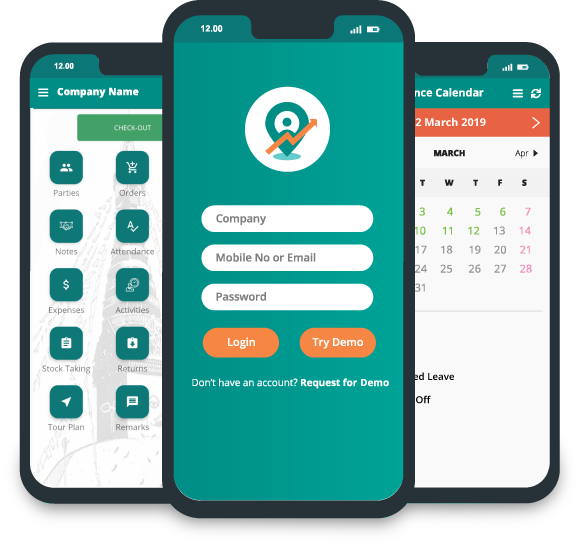
Modern platforms like Delta Sales App combine real-time sales tracking, mobile sales force automation, and automated reporting, enabling managers to monitor performance while helping field executives execute daily activities more efficiently.
Advanced field force tracking apps may also include:
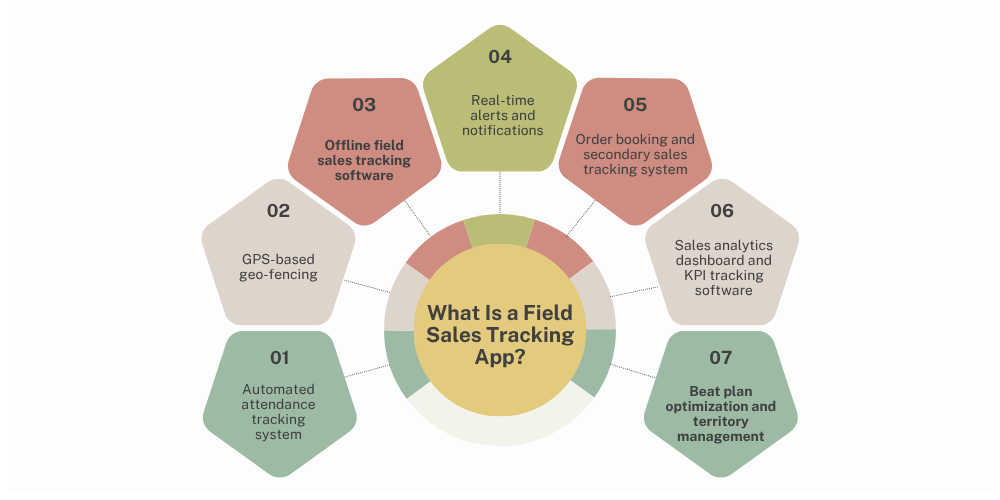
- Automated attendance tracking system for field sales teams with accurate check-in and check-out records
- GPS-based geo-fencing for field employees ensuring accurate field visit validation and location compliance
- Offline field sales tracking software with automatic data synchronization when internet connectivity resumes
- Real-time alerts and notifications for field managers to improve decision-making and sales control efficiency
- Order booking and secondary sales tracking system for FMCG and distribution-driven field sales operations
- Sales analytics dashboard and KPI tracking software for better performance measurement and forecasting accuracy
- Beat plan optimization and territory management tools for improving field sales route efficiency and coverage planning
Overall, a modern field sales management app goes beyond basic tracking. It acts as a complete sales automation solution, helping businesses improve productivity, reduce manual errors, enhance field visibility, and drive higher revenue growth through smarter execution.
15 Questions to Ask Before Buying a Field Sales Tracking App
Tracking Accuracy & Visibility
1. How accurate is the GPS tracking system?
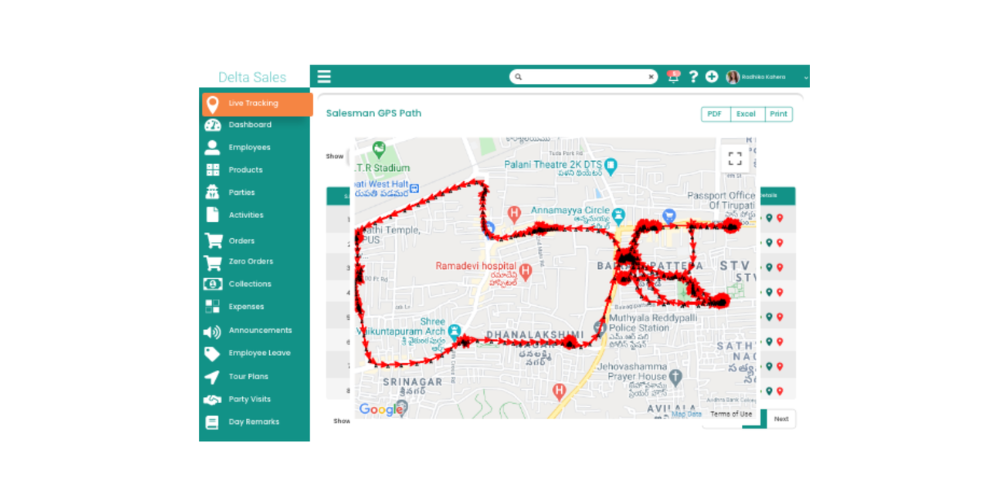
The accuracy of a GPS tracking system in a field sales tracking software depends on how frequently it updates location and how stable the signal is across different areas. Ideally, a good system should provide near real-time updates without delays or location jumps. If the GPS is not accurate, it becomes difficult to trust field movement data, which directly affects productivity analysis and decision-making. That’s why businesses should always test accuracy in both city and rural environments before finalizing.
- Real-time updates should be consistent and fast
- Works smoothly even in low-network areas
- Helps improve GPS tracking for field sales teams accuracy
- Ensures reliable performance evaluation
2. Does it support live employee tracking?
Yes, a good field force management software should definitely support live employee tracking. This feature allows managers to see where their field executives are in real time during working hours. It helps in ensuring that the team is actually following their assigned routes and not deviating from planned schedules. It also improves coordination because managers can take quick action if any issue arises in the field.
- Shows real-time location of field staff
- Ensures better discipline and route compliance
- Improves visibility through live tracking system
- Helps managers respond quickly to field situations
3. Can it track movement history and visit routes?
Yes, most advanced GPS tracking for field sales teams systems do offer movement history and route tracking. This means you can go back and see where a sales executive traveled throughout the day or week. It’s very useful for understanding productivity and identifying whether routes are optimized or not. Managers often use this data to improve planning and reduce unnecessary travel time.
- Shows complete past movement history
- Helps analyze inefficient travel routes
- Improves planning with sales route planning app
- Useful for performance review and audits
4. Does it automatically log check-ins and check-outs?
Yes, modern field sales tracking apps usually automate check-in and check-out processes. This means employees don’t need to manually mark attendance, as the system records it automatically based on location and time. It reduces errors and prevents manipulation of working hours. It also makes it easier for managers to track how much time a salesperson actually spends in the field.
- Automatic attendance without manual entry
- Accurate working hour tracking
- Reduces chances of data manipulation
- Improves efficiency using attendance tracking software
5. Can it detect fake or missed visits?
Yes, advanced field sales tracking software solutions can detect fake or missed visits using technologies like geo-fencing and GPS validation. When a salesperson claims a visit, the system verifies whether they were actually present at the customer location. If not, it flags the activity. This ensures that reporting remains accurate and trustworthy, especially in large field sales teams.
- Uses geo-fencing for visit verification
- Detects fake or skipped check-ins
- Ensures accuracy in customer visit tracking system
- Improves data trust and transparency in reporting
Usability & Field Adoption
6. Is the mobile app simple enough for field teams?
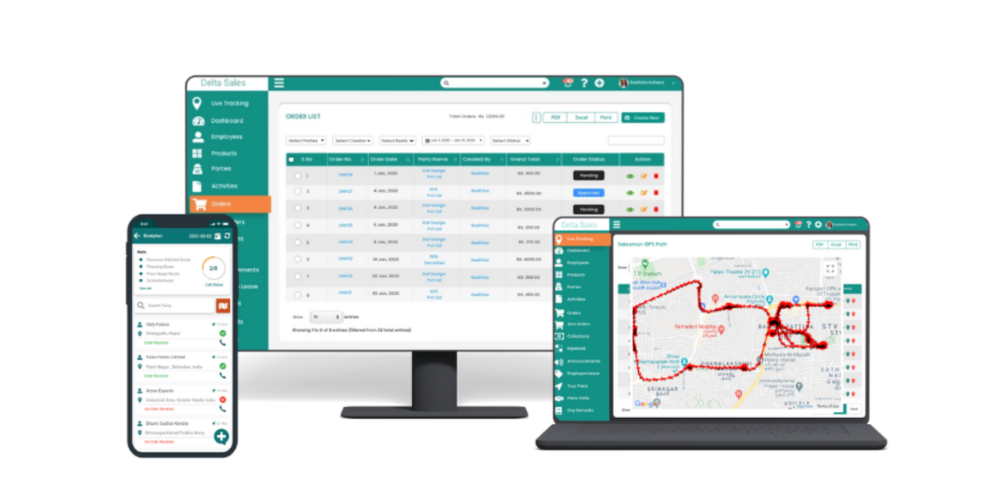
Yes, simplicity is one of the most important factors in any field sales tracking software. If the app is not easy to use, field teams will not adopt it properly, no matter how advanced the features are. A good system should allow users to quickly understand navigation and complete daily tasks like visit marking or order entry without training delays. The easier the interface, the higher the adoption rate across the sales team.
- Simple UI improves adoption in field force management software by reducing confusion and operational complexity.
- Reduces training time for field executives by enabling quick understanding of system features and workflows.
- Ensures consistent daily usage through intuitive design that encourages regular engagement with the application.
- Minimizes reporting errors by simplifying data entry processes and reducing manual input mistakes significantly.
7. Does it work in low or no internet connectivity?
Yes, a reliable field sales tracking app must work even in low or no internet areas. Field sales teams often operate in rural locations where connectivity is unstable or completely unavailable for long periods. In such situations, offline functionality becomes essential to ensure uninterrupted work. Sales executives should still be able to capture customer visits, update meeting details, and record orders without depending on live connectivity. This ensures that business operations continue smoothly even in challenging field conditions.
Once the device reconnects to the internet, all stored data should automatically sync without any manual intervention from the user. This prevents data loss and ensures that managers receive complete and accurate information without delays. A strong offline field sales tracking system also helps maintain data consistency across dashboards, reports, and analytics tools. Ultimately, this capability ensures reliability, improves field productivity, and supports seamless operations regardless of network availability.
8. How quickly can field reps complete daily tasks?
Speed is very important in any mobile field sales automation software. Field representatives should be able to complete tasks like visit logging, order booking, and reporting quickly without spending too much time on the app. A well-optimized system reduces unnecessary steps and helps sales reps focus more on customer interaction rather than data entry.
- Fast task execution in field sales tracking app ensures reps complete activities within minimal time.
- Quick visit and order logging improves efficiency during customer interactions in field operations daily.
- Saves time during field operations by reducing manual steps and repetitive data entry processes.
- Improves overall productivity by allowing sales reps to focus more on closing deals effectively.
9. Does it support multilingual usage?
Yes, multilingual support is highly useful in a field force management software, especially for teams working across different regions with diverse language preferences. When field executives can operate the app in their preferred language, it significantly improves clarity in understanding tasks, reports, and instructions. This reduces misinterpretation of data entry fields and ensures that daily field activities are performed more accurately. It also builds confidence among users who may not be comfortable with English-based interfaces.
Additionally, multilingual functionality plays a key role in improving overall system adoption and user engagement. It helps new field executives get comfortable with the platform much faster, reducing dependency on training sessions. This leads to smoother onboarding and quicker productivity from new hires. From a management perspective, it also improves communication efficiency across teams spread across different regions, ensuring that workflows remain consistent and standardized across the entire organization.
Reporting & Analytics
10. What kind of real-time dashboards are available?
A strong field sales tracking software should provide real-time dashboards that give managers instant visibility into field performance. These dashboards typically show live updates on sales activity, visit counts, productivity levels, and territory-wise performance. Instead of waiting for end-of-day reports, managers can monitor field operations as they happen, which significantly improves decision-making speed and operational control.

- Live sales performance tracking in real-time dashboard system
- Instant visibility into visit counts and productivity trends
- Territory-wise performance monitoring for better field control
11. Does it provide actionable insights or just raw data?
A good field force management software should go beyond simply showing raw numbers. It must convert data into meaningful insights that help managers understand what is actually happening in the field. Instead of just listing reports, the system should highlight performance gaps, productivity trends, and improvement opportunities. This makes decision-making faster and more strategic.
12. Can reports be customized?
Yes, customization is essential in any field sales tracking system because every business operates with different KPIs and sales structures. A flexible reporting system allows companies to choose what data they want to track and how they want to analyze it. This ensures that reports are aligned with real business goals rather than fixed templates that may not suit every organization.
- Flexible reporting in automated reports and analytics dashboard
- KPI-based report configuration for different business models
- Better alignment with specific sales performance goals
Integration & Scalability
13. Does it integrate with CRM and ERP systems?
Yes, integration with CRM and ERP is a critical requirement in modern field sales tracking software. When systems are properly connected, data flows seamlessly between sales tracking, customer management, order processing, and inventory systems. This eliminates manual data duplication and ensures all departments work with updated information. It also improves reporting accuracy and provides a unified view of business operations.
- Seamless data flow in CRM integrated field sales system ensuring real-time synchronized business information
- Reduces manual data entry and duplication errors across sales, inventory, and customer management systems
- Improves coordination between sales and operations teams through centralized integrated data visibility
14. Can the system scale with business growth?
A reliable field force management software must support business growth without affecting performance or speed. As organizations expand, users, territories, and transaction volumes increase significantly. A scalable system ensures smooth performance even under heavy data load. This is essential for long-term growth, operational stability, and efficient field sales management across multiple regions.
- Handles increasing users in scalable field sales tracking platform without performance degradation or system delays
- Supports expansion across new territories smoothly with centralized control and consistent operational visibility across regions
- Maintains performance even with high data volumes ensuring stable reporting and uninterrupted field operations efficiency
Security & Support
15. How secure is your data and what support is provided?
Security is a critical factor in any field sales tracking software because it handles sensitive business data, customer information, and sales performance records. A reliable system should use strong encryption methods to protect data both in transit and at rest. It should also include role-based access control so that users can only view information relevant to their role. Additionally, compliance with industry security standards ensures that the platform follows proper data protection practices and reduces the risk of breaches or unauthorized access.
Along with security, vendor support plays a major role in long-term usability. A good field force management software provider should offer responsive customer support, quick issue resolution, and proper onboarding assistance. Training resources such as demos, documentation, and guided setup help teams adopt the system faster and use it effectively. Strong support ensures smooth implementation and continuous performance without operational disruptions.
Common Mistakes Businesses Make
Many companies focus only on price while ignoring operational depth and long-term usability. This often leads to poor adoption, inaccurate data, and inefficient field operations. A field sales tracking software should always be evaluated beyond cost to ensure it supports real business needs, scalability, and daily field execution requirements.
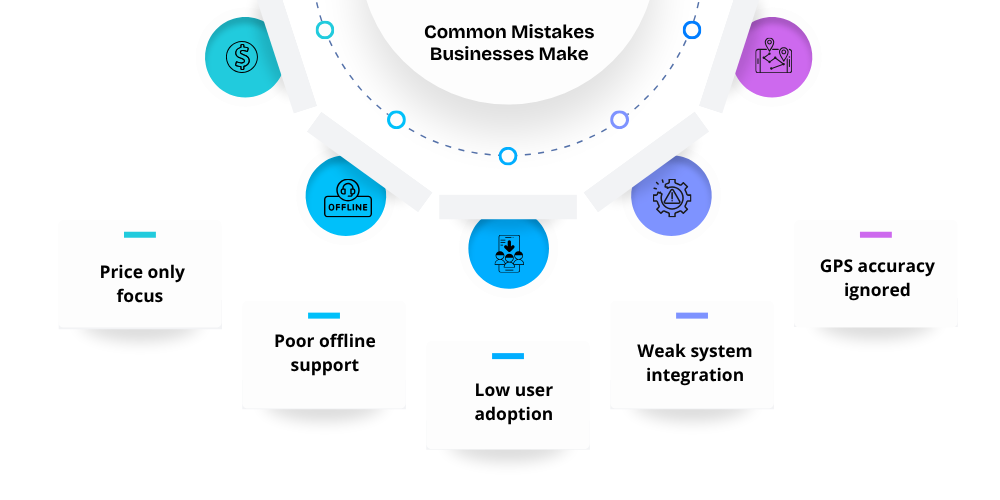
- Choosing apps with poor offline support causing data loss in remote field sales tracking system environments
- Ignoring adoption challenges for field teams leading to low usage and ineffective field force management software implementation
- Overlooking integration requirements resulting in disconnected CRM, ERP, and sales tracking software workflows
- Not testing real-world GPS accuracy before deployment causing unreliable field sales tracking accuracy issues
- Failing to evaluate vendor support quality resulting in delayed issue resolution and poor customer support experience
Final Evaluation Checklist for Selecting a Field Sales Tracking App
Before finalizing any field sales tracking software, it is important to evaluate whether the solution truly meets real-world field execution needs. A tool may look feature-rich, but without operational reliability, it can fail in daily usage. Businesses should carefully validate core performance areas like tracking accuracy, usability, reporting strength, and system integration before making a decision.
A well-structured evaluation ensures long-term success by preventing adoption issues, data inconsistencies, and operational inefficiencies. The checklist below highlights the most critical factors every organization should verify before selecting a field force management software.
- GPS accuracy is reliable for precise field sales tracking system performance and location validation
- Mobile app is easy to use ensuring faster adoption in field force management software environments
- Offline mode is available to support uninterrupted operations in remote field sales tracking conditions
- Reporting is actionable providing meaningful insights through sales analytics and performance dashboards
- Integration is possible with CRM and ERP systems for unified business data synchronization workflow
- Security standards are strong ensuring encrypted and protected field sales data management system
- Vendor support is responsive with timely assistance and effective customer success management support
Final Thoughts
A field sales tracking app is not just a software purchase—it is a long-term operational investment that directly influences how effectively your sales teams perform in the field. The right solution enhances visibility, improves accountability, reduces operational inefficiencies, and ultimately drives consistent revenue growth. On the other hand, choosing the wrong system can lead to poor adoption, inaccurate data, and friction in daily field operations.
That is why a structured evaluation using these 15 questions is essential. It ensures you move beyond surface-level features and select a solution that truly supports real-world sales execution rather than just an impressive demo experience.
If you are looking for a reliable and scalable solution, you can explore Delta Sales App.
Book a free demo today to see how it can transform your field sales operations and improve team productivity in real time.