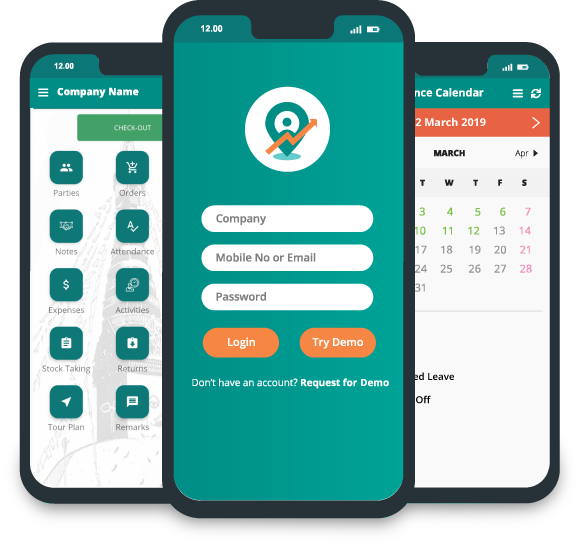

The Importance of Attendance Discipline in Modern Organizations
In an era where hybrid teams, remote workforces, and field employees are now the norm, attendance discipline isn’t just an HR rule; it’s a competitive advantage. The way organizations manage attendance impacts productivity, employee morale, workforce planning, payroll accuracy, and even customer satisfaction.
Too many businesses still treat attendance as a paperwork task. But the reality is clear: attendance discipline fuels performance, predictability, and trust across teams.
In this blog, you’ll learn why attendance discipline is critical, what real results it delivers, and how to implement it in a way that empowers both leaders and employees.
What Is Attendance Discipline?
Attendance discipline is a structured approach in which employees consistently adhere to established schedules, punctuality norms, and attendance procedures, whether on-site, remote, or in the field. It is not about policing behavior; rather, it is about ensuring transparency, fairness, and predictable outcomes throughout the organization.
It simply answers the question:
Are employees where they’re expected to be, and at the times that matter?
Strong attendance discipline bridges the gap between workforce expectations and actual performance. It helps organizations operate with clarity rather than chaos.
Why Attendance Discipline Is Essential for Modern Organizations
Attendance Discipline Directly Improves Productivity
Late arrivals, unplanned absences, and inconsistent schedules all contribute to a gradual decline in productivity. Small disruptions add up to missed deadlines, delayed projects, and frustrated teams.
Attendance discipline ensures:
-
Predictable work availability
-
Smooth collaboration between teams
-
Fewer workflow interruptions
When employees arrive consistently and on time, work moves faster and results improve without increasing pressure.
Builds a Culture of Accountability and Professionalism
Clear attendance rules promote clarity. Employees understand what is expected of them, managers apply fair policies, and accountability becomes a part of everyday behavior rather than a corrective action.
Attendance discipline reinforces:
-
Ownership of responsibilities
-
Mutual respect for time
-
Fair and transparent treatment
When everyone plays by the same rules, trust grows, and so does performance.
Enables Accurate Workforce Planning and Attendance Analytics
Attendance discipline produces accurate attendance data that aids workforce planning and HR analytics. Organizations can use attendance data to identify frequent absenteeism, forecast staffing requirements, and optimize shift schedules.
Without disciplined attendance tracking, workforce planning is reactive. Accurate attendance analytics enable organizations to make informed decisions that improve operational efficiency.
Ensures Payroll Accuracy and Labor Law Compliance
Attendance records are directly related to payroll processing, overtime calculations, and leave balances. Inaccurate attendance tracking can lead to payroll disputes, compliance violations, and employee dissatisfaction.
Attendance discipline ensures:
-
Accurate time tracking
-
Correct payroll calculations
-
Compliance with labor laws and company policies
A reliable time and attendance system protects both employees and the organization.
Reduces HR Workload With Attendance Automation
Manual attendance tracking increases HR workload and introduces errors. HR teams often spend time correcting records, reconciling attendance logs, and handling disputes.
Attendance discipline supported by attendance automation reduces administrative effort and improves data accuracy. HR teams gain real-time visibility into attendance records and can focus on strategic workforce initiatives.
Supports Remote, Hybrid, and Field Workforce Attendance
Modern organizations require attendance discipline that works beyond office premises. Remote workforce management and field force attendance tracking demand mobile, flexible attendance solutions.
With GPS-based attendance, mobile check-ins, and real-time tracking, organizations maintain discipline without micromanagement. This ensures accountability while supporting flexible work models.
Best Practices for Effective Attendance Discipline
-
Define Clear Attendance Policies
Clear attendance policies are the foundation of attendance discipline. Organizations must clearly document working hours, punctuality expectations, leave rules, absenteeism handling, and escalation procedures. When employees know exactly what is expected, confusion and disputes reduce significantly.
Well-defined attendance policies ensure consistency, fairness, and transparency across teams, making attendance discipline easier to enforce and follow.
-
Use a Digital Attendance Management System
Manual attendance tracking causes errors, delays, and inconsistencies. A digital attendance management system automates time and attendance tracking, providing accuracy and real-time visibility.
Automation enables organizations to track attendance across office, remote, and field teams while maintaining consistent attendance discipline with minimal administrative effort.
-
Communicate Attendance Expectations Clearly
Attendance discipline works best when employees understand not only the rules, but also the reasoning behind them. Organizations should communicate how attendance affects productivity, teamwork, payroll accuracy, and business results.
Clear communication builds employee buy-in and reduces resistance, making attendance discipline a shared responsibility rather than an enforced rule.
-
Balance Discipline with Flexibility
Modern attendance discipline is not about rigid control. Organizations must balance discipline with flexibility to support hybrid work, remote employees, and field operations.
Flexible schedules, outcome-based tracking, and mobile attendance tools enable organizations to maintain accountability while also respecting employee autonomy and modern work styles.
-
Review Attendance Data Regularly
Attendance discipline is not a one-time setup. Organizations should regularly review attendance reports and analytics to identify trends such as absenteeism, late arrivals, or overtime dependency.
By analyzing attendance data, businesses can refine policies, improve workforce planning, and address attendance issues proactively before they affect productivity.
-
Apply Policies Consistently and Fairly
Consistency is critical for effective attendance discipline. Policies must be applied equally across all teams and roles to avoid perceptions of favoritism or bias.
Fair enforcement builds trust, encourages compliance, and reinforces a culture of accountability and professionalism throughout the organization.
-
Leverage Technology for Visibility and Accountability
Modern attendance discipline is based on real-time visibility. GPS-based attendance, mobile check-ins, and live dashboards enable managers to track attendance without micromanaging.
This level of transparency increases accountability while also instilling confidence in employees that attendance tracking is accurate and fair.
How DeltaSales App Enables Attendance Discipline
-
GPS-Based Attendance with Location Verification
The DeltaSales App uses GPS technology to track attendance with precise location verification. This ensures that employees only mark attendance at approved work locations, such as assigned territories, client sites, or offices.
By eliminating proxy attendance and false check-ins, GPS-based attendance improves attendance discipline while maintaining transparency and trust.
-
Real-Time Field Force Tracking
Real-time tracking provides managers with instant visibility into where field employees are and how they move throughout the workday. This real-time insight helps to ensure attendance compliance without requiring constant follow-ups or micromanagement.
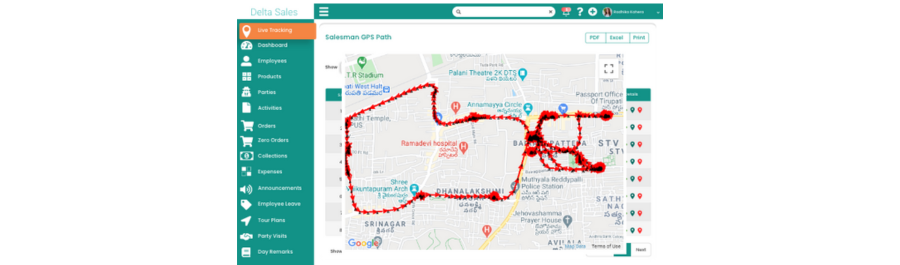
Real-time tracking also allows for faster decision-making and improved coordination among field teams.
-
Automated Attendance Logs and Reports
The DeltaSales app automatically collects attendance data and generates detailed attendance reports. These reports eliminate manual entry, reduce errors, and serve as a single source of truth for HR and managers. Automated logs assist organizations in maintaining accurate attendance records for payroll, audits, and performance reviews.
-
Offline Attendance Capture
Field employees frequently work in areas with limited or no internet connectivity. The DeltaSales App supports offline attendance capture, ensuring that attendance is recorded even without a network connection. When connectivity is restored, data syncs automatically, ensuring attendance discipline without disrupting field operations.
When connectivity is restored, data syncs automatically, ensuring attendance discipline while not disrupting field operations.
-
Activity-Linked Attendance for Higher Accountability
Attendance in the DeltaSales app is closely related to employee activities like store visits, meetings, and tasks. This ensures that attendance reflects actual work done, rather than just a check-in event.
By connecting attendance with daily activities, organizations gain deeper accountability and more meaningful attendance insights.
-
Centralized Dashboard for Complete Visibility
Delta Sales App offers managers a centralized dashboard that displays attendance status, locations, activity timelines, and exceptions in real time.
This unified view makes monitoring easier, reduces response times, and ensures consistent attendance discipline across large or distributed teams.
-
Reduced Manual Errors and Disputes
DeltaSales App reduces human error, which is common in manual tracking, by automating attendance capture and reporting. This reduces attendance issues, payroll errors, and employee dissatisfaction.
Accurate and transparent attendance records promote trust while ensuring compliance with attendance policies.

Conclusion
Attendance discipline is no longer just an HR responsibility; it is a core workforce management strategy. Organizations that implement structured attendance discipline benefit from improved productivity, accurate payroll, better workforce planning, and stronger accountability.
In today's distributed work environment, disciplined employee attendance management provides the structure required for organizations to operate efficiently and confidently scale.
Looking to improve attendance discipline and workforce productivity? Book your demo now to adopt a smart attendance management system that delivers accuracy, visibility, and accountability.