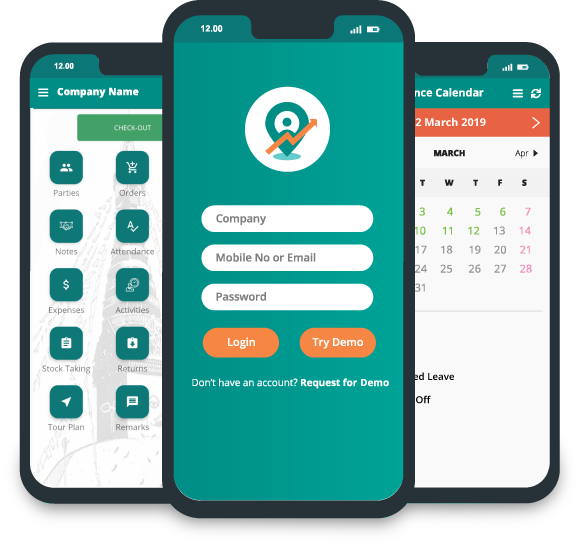

Why Are Field Sales Becoming More Data-Driven Than Ever?

For decades, field sales has been driven by experience, intuition, and personal relationships. Sales representatives relied heavily on their understanding of the market, familiarity with customers, and instinctive decision-making to close deals. While these qualities still play an important role, the modern sales environment has become far more complex and competitive.
Today’s businesses operate in fast-moving markets where customer expectations are higher, competition is intense, and margins are constantly under pressure. In such conditions, relying solely on gut feeling is no longer enough. Organizations need accuracy, visibility, and predictability and this is where data-driven field sales is transforming the way sales teams operate.
Field sales is no longer just about visiting more outlets or making more calls. It is about making the right visits, focusing on the right customers, and taking decisions based on real insights. As a result, data has become the backbone of modern field sales strategies.
The Shift from Traditional to Data-Driven Field Sales
Traditional field sales models focused largely on activity-based metrics. Managers tracked the number of visits, calls, or meetings completed by sales representatives. While these metrics showed effort, they did not always reflect actual performance or business impact.
A sales representative could make many visits in a day, but that did not guarantee higher sales or better customer engagement. Without data, it was difficult to understand which activities were truly productive and which were not.
Data-driven field sales changes this approach completely. Instead of measuring effort alone, organizations now focus on outcomes such as conversion rates, order value, visit effectiveness, and customer retention. This shift allows businesses to move from assumption-based decision-making to evidence-based strategies.
From Gut Feeling to Ground Reality
In the past, sales managers often relied on personal judgment to evaluate performance. Decisions such as assigning territories, prioritizing outlets, or launching schemes were frequently based on limited information or historical habits.
However, assumptions can be risky. Markets change, customer behavior evolves, and what worked yesterday may not work today.
Data provides a clear picture of ground reality by offering real-time insights into:
-
Outlet-wise sales performance
-
Product movement trends
-
Frequency and quality of sales visits
-
Actual contribution of each sales representative
With access to accurate data, managers can identify gaps, opportunities, and risks much earlier. This enables faster and smarter decision-making, reducing uncertainty and improving overall sales effectiveness.
Smarter Route Planning and Time Optimization
Time is one of the most valuable resources in field sales. A large portion of a sales representative’s day is spent traveling between outlets. Without proper planning, this can lead to wasted time, higher costs, and reduced productivity.
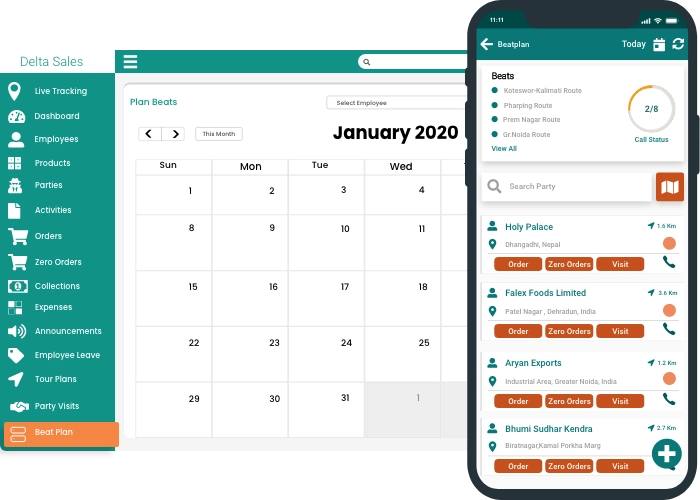
Data-driven route planning helps organizations:
-
Identify high-potential and high-revenue outlets
-
Prioritize visits based on sales value and opportunity
-
Design efficient routes that reduce travel time
By analyzing historical sales data and visit patterns, companies can ensure that their field teams focus on outlets that matter the most. This not only improves productivity but also reduces fatigue and increases job satisfaction among sales representatives.
Better Forecasting Leads to Better Decisions
Sales forecasting has always been a challenge for field sales teams. Inaccurate forecasts often result in stock shortages, excess inventory, or missed revenue opportunities.
Data-driven sales platforms enable businesses to:
-
Analyze past sales trends
-
Track seasonal demand patterns
-
Monitor product-wise and region-wise performance
With these insights, organizations can create more accurate sales forecasts and align inventory planning accordingly. This helps in reducing operational risks, improving supply chain efficiency, and ensuring better service levels for customers.
Performance Transparency and Accountability
One of the most significant advantages of data-driven field sales is transparency. When performance metrics are clearly defined and measurable, accountability improves naturally.
Data allows managers to track:
-
Individual and team performance
-
KPIs such as strike rate, order value, and visit effectiveness
-
Progress against sales targets in real time
This eliminates bias and subjectivity in performance evaluation. Feedback becomes more constructive and objective, helping sales representatives understand exactly where they need to improve. Over time, this creates a culture of fairness, clarity, and continuous improvement within the sales organization.
Empowering Sales Teams with Real-Time Insights
Data-driven tools are not just beneficial for managers, they are equally powerful for field sales representatives.
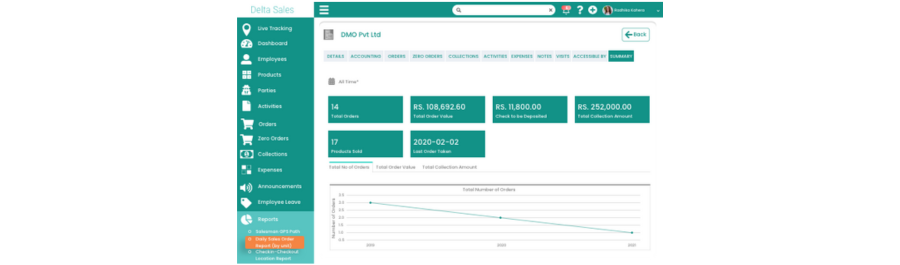
With access to real-time information, sales reps can:
-
Track their daily performance
-
Understand which products are selling better
-
Identify upselling and cross-selling opportunities
This empowers them to take ownership of their performance and make informed decisions during customer interactions. Instead of working reactively, sales teams can operate proactively, increasing confidence and effectiveness on the field.
Strengthening Customer Relationships Through Data
A common misconception is that data reduces the human element in sales. In reality, data strengthens relationships by making interactions more relevant and personalized.
By analyzing customer buying behavior, sales representatives can:
-
Understand customer preferences
-
Recommend suitable products
-
Time their visits more effectively
This leads to more meaningful conversations and better customer experiences. When customers feel understood, trust increases and trust is the foundation of long-term business relationships.
The Role of Technology in Data-Driven Field Sales
The rapid growth of mobile-first sales applications, cloud-based platforms, and analytics tools has made data accessible at every level of the organization.
Instead of waiting for end-of-month reports, businesses now operate with:
-
Faster reporting and analysis
-
Instant access to actionable insights
Technology has transformed data from a static reporting tool into a dynamic decision-making asset. It enables organizations to respond quickly to market changes and stay ahead of the competition.
Improved Compliance and Process Efficiency
Data-driven systems also help ensure process discipline and compliance. Activities such as attendance tracking, visit verification, and order reporting become more accurate and reliable.
This reduces manual errors, improves data integrity, and ensures that sales processes are followed consistently across regions. As a result, organizations gain better control over operations while reducing administrative workload.
Data as a Competitive Advantage
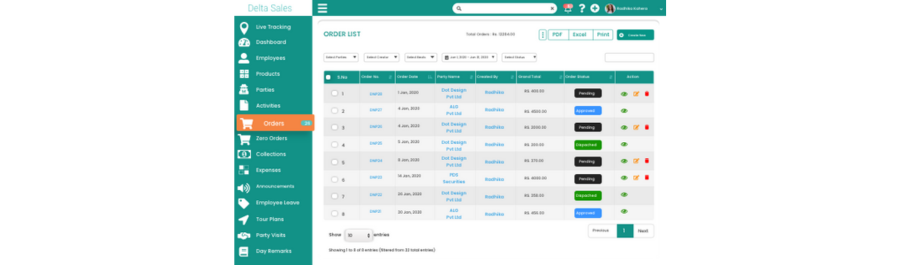
In today’s competitive landscape, data is no longer optional, it is a strategic asset. Companies that effectively leverage data gain a clear advantage over those that rely on outdated methods.
Data-driven field sales enables organizations to:
-
Identify market opportunities faster
-
Optimize resource allocation
-
Improve decision-making at every level
Over time, this leads to stronger market positioning and sustainable business growth.
Challenges in Adopting Data-Driven Sales and how to Overcome Them
While the benefits of data-driven field sales are undeniable, organizations often face challenges when implementing these strategies. Common obstacles include:
-
Resistance to Change: Sales teams accustomed to traditional methods may be hesitant to adopt new tools or rely on data for decision-making.
-
Lack of Training: Without proper guidance, field reps and managers may struggle to interpret analytics, diminishing the value of data-driven insights.
-
Poor Data Quality: Incomplete, outdated, or inaccurate data can lead to misguided decisions, reducing confidence in analytics.
-
Integration Issues: Disconnected systems and manual processes can make it difficult to consolidate data effectively across sales, inventory, and customer platforms.
-
Cost Concerns: Some organizations may hesitate due to perceived costs of adopting analytics platforms or mobile sales apps.
How to Overcome These Challenges:
-
Invest in User-Friendly Technology
-
Choose platforms that are intuitive, mobile-friendly, and integrate seamlessly with existing systems.
-
A tool like a mobile field sales app can make adoption easier by delivering analytics directly to reps in the field.
-
-
Provide Comprehensive Training
-
Train sales teams not just on how to use the tools, but also on interpreting insights to make smarter decisions.
-
Encourage a culture of continuous learning, with refresher sessions and access to tutorials.
-
-
Ensure Data Accuracy and Consistency
-
Implement standardized processes for data entry, reporting, and validation.
-
Regularly audit and clean your data to maintain trust in analytics.
-
-
Foster a Culture of Data-Driven Decision Making
-
Leadership should lead by example, using data to guide strategy and decisions.
-
Encourage feedback and highlight success stories where analytics improved sales outcomes.
-
-
Integrate Systems for Seamless Workflow
-
Connect field sales platforms with CRM, inventory, and reporting systems to enable real-time insights.
-
This reduces manual errors and ensures a single source of truth across the organization.
-
-
Highlight Tangible Benefits
-
Show how data-driven approaches lead to higher conversion rates, optimized routes, and better customer engagement.
-
Demonstrating quick wins helps overcome skepticism and builds momentum for adoption.
-
When implemented correctly, data-driven sales becomes a powerful enabler rather than a burden. Organizations that invest in technology, training, and process improvements empower their field sales teams to make smarter decisions, increase productivity, and deliver superior customer experiences.

The Future of Field Sales
The future of field sales lies in intelligent, data-driven decision-making. As analytics, AI, and mobile-first technology continue to evolve, field sales teams will become more agile, efficient, and customer-centric. Tomorrow’s top-performing organizations will not just track numbers, they will use predictive insights to anticipate customer needs, optimize sales strategies, and identify high-potential opportunities before competitors do.
Field sales teams will increasingly rely on real-time dashboards, AI recommendations, and automated reporting, enabling faster, smarter decisions while reducing errors and wasted time.
Moreover, personalization will be a key differentiator. By analyzing customer behavior, buying patterns, and historical interactions, sales reps can:
-
Tailor their pitches for individual customers
-
Recommend the most relevant products or services
-
Time their visits for maximum impact
-
Build stronger, long-term customer relationships
Technology will also create seamless collaboration between field teams and back-office operations. Inventory updates, order approvals, and promotional insights will be instantly accessible, reducing delays and operational friction. Field sales reps will operate as fully connected, data-empowered teams rather than isolated individuals.
Conclusion
Field sales today is not just about working harder, it’s about working smarter. Data-driven field sales gives businesses the clarity, control, and confidence they need to succeed. By leveraging real-time insights and analytics, organizations can boost productivity, enhance customer relationships, and achieve sustainable growth.
The transformation is already underway. The real question is not if field sales will become data-driven, but how quickly your business will adapt and stay ahead of the competition.
Empower your sales team with real-time data and actionable insights. Explore Delta Sales App and transform your field sales performance now.