
What Happens When Sales Representatives Skip Planned Outlet Visits?
-1786427272.png)
Imagine investing in hiring a field sales force, planning daily beat routes, and assigning hundreds of outlet visits, only to find out that many of those planned visits never actually took place. At first sight it may appear to be only a minor operational problem. I mean, one missed store visit can't really matter all that much, can it?
In fact, every missed outlet visit has a ripple effect throughout your business. A retailer who wanted your salesperson to place an order might delay ordering, switch to a competitor, or have a stockout because nobody checked inventory in time. Promotions go unverified, shelf displays are left unchecked, and valuable market insights never make it to your sales managers. While the size of each gap is small, cumulatively across hundreds or thousands of outlets, they can have a material impact on revenue, retailer relationships, and market coverage. The problem is that many businesses don’t know how many visits they’re missing until sales start dropping or retail execution starts looking bad in their reports. Without proper outlet visit tracking, it’s hard to tell if sales reps are sticking to their planned beat schedules or if retailers are missing key touch points.
This is where modern field sales tracking and outlet visit monitoring software can help. By giving businesses real-time visibility into planned vs. completed visits, they can increase compliance with field sales visits, reinforce retailer engagement, and make sure that every planned visit contributes to better sales results.
In this blog, we’ll look at what happens when sales reps forget scheduled outlet visits, the hidden costs that companies don’t always realize, and how technology helps to make sure each planned visit gets done.
Why Planned Outlet Visits Matter
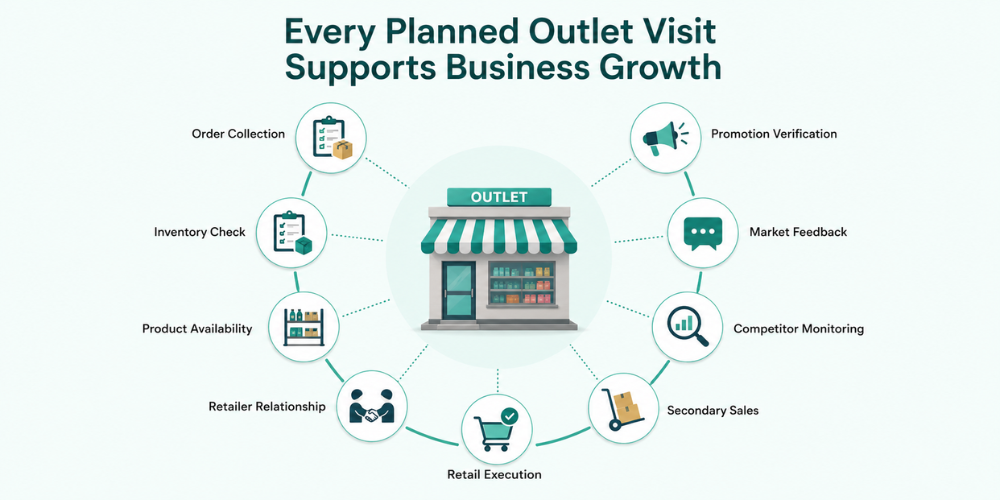
Planned outlet visits are the backbone of successful field sales operations. Every visit is scheduled with a clear objective, whether it's collecting orders, checking inventory, introducing new products, verifying promotions, or building stronger relationships with retailers. A structured beat plan ensures sales representatives visit the right outlets at the right time, helping businesses maximize coverage and maintain consistent customer engagement.
Regular outlet visits play a crucial role in dynamic sectors like FMCG, where even a handful of missed visits can result in stockouts, delayed orders, and missed sales chances. These visits also offer essential insights into what retailers need, how competitors are performing, and shifts in market demand, empowering businesses to make well-informed choices.
When sales representatives stick to their visit schedules, companies reap several benefits:
-
Increase sales opportunities by collecting orders before retailers run out of stock.
-
Avoid stockouts through routine inventory assessments and prompt restocking.
-
Strengthen retailer relationships with consistent face-to-face engagement.
-
Enhance retail execution by ensuring that displays, promotions, and product placements are correctly set up.
-
Monitor competitor activity to understand pricing, promotions, and market trends.
-
Gather valuable market insights from retailer feedback and customer demand.
-
Improve field sales visit compliance by comparing planned visits with completed visits.
-
Expand market coverage by ensuring every assigned outlet is visited on schedule.
-
Boost secondary sales through regular retailer engagement and repeat orders.
In short, planned outlet visits are not just routine tasks; they are critical touchpoints that directly influence sales performance, retailer satisfaction, and long-term business growth. The more consistently your field team follows its visit plan, the stronger your retail execution and market presence become.
The Hidden Cost of Missed Outlet Visits
When a sales representative skips a planned outlet visit, the impact goes far beyond a single missed stop. It creates a chain reaction that affects sales, retailer relationships, inventory availability, and overall market performance. While one missed visit may seem insignificant, repeated missed visits across hundreds or thousands of outlets can result in substantial revenue losses and reduced market coverage.
-1786427209.png)
The primary issue is that these costs often go unnoticed. Companies might see a drop in sales or reduced engagement from retailers after some time, yet they seldom link these issues to unvisited outlets. Without effective tracking of outlet visits, pinpointing where potential gains are slipping away and understanding the reasons behind underperforming regions becomes a real challenge.
Below are some of the most significant business consequences of skipped outlet visits.
1. Lost Sales Opportunities
When sales representatives plan their visits to outlets, it's typically a key moment for retailers to restock their shelves. If a representative misses a visit, the retailer might delay placing orders, cut back on how much they order, or even turn to a different supplier. For companies with extensive distribution networks, just a few missed visits can lead to hundreds of lost orders each month. Over time, these missed chances can significantly impact revenue and hinder the growth of the business.
2. Increased Risk of Stockouts
A crucial part of a field sales representative's role is keeping an eye on inventory levels and making sure products are restocked before they run out. When visits are missed, it’s easy for low stock levels to slip through the cracks until shelves are bare. These stockouts not only result in immediate lost sales but also drive customers to seek out competing brands. Once that customer demand is lost, it can take a significant amount of time and effort to win them back, highlighting the importance of proactive inventory management.
3. Retailers Lose Confidence in Your Brand
Retailers rely on their sales representatives for ongoing support. Regular visits foster trust, allow for quick problem-solving, and strengthen business connections. Yet, when these visits are often overlooked, retailers can feel undervalued. This neglect may lead them to cut back on shelf space for your products, postpone future orders, or even turn to competitors who offer more attentive service.
4. Poor Retail Execution
Promotional campaigns and in-store merchandising need consistent attention. When representatives don't visit stores, businesses lose insight into whether promotional materials are set up properly or if products are arranged as intended. This oversight can result in:
-
Promotional displays being overlooked
-
Products not being placed correctly
-
Decreased visibility on shelves
-
Subpar brand representation
-
Diminished effectiveness of campaigns
Without effective retail execution, marketing investments struggle to yield the anticipated returns.

5. Loss of Valuable Market Intelligence
Each visit to an outlet offers unique insights that go beyond what sales reports can show. Sales representatives have the chance to witness competitor actions firsthand, gather feedback from retailers, spot trending products, and grasp evolving customer preferences. When these visits are overlooked, businesses risk missing out on essential information, including:
- Competitor pricing and promotional strategies
- Retailer concerns and recommendations
- Rising product demand
- Trends specific to the local market
- New opportunities for sales growth
Consequently, management may find themselves making decisions based on incomplete or outdated data.
6. Lower Field Sales Productivity and Accountability
Without visibility into planned versus completed visits, managers cannot accurately measure field performance. Manual reporting methods often rely on self-reported activities, making it difficult to verify whether scheduled outlets were actually visited. This lack of accountability can lead to:
-
Inconsistent territory coverage
-
Reduced sales productivity
-
Unverified field activities
-
Inefficient route planning
-
Difficulty evaluating sales representative performance
Implementing field sales visit compliance tools and outlet visit monitoring software allows businesses to make sure that every scheduled visit is not only completed but also accurately documented, fostering a more reliable and personal connection with their clients.
7. Reduced Secondary Sales Growth
Regular engagement with retailers is crucial for secondary sales. When visits are missed, it not only decreases the frequency of orders but also delays restocking and limits chances to introduce new products or upsell. Over time, inconsistent coverage of outlets can weaken relationships with retailers, resulting in fewer repeat orders and stunted growth in secondary sales throughout the distribution network.
How Sales Force Automation Prevents Missed Outlet Visits
Preventing missed outlet visits goes beyond simply urging sales representatives to be more disciplined; it involves equipping them with the right tools to effectively manage their schedules while giving managers a clear view of field activities. This is where sales force automation software becomes essential. Instead of relying on manual reports or phone calls, businesses can track planned versus completed visits in real time, verify that representatives have reached the assigned outlets, and identify missed visits before they begin affecting sales. With the right technology, managers can ensure better field sales visit compliance, improve productivity, and maximize outlet coverage.
Here’s how sales force automation can help in preventing missed outlet visits:
-(1)-1786427214.png)
1. Smart Beat Planning Ensures Every Outlet Is Scheduled
An effective beat plan is the foundation of successful field sales operations. With Beat Plan Management, managers can assign outlets based on location, priority, and visit frequency while ensuring workloads are balanced across the sales team.
Sales representatives receive a clear daily schedule, reducing confusion and ensuring that no important outlet is overlooked.
2. GPS-Based Visit Verification Improves Accountability
One of the most significant hurdles in manual field operations is confirming if a scheduled visit actually occurred. With a GPS-based tracking app, managers can easily verify that sales representatives have truly arrived at their designated outlets, rather than relying solely on manual reports. This not only fosters greater transparency but also enhances accountability and helps prevent inaccurate visit reporting.
3. Route Planning Reduces Missed Visits
Inefficient route planning can lead to sales representatives spending excessive time on the road instead of engaging with customers. This often results in them bypassing lower-priority outlets just to save time. However, with smart route planning, sales representatives can navigate optimized travel paths that minimize travel time, allowing them to connect with more outlets throughout the day. This not only boosts their productivity but also ensures that they can fulfill their scheduled visits without delay.
4. Real-Time Tracking Gives Managers Complete Visibility
Managers can stay informed throughout the day about the status of outlet visits. With Live Tracking, they have the ability to observe field activities as they happen, allowing them to see how planned visits stack up against those that have been completed. This real-time insight helps them quickly spot any missed outlets. If they notice something amiss, they can reach out to the representative right away or reassign the visit, ensuring that no sales opportunity slips through the cracks.
5. Automated Visit Reports Highlight Missed Outlets
Manual reporting often makes it difficult to identify which stores were visited and which were skipped. With automated reports & analytics, businesses receive detailed reports showing:
- Planned outlet visits
- Completed visits
- Missed visits
- Visit duration
- Daily outlet coverage
- Sales representative productivity
These insights help managers identify recurring issues and improve field sales performance over time.
6. Retailer Visit History Helps Maintain Visit Frequency
Every retailer has unique needs when it comes to visit frequency. Some high-value outlets might benefit from several visits each week to maximize engagement, while smaller retailers may only need a visit once a week or every other week. By utilizing Retailer Visit Tracking, businesses can keep detailed records of past visits, track how often they visit each retailer, and make sure that every store gets the attention it deserves according to the established plan.
7. Photo Verification Improves Retail Execution
To ensure a visit is truly effective, businesses require tangible evidence that merchandising and promotional efforts were executed properly. Sales representatives can take photos of the outlets during their visits, enabling managers to confirm product availability, shelf organization, promotional setups, and the overall execution of retail strategies; all without the need to step foot in the store.
8. Performance Dashboards Help Improve Field Sales Compliance
Sales managers need strategies and activity logs; they need actionable insights. Interactive dashboards provide a clear view of important metrics such as
-
Planned vs. completed visits
-
Outlet coverage
-
Missed visit trends
-
Sales representative productivity
-
Territory performance
-
Visit compliance rates
By monitoring these KPIs regularly, businesses can quickly identify underperforming territories, coach sales representatives, and improve overall field sales execution.
How Delta Sales App Helps Ensure Every Planned Visit Happens
-(1)-1786427179.png)
Coordinating hundreds or even thousands of outlet visits by hand can feel like an uphill battle. Sales managers often find it challenging to confirm if their planned visits actually took place, spot any missed outlets, or figure out why some areas aren't performing as well as expected. The Delta Sales App steps in to tackle these issues, offering a comprehensive field sales management solution that empowers businesses to enhance outlet coverage, boost sales representative accountability, and elevate retail execution.
Here’s how Delta Sales App makes sure every planned visit is carried out:
Create and Assign Smart Beat Plans
Through Beat Plan Management, managers can develop organized visit schedules that prioritize outlets based on their importance, geographical territory, and how often they should be visited. Sales representatives get their daily beat plans directly in the app, which helps them understand precisely which outlets to visit, minimizing the likelihood of overlooking any stores.
Verify Every Visit with GPS Tracking
With the Delta Sales App's GPS tracking feature, managers can easily confirm that their sales representatives have actually arrived at the designated outlet. This not only removes uncertainty but also helps ensure accurate visit reporting and fosters greater accountability in field sales.
Optimize Daily Routes
With a route planning system, sales representatives can navigate smarter travel paths that save time and allow them to visit more outlets efficiently. This thoughtful approach to route optimization leads to fewer missed visits and enhances overall productivity in the field.
Monitor Field Activities in Real Time
With Live Tracking, managers can stay connected with their field teams, keeping an eye on their locations and daily activities. If a scheduled outlet visit is overlooked, they can quickly pinpoint the problem and address it right away, ensuring that sales and relationships with retailers remain strong.
Track Planned vs. Completed Visits
The Delta Sales App offers insightful reports & analytics that help compare the visits that were planned with those that were actually completed. This allows managers to easily spot any missed outlets, keep track of visit compliance, assess outlet coverage, and evaluate the performance of sales representatives, all using precise, real-time data.
Maintain Complete Retailer Visit History
With Retailer Visit Tracking, businesses can keep a detailed record of every interaction with their outlets, capturing visit dates, orders made, and follow-up actions. This approach ensures that each retailer receives the attention they deserve, following the planned schedule and making sure no valued customer is missed.
Improve Retail Execution with Visit Proof
Sales representatives have the ability to take photos of outlets and log their visit activities right within the app. This feature allows managers to check on product availability, shelf arrangements, promotional displays, and overall in-store execution without having to make a trip to the outlet themselves.
Gain Actionable Insights Through Dashboards
Interactive dashboards give managers a clear view of key performance metrics, including:
-
Planned vs. completed visits
-
Missed outlet visits
-
Outlet coverage
-
Sales representative productivity
-
Territory-wise performance
-
Field sales visit compliance
These insights help businesses identify performance gaps early and make data-driven decisions to improve field operations.
Turn Every Planned Visit Into a Sales Opportunity
A planned outlet visit goes beyond merely being a point on a map; it's a chance to build stronger connections with retailers, secure new orders, avoid running out of stock, and gain important insights about the market. By integrating features like Beat Plan Management, GPS Tracking, Route Planning, Live Tracking, Retailer Visit Tracking, and Reports & Analytics into a single platform, Delta Sales App empowers businesses to make each visit meaningful, enhancing retail execution and driving sales success.
Conclusion
Missing planned outlet visits might seem like a small hiccup in operations, but the effects can ripple out far beyond just skipping a store call. It can lead to missed sales opportunities, stock shortages, and strained relationships with retailers, all of which can hinder key business metrics and stall long-term growth. The encouraging part is that these issues can be avoided. By leveraging modern sales force automation tools that include features like Beat Plan Management, GPS Tracking, Route Planning, Live Tracking, and Retailer Visit Tracking, businesses can enhance compliance with field sales visits, ensure every planned outlet is attended to, and provide managers with a clear view of field operations.
Don’t allow missed visits to diminish your sales potential or weaken your presence in the market. Schedule a free demo of Delta Sales App today and see how smarter field sales management can empower your business to improve outlet coverage, increase sales productivity, and foster sustainable growth.