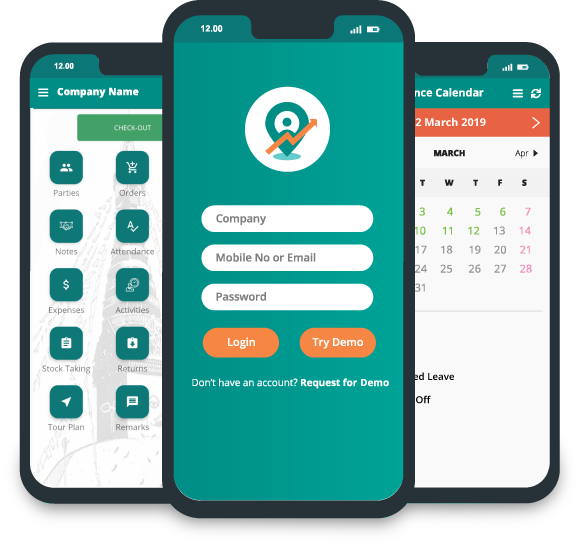

The Real Difference Between a DMS and an SFA Tool (And Why Most Companies Need Both)
As businesses expand their distribution networks, managing sales becomes more complex. Sales teams operate in the field, distributors manage inventory, retailers place orders, and managers need real-time visibility into everything happening across the channel.
This is where two business systems often come into the picture:
- Distributor Management System (DMS)
- Sales Force Automation (SFA) Software
Many companies mistakenly believe they only need one of these solutions. Some invest in an SFA platform expecting it to solve distributor management challenges. Others implement a DMS and assume it will improve field sales productivity.
The reality is that these systems solve different problems. While there is some overlap, they serve different users, automate different processes, and together create a complete sales and distribution ecosystem.
In this blog, we'll explain the real difference between DMS and SFA software, where each fits into your business, and why modern companies increasingly rely on both.
What is a Distributor Management System (DMS)?
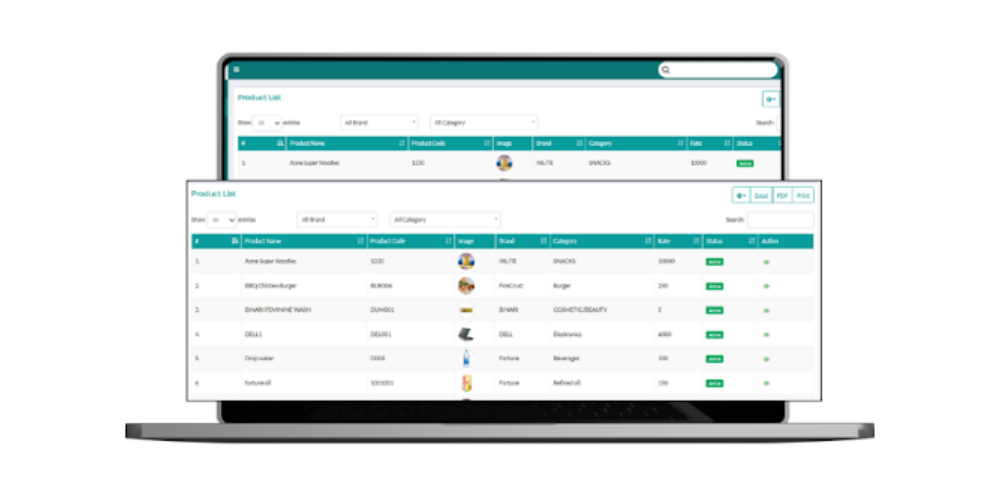
A Distributor Management System (DMS) is a software solution that aims to streamline and consolidate a business’s complete distributor network. It provides the operational backbone between manufacturers, distributors, wholesalers, and retailers to ensure smooth flow of goods, orders, inventory, and financial transactions.
In simple terms, a DMS helps businesses manage what happens after production but before final retail execution, ensuring that products move efficiently through the distribution chain without delays, stock issues, or communication gaps.
Managing hundreds of distributors manually is next to impossible for companies dealing in FMCG, pharmaceuticals, consumer goods, paints, chemicals, or agri-inputs. This is where a DMS comes into play.
Key Purpose of a DMS in Modern Businesses
The main objective of a Distributor Management System is to improve visibility and control over distribution operations. Businesses can digitize and automate workflows around distributors rather than phone calls, spreadsheets, and manual reporting.
A modern DMS typically focuses on:
- Centralizing distributor order management
- Tracking primary and secondary sales
- Monitoring stock levels in real time
- Managing pricing, schemes, and discounts
- Handling billing and invoicing processes
- Tracking outstanding payments and credit cycles
- Managing returns, replacements, and claims
- Evaluating distributor performance through data
This creates a structured and transparent distribution ecosystem where every transaction is recorded and accessible in real time.
What is Sales Force Automation (SFA)?
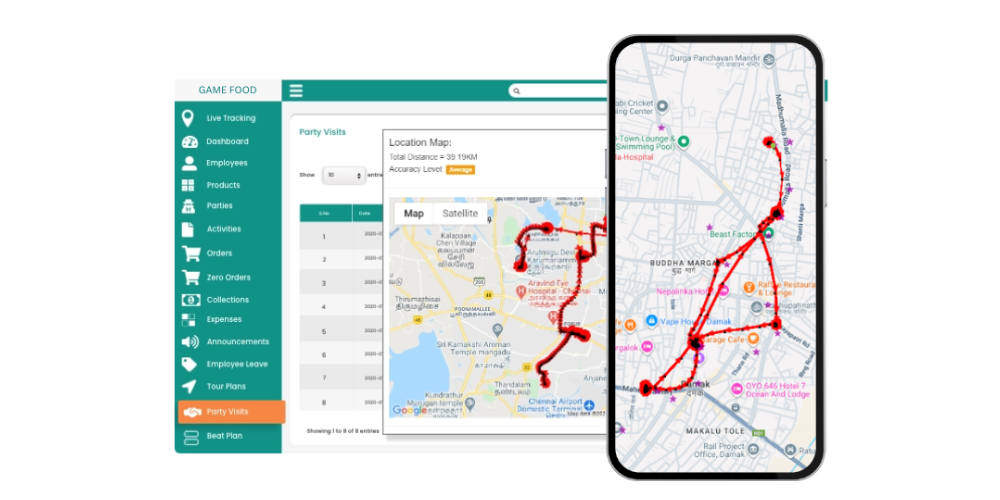
Sales Force Automation (SFA) is a software system designed to automate, streamline, and optimize the daily activities of field sales teams. Its focus is to improve the way sales reps work in the field by digitizing tasks that were done manually, like customer visits, order collection, reporting, and tracking performance.
Simply put, if a DMS manages the distribution network, an SFA system manages the people selling and executing in the field.
SFA is critical for companies with large sales forces operating in multiple territories, regions, and retail outlets to ensure consistent execution, accountability, and productivity.
Core Purpose of an SFA System
Sales force automation software is aimed at adding structure, transparency, and efficiency to field sales operations.
SFA ensures every single activity a sales rep makes is captured in real time: no phone updates, no manual diaries, and no excel reports.
A modern SFA system typically focuses on:
- Field sales employee tracking
- Daily beat planning and route optimization
- Retailer and outlet visit management
- Order booking and capture in the field
- GPS-based attendance and check-in/check-out
- Sales activity reporting
- Target vs achievement tracking
- Expense tracking for field staff
- Market survey and feedback collection
- Performance monitoring of sales representatives
This helps businesses move from assumption-based management to data-driven sales execution.
DMS vs SFA: Understanding the Core Difference
Both DMS (Distributor Management System) and SFA (Sales Force Automation) are essential for modern sales organizations. But they serve very different roles in today’s sales and distribution ecosystem. Knowing these differences helps companies choose the right set of tools, instead of just using one system.
Below is a clear breakdown of how DMS and SFA differ in real business environments.
-1782296375.png)
1. Primary Focus
-
DMS: Focuses on managing distributors, stock flow, billing, and secondary sales.
-
SFA: Focuses on managing field sales teams, customer visits, and on-ground execution.
2. Core Users
-
DMS: Used by distributors, super stockists, and backend supply chain teams.
-
SFA: Used by sales representatives, field officers, and area sales managers.
3. Business Objective
-
DMS: Ensures smooth movement of goods from company to distributor to retailer.
-
SFA: Ensures effective execution of sales activities in the field and market coverage.
4. Key Functionality
-
DMS:
-
Distributor order management
-
Inventory and stock tracking
-
Billing and invoicing
-
Secondary sales tracking
-
Credit and payment management
-
Scheme and pricing control
-
-
SFA:
-
Beat planning and route management
-
GPS-based attendance
-
Retailer visit tracking
-
Field order collection
-
Sales activity reporting
-
Expense tracking and productivity monitoring
-
5. Data Visibility
-
DMS: Provides visibility into stock movement, distributor performance, and supply chain data.
-
SFA: Provides visibility into field activities, customer interactions, and sales execution.
6. Order Flow
-
DMS: Processes and fulfills orders through distributor networks.
-
SFA: Captures orders directly from the field and sends them into the system for processing.
7. Decision-Making Insights
-
DMS: Helps in supply chain planning, inventory forecasting, and distributor management decisions.
-
SFA: Helps in sales performance analysis, territory management, and field force optimization.
8. Dependency in Business Process
-
DMS: Depends on distributor-side operations and backend supply chain systems.
-
SFA: Depends on field sales execution and real-time customer engagement.
9. Problem It Solves
-
DMS: Solves issues like stock mismanagement, delayed billing, and lack of distributor control.
-
SFA: Solves issues like poor field visibility, untracked visits, and inconsistent sales execution.
10. Limitations When Used Alone
- DMS Alone: Cannot track field sales activities or ensure retailer-level execution.
- SFA Alone: Cannot manage distributor inventory, billing, or secondary sales effectively.
In simple terms:
- DMS manages “product flow and distribution control.”
- SFA manages “sales force execution and market activity.”
Both systems operate at different layers of the sales ecosystem, which is why relying on only one often leads to incomplete visibility and operational gaps.
This is exactly why modern sales-driven companies prefer an integrated approach using both systems together.
Why a DMS Alone Isn't Enough
The Distributor Management System (DMS) is playing an important role in managing distributor operations, inventory flow, billing, and secondary sales. However, when businesses rely solely on a DMS without Sales Force Automation (SFA) software, they are missing out on a crucial layer of visibility in field sales execution. A DMS streamlines the supply chain but does not capture what actually happens at the retail level where demand is created. This causes a disconnect between distribution data and actual sales activity in the marketplace, leading to incomplete insights and lack of control over overall sales performance.
-
No Visibility into Field Sales Execution
A stand-alone DMS is unable to track field sales activities or provide visibility on how orders are generated. It can indicate that a transaction happened but doesn’t tell you whether sales were from a physical retailer visit, a promotional push, or consistent beat plan execution. Without a sales employee tracking app, businesses lose transparency on how well their field teams are creating demand in the market.
-
Lack of Control Over Retail Coverage
Without a DMS, companies have no way of ensuring proper retailer coverage management of all outlets they are assigned to. Visits can be missed, routes can be inconsistent, and these gaps often go unnoticed. Without a field sales tracking system, businesses cannot verify that all retailers are being serviced as per plan, so uneven market coverage and lost sales opportunities abound.
-
Dependence on Manual Reporting from Sales Teams
Without sales force automation tools, field reporting is usually done manually through calls, WhatsApp messages, or Excel sheets. This leads to inefficiencies and a higher risk of inaccurate or delayed data. Without real-time sales reporting software, managers can’t count on timely insights to guide decision-making, and operations are forced to be reactive instead of proactive.
-
No Real-Time Sales Team Tracking

A DMS does not offer GPS-based field tracking or live visibility of sales reps. Managers don’t have the ability to track sales team attendance, route adherence, or real time movement. The lack of a dedicated SFA mobile app makes it impossible to determine whether field teams are working efficiently or simply reporting activities without actually executing them.
-
Weak Performance Measurement of Sales Reps
A DMS does provide distributor sales data but does not tie performance to individual field sales productivity. Businesses don’t know who is delivering results and who isn’t in sales. Without sales performance tracking software, a company is missing the actionable insights needed for coaching, incentives, and territory optimization.
-
Limited Insights into Market Activity
A DMS does not capture ground level insights such as retailer feedback, market surveys, competitor activity or stock visibility at retail outlets. Without an integrated SFA solution, companies are missing real-time market intelligence that is vital for demand forecasting and strategic planning. This means they can't react fast enough to market changes.
-
Delayed Decision-Making Due to Fragmented Data
A DMS only focuses on the distributor side, so businesses don’t get a complete view of the sales process. No integrated DMS + SFA software leads to fragmented data across supply chain and field operations. This leads to delays or inaccuracies in decisions around stock planning, territory management, and sales strategy.
-
No Accountability in Field Operations
Without field force automation, there is no reliable system to track the daily sales activities, visit completion, or productivity levels. This creates accountability gaps in managing your sales team: managers know the sales result, but not the effort behind it. Over time, this can erode discipline and consistency in execution on the field.
Why an SFA Tool Alone Isn't Enough
A Sales Force Automation (SFA) tool is quite useful for managing field sales teams, tracking customer visits, capturing orders, and improving on-ground execution. But when businesses only use an SFA system and don't use a Distributor Management System (DMS), they get good field visibility but poor control over backend distribution processes. This leaves a disconnect between what is being marketed and how efficiently it is fulfilled through the supply chain.
An SFA is better at execution on the ground, but it doesn’t handle inventory flow, distributor operations, or secondary sales visibility, so it is not enough as a stand-alone solution for companies with complex distribution networks. Common challenges include:
-
No Visibility into Distributor Inventory
An SFA system doesn't offer real-time visibility on distributor stock management or inventory availability. Sales teams can take orders in the field, but they don’t know whether the distributor has enough stock to fill them. The absence of Distributor Management System (DMS) software puts companies at risk of overselling or mismatches in supply that can affect the satisfaction of their customers.
-
Lack of Secondary Sales Tracking
SFA is used for booking primary orders from the field, but it does not have a secondary sales tracking system from distributor to retailer. This creates a blind spot for knowing actual product consumption in the market. Without a DMS system, companies don’t have the ability to analyze how products are moving through the distribution channel after an order is placed.
-
No Billing and Invoice Management
An SFA tool is not designed to address distributor billing, invoicing, or credit management. These financial processes are crucial for smooth distributor operations. Without a DMS platform, companies are often forced to utilize manual or external systems to bill, leading to increased errors and slower order processing cycles.
-
Fragmented Order Fulfillment Process
Orders collected through an SFA mobile app still need to be processed, validated, and fulfilled by distributors. Without integration with a DMS, this process becomes fragmented and manual. This leads to delays in order fulfillment, communication gaps between field teams and distributors, and reduced operational efficiency.
-
No Control Over Distributor Operations
An SFA tool provides visibility only up to the point of order capture. It does not manage distributor performance monitoring, stock planning, or scheme management. Without a DMS, companies lose control over how distributors operate, how they manage stock, and how effectively they fulfill orders in the supply chain.
-
Limited Financial and Credit Management
SFA systems do not handle credit limits, outstanding balances, or tracking distributor finances. These are key elements in distributor relationships. Without a DMS solution, businesses face challenges in managing credit risk, overdue payments, and reconciling finances at the distributor level.
-
No Integrated Supply Chain Visibility
SFA provides great visibility into field sales execution but doesn’t connect that data to the larger supply chain. Businesses can’t see how field demand translates to inventory movement or distributor dispatches. Companies are operating with disconnected data sets and no integrated DMS + SFA system.
-
Poor Demand-Supply Alignment
Without integration with DMS, what is available in the distribution network is not always what is sold in the field. Sales teams can create demand, but delays in fulfillment or stock shortages at the distributor level can turn into lost sales opportunities and customer dissatisfaction.
Why Growing Businesses Need Both DMS and SFA
When organizations grow the number of channels they use to distribute their products, managing sales becomes more than simply tracking orders or observing field activity. Growth brings multiple layers, distributors, stock points, retailers, field sales teams, and regional managers, all working simultaneously across geographies. In this environment, the use of a Distributor Management System (DMS) or Sales Force Automation (SFA) tool alone leaves operational gaps. When a business grows, the two systems must work as one connected ecosystem to have full visibility and control.
And a DMS ensures smooth distribution and flow of inventory while an SFA ensures effective field execution and demand generation.” They give a complete 360-degree view of sales performance, from the moment a salesperson visits a retailer to the point of sale.

-
End-to-End Sales Visibility
Businesses get a complete view of the sales cycle with the combination of DMS software and SFA tools. SFA records the activities that are taking place in the field, such as visits to retailers, order booking, and beat plan execution. DMS records the movement of inventory, distributor processing, and secondary sales. They combine to remove blind spots and give managers visibility into the exact way in which demand is created and fulfilled in the market.
-
Seamless Order-to-Delivery Workflow
With a DMS + SFA system integrated, your ordering process is completely streamlined. The sales rep takes an order through a field sales app and submits it directly to the distributor for processing and fulfillment through the DMS. This reduces the need for manual coordination, reduces delays, and shortens the order-to-delivery cycle, leading to greater customer satisfaction overall.
-
Better Control Over Field and Distribution Operations
“Field teams and distributors often work in silos, which becomes a problem for the business. SFA helps to control and optimize the productivity of the sales force, while DMS ensures that the distributors manage stock, billing, and fulfillment efficiently. Together they create a controlled environment where demand generation and supply execution are aligned in one system.
-
Improved Sales Performance Tracking
An integrated approach connects field sales performance to actual distributor sales results. Managers can look at the most successful visits from sales reps, how those visits translate into orders, and how those orders perform at the distributor level. This creates a data-driven performance ecosystem that facilitates better decisions, incentives, and territory planning.
-
Real-Time Inventory and Market Alignment
One of the biggest problems growing businesses face is mismatches between demand from the market and available stock. The two systems work together, so DMS gives real-time visibility of stock to make sure the sales teams using SFA only push products that are in stock. This improves demand-supply alignment and lowers stock-outs and lost sales opportunities.
-
Stronger Distributor and Retailer Relationships
An integrated system enhances the coordination of all stakeholders. Distributors get orders faster and more accurately, and field sales teams service retailers better. Sales representatives can also have updated information about stocks and schemes, which will help in better communication and fewer conflicts in the distribution chain.
-
Faster and Smarter Decision-Making
When DMS and SFA data are combined, businesses gain a unified dashboard that shows both field execution insights and distribution performance metrics. This helps managers make faster decisions regarding territory optimization, inventory planning, sales forecasting, and team performance management without relying on fragmented reports.
-
Scalable Growth Without Operational Complexity
As companies grow in size, it becomes more and more difficult to coordinate manually between field teams and distributors. When you have a combined DMS and SFA platform, then that scaling doesn’t become inefficient. If the business grows and moves into new areas or hires new salespeople, the system remains centralized, structured, and easy to manage.
How Delta Sales App Combines DMS and SFA in One Platform
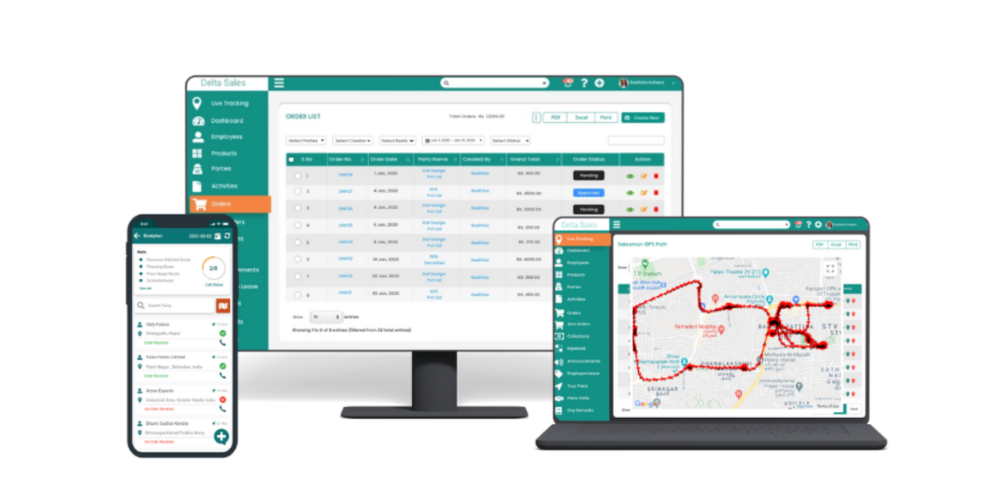
Disparate field execution and distribution management systems do not serve modern sales organizations. That’s why Delta Sales App blends DMS and SFA capabilities into a single seamless platform, eliminating silos and delivering complete end-to-end sales visibility.
Rather than using separate tools for field sales teams and distributor operations, companies can manage everything from one centralized system, ensuring smooth coordination between demand generation, order processing, inventory management, and delivery.
-
Real-Time Order Flow from Field to Distributor
Delta Sales App synchronizes orders collected through the sales employee tracking app with the distributor system in real-time. This removes the need for manual order transfer and shortens delays. Field sales teams place orders at retail outlets and the DMS module ensures that those orders are processed, validated and fulfilled efficiently. Real-time integration increases order accuracy and decreases operational friction between teams.
-
Complete Visibility from Sales Visit to Delivery
Most businesses have fragmented visibility, where SFA tools show field activity and DMS tools show movement of distribution. Delta Sales App fills this gap, bridging the two layers.
Managers can monitor:
-
Sales Reps Complete Retailer Visit
-
Orders placed on each visit
-
Processing status of distributor
-
Inventory updates and availability to ship
-
Order fulfillment final status
This end-to-end visibility allows businesses to see the entire journey of each sale.
-
Unified Field Sales and Distribution Platform
Delta Sales App brings together features of SFA software like beat planning, GPS tracking, and retailer visits with DMS features like distributor order management and stock tracking. This means that both field teams and distributors can work in the same system without having to switch platforms or duplicate data. A smooth and connected workflow: order data captured by sales reps in the field and sent directly structured to distributors for fulfillment.
-
Integrated Inventory and Field Execution Insights
One of the biggest benefits of Delta Sales App is the integration of real time inventory management (DMS) and field execution tracking (SFA). Sales teams can verify current stock availability before placing orders and managers can analyze how field activities impact inventory movement at the distributor level. That is, a better match between what the market demands and what the supply chain delivers.
-
Smarter Beat Planning with Distributor Intelligence
Unlike standalone SFA tools, Delta Sales App enhances beat planning software with distributor-level insights. Sales representatives not only follow optimized routes but also align their visits with real-time stock availability and distributor schemes.
This improves productivity in the field while ensuring that orders are placed strategically based on supply conditions.
-
Seamless Distributor and Sales Team Collaboration
Delta Sales App offers DMS and SFA in a single platform and improves communication between distributors and field sales teams. Distributors get accurate timely orders and sales reps get instant updates on stock, pricing and scheme changes. This reduces calls or manual coordination and provides a more efficient sales ecosystem.
-
Centralized Reporting and Analytics
Delta Sales App combines the reporting system instead of having separate dashboards for field sales and distribution. Delta Sales App combines the reporting system instead of having separate dashboards for field sales and distribution.

Businesses can analyze:
-
Sales team efficiency Sales team efficiency
-
Retail Reach and Visit Frequency Retail Reach and Visit Frequency
-
Distributor performance Distributor performance
-
Conversion rates for orders Conversion rates for orders
-
Trends in secondary sales Trends in secondary sales
-
Growth by territory Growth by territory
This allows management to make faster and better decisions based on consolidated data.
-
Scalable Architecture for Growing Businesses
As companies expand, managing separate systems for DMS and SFA becomes complex and costly. Delta Sales App solves this by offering a scalable, integrated architecture that grows with the business. Whether a company is operating in a single region or across multiple states, the platform ensures consistent visibility and control across all sales and distribution operations.
Conclusion
The Delta Sales App is built on a simple premise: sales execution and distribution management should not be stand-alone. It merges Sales Force Automation (SFA) and Distributor Management System (DMS) on a single platform that allows businesses to manage field teams, distributors, inventory and orders in a single connected ecosystem. With this integration, businesses can close data gaps, improve operational efficiency and gain full visibility from field activity to final delivery, making it a powerful solution for today’s modern, fast-growing sales organizations.
When both systems work together in one platform, companies don’t just track sales—they control, optimize, and scale them with real-time intelligence.
Ready to see it in action?
Experience how Delta Sales App unifies DMS + SFA for your business and transforms the way your sales teams and distributors work together.
Schedule a free demo today and explore how you can improve sales visibility, execution, and distribution efficiency in one platform.