
Employee Tracker App for Field Sales Teams: How to Choose the Right One
Managing field sales teams is fundamentally different from supervising in-office staff. Unlike desk-based roles, sales representatives spend their day on the move, visiting clients, covering territories, and handling on-ground tasks without constant supervision. This dynamic work environment often creates visibility gaps for managers, making it difficult to verify visits, track productivity, or ensure optimal use of time. As a result, businesses may face inefficiencies, missed sales opportunities, delayed reporting, and reduced accountability across teams.
This is where an Employee Tracker App becomes a critical business tool. It enables organizations to monitor real-time location, track daily activities, and evaluate performance through a centralized system. Managers gain actionable insights without intrusive oversight, allowing them to make faster and more informed decisions. For companies looking to streamline operations, improve team coordination, and scale efficiently, investing in the right Employee Tracker App is no longer just a convenience, it’s a strategic necessity.
What Is an Employee Tracker App?
An Employee Tracker App is a digital solution designed to monitor, manage, and optimize the activities of employees working outside the office. It enables businesses to track movement, attendance, task completion, and performance metrics through a centralized platform, giving managers complete visibility into field operations.
For field sales teams, such apps act as a crucial bridge between on-ground execution and managerial oversight. By leveraging technologies like GPS tracking for employees, organizations can ensure transparency, reduce reporting delays, and improve coordination across distributed teams. Instead of relying on manual updates or end-of-day reports, managers can access real-time insights and make quicker, data-driven decisions.
Beyond basic tracking, modern solutions also integrate features like real-time location tracking, mobile attendance tracking, and field data collection tools, making them a comprehensive productivity enabler rather than just a monitoring tool. This helps businesses streamline workflows, improve accountability, and maintain consistent performance across territories.
Key Functions of an Employee Tracker App
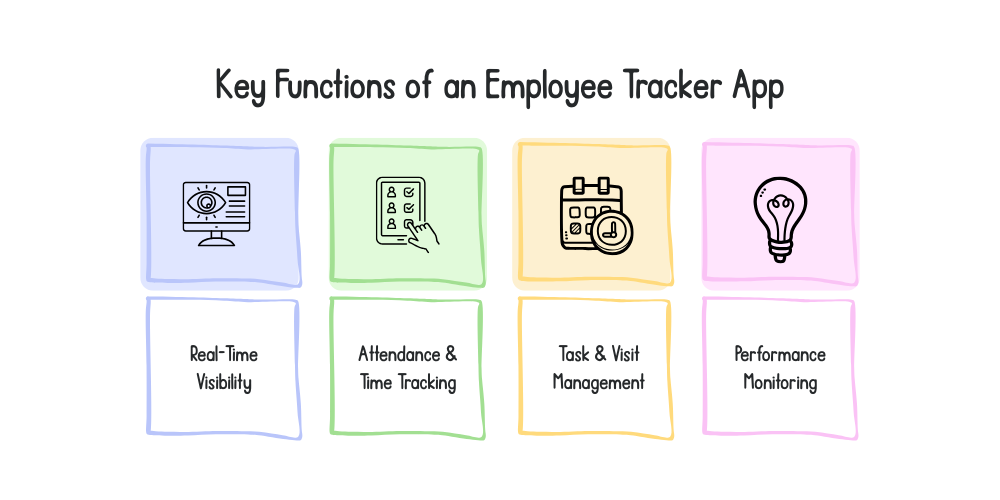
- Real-Time Visibility: Monitor employee location and movement instantly to gain better control over field operations.
- Attendance & Time Tracking: Automate check-ins, check-outs, and working hours efficiently using mobile-based tracking systems.
- Task & Visit Management: Assign tasks, track client visits, and ensure timely execution of daily sales activities.
- Performance Monitoring: Analyze individual and team productivity using detailed reports and actionable performance insights regularly.
By combining tracking with analytics, an Employee Tracker App empowers businesses to manage field teams more efficiently while improving overall operational performance.
How an Employee Tracker App Works
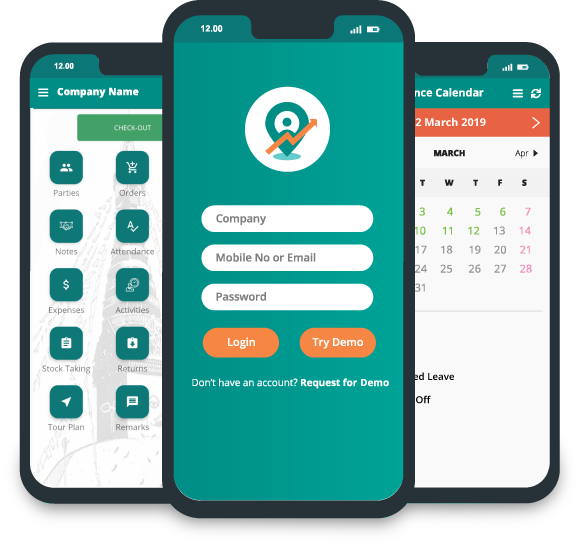
An Employee Tracker App operates through mobile devices installed on field representatives’ smartphones. Once activated, the app collects and transmits data to a centralized dashboard accessible to managers, ensuring complete visibility into field operations.
Here’s how it typically functions:
- Tracks real-time location using real-time location tracking
- Logs attendance via mobile attendance tracking
- Records visits, routes, and tasks
- Generates reports for analysis using field data collection tools
- Syncs data automatically in real-time or when internet connectivity is restored
- Enables managers to monitor team activity through a centralized dashboard
- Supports offline data storage to avoid loss of information in low-network areas
- Provides alerts and notifications for task updates, delays, or route deviations
This continuous data flow allows managers to make informed decisions quickly, optimize routes, and ensure that field activities align with business goals.
Key Challenges in Managing Field Sales Teams
Without proper tracking systems, businesses face several operational hurdles that directly affect efficiency, coordination, and overall sales performance:
-1777874434.png)
- Lack of visibility into employee movement: Managers cannot accurately track field representatives’ locations, leading to uncertainty in daily operations and reduced control.
- Difficulty in verifying client visits: Without proper systems, businesses struggle to confirm whether sales representatives actually visited clients as reported during the day.
- Inefficient route planning: Poor route planning leads to wasted travel time, increased fuel costs, and fewer client visits completed within working hours.
- Delayed reporting and communication: Manual reporting processes often cause delays, making it difficult for managers to respond quickly to field situations.
- Reduced accountability: Without tracking, employees may not follow schedules properly, resulting in decreased productivity and lack of responsibility for assigned tasks.
- Limited performance insights: Businesses lack access to real-time data, making it difficult to evaluate employee productivity and identify areas for improvement effectively.
- Inconsistent task execution: Field teams may miss important tasks or fail to follow processes due to lack of proper monitoring and guidance.
These challenges directly impact productivity and revenue. Implementing field force management software can help address these issues by bringing structure, visibility, and transparency to daily field operations.
Essential Features to Look for in an Employee Tracker App
Choosing the right solution requires understanding the features that truly matter for managing field teams efficiently. A well-equipped Employee Tracker App not only tracks employees but also improves productivity, accountability, and decision-making.
Here are the must-have capabilities:
- Live tracking via GPS-based tracking system: Enables managers to monitor field employees’ real-time location accurately, ensuring transparency, better supervision, and improved coordination across territories without relying on manual updates.
- Attendance management through employee attendance management system: Automates employee check-ins, check-outs, and working hours, reducing manual errors while ensuring accurate attendance records and compliance with company policies.
- Route optimization using route planning software: Helps field teams plan efficient travel routes, reducing travel time and fuel costs while maximizing the number of client visits completed daily.
- Task assignment and monitoring: Allows managers to assign tasks, set priorities, and track progress in real time, ensuring that field employees stay aligned with daily sales objectives.
- Reporting and analytics dashboards: Provides detailed insights into employee performance, visit data, and productivity trends, enabling managers to make informed, data-driven decisions for continuous improvement.
- Offline functionality for remote areas: Ensures uninterrupted data collection and task execution even in low or no network areas, with automatic syncing once internet connectivity is restored.
- Geofencing and alerts: Notifies managers when employees enter or leave predefined locations, helping verify visits, prevent deviations, and maintain discipline in field operations.
- Integration with other business tools: Seamlessly connects with CRM and other systems to streamline workflows, eliminate data silos, and improve overall operational efficiency across departments.
Additionally, features like sales team tracking app capabilities ensure that sales-specific workflows are efficiently managed, helping organizations align tracking with real business outcomes.
How Employee Tracking Improves Sales Productivity
The impact of tracking tools goes far beyond basic monitoring, it directly enhances execution, accountability, and overall sales performance. A well-implemented Employee Tracker App empowers managers with real-time insights, enabling faster decisions and better control over field operations.
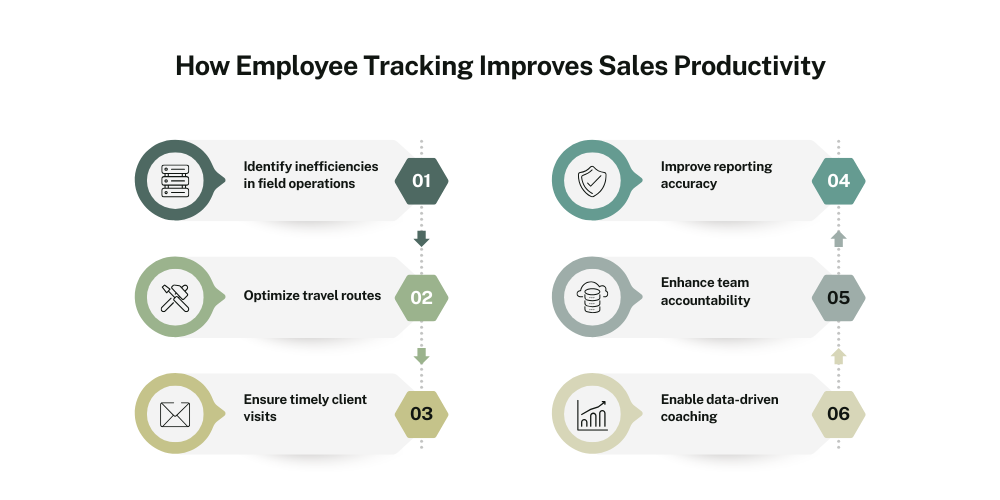
With better visibility, managers can:
- Identify inefficiencies in field operations: Detect gaps in daily activities, unproductive hours, and missed opportunities, allowing managers to take corrective actions and improve overall team efficiency.
- Optimize travel routes: Analyze movement patterns to reduce unnecessary travel, save time, lower operational costs, and increase the number of productive client visits per day.
- Ensure timely client visits: Monitor schedules and visit completion in real time, ensuring that sales representatives meet clients as planned without delays or missed appointments.
- Improve reporting accuracy: Eliminate manual errors by capturing real-time data automatically, ensuring that reports reflect actual field activities and support reliable decision-making.
- Enhance team accountability: Track daily performance and activity levels, encouraging employees to follow schedules properly and maintain consistency in their work output.
- Enable data-driven coaching: Use performance insights to identify strengths and weaknesses, helping managers provide targeted guidance and improve individual and team productivity.
Using sales productivity tools, organizations can transform raw activity data into actionable insights that drive better results. Moreover, solutions integrated with field employee monitoring software allow businesses to evaluate performance more effectively, streamline workflows, and continuously optimize field sales operations.
Factors to Consider Before Choosing the Right App
Not all tracking solutions deliver the same value. Selecting the right Employee Tracker App requires a careful evaluation of usability, scalability, and long-term business alignment.
Before making a decision, evaluate the following:
- Ease of use and user adoption: The app should have an intuitive interface, ensuring field employees can use it easily without extensive training, improving adoption rates.
- Scalability for growing teams: Choose a solution that can handle increasing users, territories, and data without performance issues as your business expands over time.
- Integration capabilities with CRM integration tools: Seamless integration ensures smooth data flow between systems, eliminating duplication, improving efficiency, and enabling better decision-making across sales operations.
- Customization options: The app should allow businesses to tailor workflows, reports, and features according to specific operational needs and industry requirements.
- Data accuracy and reporting: Reliable data collection and detailed reporting are critical for making informed decisions and tracking actual field performance effectively.
- Security and data privacy: Ensure the app follows strong security protocols to protect sensitive employee and business data from unauthorized access or breaches.
It’s also important to ensure compatibility with your existing sales force automation software to maintain a seamless workflow, avoid data silos, and enhance overall operational efficiency.
Common Mistakes to Avoid While Selecting a Tracker
Businesses often make avoidable errors during the selection process, which can lead to poor adoption, wasted investment, and limited results from the Employee Tracker App.
- Choosing based on price alone: Opting for the cheapest solution often results in limited features, poor scalability, and reduced long-term value for business operations.
- Ignoring user experience: A complex interface can discourage field employees from using the app consistently, leading to low adoption and inaccurate data collection.
- Overlooking scalability: Selecting a tool that cannot grow with your business may create challenges when expanding teams, territories, or operational requirements.
- Not considering real-world field challenges: Ignoring factors like low network areas, travel conditions, and on-ground workflows can make the app ineffective for field usage.
- Lack of proper evaluation and testing: Businesses often skip demos or trials, leading to poor understanding of how the app performs in real working conditions.
- Ignoring integration capabilities: Choosing a standalone solution without integration can create data silos and disrupt overall business processes and reporting systems.
Another common mistake is failing to align the tool with broader workforce management solutions, which can significantly limit its effectiveness, scalability, and long-term impact on business performance.
Implementation Best Practices for Field Teams
Even the most advanced Employee Tracker App can fail without proper implementation. Success depends on how well the tool is introduced, adopted, and continuously optimized within your field operations.
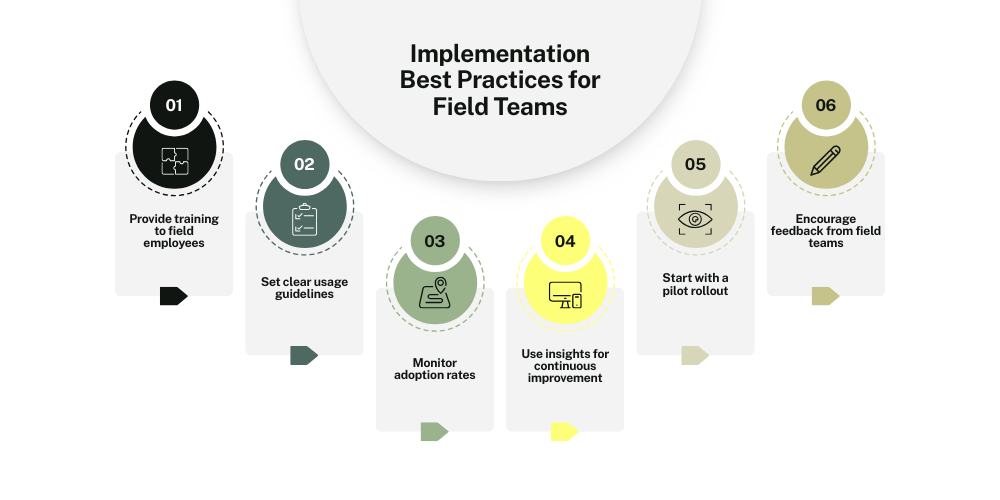
Follow these best practices:
- Provide training to field employees: Ensure every team member understands how to use the app effectively, reducing resistance and improving overall adoption and data accuracy.
- Set clear usage guidelines: Define expectations for check-ins, task updates, and reporting to maintain consistency and ensure proper utilization of the tracking system.
- Monitor adoption rates: Regularly track how actively employees are using the app and identify gaps where additional support or training may be required.
- Use insights for continuous improvement: Analyze collected data to refine strategies, improve field performance, and optimize workflows based on real-time operational insights.
- Start with a pilot rollout: Implement the app with a small group first to identify potential issues and make necessary adjustments before full-scale deployment.
- Encourage feedback from field teams: Gather input from users to understand challenges, improve usability, and ensure the tool aligns with real-world field requirements.

Incorporating remote employee tracking software effectively ensures smooth onboarding, higher adoption rates, and long-term success in managing field sales teams.
Final Thoughts:
Selecting the right Employee Tracker App is a strategic decision that directly impacts your field sales efficiency. The ideal solution should not only solve current challenges but also scale with your business as it grows.
By focusing on the right features, avoiding common pitfalls, and ensuring proper implementation, businesses can unlock the full potential of their field teams. In a competitive market, leveraging tools like field sales management app solutions can be the difference between average performance and exceptional growth.
Ready to take control of your field sales operations?
Experience how a powerful and easy-to-use solution can transform your team’s productivity. Book a free demo of Delta Sales App today and see how it helps you track, manage, and optimize your field workforce in real time.