
Beyond GPS Tracking: 5 Ethical Ways to Use Location Data to Improve Sales Rep Safety and Efficiency
In today’s fast-moving field sales environment, location data has become essential. Businesses rely on it to optimize routes, track visit patterns, improve productivity, and enhance accountability.
Yet for many sales reps, location tracking feels intrusive,,an invisible eye monitoring every move. This perception can erode trust, create resistance, and disengage employees.
The issue isn’t location data itself, it’s how it’s applied. When used ethically, transparently, and with a people-first approach, location data transforms from a control tool into a driver of safety, efficiency, and empowerment.
The future of field sales isn’t tighter surveillance, it’s smarter, ethical location intelligence. Here are five ways organizations can ethically use location data beyond GPS tracking to protect, empower, and improve the performance of sales teams.
1. Smart Route Optimization to Reduce Travel Fatigue
Field sales reps spend hours on the road, often dealing with traffic, inefficient routes, and long distances. Over time, this leads to fatigue, stress, and reduced productivity.
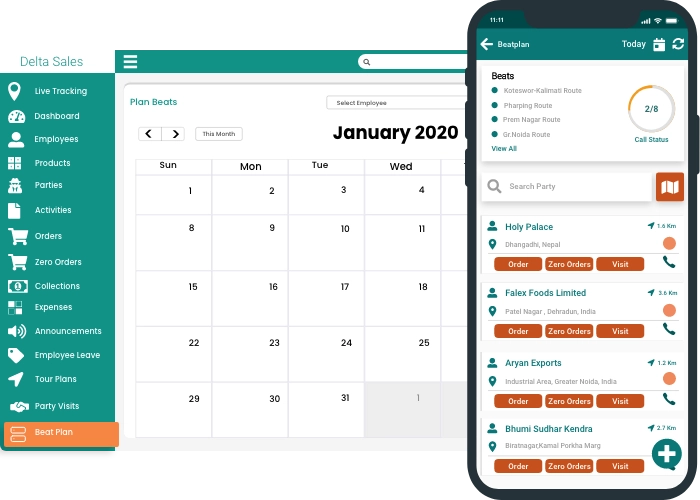
By leveraging historical and aggregated location data, businesses can:
-
Suggest the most efficient visit sequences, minimizing travel time
-
Reduce total travel distances to save fuel, energy, and costs
-
Avoid traffic-heavy routes, improving punctuality and customer satisfaction
-
Cluster nearby customer visits to streamline daily schedules
Why This Is Ethical:
-
Improves efficiency rather than tracking individuals
-
Reduces travel stress and enhances work-life balance
-
Provides tangible benefits that make adoption natural, not forced
Using a field sales app for route optimization empowers reps without constant surveillance.
2. Safety Check-Ins for High-Risk or Unfamiliar Areas
Sales reps often visit remote locations, unfamiliar neighborhoods, or high-risk areas. Continuous monitoring may feel invasive, but location data can still enhance safety responsibly.
Ethical approaches include:
-
Optional check-ins when entering predefined high-risk zones
-
Automated “safe arrival” notifications to managers or contacts
-
Escalation alerts if a rep doesn’t check out within a specified time
Why This Is Ethical:
-
Activated only in safety-critical situations
-
Designed to protect, not evaluate performance
-
Respects personal boundaries and autonomy
This method communicates a clear message: employee safety matters more than surveillance.
3. Fair and Balanced Territory Planning
Poorly designed sales territories cause inefficiency and burnout. Some reps travel excessive distances while others manage compact, high-potential areas, creating imbalance.
How location data helps without tracking individuals:
-
Identify excessive travel burdens: Aggregated data highlights reps covering long distances unnecessarily, reducing fatigue and improving productivity.
-
Balance territories geographically: Insights allow managers to redesign territories for fairness, minimizing travel time and maximizing coverage efficiency.
-
Reduce overlap between reps: Patterns reveal duplicate visits, enabling better account assignments and preventing wasted effort.
-
Ensure fair workload distribution: Data-driven decisions ensure equitable workloads, maintaining team morale and engagement.
Why This Is Ethical:
-
Uses anonymized data, protecting individual privacy
-
Improves fairness and equity across the team
-
Supports long-term productivity and reduces burnout
-
Enhances job satisfaction, lowers attrition, and strengthens overall performance
Outcome: Reps are happier, work efficiently, and feel trusted without micromanagement.
4. Emergency Assistance and SOS Support
Emergency response is one of the most human-centered applications of location data. Sales reps may face situations like:
-
Road accidents: Enable immediate location sharing for quick emergency response
-
Medical emergencies: Allow prompt alerts to managers or medical contacts
-
Harassment or unsafe encounters: Notify supervisors instantly to ensure rapid protection
An ethical SOS system allows:
-
Real-time location sharing: Activated only when reps initiate alerts
-
Predefined escalation workflows: Automatically triggers help without delays
-
Faster assistance: Accelerates rescue or support, reducing potential harm
Why This Is Ethical:
-
Fully employee-initiated, ensuring autonomy and consent
-
Used only during emergencies, not for routine monitoring
-
Reinforces trust and demonstrates organizational care
Outcome: Location data becomes a protective safety net, supporting employees when they truly need it.
5. Performance Insights Without Personal Surveillance
Managers need insights to improve field sales operations, but tracking individuals in real time isn’t necessary. Ethical location intelligence focuses on patterns, not people.

Useful insights include:
-
Average travel time between visits
-
Peak visit hours across regions
-
Visit density by geography
-
Ratio of time spent traveling vs. selling
These insights help managers:
-
Improve scheduling
-
Redesign visit plans
-
Allocate resources efficiently
Why This Is Ethical:
-
No individual-level surveillance
-
Supports strategic decision-making
-
Avoids policing behavior while boosting field sales productivity
When data is used to improve systems rather than monitor employees, trust remains intact.
Core Principles of Ethical Location Data Use
Ethical location data balances societal benefits with individual privacy, autonomy, and dignity. The UK Geospatial Commission’s "ABC" framework, Accountability, Bias, Clarity, guides best practices:
-
Accountability: Organizations must responsibly govern location data, ensure security, ethical use, and provide redress mechanisms.
-
Bias Mitigation & Fairness: Identify and reduce biases to prevent unfair treatment or discrimination.
-
Clarity & Transparency: Clearly explain why, how, and for what purpose location data is collected and shared.
-
Informed Consent & Control: Users should opt in/out freely and withdraw consent anytime.
-
Data Minimization & Purpose Limitation: Collect only necessary data for defined purposes; avoid unrelated commercial use.
-
Privacy by Design & Default: Embed privacy from the start using anonymization, aggregation, and privacy-enhancing technologies.

Business Impact of Ethical Location Intelligence
Ethical location intelligence combines geospatial data with transparency, privacy, and fairness standards, driving sustainable business growth and trust.
-
Enhanced Customer Trust and Brand Reputation:
Transparent data collection and informed consent build customer trust, loyalty, and a positive brand reputation. -
Reduced Risk and Legal Compliance:
Ethical practices ensure adherence to GDPR and AI regulations, minimizing fines, litigation, and reputational damage. -
Improved Data Quality and Decision-Making:
Responsible data collection produces accurate, high-quality insights, improving spatial analysis and operational planning decisions. -
Targeted, Effective Marketing (Without Being Creepy):
Anonymized hyperlocal marketing personalizes offers, increases engagement, and boosts conversion without compromising customer privacy. -
Operational Efficiency and Sustainability:
Ethical location intelligence optimizes supply chains, reduces transport costs, and lowers environmental impact through smarter resource allocation. -
Competitive Differentiation:
Companies demonstrating proactive data ethics gain strategic advantage, standing out as leaders in ethical AI usage.
Conclusion
GPS tracking alone is outdated and intrusive. Ethical location intelligence is smarter, precise, and truly human-centered. By going beyond surveillance and embracing ethical use of location data, organizations can build safer, faster, and more trusted field sales teams. The real question isn’t whether to track, it’s whether you empower or control your team. Choose empowerment, and watch productivity, efficiency, and morale soar.
Ready to transform your field sales? Give your reps the tools they deserve. Discover how Delta Sales App improves safety, efficiency, and performance ethically, transparently, and effectively.