
Field Sales App vs. Excel: Why Spreadsheets Break Down in the Market
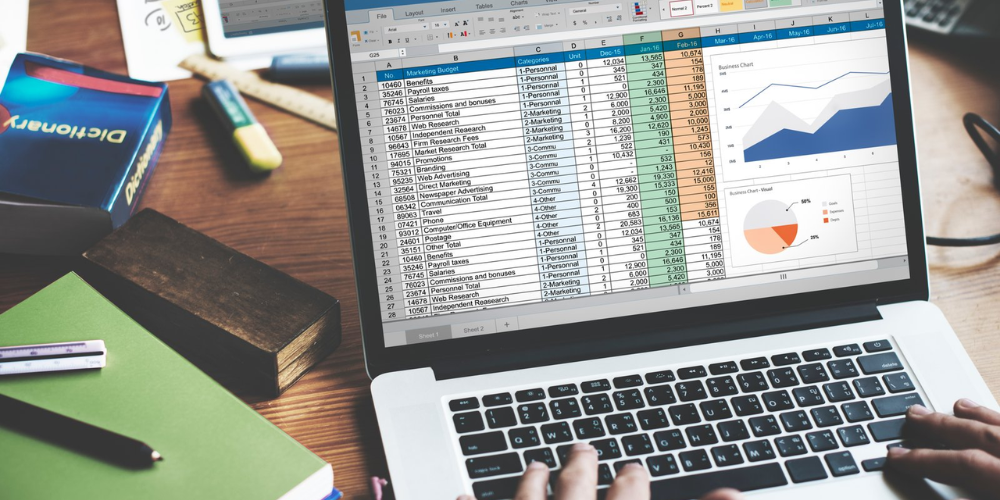
For many years, Excel spreadsheets have been one of the most commonly used tools in FMCG distribution and field sales operations. Businesses adopted Excel because it was simple, widely available, and required no technical setup. Sales teams used it to record daily orders, manage retailer lists, track collections, and prepare basic reports. For small-scale operations, it worked reasonably well and provided a quick way to manage sales data without investing in advanced systems.
However, as FMCG businesses grow, field sales operations become more complex and fast-paced. The number of retailers increases, order volumes rise, and sales teams expand across multiple territories. At this stage, Excel starts to show serious limitations. Manual data entry, lack of real-time updates, and poor coordination between teams begin to slow down operations and affect business performance. This is where modern sales force automation software becomes essential for scaling businesses.
Unlike spreadsheets, a modern field sales automation system provides real-time visibility, automated order processing, GPS tracking, and integrated distributor management. It eliminates manual errors and helps FMCG companies make faster, data-driven decisions.
In this blog we will explore why Excel spreadsheets fail in real market conditions and how a modern sales force automation system helps distributors improve field sales productivity, reporting accuracy, retailer servicing, and operational efficiency.
Why Excel Became Popular in Field Sales Operations
Excel has been widely used because it is familiar, flexible, and easy to start with. Small businesses often use spreadsheets to manage the following:
-
Easy and Familiar to Use
Most companies knew how to use Excel, so it was successful in field sales operations. Employees could quickly build spreadsheets, enter sales data, maintain retailer records and generate basic reports, without requiring specialized software training.
-
Low Initial Cost
Excel seemed a cheap solution for small distributors and growing businesses. They could manage sales reports, inventory lists and order records without first purchasing dedicated field sales automation software or distributor management systems.
-
Flexible for Basic Data Management
Excel enabled businesses to tailor sheets to their operational requirements. Sales managers can create different files for daily sales reports, retailers tracking, collections, inventory management and employee attendance. It is a versatile tool for basic operations.
-
Useful for Small Sales Teams
When field sales operations were just a handful of employees and retailers, spreadsheets were easier to manage. Excel often sufficed for basic sales and operational records for companies with low sales volume.
-
Quick Reporting and Calculations
Managers were helped by Excel to do simple calculations, to make summaries, sales reports through formulas and charts. In the early days, spreadsheets were a convenient way for businesses with limited operational complexity to monitor performance.
The Biggest Problems With Excel in Field Sales
As FMCG distribution grows, Excel starts showing serious limitations in managing fast-moving field sales operations. What initially feels like a simple tool quickly turns into a source of errors, delays, and inefficiencies. Below are the major problems distributors face when relying on spreadsheets instead of a modern system.
-
Lack of Real-Time Data Visibility
Excel spreadsheets are static and rely on manual updates, so field sales managers often receive delayed reports after market visits. This creates a major visibility gap for FMCG distributors who need real-time updates on retailer orders, sales performance, inventory movement, collections, and field activity. A connected mobile sales app solves this by providing live sales data for faster and more accurate decision-making.
-
High Chances of Human Error
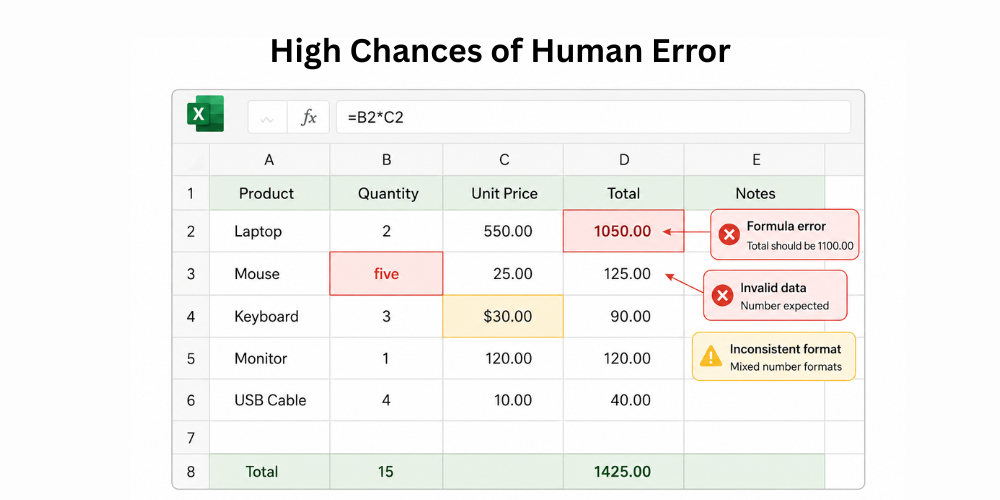
Manual spreadsheet management significantly increases the chances of errors such as duplicate entries, incorrect sales data, wrong inventory numbers, formula mistakes, and missing retailer records. These issues may look small at the entry level but can create major disruptions in invoicing, stock planning, and retailer servicing. Over time, even minor mistakes in Excel can impact overall business accuracy and decision-making. This is why businesses rely on modern inventory management software to automate data synchronization and reduce dependency on manual calculations.
-
Difficulties in Managing Large Sales Teams
Excel is becoming harder and harder to manage and control as field sales teams get bigger. Managers are challenged to track key field activities like sales calls, route coverage, attendance, daily reporting, and retailer engagement. We can't see real time, so it's ineffective and unreliable to track team performance. A dedicated helps solve this problem, as it allows managers to monitor sales representatives in real time, as well as improve accountability and overall productivity.
-
No GPS Tracking or Beat Monitoring
Excel does not have live tracking of field employees. This means that managers cannot see where sales representatives are while in the field or if they are following their assigned routes. This results in visibility gaps and less control over field execution. Modern helps businesses overcome this limitation by optimizing routes, live movement tracking, and improving field efficiency.
-
Slow Reporting and Analysis
Excel reporting is time-consuming, as managers have to compile data on daily sales, collection, retailer performance, and inventory movement manually. This process is time-consuming and slows down decision-making. Unlike spreadsheets, modern sales reporting software automatically creates real-time dashboards and reports that help businesses increase visibility and make faster data-driven decisions.
-
Poor Coordination Between Departments
Data silos are a major issue when different teams keep separate spreadsheets. Sales, inventory, warehouse, and finance departments are often working with different versions of the same piece of information, leading to confusion, delays, and operational inefficiencies. This is where integrated distributor management software comes in, centralizing all business operations and ensuring that all teams work on one unified, synchronized system.
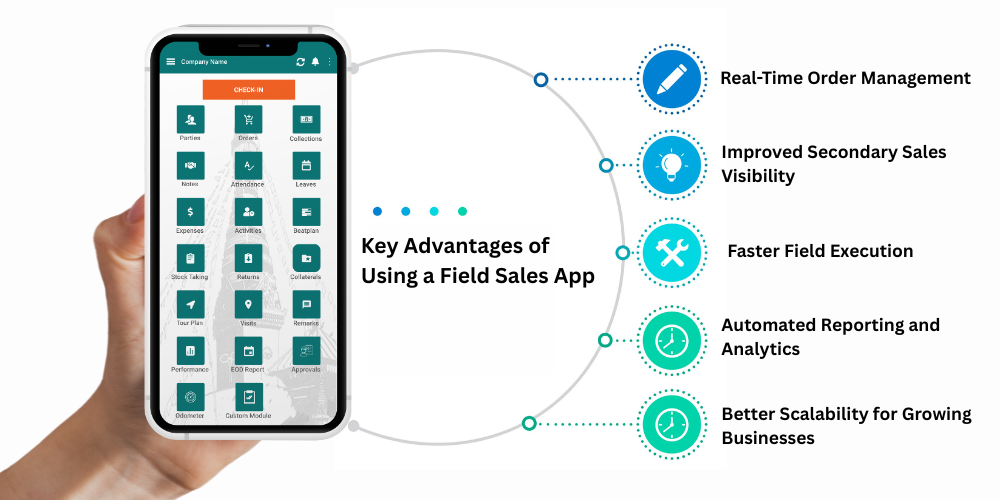
Key Advantages of Using a Field Sales App
-
Real-Time Order Management
Sales representatives can capture retailer orders directly through connected order management software during market visits. Orders sync instantly with management dashboards, reducing delays and manual coordination.
-
Better Retailer Relationship Management
A modern field sales app lets businesses keep full records of retailers, purchase history, outstanding balances, and visit tracking all in one place. That is better retailer servicing and customer relationships.
-
Improved Secondary Sales Visibility
Integrated secondary sales management software enables businesses to have a real-time view of how their products are moving through their distributor and retailer network. It improves demand planning and inventory management.
-
Faster Field Execution
Connected retail execution software allows field teams to execute promotions, retailer visits, merchandising activities, and sales operations more efficiently.
-
Automated Reporting and Analytics
Field sales applications provide immediate reporting on sales performance, route efficiency, collections, inventory movement, retailer productivity and sales targets. This removes the need for manual spreadsheet work and reduces the time spent compiling data. This provides managers with a real-time view of the business, so they can make faster and more accurate decisions based on current field data.”
-
Better Scalability for Growing Businesses
As businesses grow and data volumes increase, Excel becomes harder to manage. It is a challenge to manage complex field sales operations effectively, especially when there are multiple teams involved. In contrast, field sales automation platforms are significantly more scalable, enabling larger sales teams, multiple warehouses, growing retailer networks, increased order volumes, and operations across multiple locations.
How Delta Sales App Helps FMCG Distributors
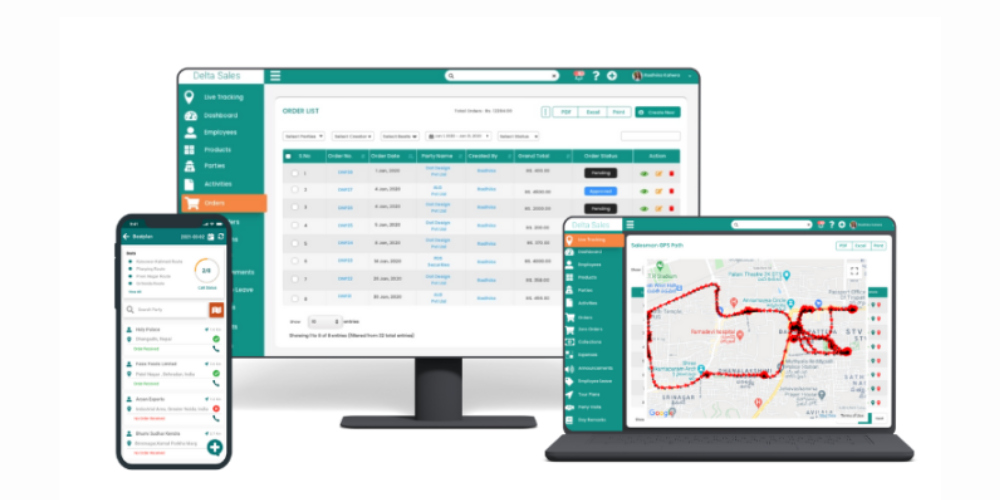
Delta Sales App is a dedicated field sales automation platform for FMCG distributors, wholesalers, manufacturers, and retail businesses who want to ditch manual processes and spreadsheets. It helps organizations digitize the end-to-end field sales workflow, from order collection in the market to final reporting in the backend system.
The platform combines the following:
-
Field Sales Automation
Field sales automation enables FMCG companies to digitize the entire on-ground sales process where the sales representative can take orders, update customer details and log daily activities from the field. So instead of manually writing everything down and updating spreadsheets later, all data is captured in real time, reducing errors and saving significant time for both sales and backend teams. This also speeds up execution and guarantees that each field activity is properly documented.
-
Distributor Management
Distributor management provides a single window to manage and monitor all distribution activities at one place. It helps companies better manage sales performance, product distribution, dealer networks and operational workflows. “It replaces the scattered Excel sheets and manual tracking methods to better coordinate the sales, warehouse and finance teams to improve distribution visibility overall.
-
Retailer Order Management
Sales order management software enables sales teams to place orders instantly during market visits using a mobile system. This eliminates delays caused by manual order collection and reduces the chances of miscommunication or missing orders. It ensures faster order processing, better accuracy, and improved service levels for retailers, which directly strengthens business relationships and customer satisfaction.
-
Inventory Tracking
Real-time inventory tracking helps to know where stock is available at warehouse and distribution points. It helps companies prevent common problems such as stockouts, overstocking and inaccurate inventory records. Accurate inventory visibility helps distributors better plan supply, fulfill orders faster and keep the flow of products moving smoothly through the supply chain.
-
GPS Employee Monitoring
GPS employee monitoring allows managers to track the real-time location and movement of field sales representatives. This ensures that sales teams follow assigned routes, visit scheduled retailers, and use their working hours effectively. It improves accountability, reduces route deviations, and helps managers optimize field performance based on accurate location data.
-
Beat Planning
Beat planning helps organize daily or weekly sales routes for field teams in a structured and efficient way. It ensures that every sales representative covers assigned retailers systematically without missing visits. Proper beat planning improves time management, reduces travel inefficiencies, and increases the number of productive retail interactions per day.
-
Sales Reporting
Sales reporting automates the generation of real-time insights related to sales performance, collections, and field activities. Instead of spending hours preparing reports manually in Excel, managers get instant dashboards that show accurate and updated data. This helps businesses make faster decisions and quickly identify performance gaps or growth opportunities.
-
Collection Tracking
Collection tracking allows businesses to monitor payments collected from retailers along with outstanding dues in real time. This improves cash flow management and reduces delays in follow-ups for pending payments. It also gives sales teams better visibility into customer credit status, helping them make informed decisions during field visits.
-
Retail Execution
Retail execution focuses on improving how products are displayed, promoted, and managed at the retail level. It ensures that marketing strategies and sales plans are properly implemented in stores. By improving product visibility and in-store execution, businesses can increase sales conversion and strengthen brand presence in the market.
Unlike Excel spreadsheets, Delta Sales App provides real-time operational visibility while reducing manual work and reporting delays.
Signs Your Business Has Outgrown Excel
As they scale their FMCG distribution and field sales operations, Excel is increasingly less useful and more a hindrance than a help. Many companies are still using spreadsheets and do not realize how much efficiency they lose in their daily operations. Here are the key indicators your business has outgrown Excel and needs a modern system.
-
Delayed and Inconsistent Reporting
If your sales reports are consistently tardy or contain conflicting figures, it is a clear indication that Excel is not sufficient anymore. Manual updates leave gaps in the data making it hard for managers to have a real-time view of sales performance. A connected provides instant, accurate dashboards to handle it.
-
Difficulty Tracking Field Teams
Excel breaks down when managers lose track of where their sales reps are, or what they’re doing in the field. Poor field control is the result of not having visibility into visits, routes and productivity. A modern helps monitor field teams in real time, increasing accountability.
-
Frequent Inventory and Order Mismatches
If your business often faces issues like missing orders, stock mismatches, or incorrect inventory records, Excel may be the root cause. Manual entry increases the chances of errors across sales and stock data. A proper inventory management software ensures real-time synchronization and accuracy.
-
Heavy Dependence on WhatsApp and Manual Coordination
If your teams rely heavily on WhatsApp messages, calls and manual follow-ups to manage sales operations, it means you are not integrated with the system. This results in confusion, missed updates, and communication gaps between teams. Centralised distributor management software resolves these problems.
-
Increasing Errors as Business Grows
The more your order volume and retailer base grow, the more difficult Excel becomes to manage and the more errors you’ll see. Duplicate records, incorrect data updates and broken formulas start to affect business decisions. That’s a good sign you need a scalable .
-
Difficulty Scaling Operations
If you feel that growing your sales team or adding new territories is complicated and disorganized, Excel is holding your business back. It is not suitable for large-scale FMCG distribution workflows. The field sales automation system is meant to support growth with ease and efficiency.
The Future of FMCG Field Sales Is Mobile and Automated
The FMCG distribution industry is rapidly shifting from manual, spreadsheet-based operations to fully digital and automated systems. Businesses are realizing that traditional tools like Excel cannot support the speed, accuracy, and real-time visibility required in modern field sales environments. As competition increases and customer expectations rise, companies need faster decision-making and more efficient execution at every level of distribution.
In the future, field sales will be driven entirely by mobile-first automation, where sales teams, managers, warehouses, and finance departments all work on a single connected system. Instead, companies will use real-time dashboards, automated workflows and GPS-based employee tracking to manage everyday operations, rather than manual reporting and lagging updates. This is what modern platforms like Delta Sales App are doing for FMCG distributors today.

Automation will also remove the manual, repetitive tasks of order entry, invoice updates, inventory reconciliation, and sales reporting. This not only eliminates human error but also enables teams to concentrate more on sales growth, retailer relationships, and market expansion instead of administrative tasks.
FMCG companies will make mobile-based field sales systems the norm for instant visibility, better coordination, and scalable operations. Businesses can leverage tools like these to connect their field teams and backend operations in real-time, resulting in faster execution and smarter decision-making.
Conclusion
Excel spreadsheets are fine for very small operations; when field sales operations grow, they become inefficient. Today’s FMCG distributors need real-time reporting, automated workflows, inventory visibility, GPS tracking, and connected field execution tools to run their day-to-day operations effectively. A dedicated field sales automation platform like Delta Sales App helps businesses eliminate manual reporting, improve sales visibility, streamline order management, and boost team productivity. If your sales team still relies on spreadsheets, now is the time to start moving toward smarter automation.
Schedule a free demo today and discover how Delta Sales App can help your business streamline field sales operations and scale distribution more effectively.