
How Can Businesses Identify Untapped Sales Opportunities?

Every business wants more sales, but many ignore the easiest source of growth: the customers, markets, and products they already have. Companies spend a lot of time and money on acquiring new customers, but there are often sales opportunities left on the table in existing territories, inactive retailers, underperforming sales routes, missed store visits, and overlooked buying patterns. Unfortunately, those opportunities remain hidden when sales data is scattered across spreadsheets, manual reports, and disconnected systems.
According to Harvard Business Review, it can cost 5 to 25 times more to acquire a new customer than to retain an existing one. And according to McKinsey, companies that use advanced sales analytics consistently outperform their competition on revenue growth, because they spot hidden opportunities before their rivals.
The problem isn’t a lack of opportunity; it’s a lack of visibility. To unearth revenue opportunities through real-time data, retailer insights, GPS tracking, route optimization, and sales analytics, today’s field sales organizations are turning to Sales Force Automation solutions.
In this blog, we’ll look at how businesses can systematically uncover untapped sales opportunities and how Delta Sales App helps turn hidden potential into measurable revenue.
What Are Untapped Sales Opportunities?
Untapped sales opportunities are potential sources of revenue that a business has not yet identified or fully leveraged. These opportunities already exist within your market, customer base, or sales process but often go unnoticed due to limited visibility into sales data and customer behavior. Rather than focusing solely on acquiring new customers, businesses can unlock significant growth by identifying gaps in their existing sales strategy. For example, some retailers may have stopped placing regular orders, certain products may have low market penetration, or high-potential territories may not be receiving enough sales coverage. Recognizing these patterns early allows businesses to take proactive action and maximize revenue.
Common untapped sales opportunities include:
-
Existing customers who could purchase additional products through cross-selling or upselling
-
Inactive retailers who can be re-engaged with targeted sales efforts
-
High-potential territories that receive limited sales coverage
-
Products with low adoption despite strong market demand
-
Retailers with declining order frequency or purchase value
-
Emerging customer segments or new market trends
-
Seasonal demand that has not been fully capitalized on
Recognizing these opportunities goes beyond mere instinct. Through a thorough examination of sales metrics, customer buying patterns, and prevailing market dynamics, companies can reveal concealed avenues for growth and make strategic choices that foster sustainable revenue expansion.
Why Businesses Fail to Spot Hidden Sales Opportunities
Many businesses often think that their declining sales or slow growth is due to tougher competition or shifts in the market. However, the underlying problem is frequently a lack of insight into their own sales performance. When businesses don't have access to precise sales data, customer insights, and consistent sales analysis, they risk missing out on valuable opportunities that are already present within their existing customer base.
Here are some common reasons why businesses might overlook these important sales opportunities:
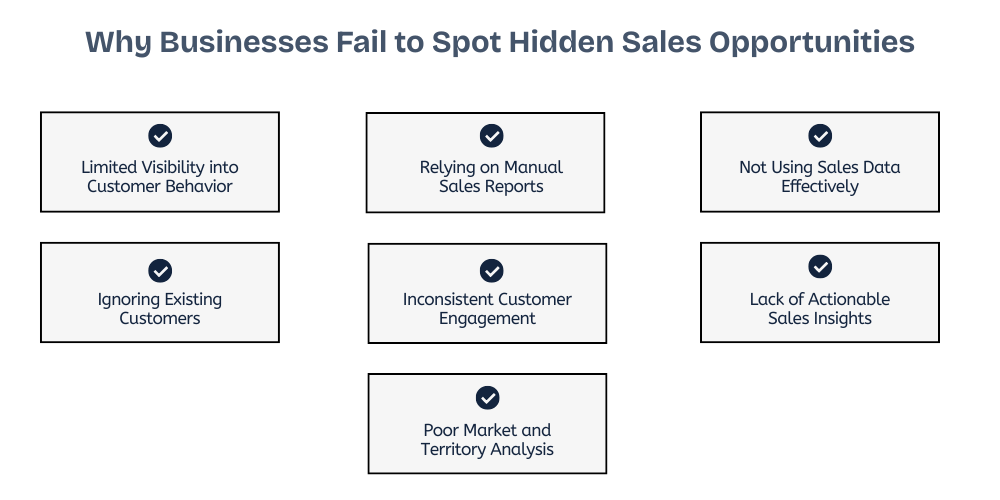
Limited Visibility into Customer Behavior
Grasping how customers make their purchasing decisions is crucial for uncovering new sales possibilities. Without monitoring their purchase history, order frequency, or buying habits, businesses struggle to identify which customers might be open to cross-selling, upselling, or re-engagement.
Relying on Manual Sales Reports
Numerous organizations continue to rely on spreadsheets or manual reporting methods to track their sales performance. Unfortunately, these reports frequently become outdated by the time they reach decision-makers, complicating their ability to adapt to shifting customer needs or seize new market opportunities.
Not Using Sales Data Effectively
Understanding sales data is just the beginning. Companies that overlook the importance of analyzing sales trends, evaluating retailer performance, and gauging product demand are missing out on crucial insights. These insights can empower them to develop more effective sales strategies and drive revenue growth.
Ignoring Existing Customers
Many businesses make the mistake of concentrating almost exclusively on bringing in new customers, often neglecting the ones they already have. However, it's important to remember that existing customers can be a goldmine for opportunities like cross-selling, upselling, repeat purchases, and fostering long-term loyalty.
Inconsistent Customer Engagement
Retailers or customers who are not contacted regularly may gradually reduce their orders or switch to competitors. Without monitoring customer activity, businesses may not realize they're losing valuable accounts until sales have already declined.
Lack of Actionable Sales Insights
Businesses often review sales numbers without asking deeper questions such as:
-
Which customers haven't ordered recently?
-
Which products have low market penetration?
-
Which regions are showing the fastest growth?
-
Where are the biggest opportunities for revenue growth?
Answering these questions requires actionable sales insights, not just sales reports.
Poor Market and Territory Analysis
Markets vary widely in their performance. Companies that fail to analyze sales results across different regions, customer groups, or territories risk missing out on promising growth opportunities while still pouring resources into areas that aren't thriving.
10 Ways Businesses Can Identify Untapped Sales Opportunities
Recognizing untapped sales opportunities involves a thoughtful and engaging approach to truly understanding customers, evaluating sales performance, and keeping an eye on market trends. By relying on insights derived from real data rather than mere assumptions, businesses can discover hidden revenue potential among their current customers, products, and markets. The strategies outlined below can empower businesses to pinpoint growth areas, enhance sales performance, and make wiser business choices.
1. Analyze Customer Purchase History
To uncover untapped sales opportunities, a great starting point is to take a closer look at your customers' purchase history. Each order they make reveals important details about their buying habits, favorite products, and how often they shop with you. Rather than just focusing on overall sales figures, businesses should dig deeper to see which items customers tend to buy repeatedly, how frequently they place orders, and if their average spending has shifted over time.
For instance, if a retailer consistently buys from one category but hasn’t explored related products, there’s a chance to introduce complementary items through cross-selling. Additionally, if you notice a drop in how often customers are ordering or how much they’re spending, it might be time to reach out and engage with them before they consider switching to a competitor. By consistently reviewing purchase histories, businesses can spot their most valuable customers, tailor their sales approaches, and discover hidden opportunities that can drive sustainable revenue growth.
2. Identify Inactive Customers
Many companies often prioritize attracting new customers, neglecting those who have already made purchases. Yet, inactive customers can be one of the most significant, overlooked opportunities for sales. Typically, a customer doesn’t stop buying all at once; their purchasing frequency tends to decline gradually over weeks or months. Spotting these shifts early allows businesses to reach out and reconnect before losing the customer for good.
It's essential for businesses to keep an eye on customers who haven’t ordered within their typical buying timeframe or whose spending has dropped significantly. Understanding the reasons behind their inactivity, be it pricing issues, product shortages, service quality, or competition, enables sales teams to take appropriate measures. Initiatives like re-engagement campaigns, tailored offers, or personal follow-ups can often revive these customer relationships at a fraction of the cost of acquiring new ones, ultimately enhancing customer loyalty and boosting overall sales performance.
3. Monitor Sales Trends
Sales opportunities become much easier to identify when businesses consistently monitor sales trends instead of relying on isolated sales reports. Analyzing sales performance over weeks, months, or seasons helps businesses understand changes in customer demand, identify fast-growing product categories, and detect early signs of declining performance.
For instance, a surge in demand for certain products during specific seasons can create chances for targeted marketing campaigns or strategic inventory management. Similarly, a drop in sales within a particular area may signal evolving customer preferences or heightened competition. Keeping an eye on sales trends also enables businesses to predict demand more accurately and allocate resources effectively for maximum returns. Companies that consistently analyze these trends are better equipped to take proactive measures instead of merely reacting after opportunities have slipped away.
4. Evaluate Product Performance
Each product plays a unique role in driving business growth, which is why analyzing product performance is crucial for uncovering hidden sales opportunities. Some products may consistently bring in impressive sales figures, while others hold great promise in the market but struggle to gain traction with customers.
Recognizing these distinctions helps businesses enhance their product strategies and boost revenue. Companies should assess which products resonate well with various customer segments and regions while pinpointing those that are lagging and might need more effective marketing or repositioning. By aligning product performance with customer needs, businesses can uncover chances to launch complementary items, develop product bundles, or optimize inventory management. Ongoing analysis empowers sales teams to prioritize promoting products that show the greatest potential for growth, rather than depending solely on past sales data.
5. Segment Your Customers
Recognizing that each customer is unique can unlock significant sales potential. By segmenting customers based on traits like purchase value, buying frequency, industry, location, or business size, businesses can create a more tailored approach to sales.
For example, high-value customers might appreciate regular check-ins and exclusive deals, while smaller retailers could respond well to targeted promotions that encourage them to place larger orders. This segmentation also allows businesses to discover new customer groups that show promise for growth and adjust their sales strategies to meet those needs. By truly understanding what each customer segment values, businesses can enhance customer satisfaction, build lasting relationships, and ultimately drive revenue through more effective sales initiatives.
6. Compare Sales Performance Across Markets
-1786596965.png)
Sales performance can differ greatly across various regions, territories, and customer segments. By taking the time to compare sales performance in different markets, businesses can gain valuable insights into their successes and uncover new growth opportunities. A territory that shows lower sales figures might not indicate a lack of demand; it could simply mean that there’s a need for better market presence, more meaningful customer interactions, or enhanced sales strategies.
Examining regional performance allows businesses to spot markets that are being overlooked, identify areas with high growth potential, and determine where investing additional resources could yield better returns. It also provides managers with a clearer picture of how outside factors like local competition, seasonal trends, or shifting customer preferences affect sales. By consistently reviewing market performance, businesses can make smarter choices regarding expanding territories, allocating resources, and planning for future growth.
7. Track Customer Buying Patterns
Recognizing how customers make their purchases allows businesses to better understand their needs and spot opportunities before they become clear. Rather than just looking at single transactions, companies should examine customer behavior over time, such as how often they order, what products they prefer, their seasonal buying habits, and the average amount they spend.
These insights empower sales teams to forecast future demand, suggest products that resonate with customers, and connect with them at the right moments. For instance, if a retailer usually places orders every four weeks but hasn't done so after six weeks, it could signal a chance for a timely check-in. Additionally, recognizing frequently bought product pairs can enhance cross-selling efforts, boosting overall order value. Businesses that grasp customer buying habits are in a stronger position to provide tailored experiences and foster deeper relationships with their customers.

8. Use Sales Analytics to Generate Actionable Insights
Transforming sales data into actionable insights is crucial for businesses. Sales analytics empowers organizations to spot trends, assess performance, and discover hidden opportunities that might not be apparent through traditional reporting methods. Rather than just looking at revenue numbers, companies can delve into customer acquisition, product performance, territory expansion, and sales productivity to make well-informed choices.
Moreover, advanced analytics allows businesses to recognize their best customers, catch early signs of declining sales, and assess the success of various sales strategies. With timely and accurate insights at their fingertips, managers can focus on promising opportunities, streamline sales efforts, and enhance overall business performance. Embracing data-driven decision-making fosters steady revenue growth and strengthens competitive advantage, ultimately creating a more resilient and responsive organization.
9. Keep an Eye on Market Trends
Customer preferences and market conditions are constantly evolving, making it essential for businesses to monitor market trends regularly. Changes in consumer demand, competitor strategies, industry innovations, and economic conditions can all create new sales opportunities or affect existing ones.
Businesses that stay informed about market developments are better prepared to adapt their product offerings, pricing strategies, and sales approach. For example, identifying a growing demand for a specific product category allows businesses to expand their offerings before competitors do. Regular market analysis also helps organizations recognize emerging customer needs, evaluate competitive positioning, and make proactive decisions that support long-term business growth.
10. Monitor Key Sales Metrics Regularly
Successful businesses understand the importance of measurable performance indicators to spot areas for improvement. By regularly keeping an eye on sales KPIs like revenue growth, customer retention, average order value, sales conversion rate, repeat purchase rate, and customer lifetime value, they gain a well-rounded view of their overall performance.
Instead of waiting until the end of the month or quarter to review these metrics, businesses should look at them consistently. This ongoing analysis helps them identify trends and react swiftly to changes in the market. By tracking these sales metrics, managers can assess how effective their sales strategies are, pinpoint areas that need attention, and focus on initiatives that promise the most growth. Over time, this continuous monitoring empowers businesses to make informed decisions, enhance sales efficiency, and discover hidden sales opportunities before their competitors do.
How Delta Sales App Helps Businesses Identify Untapped Sales Opportunities
Identifying untapped sales opportunities starts with having complete visibility into your customers, sales performance, and field operations. When sales data is spread across spreadsheets or delayed reports, valuable insights can easily be missed.
-1785053058.png)
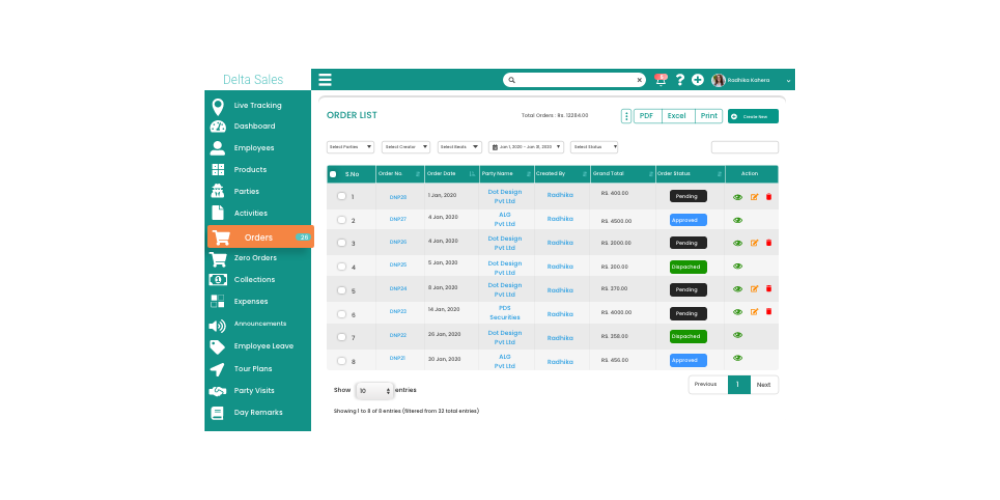
Delta Sales App brings this information together in one place, helping businesses make informed decisions based on real-time data rather than assumptions.
With built-in sales analytics, businesses can monitor sales trends, compare territory performance, and identify products or regions with the highest growth potential. Instead of looking only at total sales, managers can understand which retailers are buying less frequently, which products are underperforming, and where new opportunities exist.
The app offers a user-friendly customer management system that keeps comprehensive profiles of retailers, capturing their purchase history, visit logs, and buying habits. This approach simplifies the process of spotting inactive customers, focusing on valuable accounts, and nurturing deeper relationships with clients. For companies that depend on distributor networks, tracking secondary sales provides a clearer picture of real retailer demand, going beyond just primary sales figures. These valuable insights empower businesses to recognize popular products, evolving buying trends, and opportunities for further market expansion.
By utilizing a field sales tracking app, managers can foster meaningful relationships with high-potential retailers through regular visits, ensuring that sales representatives are effectively engaging with their assigned territories. When paired with insightful reports and analytics, businesses can swiftly adapt to market shifts, enhance their sales strategies, and discover untapped revenue potential. Instead of depending on assumptions, the Delta Sales App empowers businesses to harness data-driven insights, allowing them to identify genuine sales opportunities, strengthen customer connections, and promote sustainable growth in their operations.
Conclusion
Hidden sales opportunities often lie within your current customers, products, and markets, waiting to be discovered with the right insights. By taking a closer look at customer buying habits, keeping an eye on retailer performance, tracking sales trends, and evaluating key sales metrics, businesses can find new revenue streams before their competitors catch on. Rather than relying on gut feelings or outdated reports, successful companies leverage real-time data to make smart sales decisions. This approach not only helps pinpoint inactive customers and promising retailers but also empowers teams to enhance market coverage, build stronger customer relationships, and foster sustainable revenue growth.
If you're eager to uncover new revenue opportunities, boost sales visibility, and make wiser business choices, the Delta Sales App is here to assist. Schedule a free demo today and see how real-time sales insights, customer analytics, and field sales automation can help your business tap into hidden sales potential and drive growth.