
How Medical Device Companies Can Strengthen Field Sales

Medical device sales teams work in a complicated environment where customer relationships, product knowledge, technical evaluations, and purchasing procedures all shape sales outcomes. Reps may visit hospitals, clinics, diagnostic laboratories, and distributors, working with clinicians, procurement officers, biomedical engineers, and hospital administrators along the way. Unlike routine consumer goods sales, medical device sales often involve long buying cycles, product demonstrations, technical discussions, and several approval stages. A rep may spend weeks building a relationship with a hospital before anyone makes a purchase decision. Across several territories, that gets hard to manage when visit records, customer information, and follow-up tasks are scattered across spreadsheets, phone calls, and messaging apps.
A structured field sales process helps companies prioritize valuable accounts, improve territory coverage, and keep customer communication consistent. Digital tools can also give managers better visibility into field activity and sales opportunities without leaning entirely on manual updates.
This blog explains how medical device companies can strengthen field sales through account planning, efficient visit management, standardized reporting, and monitoring field sales performance, along with practical ways to bring field sales automation into daily operations.
Why Field Sales Is Harder for Medical Device Companies
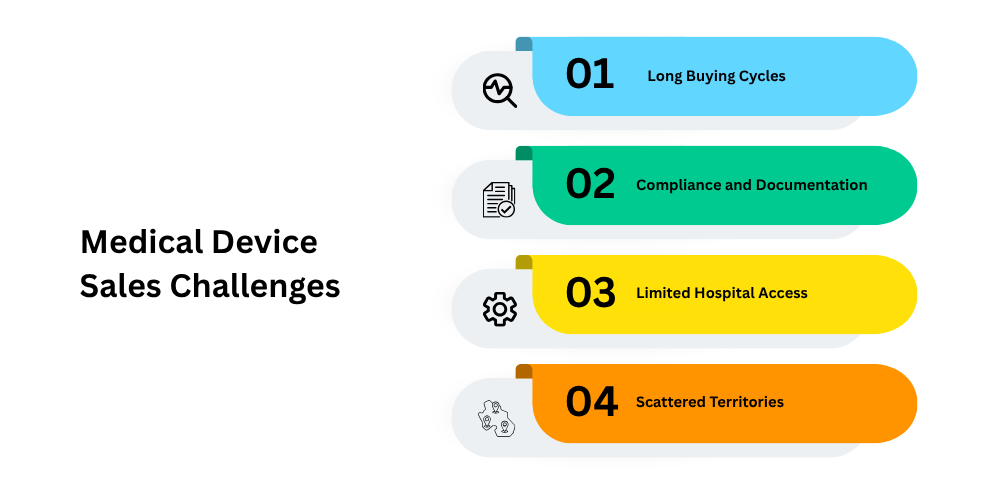
Medical device sales run through different users, different purchasing processes, and different technical requirements depending on what's being sold. A rep selling surgical instruments works with surgeons. A diagnostic equipment team coordinates with lab managers and biomedical engineers instead. That variation is exactly what makes field sales planning harder in this industry than in most others.
-
Long buying cycles and multiple decision-makers
Medical device purchases often require product evaluations, demonstrations, budget approvals, and procurement reviews. A clinician may recommend a device, but the final decision may involve numerous other teams. Representatives should engage with stakeholders, document conversations, and arrange follow-ups to ensure opportunities continue to progress.
-
Compliance and documentation requirements
Medical device companies may need to maintain records of customer interactions, demonstrations, product training, and equipment movements, depending on their products and applicable regulations. Standardized digital reporting helps teams maintain consistent records and retrieve information when needed. Companies must still follow relevant privacy and compliance requirements.
-
Limited access to hospitals and clinicians
Healthcare professionals often have demanding clinical schedules, which can lead to their unavailability. Additionally, hospitals might limit access to specific departments, creating barriers for representatives. These circumstances can throw a wrench in planned visits and extend travel times. To make the most of their time, representatives can connect with their contacts to confirm appointments, focus on key accounts, and adapt their routes as needed when schedules shift.
-
Scattered territories and low visibility into rep activity
Medical device representatives often find themselves navigating a diverse landscape of cities, hospitals, clinics, and distributor locations. For managers relying on phone calls or end-of-day spreadsheets, it can be challenging to grasp where their representatives are and if they are fulfilling their planned visits. This lack of visibility can lead to missed opportunities in identifying coverage gaps, balancing workloads, and providing timely support. By implementing centralized field activity records and location tracking, managers can foster better coordination among their teams while respecting the privacy of their employees.
Build a Territory and Account Strategy Around Hospitals and Clinics
Effective field sales begins with identifying valuable accounts and allocating resources appropriately. A structured territory mapping helps representatives prioritize hospitals and clinics based on their potential and purchasing needs.
-
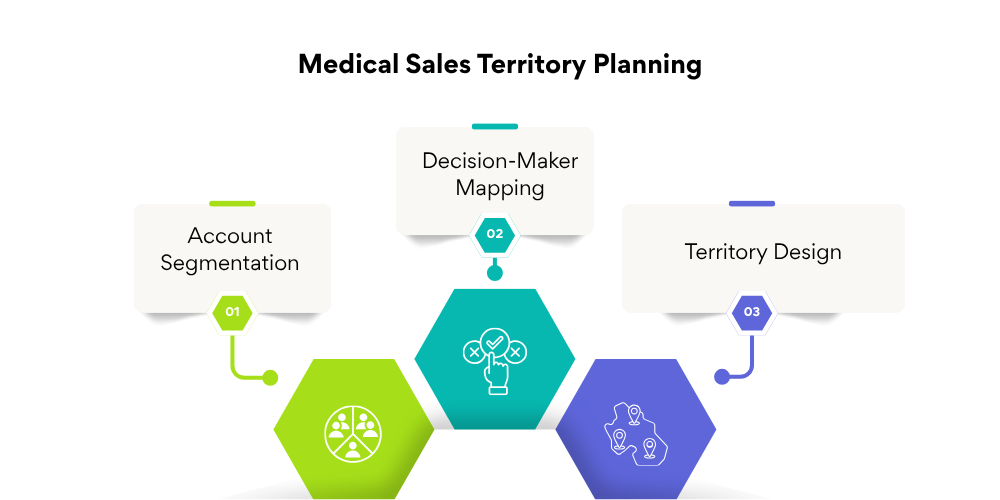
Segment accounts by procedure volume and revenue potential
Hospitals and clinics have unique needs when it comes to products, their ability to purchase, and the revenue they can generate. It's important to categorize accounts by understanding their clinical demands, how well products align with those needs, anticipated sales, readiness to buy, and any existing connections. For instance, a hospital that is growing its diagnostic department might warrant more focus from a sales representative than a facility that isn't looking to make immediate purchases. Regularly revisiting these account segments ensures that priorities shift as customer needs evolve.
-
Identify and connect with key decision-makers within each facility.
Medical device purchases often involve clinicians, procurement officers, biomedical engineers, department heads, and administrators. Representatives need to understand each person's role in the purchasing process. Maintain contact records, communication history, and next steps for relevant stakeholders. This reduces dependence on one contact and helps representatives coordinate follow-ups with the appropriate people.
-
Design territories that reduce travel time
Poor territory design can leave representatives spending more time travelling than meeting customers. Assigning accounts based on geography, customer potential, appointment frequency, and workload helps create more practical schedules. Group nearby hospitals and clinics where possible, while accounting for appointment windows, traffic, facility access, and demonstration requirements. Representatives covering rural or widely dispersed locations may need different schedules from those working in dense urban areas.
Make Every Customer Visit Count
Field visits consume time and travel resources, so each interaction should have a clear purpose. Better planning and consistent reporting help representatives make progress on customer requirements and sales opportunities.
-
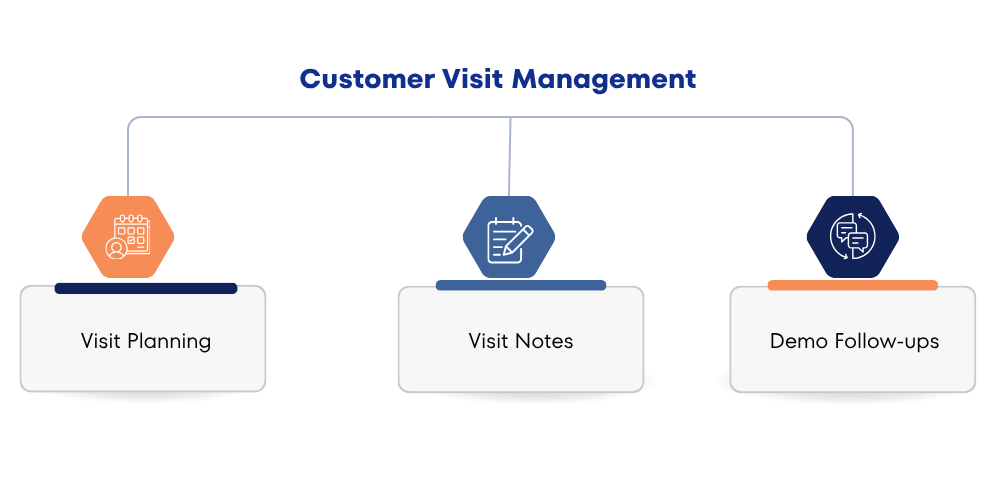
Plan visits by priority and route
Prioritize scheduled demonstrations, pending evaluations, procurement discussions, and important follow-ups. Group nearby appointments to reduce unnecessary travel while considering hospital access rules and customer availability. Review planned and completed visits to identify scheduling problems and improve territory coverage.
-
Capture visit notes and next steps on the spot
Representatives should record visit outcomes immediately, including customer requirements, product concerns, discussions, and agreed follow-ups. For example, if a hospital requests technical specifications before evaluating a device, the representative should document the request and schedule the next action. Timely notes prevent missed commitments and keep account information accessible.
-
Follow up on demos, trials, and training
Demonstrations rarely complete the entire sales process. Customers may need technical information, training, quotations, or internal approvals before purchasing. Record each demonstration's outcome, outstanding questions, and next action. Assign responsibilities and follow-up dates to keep opportunities moving forward.
Keep Reps Compliant and Records Audit-Ready
Consistent documentation helps medical device companies coordinate field teams and maintain reliable records. Reporting processes should align with the company's quality procedures and applicable regulations.
-
Log every interaction and demo equipment movement
Representatives may carry demonstration units, accessories, or product samples between facilities. Companies should record relevant equipment movements, responsible persons, and return status according to their procedures. Visit records should also capture the purpose, outcome, and follow-up requirements of customer interactions. Specialized asset or quality management systems may be needed for more detailed controls.
-
Standardize reporting across the team
Inconsistent reports make it difficult to compare field performance or identify missing information. Establish a common format covering customer details, visit outcomes, opportunity status, and follow-up actions. Digital forms help representatives submit consistent reports and allow managers to review information without manually combining multiple spreadsheets.

Use Field Data to Coach Reps and Forecast Accurately
Field activity data helps managers understand sales progress beyond the number of visits completed. Combining activity reports with opportunity information provides a clearer picture of team performance.
1. Track the metrics that matter
Medical device companies should track metrics that reflect their sales process and product category. The following metrics help managers evaluate field activities and sales performance.
-
Planned vs. Completed Visits: Measures how consistently representatives follow their schedules.
-
Priority Account Coverage: Shows whether key hospitals and clinics receive sufficient attention.
-
Follow-up Completion Rate: Tracks how consistently representatives complete agreed customer follow-ups on time.
-
Demonstration-to-Opportunity Progression: Measures whether product demonstrations lead to qualified sales opportunities.
-
Opportunity Aging: Identifies opportunities that have remained at the same sales stage for too long.
-
Sales Conversion Rate: Shows how effectively qualified opportunities turn into sales.
-
Sales Cycle Length: Measures the time required to move an opportunity from initial contact to a purchasing decision.
-
Revenue by Territory: Helps managers compare sales performance across different territories.
2. Identify coverage gaps across territories
Territory coverage reports help managers identify hospitals and clinics receiving fewer visits than their account importance requires. They can also reveal areas where representatives spend too much time travelling or where customer demand exceeds the team's current capacity.
Compare planned visits, completed visits, account priorities, and sales opportunities to identify gaps. For instance, if several high-potential hospitals in one region receive limited attention, managers may need to adjust schedules, redistribute accounts, or assign additional field resources. Reviewing coverage regularly helps ensure that sales effort remains aligned with business priorities instead of being driven only by convenience or routine.
3. Coach reps with real activity data instead of self-reported updates
Performance discussions get more useful when managers can pull up actual visit records, follow-up history, and sales progress, rather than relying on whatever the rep remembers to say out loud.
Say a rep is doing regular hospital visits but has several opportunities stalling right after the demonstration. Looking at the records might turn up unresolved technical questions, a missing stakeholder, or a quotation sitting delayed somewhere. That's specific enough for a manager to actually help, coordinating a technical specialist, and prepping for the next product evaluation, something real instead of a generic "push harder." Data should support coaching that's constructive, and the rep should still get to explain the circumstances behind the numbers before anyone draws a conclusion from them.
How Delta Sales App Helps Medical Device Field Teams
Managing a distributed sales team becomes harder when attendance, visit records, and sales reports are scattered across different tools. Field sales automation can bring relevant operational information into a centralized system.
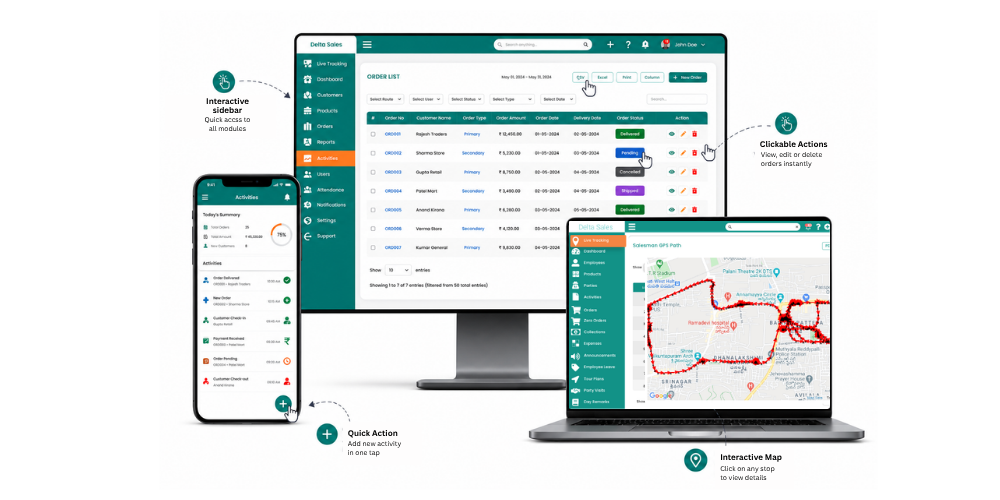
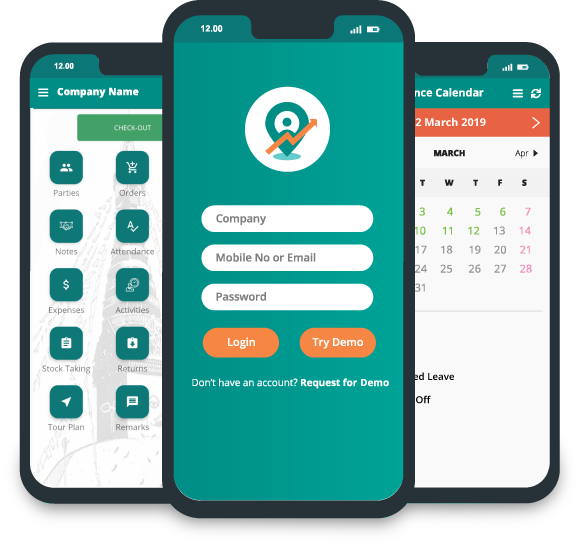
Delta Sales App provides field sales automation and employee tracking capabilities that can support medical device companies managing representatives across hospitals, clinics, and distributor networks.
-
Real-time visit tracking and rep accountability
GPS-based tracking system helps managers monitor field reps' locations during working hours, subject to whatever company policy and privacy requirements apply. Combined with attendance and visit reporting, it gives managers a way to review field coverage, coordinate schedules, and catch operational gaps. On its own, though, GPS data doesn't confirm a meaningful customer interaction actually happened; location isn't the same thing as a good visit.
-
Leads, orders, and follow-ups in one mobile app
Reps need an organized way to manage customer information, sales activity, and relevant orders. Delta Sales App supports mobile field sales workflows, order management, customer or distributor management, and sales reporting, which can be useful for medical device businesses selling equipment or consumables through distributors. Worth confirming the specific CRM, lead tracking, demonstration documentation, and follow-up requirements before implementation, since what matters most in this industry varies by exactly what's being sold.
-
Manager dashboards and reports
Managers need a clear overview of field activity without chasing updates from every rep individually. Delta Sales App's dashboards and reporting features let managers review available field operations and sales data in one place, and that view can support real decisions on territory coverage, rep performance, and operational improvements. Worth assessing integrations, access controls, data retention, and compliance requirements too before picking a platform, since those matter as much as the day-to-day features.
Conclusion
Medical device companies can strengthen field sales by tightening up territory planning, mapping decision-makers, organizing customer visits and keeping documentation consistent. Tracking the field metrics that actually matter also helps managers spot coverage gaps, understand why an opportunity stalled, and coach reps with something concrete instead of guesswork.
A structured rollout of field sales automation software improves visibility into daily operations and cuts the dependence on manual reporting. The approach that actually works combines practical sales processes, reliable field data, and technology that fits what the company genuinely needs, not whatever has the longest feature list.
Delta Sales App is worth evaluating for medical device businesses looking to improve rep tracking, attendance management, and sales reporting. Companies should weigh its capabilities against their specific CRM, distribution, and compliance needs before deciding to implement it.
Request a personalized demo to explore whether Delta Sales App fits the team's field sales workflow.