
How Can Sales Teams Increase Average Order Value From Retailers?
For field sales teams, increasing revenue does not always require finding more retailers. In many cases, a significant opportunity already exists within the existing retailer network.
A retailer who normally places small or predictable orders may have opportunities to purchase more when the sales representative understands current stock levels, product demand, purchasing patterns, seasonal requirements, and gaps in the retailer's assortment.
The challenge is identifying those opportunities without pushing irrelevant products or increasing inventory pressure on retailers.
A smarter approach combines retailer insights, product recommendations, sales history, and effective retail sales strategy to make every store visit more productive.
Why Every Retail Visit Can Create an Opportunity for a Bigger Order
A retailer visit should not be viewed only as an opportunity to collect a routine order. Each visit gives the sales representative a chance to understand what the retailer needs, which products are selling, what is missing from the outlet, and whether upcoming demand could justify a larger order.
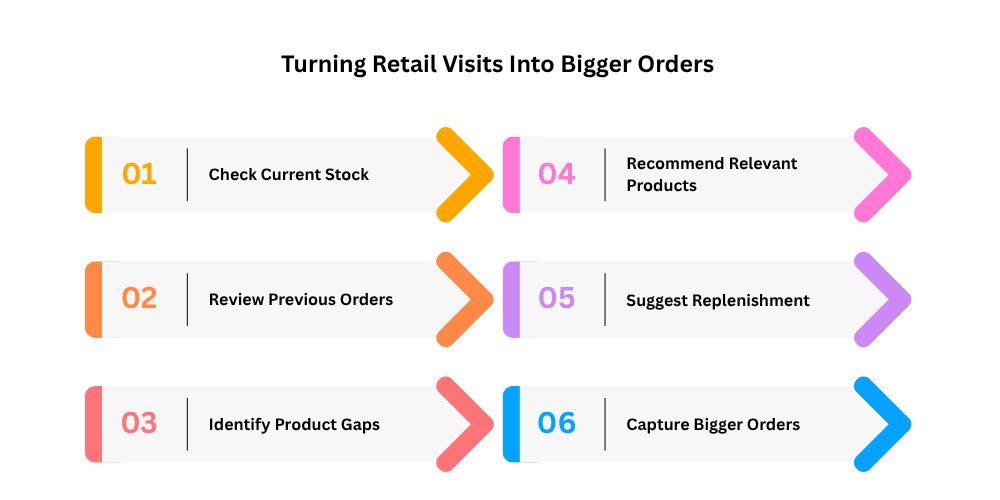
For example, a retailer may regularly purchase five fast-moving SKUs but never order their complementary products. Another retailer may be running low on high-demand items before a seasonal sales period.
These situations create opportunities to increase order value naturally.
The objective is not simply to convince retailers to buy more. It is to help them place larger and more relevant orders based on actual business opportunities.
This requires sales representatives to move from order-taking to opportunity-based selling.
What Is Average Order Value in Retail Sales?
Average Order Value (AOV) is the average amount a retailer spends each time they place an order with a brand, distributor, or supplier. It is an important retail sales metric because it helps sales teams understand how much revenue they generate from each order and where opportunities exist to increase order size.
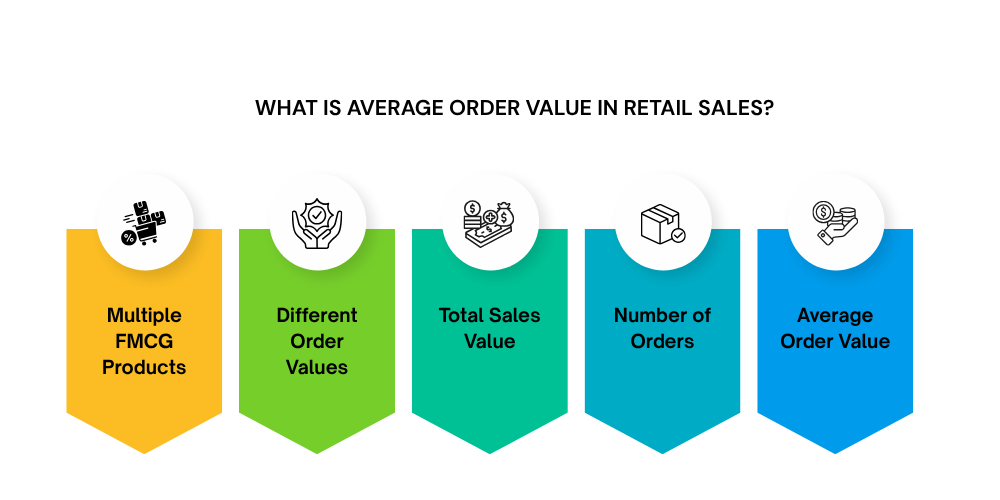
The formula is straightforward:
Average Order Value = Total Retail Sales Revenue ÷ Total Number of Retail Orders
For example, if a sales team generates $50,000 from 500 retailer orders, the average order value is $100 per order.
A higher AOV means sales teams are generating more revenue from each transaction. This can be particularly valuable for businesses that already have an established retailer network because they can increase revenue without necessarily adding more retailers or significantly increasing the number of store visits.
However, increasing AOV should not mean simply asking retailers to buy more products. The additional products or quantities should match their actual demand, available shelf space, purchasing capacity, and expected sales.
For instance, recommending extra inventory to a retailer that already has slow-moving stock could create excess inventory and put pressure on the retailer's cash flow. On the other hand, identifying a retailer that frequently runs out of a fast-moving product can create a genuine opportunity to increase the order while helping prevent stockouts.
Therefore, the objective should be profitable order growth, not just larger invoices.
Sales teams can monitor AOV across different retailers, territories, product categories, and time periods to identify where order values are increasing, where they remain low, and which retailers have the greatest potential for growth. This data can help sales representatives make more relevant recommendations during their next retailer visit.
Why Are Retailers Not Ordering More?
Before trying to increase order value, sales teams need to understand why existing retailer orders remain smaller than their potential.
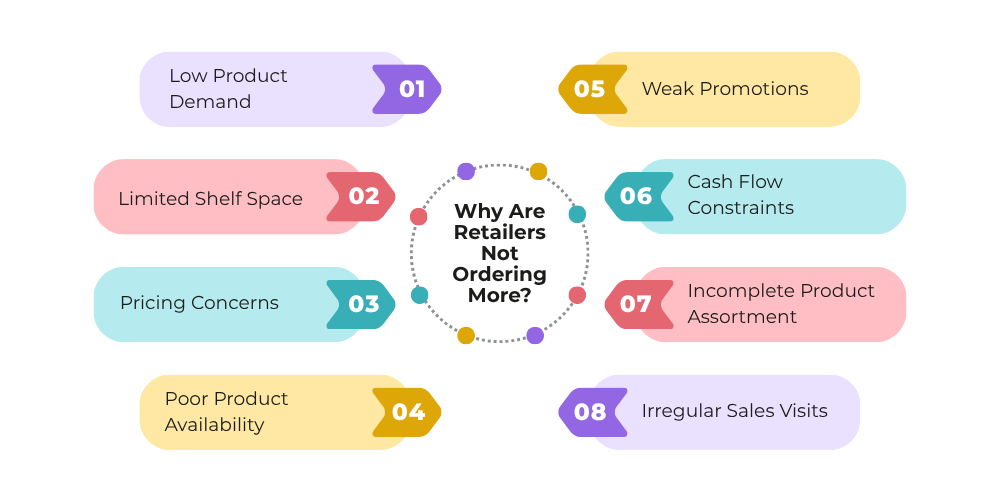
Limited Product Visibility
Retailers may not know the complete product range available, causing them to overlook relevant SKUs that could complement their existing assortment.
Uncertain Product Demand
Retailers may hesitate to purchase additional products when demand seems uncertain, fearing unsold inventory, reduced cash flow, and slower product movement.
Limited Shelf Space
Limited shelf space can restrict how many products retailers display, making them selective about quantities, categories, pack sizes, and new products.
Poor Stock Planning
Retailers may place orders reactively instead of considering historical sales, current inventory, reorder patterns, and upcoming demand when planning purchases.
Cash Flow Constraints
Limited working capital may prevent retailers from placing larger orders, even when products have strong demand and attractive sales potential.
Incomplete Product Assortment
Retailers may stock popular products while missing complementary SKUs, limiting their assortment and preventing opportunities to serve broader customer requirements.
Irregular Sales Visits
Infrequent or poorly scheduled sales visits can cause representatives to miss stock shortages, changing demand, reorder opportunities, and potential incremental sales.
Understanding the underlying reason is important because the right response depends on the problem. A retailer with limited shelf space requires a different recommendation from one experiencing strong demand but frequent stockouts.
The 5 Signals That a Retailer Could Place a Bigger Order
Sales representatives do not have to guess when a retailer may be ready for a larger order. Several signals can reveal unmet demand, replenishment needs, or opportunities to expand the retailer's product mix.
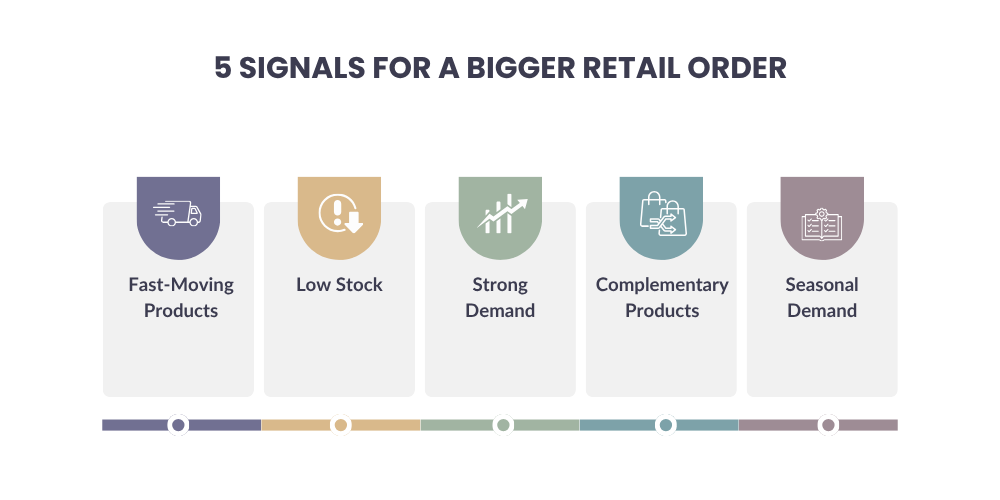
By identifying these signals during each store visit, sales teams can make more relevant recommendations and increase order value without pushing unnecessary products.
Missing SKUs
A retailer may regularly purchase products from a particular category but still have important SKUs missing from its assortment. These gaps can indicate an opportunity to expand the order.
For example, a retailer may stock a popular product in one pack size while customers frequently ask for another. The sales representative can identify this gap and recommend the missing SKU if it matches the outlet's demand and customer profile.
Low Stock
Low stock on frequently purchased products is a strong indication that a retailer may need a larger replenishment order.
Instead of recording only the quantity currently requested, sales representatives can review previous order quantities, reorder intervals, and product movement. If the retailer repeatedly runs out before the next visit, increasing the order quantity may help prevent stockouts and capture additional sales.
Strong Product Demand
Consistently strong demand can indicate that a retailer has the potential to purchase larger quantities.
Sales representatives can look at previous orders, reorder frequency, and retailer feedback to identify products that are moving quickly. When demand is consistently high, recommending an appropriate increase in quantity becomes more relevant than simply asking the retailer to buy more.
This approach allows sales teams to connect order recommendations with actual product movement.
Complementary Product Opportunities
A retailer purchasing one product may have an opportunity to add related products that complement the existing assortment.
For example, if a retailer regularly orders a particular product category, the representative can identify complementary SKUs that are relevant to the same customer base. This can increase the number of products included in the order while helping the retailer offer a broader assortment.
The recommendation should always be based on relevance rather than adding products simply to increase invoice value.
Seasonal Demand
Retailer demand can increase during festivals, holidays, weather changes, local events, or other predictable seasonal periods.
Sales teams can review previous seasonal sales data to understand which products typically experience higher demand and when retailers begin increasing their purchases.
Rather than waiting for demand to peak, representatives can discuss upcoming requirements during earlier visits and help retailers prepare their inventory in advance. This can create a timely opportunity for larger orders while reducing the risk of missed sales caused by insufficient stock.

How Sales Representatives Can Increase Order Value During a Store Visit
Increasing order value starts with understanding what the retailer actually needs rather than simply asking for a larger order. A well-planned sales visit gives representatives an opportunity to assess inventory, understand demand, identify product gaps, and recommend products that can generate additional sales.
A productive retailer visit can follow a simple five-step approach:
Observe → Ask → Analyze → Recommend → Confirm
Observe the Outlet
Start by examining the retailer's current inventory, shelf presence, product assortment, and visible signs of customer demand. Look for fast-moving products, low-stock items, missing SKUs, and categories that could be expanded.
This first step strengthens retail execution because representatives can base their recommendations on actual conditions at the outlet rather than assumptions.
Ask Relevant Questions
A short conversation with the retailer can reveal opportunities that order history alone may not show.
Ask about products selling quickly, items frequently requested by customers, stock shortages, upcoming seasonal demand, and products the retailer is considering adding.
Effective retailer engagement helps representatives understand the reasons behind current purchasing decisions and identify potential requirements for the next order.
Analyze the Opportunity
Once the representative understands the retailer's situation, compare the current requirement with previous purchases, reorder frequency, product movement, and expected demand.
For example, if a retailer repeatedly sells out of a particular SKU before the next scheduled visit, there may be an opportunity to increase the recommended quantity.
Using historical information as part of sales order management helps representatives make recommendations based on evidence rather than intuition.
Recommend Relevant Products
The next step is to present recommendations that match the retailer's needs. These may include additional quantities of fast-moving products, missing SKUs, complementary products, different pack sizes, or suitable alternatives.
Recommendations should be specific and explain the potential benefit to the retailer. Instead of simply saying, "You should order more," the representative can connect the recommendation to previous sales, current stock, or expected demand.
This makes order booking more consultative and can help increase the value of each transaction without creating unnecessary inventory.
Confirm the Order
The final order should reflect what the retailer actually needs and can reasonably sell.
This consultative approach makes sales representative productivity more meaningful because productivity is measured not only by the number of visits but also by the quality and commercial outcome of those visits.
Build the Right Product Mix Instead of Simply Selling More
A bigger order does not necessarily mean a better order. Suppose a retailer purchases ten units of one product but has no demand for another product category. Convincing the retailer to add unnecessary products may increase the invoice temporarily but create inventory problems later.
Instead, sales teams should focus on creating the right product mix.
A strong product mix can include:
-
High-demand products
-
Different pack sizes
-
Complementary products
-
Products suitable for the retailer's customer base
-
Seasonal products
-
Products that fill assortment gaps
The ideal mix will differ from retailer to retailer. A neighborhood convenience store, supermarket, pharmacy, and specialty retailer may have completely different purchasing patterns.
Therefore, retailer order management should support differentiated recommendations rather than applying the same order strategy to every outlet.
Use Cross-Selling to Add Relevant Products
Cross-selling involves recommending related products that complement what the retailer is already purchasing. For example, if a retailer regularly orders a particular beverage, the representative may identify whether related variants or complementary products could also perform well in that outlet.
Effective cross-selling should answer a simple question:
"What additional product makes sense alongside what this retailer already sells?"
Sales teams can identify cross-selling opportunities using:
-
Previous orders
-
Product relationships
-
Retailer category mix
-
Local demand
-
Customer buying patterns
-
Similar retailer purchasing behavior
When recommendations are relevant, cross-selling can increase basket size while improving the retailer's product assortment.
Use Upselling Carefully to Increase Order Value
Upselling encourages a retailer to choose a higher-value or more suitable option instead of the basic option they normally purchase. This could involve a larger pack size, premium variant, higher-margin product, or a quantity appropriate for stronger demand.
A retailer should not be encouraged to purchase a more expensive product simply because it increases invoice value.
Instead, the sales representative should establish whether:
-
The product fits the retailer's customer segment
-
Demand supports the recommendation
-
The retailer has sufficient shelf space
-
The expected sales justify the additional investment
-
The product complements the existing assortment
This makes upselling a value-based recommendation rather than aggressive selling.
Turn Fast-Moving Products Into Basket-Building Opportunities
Fast-moving products provide useful clues about where a retailer's sales potential already exists. If one SKU consistently generates strong demand, sales representatives can investigate what else can be added around that demand.
For example, the representative might identify:
-
Related variants
-
Different pack sizes
-
Complementary products
-
Products from the same category
-
Products commonly purchased by similar retailers
This transforms a single successful SKU into a broader basket-building opportunity.
Sales teams can also monitor reorder intervals. If a retailer repeatedly runs out of a product before the next scheduled visit, the team may need to reconsider the recommended order quantity or visit frequency.
Use Retailer Purchase History to Personalize Recommendations
A retailer's purchase history can provide more useful information than a generic sales pitch.
Historical data can reveal:
-
Frequently ordered products
-
Average order quantities
-
Reorder intervals
-
Seasonal purchasing patterns
-
Products that were previously purchased but later dropped
-
Categories with growing or declining demand
For example, if a retailer consistently increases orders of a particular category during a specific period each year, the sales representative can prepare a recommendation before demand peaks.
This supports a more data-driven retail sales analytics approach. Instead of asking every retailer to purchase the same products, sales teams can tailor recommendations according to individual buying behavior.
Match Orders With Retailer Potential
Not every retailer has the same sales potential. Factors such as store size, location, customer traffic, historical sales, purchasing capacity, product category, competition, and shelf space can influence how much a retailer can realistically sell.
A high-volume retailer may support a broader assortment and larger replenishment quantities, while a smaller outlet may perform better with a focused selection of fast-moving products.
Segment Retailers by Potential
Sales teams can use retailer segmentation to group outlets based on sales volume, purchasing behavior, growth potential, and product demand. This helps representatives tailor their order recommendations instead of using the same approach for every retailer.
Adjust Recommendations
High-potential retailers may need additional SKUs, larger quantities, or more frequent replenishment, while smaller outlets may require a narrower product mix.
By matching recommendations with retailer potential, sales teams can focus on genuine sales growth opportunities and increase average order value without creating unnecessary inventory.
How Better Visit Planning Can Lead to Bigger Orders
Order value is also influenced by when and how sales representatives visit retailers. If representatives follow inefficient routes or visit outlets without considering demand patterns, they may spend valuable selling time traveling instead of engaging with retailers.
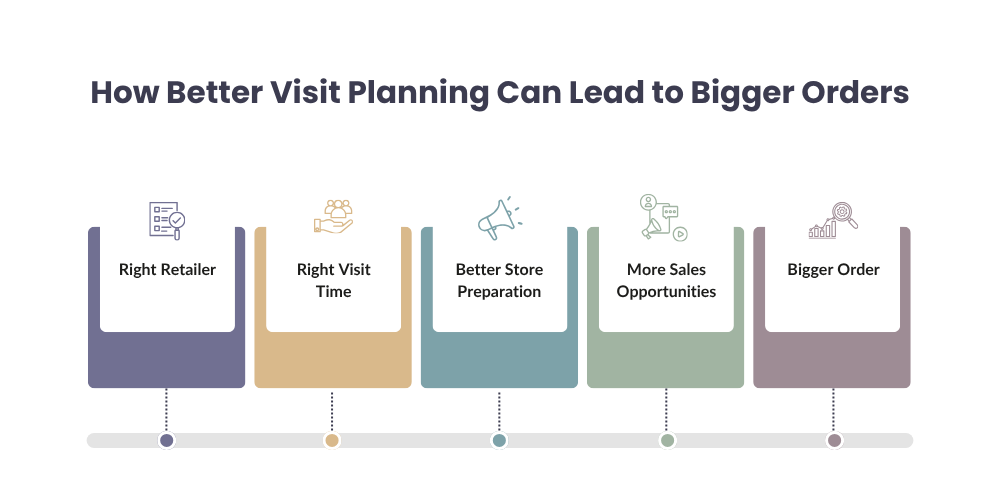
Better field sales route planning can help teams organize visits according to territory, retailer priority, visit frequency, and expected sales opportunity.
For example, a representative could prioritize:
-
Retailers approaching stockout
-
High-potential retailers
-
Retailers with upcoming seasonal demand
-
Outlets requiring product assortment expansion
-
Routine lower-priority visits
Better planning does not automatically create larger orders, but it gives representatives more time and context to focus on the opportunities most likely to generate incremental sales.
How to Measure Retailer Order Value and Sales Growth
Sales teams need measurable indicators to determine whether their strategy is actually improving order value and generating sustainable sales growth.
Average Order Value
Track average revenue generated from retailer orders to identify changes in transaction value over time.
Average Units Per Order
Measure units purchased per transaction to determine whether retailers are increasing their overall order quantities.
SKU Count Per Order
Monitor the number of SKUs ordered to identify improvements in retailer product assortment and variety.
Revenue Per Retailer
Compare revenue generated from individual retailers to identify high-value accounts and potential growth opportunities.
Repeat Order Rate
Measure how consistently retailers place repeat orders to evaluate customer retention and purchasing frequency.
Cross-Sell Rate
Track complementary products purchased by retailers to measure the effectiveness of cross-selling strategies.
Order Value by Retailer Segment
Compare average order values across retailer segments to identify which groups offer stronger sales growth opportunities.
Sales Growth by Product Category
Analyze sales growth across product categories to identify which products contribute most to incremental revenue.
These metrics help sales managers distinguish genuine order-value growth from temporary increases caused by one-time purchases.
How Technology Helps Sales Teams Find Bigger Order Opportunities
Technology can make retailer-level selling more systematic. A field sales platform can bring together information such as retailer profiles, previous orders, sales activity, visit history, inventory information, and representative performance.
Instead of relying entirely on memory, sales representatives can access relevant information while they are in the field.
Technology can help teams:
-
Review retailer purchase history
-
Identify missed products
-
Monitor order trends
-
Plan retailer visits
-
Track sales representative activity
-
Record orders digitally
-
Compare sales performance
-
Identify potential growth opportunities
The objective is not to replace the sales representative's judgment. It is to give representatives better information when making recommendations.
How Delta Sales App Helps Increase Retailer Order Value
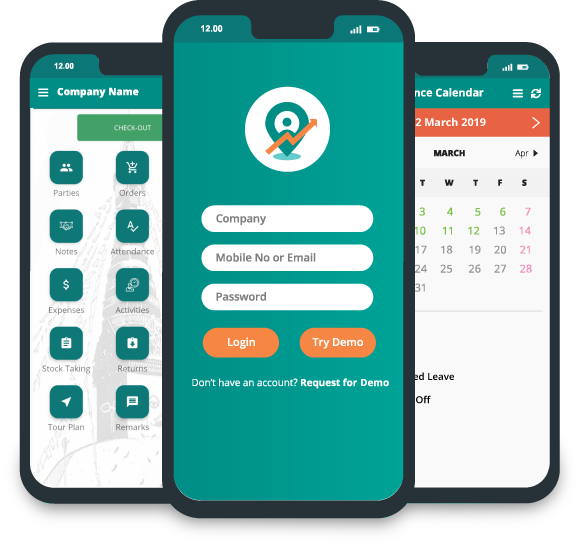
Delta Sales App can help field sales teams manage retailer visits, order booking, sales activities, and customer information from a centralized platform.
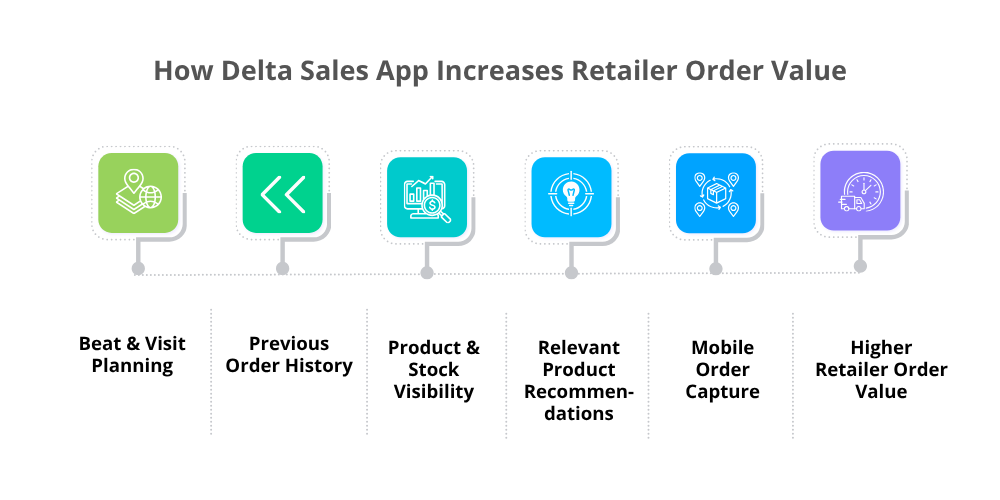
Sales representatives can use field sales tools to access relevant customer information while visiting retailers, record orders, and capture important sales activity from the field.
With better visibility into retailer interactions and sales operations, managers can identify sales patterns and opportunities that may otherwise be missed.
Delta Sales App also supports capabilities such as order reporting, customer visit tracking, GPS-based field activity monitoring, automated reporting, payment collection, and field-force management.
For businesses managing distributed sales teams, connecting these activities can help create a more structured approach to retailer sales execution.
Mistakes to Avoid When Trying to Increase Order Value
Increasing AOV can become counterproductive when sales teams focus only on increasing invoice value instead of creating sustainable retailer sales.
Pushing Irrelevant Products
Recommending products without understanding retailer demand can create excess inventory, slow product movement, and reduce retailer confidence in future recommendations.
Treating Every Retailer the Same
Using one order strategy for every retailer can overlook differences in customer demand, purchasing capacity, store size, and sales potential.
Ignoring Purchase History
Ignoring historical purchase data can prevent representatives from identifying buying patterns, preferred products, reorder cycles, and valuable growth opportunities.
Focusing Only on Quantity
Increasing quantities without considering product demand, inventory levels, shelf space, and sell-through can create unnecessary stock for retailers.
Overusing Upselling
Constantly promoting premium products or larger quantities can pressure retailers, damage trust, and reduce the effectiveness of future recommendations.
Ignoring Stock Conditions
Recommending additional products without checking existing inventory can increase excess stock, tie up retailer capital, and reduce product movement.
Measuring Only Revenue
Focusing only on revenue can hide problems with repeat orders, retailer retention, product movement, assortment quality, and long-term sales growth.
The strongest approach is to increase order value while maintaining retailer satisfaction, healthy inventory levels, and consistent product sell-through.
Conclusion
Increasing average order value is not about simply asking retailers to buy more. It is about understanding their needs, recognizing buying signals, and recommending the right products and quantities at the right time.
Sales representatives can identify opportunities by monitoring low stock, missing SKUs, fast-moving products, complementary products, seasonal demand, and retailer purchase history. Segmenting retailers by potential and planning visits effectively can further help sales teams focus on opportunities that are more likely to generate incremental revenue.
The right technology can make this process easier by giving field teams better visibility into retailer visits, orders, customer information, and sales performance.
Delta Sales App helps businesses manage field sales activities, retailer visits, order booking, customer visit tracking, payment collection, and sales reporting from one platform.
Want to improve your field sales execution and identify more retailer order opportunities?
Book a demo of Delta Sales App today and see how it can help your sales team manage retailer sales more efficiently.