
How To Track Dealer Visits in Rural Markets

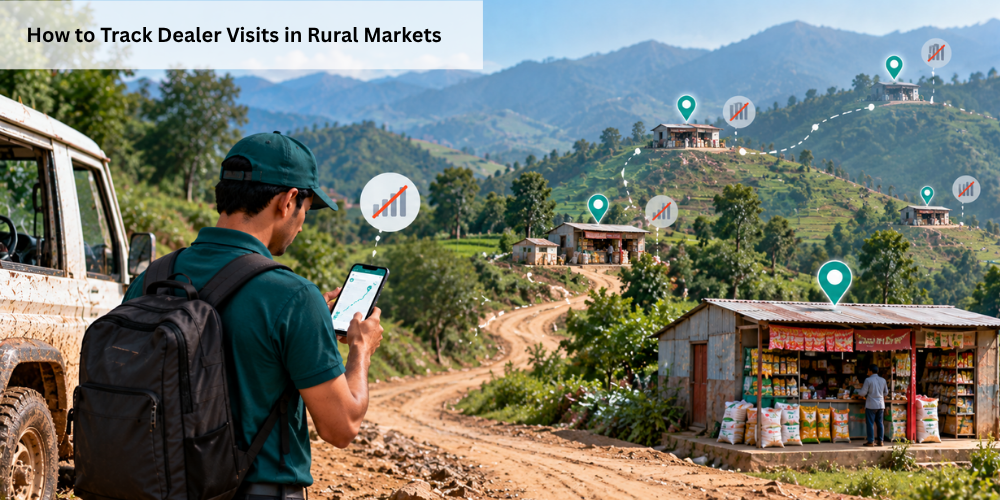
Tracking dealer visits in rural markets can be difficult when outlets are spread across villages, roads are challenging to navigate, and mobile network coverage is unreliable. Sales representatives may travel long distances to meet dealers, book orders, collect payments, and check stock, while managers have limited visibility into what happens during these visits.
A daily sales report (DSR) may show that a representative visited several dealers, but it may not confirm whether the visits happened as planned, which products were discussed, or whether an order was booked. Paper registers and WhatsApp updates can provide basic information, but they rarely offer a complete picture of field activity.
A reliable dealer visit tracking process connects location verification with sales outcomes, stock information, dealer feedback, and follow-up actions. It must also work when representatives lose internet connectivity while travelling between villages. For manufacturers, distributors, and wholesalers, the goal is not simply to count visits. It is to understand whether the field team is covering the right dealers, using travel time effectively, and creating opportunities for secondary sales.
In this blog, we will explain how to track dealer visits in rural markets, what information to record, how to manage visits without internet access, and how field sales automation software can improve visibility across rural territories.
Why Dealer Visits Are Hard To Track in Rural Areas
Rural sales operations run into logistics that don't exist in urban markets. A rep might cover several villages in a single day, travel long stretches between outlets, and work around local market days and distributor delivery schedules that don't follow any predictable pattern. Without a structured tracking process, managers can't easily tell apart a missed visit, incomplete reporting, and a route that's just inefficient.
-
Weak network coverage and patchy connectivity
Mobile coverage swings wildly between villages, highways, and remote trading areas. A rep might have a solid connection near the distributor's warehouse and lose it completely out at a distant dealer. That's a real problem for teams depending on online-only apps: visit records stay incomplete, orders sit delayed, and managers see the update hours after the activity actually happened. Reps also tend to put off data entry until they find a stronger signal, which means details get forgotten along the way. An offline-capable process fixes that: the rep records what matters right at the outlet, and it all syncs once there's a connection again.
-
Long distances and scattered dealer locations
Rural dealers spread across multiple villages, which makes daily coverage a real grind. A rep can travel a considerable distance only to find the shop closed, the dealer unavailable, or the stock they needed just missing. Without accurate location records and route planning, a lot of that travel time ends up wasted. Managers can also end up assigning beats that sound fine on paper but underestimate road conditions and how long each visit actually takes. Tracking actual visits against the planned beat is what surfaces the inefficient routes, the overloaded schedules, and the territories that need rebalancing.
-
Paper registers, WhatsApp updates, and missing visit proof
Paper registers and WhatsApp messages feel convenient and still leave sales records fragmented. A handwritten entry confirms a visit happened, but it doesn't verify where. A message mentions an order but skips the details or the follow-up. Managers end up piecing together several sources just to build a DSR, verify field activity, and review territory coverage, which costs time and loses details somewhere in the combining. Customer visit tracking fixes the fragmentation directly, tying each visit to a timestamp, a location, the sales activity, and whatever follow-up it needs.
What To Record on Every Dealer Visit
A useful dealer visit record should establish whether the representative visited the intended outlet, what happened during the interaction, and what needs to happen next. These details help managers connect field activity with sales performance.
Visit time, location, and duration
Representatives should record essential visit details so managers can compare actual activity with the assigned beat plan. Important fields include:
-
Dealer name and unique dealer ID.
-
Village, market, territory, and assigned beat.
-
Check-in and check-out timestamps.
-
GPS coordinates or available location verification.
-
Visit duration and completion status.
Location verification helps identify visits recorded far from the registered outlet, while timestamps help managers understand how the day's schedule was followed. Duration should be reviewed alongside the visit purpose rather than treated as a direct measure of productivity.
Orders booked, stock position and payment collected
Visit records should capture the commercial outcomes of dealer interactions, including orders, inventory requirements, and collections. Relevant information includes:
-
Orders booked, including SKU quantities and order value.
-
Fast-moving products and slow-moving inventory.
-
Stockouts and replenishment requirements.
-
Distributor stock availability.
-
Payments collected and outstanding dues.
-
Sales schemes, returns, and order discrepancies.
These details help managers understand why an order was or was not placed. For example, a dealer may want to purchase a particular SKU but be unable to order because the distributor has insufficient stock. Recording the issue helps the sales and distribution teams address the problem instead of treating the visit as an unsuccessful sales call.
Dealer feedback, issues, and follow-up actions
Not every productive visit results in an immediate order. Representatives should record important dealer feedback so that unresolved issues do not disappear into informal conversations.
Useful details include:
-
Reasons for not placing an order.
-
Complaints about pricing, product quality, or delivery.
-
Competitor products and promotional offers.
-
Requests for additional SKUs.
-
Pending claims, returns, or payment disputes.
-
Next action and expected follow-up date.
For example, repeated complaints about delayed deliveries may indicate a distribution problem rather than weak dealer demand. Recording the issue and assigning a follow-up action helps managers investigate and track its resolution.
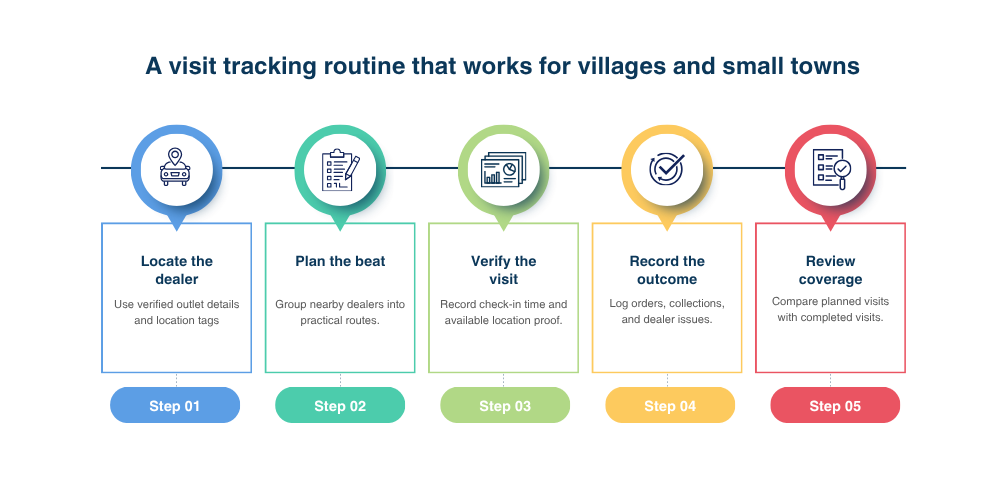
A Visit Tracking Routine That Works For Villages And Small Towns
A practical routine should fit the representative's working day without creating unnecessary administrative work. The following steps help rural field sales teams maintain consistent visit records and improve dealer coverage.
-
Start with a dealer list that has location tags
Create a comprehensive dealer database that captures essential outlet details in a user-friendly manner. Each entry should feature the dealer's name, contact information, village, territory, assigned representative, and outlet category. Whenever possible, include verified GPS coordinates or map locations to assist representatives in accurately locating outlets, particularly in villages with similarly named shops or when dealers are situated off the main road. Additionally, incorporate relevant insights such as order history, product categories, and payment status. Regularly review the database to update outdated locations and remove any closed outlets from active plans, ensuring that the information remains current and useful for all representatives.
-
Group dealers into beats by distance and category
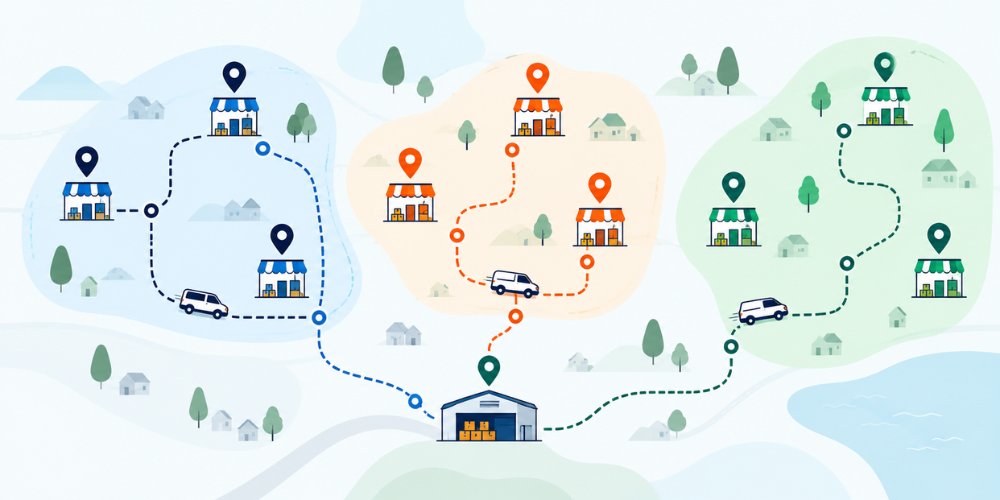
Create dealer routes that feel natural and intuitive, taking into account geography, travel time, road conditions, market days, and sales potential. Each route should be manageable within the available time, allowing for meaningful conversations and order placements with dealers. For instance, representatives might visit nearby general trade outlets one day and then focus on a more distant group of high-volume dealers the next. This approach minimizes unnecessary travel and simplifies planning. The frequency of visits should also align with the dealer's category and buying habits. While route optimization can streamline stops, it's essential to remain flexible and adapt to local road conditions and any unexpected delays.
-
Check in at the outlet with geo-tagged proof
Representatives are encouraged to connect with dealers using the designated tracking process upon arrival. Utilizing GPS-enabled check-ins allows them to record the time of their visit and gather location details to ensure they are at the correct outlet. When possible, taking a photo of the outlet or using another method of verification can add an extra layer of assurance. If a dealer has relocated or if there are inaccuracies in the stored location, representatives should promptly note these discrepancies for updates. While GPS check-ins are useful for confirming location, they don't necessarily indicate that a meaningful sales conversation took place. It's important for visit records to reflect not only the outcome but also any relevant sales activities that occurred during the interaction.
-
Log the outcome before leaving the dealer
Representatives should record essential details while the visit is still fresh. This includes orders booked, stock requirements, payments collected, dealer concerns, and any follow-up needed. If no order is placed, the representative should record the reason where possible. The dealer may have sufficient stock, be waiting for a previous delivery, or be unable to purchase because of outstanding dues.
These details help managers distinguish between different sales barriers and decide what action is appropriate. Standardized fields and simple status options make reporting faster without sacrificing important information.
-
Go through missed visits at the end of the day
At the end of the day, compare planned dealer visits with recorded activity. Review missed outlets, incomplete logs, unresolved complaints, pending collections, and follow-up commitments. Managers should understand why a visit was missed rather than automatically treating every deviation as poor performance. A closed shop, road disruption, or unrealistic beat schedule may require a different response. Prioritize rescheduling based on dealer importance and urgency. Regular reviews also help identify routes that need adjustment and territories where representatives have difficulty meeting coverage targets.
How To Track Visits When There is No Internet
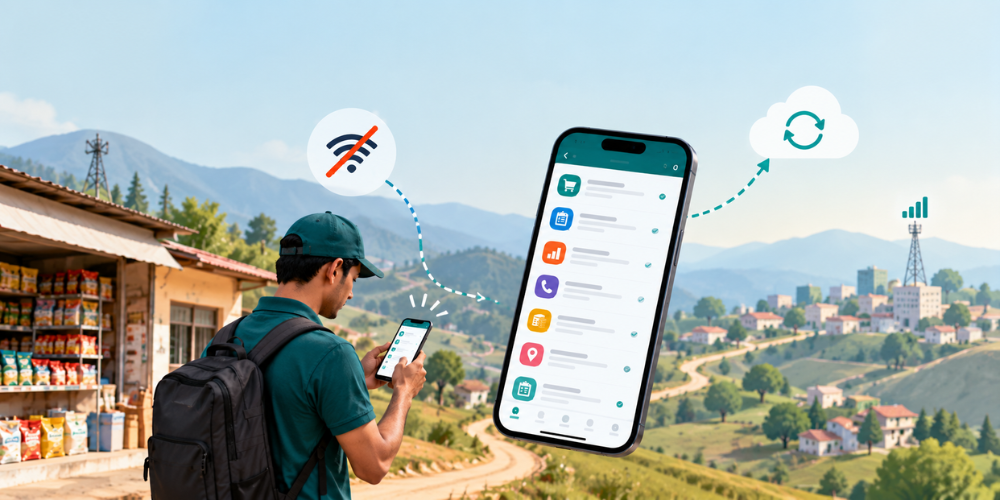
Offline functionality is essential for rural sales teams operating in areas with inconsistent mobile data. A tracking process that requires continuous connectivity can leave gaps in field reporting. An offline-first workflow allows representatives to capture information locally and synchronize it when a connection becomes available.
-
Offline check-in and data capture
An offline-capable application should allow representatives to access relevant dealer information and save permitted field activities without an active internet connection. Depending on the application's capabilities, this may include visit details, order quantities, payment information, and dealer notes. Representatives can continue working instead of postponing data entry until they return to a connected area. GPS positioning and internet connectivity are different functions. A device may determine its location without mobile data, although accuracy depends on satellite reception and surrounding conditions. The application must also support saving the visit record offline. Before deployment, test whether representatives can access assigned dealers, record orders, save visit details, and identify pending records while offline.
-
Automatic sync once the network returns
When connectivity returns, saved records should synchronize with the central system if automatic synchronization is supported and enabled. This reduces manual re-entry and helps managers access field information without relying on individual WhatsApp updates. Representatives should also be able to identify records that remain pending synchronization. Teams need a clear process for handling failed uploads, incomplete records, and devices that remain offline for extended periods. Important orders and collections should be confirmed as successfully submitted before they are considered fully reported.
How Delta Sales App Helps Track Rural Dealer Visits
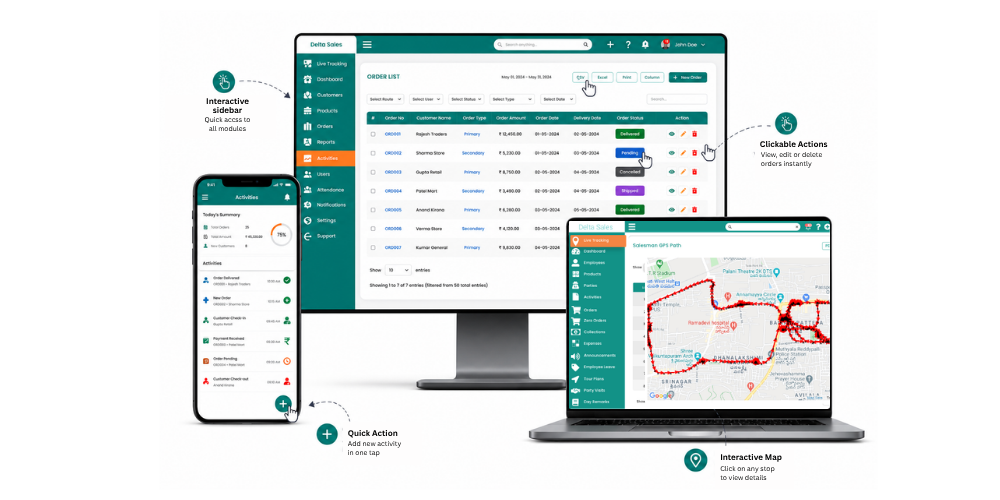
Delta Sales App connects field sales tracking, beat planning, order management, and sales reporting in one workflow. For manufacturers, wholesalers, and distributors managing representatives across rural territories, this can reduce dependence on separate registers, spreadsheets, and informal updates.
-
GPS-based visit tracking and beat planning
Delta Sales App provides GPS-based employee location tracking and tools for planning field sales activities. These capabilities help managers review representative movement and compare field activity with assigned dealer coverage. Structured beat planning gives representatives a defined list of outlets to visit and helps managers organize territories around practical travel requirements. This is particularly useful when dealers are scattered across several villages.
-
Offline order booking and visit logs
Delta Sales App supports offline-first mobile functionality, which is valuable for representatives working in low-connectivity areas. Offline workflows help field teams continue routine activities without depending on an immediate internet connection. Representatives can record sales information and, where supported by the configured workflow, save visit details and orders for later synchronization. This reduces reliance on handwritten order slips and delayed reporting. Manufacturers and distributors can establish a more consistent flow of information from field representatives to the sales office.
-
Manager dashboards for live and daily reports
Managers need a consolidated view of representative activity, orders, collections, and territory management. Delta Sales App provides reporting and dashboard capabilities to help teams review field sales information. Available reports can support the review of daily visit activity, order performance, collection records, and areas requiring follow-up, depending on the configured workflow. For example, repeated visits with few orders may indicate stock shortages, weak dealer demand, or unresolved payment issues. Missed visits across a remote cluster may suggest that the beat plan needs adjustment.
Common Mistakes When Tracking Rural Dealer Visits
Even a digital tracking system can produce misleading results if the process is poorly designed. Managers should focus on meaningful outcomes, realistic coverage expectations, and consistent adoption.
-
Tracking visits without tracking outcomes
Counting completed visits measures activity, and activity isn't the same as progress toward sales objectives. A rep can visit 15 dealers and book nothing, resolve nothing, while another visits fewer outlets and comes back with solid repeat orders. Visit counts should get reviewed alongside orders booked, SKU availability, collections, dealer feedback, and follow-up completion, not on their own. The point was never to squeeze an order out of every dealer. It's making sure each visit actually has a reason behind it.

-
Treating all dealers with the same visit frequency
Dealers don't purchase the same way, so giving every outlet the same visit schedule wastes travel time and shortchanges the high-value accounts. Use sales history, SKU demand, stock movement, payment behavior, and local market conditions to set visit frequency instead. High-volume dealers might need frequent replenishment checks. Smaller outlets with stable inventory might need far fewer visits than they're currently getting. Compare planned frequency against actual coverage regularly, and adjust the beat plan as dealer requirements shift, because they will.
-
Ignoring field team adoption
A tracking system only works if reps can actually use it every day without a fight. Complicated forms, offline workflows that break, and duplicate paperwork- all of that pushes people back to informal messages, and the records stay incomplete. Train reps on check-ins, order recording, dealer notes, and synchronization, and explain why each required field actually matters rather than just handing down a form to fill out. Collect feedback from the reps working in remote areas, especially since they’ll hit problems nobody designing the system anticipated. Managers should also look at location discrepancies and missed visits in context, not just flag the number and move on. A simple process with realistic expectations is what gets better adoption and more reliable reporting; a complicated one just gets worked around.
Conclusion
Tracking dealer visits in rural markets requires more than collecting attendance records or asking representatives to submit a DSR. Businesses need a consistent way to verify outlet visits, record orders and collections, identify dealer issues, and plan follow-up activities. Start with accurate dealer locations, realistic beat plans, and structured visit logs. Support offline data capture where connectivity is unreliable, and review planned coverage against actual outcomes at the end of each day. Delta Sales App connects field sales tracking, beat planning, order management, and reporting to help businesses improve visibility across rural territories.
Ready to improve dealer visit tracking across rural territories? Explore how Delta Sales App helps streamline field visits, track sales reps, and improve visibility across your dealer network.