
Predictive Ordering vs. Sales Instinct: How to Balance Tech and Human Relationships in General Trade
A field sales representative goes into a neighborhood store to place the order for the week. The sales app says to order 30 cartons because that's what the retailer usually buys. But before the sales representative confirms the order, the retailer says, "Not this week. Sales have slowed down after the festival. I still have plenty of stock. "The system is not wrong; it is just looking at what happened in the past. The retailer is not wrong either; they are looking at what's happening right now in their store.
This is something that happens a lot in trade, where selling is not just about numbers and formulas. While predictive ordering can look at what people bought and find patterns, it cannot really understand what is going on in the local area, how customers are feeling, if the retailer has enough money, or the trust that comes from talking to people face-to-face. A lot of sales solutions are using intelligence to suggest orders, which can make things faster and more efficient. When these suggestions are too strict, field sales representatives might start listening to the system more than the retailer, which can hurt relationships instead of making them stronger. The best way to do things is not to choose between using technology and using judgment. It is to find a balance between the two.
In this blog we will talk about what predictive ordering is, where it helps, why relationships with people are still very important in general trade, and how businesses can use smart sales technology to help field representatives without taking away the freedom that makes them good at their job.
What Is Predictive Ordering?
Predictive ordering is a way to figure out what a retailer will probably buy when the sales person comes to visit. It uses information from sales to make a good guess. This is better than guessing or doing math in your head. The system looks at what the retailer bought and how often they buy things. It also looks at what products are selling well and what time of year it is.
The main idea is to help the sales people get the orders ready faster and make mistakes. They can spend time talking to the retailers instead of doing math.
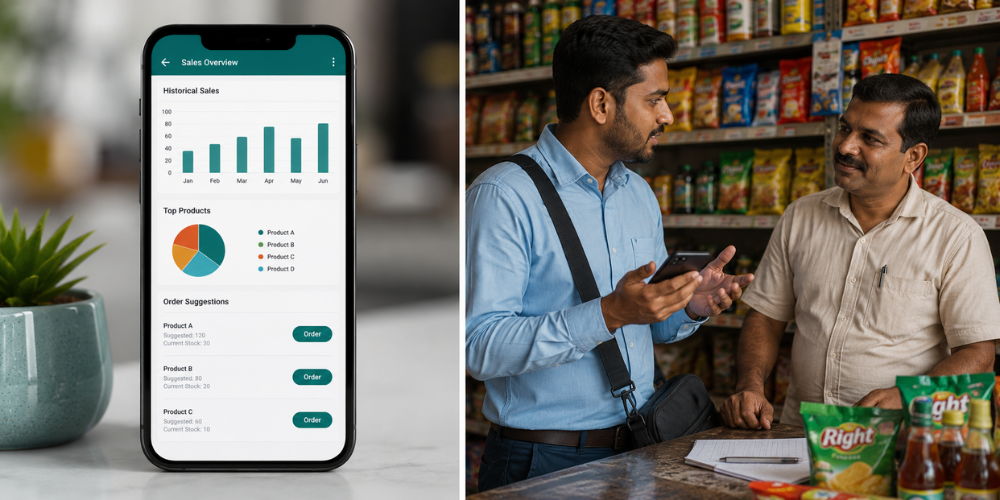
The predictive ordering system thinks about things, like:
- What the retailer bought before
- How often they buy things
- What products are selling well
- If it is a time of year
- How well the products are selling to people
- What the retailer usually buys
- If we know how stock they have
For example if a retailer always buys 20 cartons of something every week the system will probably say to buy 20 cartons again. This gives the sales person a place to start. They can then spend time talking to the retailer.
If you use predictive ordering correctly, it can help you get work done and make better use of the sales information. You have to think about what's going on in the real world. The real world is always changing. Things can change fast. Those old sales numbers might not be very useful anymore. That is why people need to use their judgment when they are making decisions about sales numbers and things like that. Predictive ordering is a tool to help with this. It is not the only thing to consider.
Why Predictive Ordering Is Not Enough for General Trade
Predictive ordering can make the ordering process faster. It is not enough on its own for general trade. The best decisions are not made by computers alone. Many sales platforms are using intelligence to suggest orders to retailers based on what they have bought before. These suggestions can make things more efficient. They often care more about patterns than people.
The thing is, every retailer has their problems that only a salesperson can understand when they visit the store. That is why businesses need technology that helps people make decisions rather than making decisions for them.
- Artificial Intelligence Does Not Understand Every Retailer's Situation
A computer can look at orders how often someone buys something and what time of year it is, but it does not know why a retailer wants to buy more or less of something today. Maybe people are not buying much after a holiday, or maybe the retailer does not have enough money right now or maybe they already have enough stock. These are things that a sales person can find out when they talk to the retailer during customer visits, not by looking at old data.
- Automatic Suggestions Can Make Sales Less Personal
Some sales apps tell sales people to follow the suggestions made by the computer. This can make things easier. It can also make every time a sales person talks to a retailer feel like just a business deal. Of listening to what the retailer needs, the salesperson might feel like they have to explain why the computer says they should buy something even if that is not what the retailer really needs.
- One Recommendation Doesn't Fit Every Retailer
Two retailers might buy things, but they are not always in the same situation. One might be out of stock while the other has much stock or not enough room to store things. If a salesperson just follows what the computer says, they might get the order wrong. Sales people need to be able to change the suggestions based on what they see when they visit the store and do their retail execution activities.

- Sales Relationships Are Built on Trust, Not Algorithms
Retailers keep doing business with sales people who understand their problems and can help them. Trust is built when salespeople talk to retailers, regularly follow up with them and make suggestions. Computers can find patterns. They cannot replace the trust that comes from having a good relationship with a retailer.
- Technology Should Help Not Make Decisions
The best sales software does not force sales people to do what the computer says. Instead it gives them information like what the retailer has bought, other sales data records of customer visits, sales analytics and reports to help them make good decisions. The final order should always be based on both what the computer says and what the sales person thinks.
This way of doing things makes orders more accurate helps retailers trust the salespeople more, and lets sales teams do what is best for the retailer in the long run instead of just following what the computer says.
Finding the Right Balance Between Technology and Sales Instinct
Technology has changed the way field sales work by making it faster to collect orders easier to see how sales are going, and reducing the amount of work that has to be done by hand. At the time people who have been doing field sales for a long time are still very important for building relationships with retailers and understanding what is going on in local markets. The successful businesses do not choose between technology and people. They use both. Instead of using computers to make sales decisions, businesses should use technology to give sales people good information and let them make the final decision based on what they see and hear when they visit retailers.
-
Use Sales Data as a Guide, Not the Final Decision
Looking at sales data can give us some ideas about what people are buying, but it should not be the only thing we consider. Computers can suggest what orders might be an idea, but salespeople should be able to adjust these orders based on what they see and hear when they visit retailers.
- Combine Historical Data with Market Visit Insights
Sales data can tell us what a retailer bought before, but it does not tell us what is happening now. When salespeople visit retailers, they can see what is going on and talk to the retailers, which gives more information than just looking at past sales data.
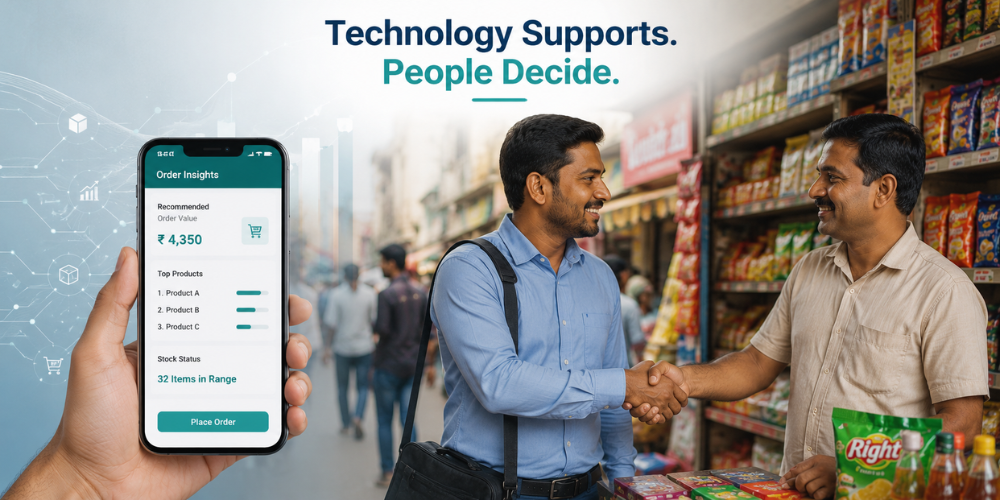
- Give Field Representatives the Flexibility to Decide
The software for field sales gives sales people the power to make decisions rather than telling them what to do. It should let them change suggested orders based on what they see and hear when they visit retailers, which makes orders more accurate and retailers happier.
- Capture Real-Time Market Intelligence
Every time a salesperson visits a retailer, they can learn something. Writing down information about what's on the shelves, what the competition is doing, and what the retailer thinks can help businesses make better decisions.
- Using Technology to Make Relationships Better
Technology is supposed to make things easier for sales people so they have time to talk to retailers. It can help with things like beat planning, order management, and keeping track of sales, which means salespeople have time to have real conversations with retailers.
- Finding a Balance Between Automation and Human Knowledge
The future of sales is not about replacing people with computers. It is about helping people make decisions. Businesses that use technology to give sales people information and also let them use their own experience and judgment will be more successful. In sales, technology works best when it helps salespeople rather than trying to replace them.
How Delta Sales App Balances Smart Technology with Human Relationships
The Delta Sales App is built on an idea: technology should help field sales representatives, not replace them. It does not rely on recommendations made by artificial intelligence. Instead, it provides order suggestions based on what has happened in the past. This helps representatives make more informed decisions. They are always in control of the order.
By combining what has happened in the past with what's happening in the market right now the Delta Sales App helps businesses improve the accuracy of orders. It does this without hurting the relationships that are important for success in general trade.
- Order Suggestions Based on What Has Happened in the Past
The Delta Sales App’s order management system looks at what orders have been made, how often people buy things, how well products are selling, and what retailers like to buy. It uses this information to make order suggestions. These suggestions are a starting point for the sales representative. They can look at the suggestions and make changes or reject them based on what the retailer needs now.
- Field Representatives Always Have the Final Say
The Delta Sales App is different from platforms that rely heavily on automated recommendations. It knows that experienced representatives understand their retailers better than any computer program. If a retailer wants to reduce an order because they do not need much, the representative can easily make changes to the order before submitting it through the Sales Order Management System.
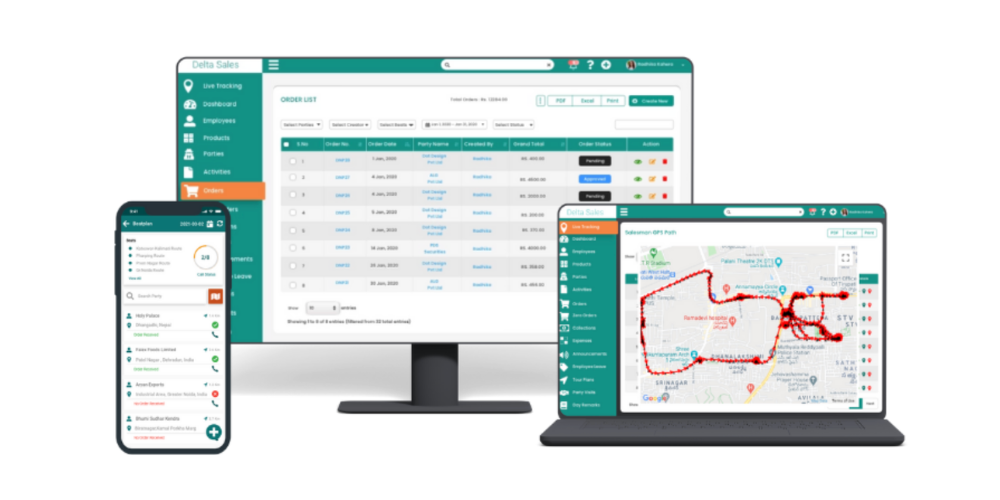
- Real-Time Market Insights Improve Every Order
Making orders requires more than just looking at what has happened in the past. The Delta Sales App allows representatives to record what retailers say, what they see in the market and notes from their visits. This information is combined with what's happening on the shelves what products are visible what competitors are doing and what is in stock. This ensures that every order reflects what is happening in the market now not just what happened in the past.
- Better Planning Creates Better Retailer Relationships
When representatives spend time on paperwork they have more time to build relationships with retailers. Features like route planning, planning beats, and an offline sales app help field teams visit outlets efficiently. People can use this system in places where the internet connection's not very good. This means they can spend their time talking to customers, like the customers of doing things like paperwork.
- Smarter Decisions Backed by Business Data
The Delta Sales App also includes features like tracking sales, sales analytics, and a distributor management system. These features give managers a view of what products are moving and what ordering trends are happening. This allows businesses to monitor how they are doing find opportunities, and support field teams with insights. At the time they still trust representatives to make informed decisions in the field.
Why Finding the Right Balance Leads to Better Business Results
The goal of using technology in field sales is to help sales reps make choices not replace them. When businesses use data insights and human expertise together they create a sales process. Technology makes things more efficient while relationships keep driving growth. A balanced approach helps businesses understand what retailers need make better ordering decisions and improve how their field sales teams perform.
- Building Better Relationships with Retailers
Retailers like working with sales reps who get their challenges and provide solutions that fit their needs. When technology gives insights without being too rigid, reps can focus on having meaningful conversations, making personalized recommendations, and building trust with retailers over time. This approach leads to order accuracy. Predictive insights and past sales data help reps prepare orders. Their knowledge of the market ensures their recommendations match conditions.
- Reducing Excess Inventory
Overstocking can hurt retailers' cash flow. Create unnecessary pressure on distributors. By combining sales history, product movement insights, and real-time market feedback businesses can make accurate decisions about restocking. This helps maintain inventory levels.
- Getting Better Visibility into Secondary Sales
Understanding what happens after products leave the distributor is crucial for growth in the FMCG industry. With a secondary sales automation system businesses can monitor retailer-level movement, identify demand patterns, and make better decisions based on actual market performance.
-1784025202.png)
- Confident Field Representatives
When reps have access to accurate information through tools like sales analytics, customer visit tracking and order history insights they can approach retailers with more confidence. They can focus on selling, advising and strengthening customer relationships of searching for information.
- Higher Customer Retention
Strong relationships with retailers lead to long-term business partnerships. When reps provide recommendations maintain regular communication and understand retailer requirements businesses improve retailer satisfaction and increase customer loyalty.
- Making Smarter Decisions with Real Market Insights
The sales decisions come from combining technology with real-world experience. Data helps identify trends while field reps provide the context behind those numbers. Together they help businesses make decisions related to ordering, inventory planning, territory management, and sales growth.
- Improved Sales App Adoption
Field reps are more likely to use sales technology if it supports their work of controlling their decisions. A flexible field sales app that provides insights and allows reps to use their experience encourages more adoption and accurate data collection.
Conclusion
Predictive ordering is a tool for getting things done faster but it should not replace the experience, judgment and relationships that make field sales successful. Historical data can show patterns. It can't understand what a retailer needs right now or the local market situation or the trust thats built when you visit them every time. The best FMCG brands and distributors don't just rely on what AI says. They use technology and their field sales teams expertise to make better choices, get orders right and build strong relationships with retailers over time.
Delta Sales App is made with this balance in mind. It suggests orders based on history. It has features like managing sales orders tracking customer visits, and tracking secondary sales executing retail plans, planning beats, and analyzing sales. This helps sales reps make choices and still be in control of every order. If you want a field sales automation solution that helps your team get better, not replaces them, Delta Sales App can help.
Book a free demo today to see how Delta Sales App helps your field sales team place better orders, build stronger relationships with retailers, and grow your business in a sustainable way.