
Range Selling Strategies: Boost Retail Sales Effectively
In today’s competitive retail landscape, standing out requires more than just quality products, it demands smart sales strategies. Range selling is a powerful approach that can significantly boost revenue, enhance customer satisfaction, and drive business growth. But what exactly is range selling, and how can retailers leverage it to increase sales and build a loyal customer base?
This blog explores the fundamentals of range selling, its benefits, and actionable strategies to implement it successfully in your retail business.
What is range selling?
At its core, range selling refers to offering a wide selection of products across multiple outlets to ensure that customers have access to everything they might need. It's not just about stocking your most popular items in a few select locations it’s about maximizing your product's availability across different retail touchpoints.
In essence, range selling is about making sure the right products are available in the right places at the right time. Whether you’re in the grocery business, fashion retail, or electronics, range selling can play a critical role in boosting sales and customer satisfaction. The primary objective is to increase product visibility and availability across your sales channels, ensuring that customers always find what they need, no matter where they shop.

Importance of Range Selling in Retail Business
In today's competitive retail market, Range Selling plays a crucial role in helping businesses offer the right products to the right customers at the right locations. By maintaining an appropriate product assortment, retailers can improve customer satisfaction, reduce missed sales opportunities, and strengthen their market presence. A well-planned range selling strategy also supports inventory management, enhances retail execution, and enables businesses to respond quickly to changing consumer preferences.
Why Range Selling is Important
-
Improves Product Availability: Ensures customers can easily find the products they need, increasing purchase opportunities and customer satisfaction.
-
Enhances Customer Experience: Offering a well-balanced product assortment encourages repeat purchases and builds long-term customer loyalty.
-
Increases Retail Sales: Displaying the right mix of products helps retailers maximize revenue and improve overall sales performance.
-
Optimizes Inventory Management: Maintaining the right product range minimizes stock shortages, reduces excess inventory, and improves stock turnover.
-
Strengthens Brand Visibility: Consistent product availability across retail outlets improves brand recognition and market penetration.
-
Supports Better Retail Execution: Helps field sales teams ensure products are correctly stocked, displayed, and available in every assigned outlet.
How Does Range Selling Work?
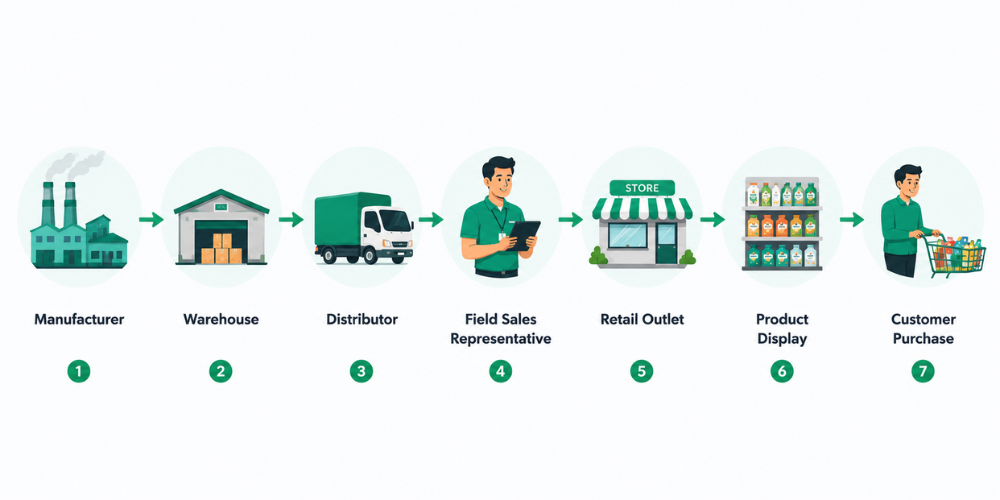
To fully understand how range selling works, it’s important to look at the process step-by-step and recognize how each element contributes to driving sales and ensuring product availability.
1. Ensuring Product Availability Across Multiple Outlets
The first key component of range selling is ensuring your product range is available in multiple stores or retail locations. Think of it like this: if you are a brand that sells a popular snack, you want to make sure your product is available in a wide variety of stores, big and small and not just in one or two locations. The more outlets that stock your product, the more customers will be exposed to it, increasing the likelihood of making a sale.
But it’s not just about being available everywhere; it’s about making sure your products are available in the right places. For instance, a high-end, premium item might sell better in an upscale store, while budget-friendly items should be stocked in more cost-conscious outlets. Understanding the type of stores and their customer base is essential to executing range selling effectively.
2. Right Product in the Right Store
Not all stores are the same, and not all products will sell equally well across all types of outlets. The key to successful range selling is placing the right products in the right stores. A larger store with high foot traffic may be better suited for stocking large quantities of a product or a premium version of a product. Smaller, niche stores, on the other hand, may benefit from stocking a more specialized or budget-friendly version.
For example, a grocery chain might offer a selection of organic products in larger stores in high-income areas, while smaller stores in urban areas may focus on cost-effective, everyday staples. Range selling doesn’t mean putting all of your products in all locations, but rather customizing your product offerings to fit the demands and preferences of the customers in each area.
3. Market Coverage: Reaching Every Corner
To maximize the effectiveness of range selling, it's crucial to cover your entire target market. It’s not enough to just focus on the high-performing stores. If you’re ignoring smaller, lesser-known shops or regional outlets, you may be missing out on significant sales opportunities. A comprehensive range should span across the entire market, ensuring that every store in your target area is stocked with the right products.
For instance, a retailer that only focuses on major urban centers may be missing out on potential customers in smaller towns and suburban areas. By extending your range of products to stores across these locations, you create more points of contact with customers, increasing your chances of making a sale.
4. Effective Stock Management and Restocking
Range selling also demands strong stock management practices. When you stock a variety of products across multiple outlets, you need to keep a close eye on inventory levels to ensure that products don’t run out of stock. Running out of stock in high-demand products can frustrate customers and lead to missed sales. That’s why an essential part of range selling is ensuring that products are consistently available across all stores.
Managing stock levels also means rotating your inventory regularly. By updating and replenishing products, you ensure that the newest, most popular items are always available to customers. Additionally, you can use inventory data to understand which products are selling well and which are underperforming, allowing you to make adjustments to your stock accordingly.
5. Leveraging Data for Better Insights
The best way to manage a range of products across multiple outlets is by using data to drive your decisions. Data is the backbone of range selling. By tracking sales performance across different locations, you can identify trends, customer preferences, and the effectiveness of your current product range. Sales data can help you determine which products are the best sellers in each area, allowing you to tailor your stock accordingly and even adjust pricing if necessary.
With the right sales management tools, you can monitor which products need to be restocked, which stores are performing well, and which need more attention. This data-driven approach ensures that you’re not just guessing what products to offer but instead making informed decisions based on real-time insights.
Common Range Selling Strategies
Different businesses use different Range Selling strategies based on customer demand, retail formats, and product categories. Selecting the right strategy helps improve product availability, increase sales, and optimize retail operations.
Full Range Strategy
Offer a complete portfolio of products across retail outlets, allowing customers to choose from a wide variety while maximizing cross-selling opportunities.
Category-Based Range Selling
Group products into categories and customize the assortment according to customer demand, store size, or local purchasing behavior.
Outlet-Specific Range Selling
Provide different product ranges for supermarkets, convenience stores, wholesalers, and specialty retailers based on their customer base and sales potential.
Seasonal Range Selling
Adjust product availability during festive seasons, holidays, or peak demand periods to maximize sales and improve inventory utilization.
Data-Driven Range Selling
Use sales analytics, customer insights, and historical sales data to optimize product assortment and improve decision-making across retail locations.
Benefits of Range Selling
1. Increased Sales and Revenue
The most obvious benefit of range selling is its potential to increase sales. By making sure that your products are available in multiple outlets and are well-stocked, you increase the chances of a sale. The broader your product range, the higher the chances of attracting a wide variety of customers with different preferences.
2. Enhanced Customer Experience
Customers want convenience. They don’t want to visit multiple stores in search of a single product. Range Selling helps by ensuring that the products they want are always available in stores near them, which leads to higher customer satisfaction. Happy customers are more likely to return and recommend your products to others, fostering brand loyalty and improving retention rates.
3. Competitive Advantage
Having your products available in a wide range of locations gives you a competitive edge. If your competitors are limiting their product availability to just a few stores, you can outpace them by ensuring that your products are found everywhere. Range Selling gives you visibility and accessibility, which translates to increased customer engagement and higher sales opportunities.
4. Better Brand Exposure
The more locations your products are available in, the more exposure your brand gets. Range selling increases your brand’s visibility and introduces your products to a larger audience. This exposure is key for brand awareness and establishing your company as a reliable supplier.
5. Data-Driven Insights for Business Growth
Range selling is not just about physical products but also about the data you collect and analyze. The information you gain through sales tracking, customer preferences, and product performance can help guide your future sales strategies, marketing campaigns, and even product development.
Common Challenges in Range Selling
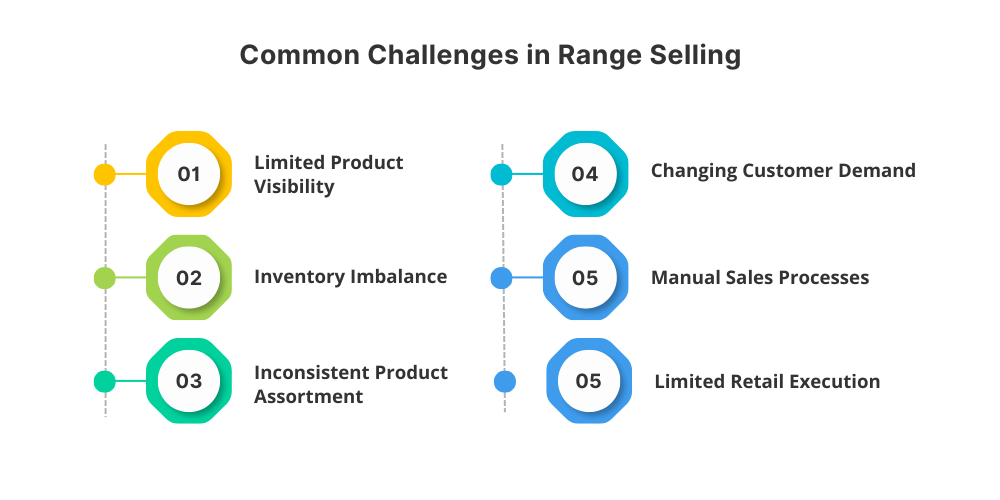
Although Range Selling helps businesses improve product availability and retail sales, several operational challenges can affect its success. Addressing these issues is essential for maintaining an efficient distribution network and delivering a better customer experience.
Limited Product Visibility
Retailers may struggle to maintain complete visibility of available products across multiple outlets, making assortment planning difficult.
Inventory Imbalance
Poor inventory management can lead to stock shortages or excess inventory, affecting product availability and profitability.
Inconsistent Product Assortment
Different outlets may carry an inconsistent product range, resulting in lost sales opportunities and customer dissatisfaction.
Changing Customer Demand
Rapid shifts in consumer preferences make it challenging to maintain the ideal product assortment across all retail locations.
Manual Sales Processes
Paper-based reporting and manual order collection reduce efficiency, increase errors, and delay business decisions.
Limited Retail Execution
Without proper monitoring, field sales teams may struggle to ensure product availability, merchandising compliance, and outlet coverage.
Key Metrics to Measure Range Selling Success
Monitoring the right performance indicators helps businesses evaluate the effectiveness of their Range Selling strategy and identify opportunities for continuous improvement.
Product Availability Rate
Measures how consistently products remain available across retail outlets, helping reduce lost sales caused by stockouts.
Product Assortment Coverage
Evaluates whether each retail outlet stocks the recommended product range based on customer demand and business objectives.
Sales Per Outlet
Tracks the revenue generated by each retail location to identify high-performing outlets and optimize product assortment.
Stockout Rate
Measures how often products become unavailable, helping businesses improve inventory management and replenishment planning.
Average Order Value
Analyzes the average value of customer purchases to measure the effectiveness of cross-selling and product range optimization.
Retail Outlet Coverage
Measures the percentage of targeted retailers visited by field sales representatives to ensure consistent retail execution and market coverage.
Inventory Turnover
Tracks how quickly products are sold and replenished, indicating the efficiency of inventory planning and demand forecasting.
Customer Satisfaction
Monitors customer feedback and repeat purchases to evaluate whether the current product assortment meets customer expectations and supports long-term business growth.

Best Practices for Effective Range Selling
Implementing an effective Range Selling strategy requires more than offering a wide variety of products. Businesses must understand customer needs, optimize inventory, and maintain strong retailer relationships to maximize product availability and sales performance. Following these best practices can help improve retail execution, enhance customer satisfaction, and drive long-term business growth.
Understanding Market Demand: Know the preferences of your customers in different areas. Customizing your product range to cater to local demand can greatly enhance sales.
Regular Stock Updates: Keep your stock fresh and updated. Outdated or old products should be rotated out to make space for new items that appeal to customers.
Efficient Distribution Channels: Ensure your supply chain is functioning smoothly so that products can be efficiently distributed to all stores. Timely delivery of products to retailers is crucial to maintaining availability.
Training and Engagement with Retailers: Ensure that the retailers you work with understand your product range and can promote it to customers effectively. Regular communication with retailers helps build strong relationships and improves the effectiveness of your range selling strategy.
Conclusion
Range selling is a game-changing strategy for businesses that want to expand their market reach, increase sales, and improve customer satisfaction. By ensuring that your products are available across multiple outlets, managing your stock effectively, and using data to make informed decisions, you can significantly enhance your retail success.
Remember, the key to range selling is not just about offering a wide range of products but doing so in a way that is tailored to meet the specific needs of each outlet and customer segment. When done right, range selling can give your business the edge it needs to outperform competitors, increase revenue, and build a loyal customer base.
Ready to optimize your range selling strategy?
Book a free demo of Delta Sales App and discover how our Field Sales Automation Software helps you improve product availability, streamline order management, track retailer visits, and empower your field sales team to achieve better business results.