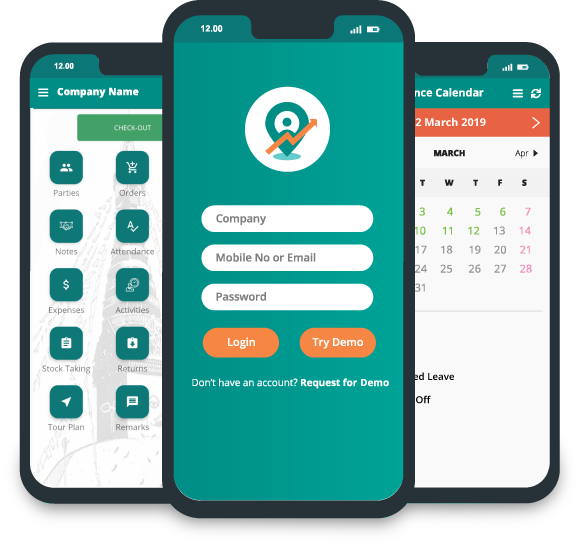

Stop Waiting for AI to Fix What a Sales App Can Solve Today

Artificial Intelligence is dominating conversations across every industry. From predictive analytics to automated customer engagement, businesses are being told that AI will completely transform sales operations.
But while companies continue discussing future AI possibilities, many are still struggling with basic field execution problems like delayed reporting, poor market visibility, missed outlet visits, and manual order collection.
Most businesses do not need advanced AI to solve their immediate operational challenges. They first need a reliable field sales management software that improves execution, accountability, visibility, and productivity on the ground.
Instead of waiting for AI to magically fix sales inefficiencies, businesses should focus on technologies already delivering measurable results today through sales force automation software, field employee tracking systems, and retail execution software.
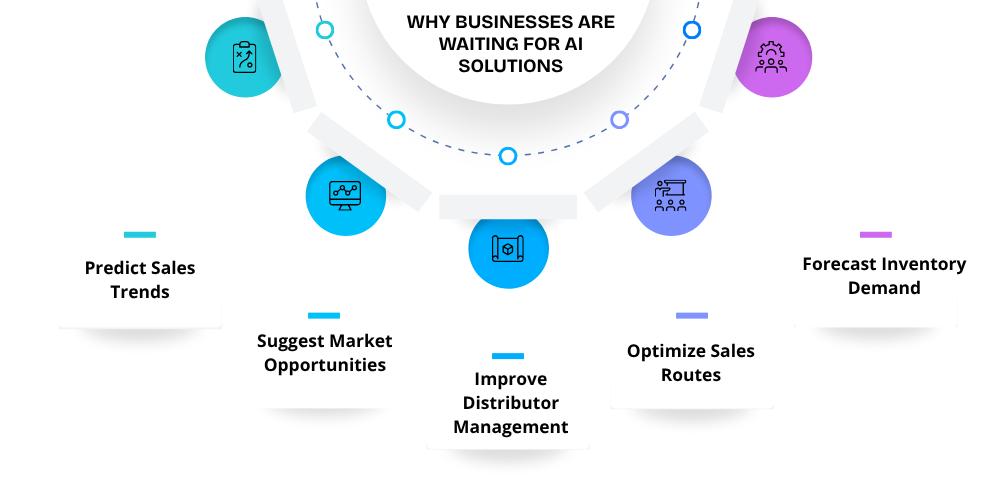
Why Businesses Are Waiting for AI Solutions
Many companies believe AI will eventually automate everything:
-
Predict Sales Trends: AI can identify future sales patterns only when businesses continuously collect accurate retailer, distributor, and market execution data daily.
-
Suggest Market Opportunities: AI tools require structured market coverage data, retailer information, and territory performance records to identify profitable expansion opportunities accurately.
-
Improve Distributor Management: AI-driven distributor insights depend heavily on real-time stock movement, secondary sales tracking, and order management system accuracy.
-
Optimize Sales Routes: AI route optimization works effectively only when businesses already monitor field movement using GPS-enabled field employee tracking systems consistently.
-
Forecast Inventory Demand: Inventory forecasting becomes reliable when businesses digitize order collection, distributor inventory tracking, and real-time retail sales reporting processes.
While these capabilities are valuable, businesses often overlook a critical fact:
AI is only effective when operational data is accurate and execution processes are already digitized.
If field teams still use spreadsheets, WhatsApp updates, manual attendance, or paper-based order collection, then AI cannot solve the core execution problem.
Without structured field data, even the most advanced AI systems become ineffective.
That is why businesses should first invest in:
-
Field Sales Tracking Apps: Field sales tracking app improve visibility, monitor market visits, track productivity, and help managers supervise field operations efficiently daily.
-
Sales Automation Tools: Sales automation tools reduce manual reporting, improve workflow efficiency, automate repetitive tasks, and increase operational productivity across sales teams.
-
Employee GPS Tracking Apps: Employee GPS tracking apps help businesses monitor route adherence, improve accountability, and verify genuine retailer visit activities accurately.
-
Distributor Management Systems: Distributor management systems centralize stock monitoring, order coordination, secondary sales tracking, and distributor communication for better operational control.
-
Mobile Sales Force Automation Platforms: Mobile sales force automation platforms digitize field operations, improve reporting accuracy, accelerate order processing, and enhance team productivity significantly.
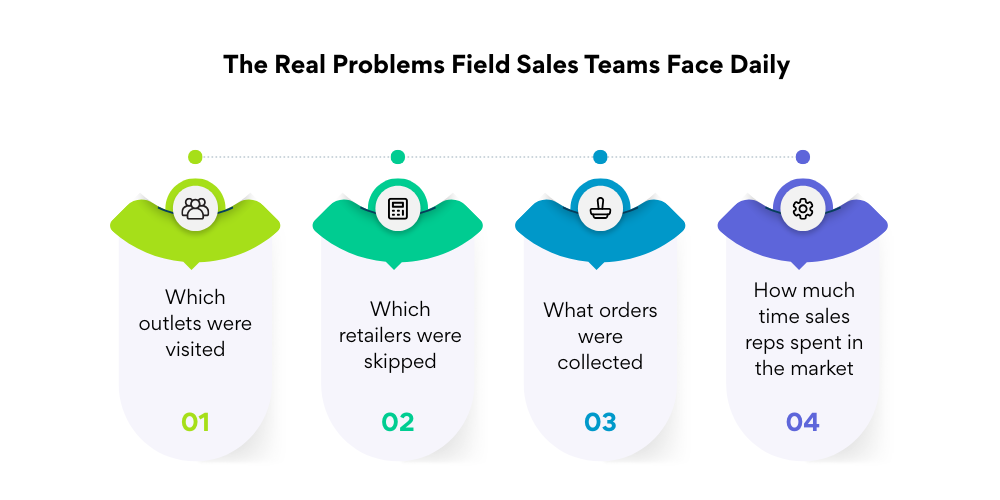
The Real Problems Field Sales Teams Face Daily
Field sales operations are becoming increasingly complex in today’s competitive FMCG and distribution environment. Sales managers are expected to improve productivity, increase market coverage, monitor field activities, and maintain retailer relationships simultaneously.
However, many businesses still rely on outdated manual systems that create operational inefficiencies, reporting delays, and poor execution visibility.
Without proper field sales management software, businesses struggle to maintain consistency across territories, distributors, retailers, and field teams.
Below are some of the biggest operational challenges field sales teams face daily.
Poor Market Visibility
Many sales managers still lack real-time visibility into field operations. They cannot accurately track:
- Which outlets were visited
- Which retailers were skipped
- What orders were collected
- How much time sales reps spent in the market
This creates major execution gaps.
A modern field force management software provides live visibility into team activities, allowing managers to monitor sales operations instantly.
Without proper market visibility, businesses often struggle to identify low-performing territories, inactive retailers, and missed sales opportunities. Managers are unable to make quick decisions because field activities are not updated in real time.
A reliable field sales tracking app helps businesses improve operational visibility, monitor market execution, and ensure consistent retailer engagement across territories.
Delayed Reporting
In traditional systems, field representatives often submit reports at the end of the day or even after several days.
Delayed reporting affects:
- Decision-making
- Stock planning
- Distributor coordination
- Retailer servicing
With an automated reports and analytics dashboard, businesses can access instant updates from the field without waiting for manual reports.
Manual reporting systems often create communication gaps and inaccurate sales records. Delayed information reduces business responsiveness and affects operational planning significantly.
Using a sales reporting software allows businesses to monitor sales activities instantly, improve reporting accuracy, and accelerate market-level decision-making processes.
Missed Outlet Visits
One of the biggest problems in FMCG sales is inconsistent market coverage.
Sales representatives may unintentionally skip outlets due to:
- Inefficient route planning
- Poor beat management
- Lack of monitoring
- Manual scheduling
Using a beat plan management system and GPS-based field tracking app, companies can improve retail coverage and ensure planned outlet visits are completed.
Missed retailer visits often result in reduced product visibility, weak retailer relationships, and lost sales opportunities. Regular market visits are essential for maintaining strong distribution networks.
A modern retail execution app helps managers track outlet coverage, monitor retailer engagement, and improve territory-level execution consistency.
Manual Order Management
Manual order collection creates:
- Billing errors
- Delayed processing
- Inventory mismatches
- Communication gaps
A mobile order management app enables sales reps to capture orders digitally from retailers, improving speed and accuracy.
Paper-based ordering processes increase operational workload and often delay communication between retailers, distributors, and warehouses. This affects inventory movement and order fulfillment efficiency.
With a sales order management software, businesses can streamline order collection, reduce manual errors, and improve overall supply chain coordination.
Lack of Team Accountability
Without tracking systems, businesses struggle to verify:
- Attendance
- Working hours
- Route adherence
- Retailer engagement
A reliable employee attendance management system combined with live location tracking improves transparency and accountability across field teams.
Manual attendance systems make it difficult for managers to validate actual field activity and employee productivity. This often creates discipline and performance monitoring challenges.
Using a GPS employee tracking app helps businesses improve workforce accountability, verify retailer visits, and monitor field operations more efficiently.
Inefficient Route Planning
Poor route planning wastes:
- Fuel
- Travel time
- Productive selling hours
An optimized route optimization software helps sales representatives cover more outlets efficiently while reducing operational costs.
Unstructured travel routes reduce market productivity and increase unnecessary operational expenses. Sales representatives spend more time traveling and less time engaging with retailers.
A smart route planning software improves territory coverage, optimizes travel schedules, and helps field teams maximize daily productivity effectively.
What Most Companies Ignore While Chasing AI
Businesses today are heavily focused on AI-driven transformation, expecting automation and predictive intelligence to solve all sales challenges. However, most companies overlook a key reality.
The biggest sales problems are not prediction-related. They are execution-related.
AI cannot fix weak field operations, missing reports, or inconsistent ground-level activity. It only works effectively when the execution layer is already structured and digitized.
For example:
- Retailers not visited regularly
- Orders not collected on time
- Field reps not following beat plans
- Delayed distributor communication
- Incomplete market coverage
These issues directly impact revenue and retailer relationships, yet they are still very common in daily sales operations.
These are operational issues that can already be solved through sales tracking software and field sales automation tools.
Without real-time visibility and proper field execution systems, even the most advanced AI tools fail to deliver meaningful results because the input data itself is unreliable.
A strong field force management system helps businesses fix these gaps by improving tracking, accountability, and execution consistency.
In simple terms, execution comes first, AI becomes useful only after that foundation is in place.
Sales Problems That Can Be Solved Immediately Without AI
Real-Time Field Tracking
A GPS tracking app for field employees helps managers monitor team movement, route completion, and market activity in real time.
This improves:
- Productivity
- Route discipline
- Operational visibility
It also helps businesses identify inefficient travel patterns, reduce time wastage in the field, and ensure that every working hour is properly utilized for actual sales activities instead of unproductive movement.
Attendance and Visit Monitoring
A digital attendance management system allows employees to mark attendance directly from the field using GPS-enabled check-ins.
This eliminates false attendance reporting and improves workforce transparency.
It also connects attendance with actual field presence, ensuring that managers can verify whether employees are truly active in the assigned market or not, improving discipline and accountability across the sales team.
Beat Plan Management
An automated beat planning software ensures sales reps follow assigned market routes and retailer schedules consistently.
This increases outlet coverage and improves retailer relationships.
It also reduces confusion in daily planning, helps managers structure territory-wise execution, and ensures that no important outlets are repeatedly missed due to poor planning or manual errors.
Retailer Order Collection
Using a retailer order management app, businesses can collect orders digitally and process them faster.
Benefits include:
- Faster billing
- Reduced errors
- Quicker dispatch
- Improved retailer satisfaction
It also improves coordination between field teams and backend operations, ensuring that orders move seamlessly from retailer to warehouse without delays or miscommunication.
Distributor Coordination
A centralized distributor management system improves coordination between sales teams, distributors, and retailers.
It helps businesses monitor:
- Stock movement
- Secondary sales
- Distributor performance
- Order fulfillment
It also reduces dependency on phone calls and manual updates, creating a more structured and transparent supply chain ecosystem.
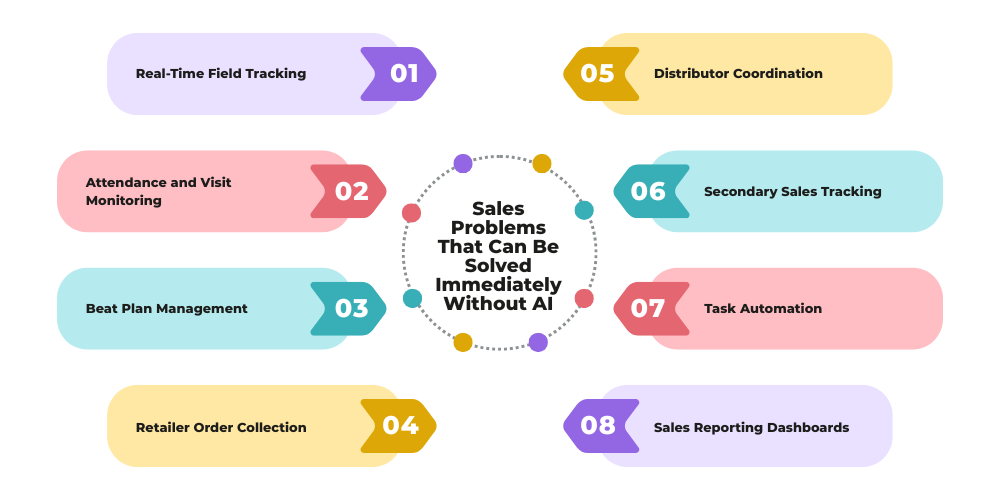
Secondary Sales Tracking
Tracking secondary sales is essential for FMCG companies.
A modern secondary sales tracking software provides real-time visibility into product movement from distributors to retailers.
It also helps businesses identify demand patterns, prevent stock gaps, and improve replenishment planning at the ground level.
Task Automation
Routine tasks like reporting, attendance, order collection, and visit logging can be automated using sales force automation software.
This reduces administrative workload and allows sales teams to focus more on selling.
It also improves data accuracy, eliminates duplication of work, and ensures that all field activities are captured consistently without manual intervention.
Sales Reporting Dashboards
A centralized sales analytics dashboard provides actionable insights into:
- Sales performance
- Team productivity
- Outlet coverage
- Order trends
Managers can make faster business decisions using real-time operational data.
It also helps identify high-performing territories, monitor daily achievements, and quickly address gaps in execution before they impact overall business growth.
How a Field Sales App Creates Instant Operational Improvements
A modern field sales app improves business performance immediately by:
-
Digitizing field operations through real-time data capture, reducing manual work and improving overall sales execution efficiency in markets.
-
Automating manual workflows like attendance, orders, and reporting, ensuring faster processes with fewer errors and higher operational consistency.
-
Improving communication between field teams, managers, and distributors, enabling faster decisions and reducing delays in sales coordination activities.
-
Increasing retailer coverage by optimizing beat plans, ensuring no outlet is missed and improving overall market penetration effectively.
-
Enhancing reporting accuracy through real-time data entry, eliminating manual errors and improving decision-making with reliable field insights instantly.
Companies adopting field force automation software often experience:
-
Higher productivity as field teams spend more time selling and less time on manual reporting and administrative work tasks.
-
Faster reporting with real-time updates from the field, enabling managers to access accurate data instantly for quick decisions.
-
Reduced operational leakage by tracking every activity in real time, preventing missed visits, errors, and inefficiencies in execution.
-
Improved sales visibility across territories, allowing managers to monitor performance, track progress, and identify gaps in real time easily.
-
Better distributor coordination through centralized data sharing, improving order flow, stock management, and communication between all stakeholders effectively.
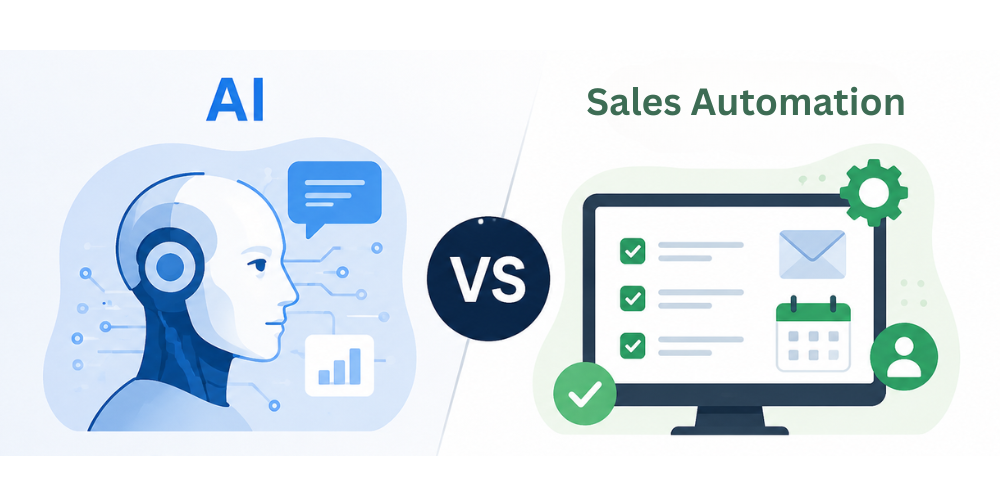
AI vs Practical Sales Automation: Understanding the Difference
AI and sales automation are often used interchangeably, but they solve completely different problems in business operations.
AI is designed to improve prediction and intelligence. It focuses on analyzing patterns, forecasting demand, and generating insights based on historical and real-time data.
Sales automation, on the other hand, is designed to improve execution. It ensures that daily field activities like visits, orders, reporting, and tracking are performed consistently and efficiently.
In simple terms, AI helps you decide better, while sales automation helps you execute better.
Businesses often make the mistake of investing in AI solutions before fixing their basic operational systems. Without structured and reliable field data, AI cannot produce accurate or actionable insights.
This is why many companies struggle to get real value from AI tools in sales operations.
Businesses cannot achieve effective AI-driven operations without first building structured operational systems.
Before using AI forecasting, companies must first implement:
-
Sales force tracking software to monitor real-time field activities and ensure complete visibility across teams and territories
-
Retail execution systems to manage outlet coverage, beat plans, and consistent market visits effectively
-
Employee tracking applications to improve accountability, attendance accuracy, and field discipline across sales teams
-
Mobile CRM for field sales to streamline customer interactions, order management, and communication from the field
-
Field activity reporting software to capture accurate sales data directly from the ground in real time without manual errors
Once these systems are in place, businesses can ensure that the data feeding into AI tools is clean, structured, and reliable.
Execution comes before intelligence. Without strong execution systems, even the most advanced AI models cannot deliver meaningful business impact in real-world sales operations.
Signs Your Business Needs a Sales Automation App Right Now
Many businesses continue operating with manual processes until inefficiencies start directly impacting revenue and customer relationships. A field sales automation software becomes essential when operational gaps begin affecting daily execution and decision-making.
Your business likely needs a field sales automation software if:
-
Sales reps submit manual reports, leading to delays, errors, and lack of real-time visibility into field activities
-
Outlet coverage is inconsistent, resulting in missed retailer visits and uneven market penetration across territories
-
Managers lack market visibility, making it difficult to track field performance, visits, and actual sales execution
-
Order collection is delayed, causing slower billing, fulfillment issues, and reduced retailer satisfaction
-
Attendance monitoring is difficult, creating accountability gaps and uncertainty about actual field presence
-
Distributors are poorly coordinated, leading to stock mismatches, communication delays, and inefficiencies in supply flow
-
Sales performance tracking is inaccurate, preventing managers from making data-driven decisions and identifying weak areas
These problems directly affect revenue growth and operational efficiency.
When such challenges persist, businesses lose control over field execution, which leads to missed opportunities, reduced productivity, and weak market coverage.
Implementing a sales force automation system helps centralize field operations, improve visibility, and ensure every sales activity is tracked in real time. It transforms fragmented manual processes into a structured and measurable workflow.
In such scenarios, a sales automation app is no longer an option, it becomes a necessity for scaling operations effectively and maintaining competitive performance in the market.
How Automation Helps Managers Make Faster Decisions
Managers today operate in fast-moving markets where delayed decisions can directly impact sales performance and revenue. To respond effectively, they need accurate, real-time field data instead of fragmented or outdated reports.
A real-time field reporting system enables businesses to transform raw field activity into actionable insights instantly, helping managers make faster and more confident decisions.
With better visibility into ground-level execution, businesses can:
-
Identify low-performing territories and take corrective action before revenue loss increases
-
Track sales rep productivity using real-time activity data instead of end-of-day reports
-
Monitor retailer engagement to ensure consistent market coverage and strong customer relationships
-
Analyze market trends quickly to adjust strategies, pricing, and promotional efforts in time
By centralizing field data through a sales force automation system, managers no longer rely on assumptions or delayed reporting cycles.
This improves decision-making speed and operational responsiveness, allowing businesses to react to market changes instantly rather than after the opportunity is lost.
In competitive FMCG and distribution environments, faster decisions often translate directly into better execution, improved sales performance, and stronger market control.
Reducing Human Errors with Sales Force Automation
Manual sales processes are highly dependent on human input, which naturally increases the chances of mistakes in daily field operations. As sales teams scale, these errors multiply and directly affect reporting accuracy, order fulfillment, and decision-making.
Manual systems are highly prone to:
- Duplicate entries
- Incorrect orders
- Delayed reporting
- Data inconsistencies
These issues often arise because information is captured multiple times across different channels like spreadsheets, paper logs, WhatsApp messages, and verbal updates, leading to confusion and inefficiency.
A reliable sales force automation platform minimizes human errors through structured digital workflows and automated reporting systems.
By standardizing how field data is captured and processed, businesses ensure that every order, visit, and activity is recorded only once at the source. This reduces dependency on manual re-entry and eliminates repetitive data handling.
It also improves accuracy in order management, sales reporting, and field activity tracking, ensuring that managers work with clean and reliable data.
With automation in place, businesses achieve more consistent execution, fewer operational mistakes, and significantly improved data integrity across the entire sales process.
How Small and Mid-Sized Companies Can Compete Without AI
Many businesses believe only large enterprises have the resources to improve operational efficiency through advanced technology. However, this assumption is no longer valid in today’s digital sales environment.
Small and medium-sized companies can compete effectively by focusing on execution-first systems rather than expensive AI-driven solutions.
Instead of investing heavily in predictive technologies, they can achieve strong results by adopting practical tools that improve day-to-day field performance and visibility.
Small and medium-sized companies can compete effectively by implementing:
- Field employee tracking software to monitor real-time field activity and improve accountability
- Mobile sales apps to digitize order collection, reporting, and communication from the field
- Retail sales automation systems to ensure consistent outlet coverage and structured beat execution
- Distributor management tools to improve coordination, stock visibility, and order flow efficiency
These tools help businesses build strong operational foundations without requiring large-scale infrastructure or complex AI systems.
Practical automation allows growing businesses to improve execution, reduce manual errors, and increase productivity without depending on massive AI investments.
By strengthening field operations first, small and mid-sized companies can compete with larger players on execution quality, even if they do not yet have advanced predictive technologies in place.
How Delta Sales App Helps Businesses Solve Ground-Level Problems
Delta Sales App helps businesses digitize and automate their field sales operations using practical, execution-focused technology designed for real-world sales challenges.
Instead of relying on manual reporting, fragmented communication, or delayed updates, the platform brings complete field operations into a single structured system that improves visibility, control, and accountability.
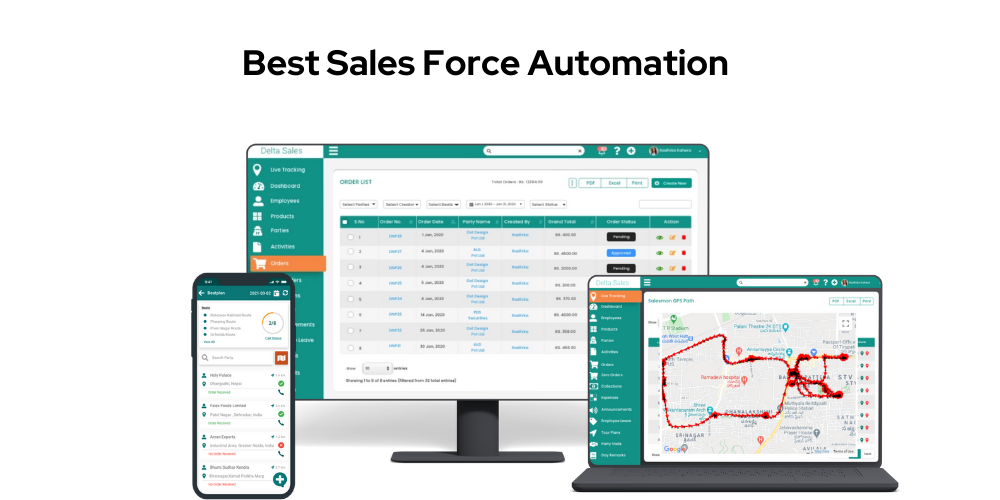
The platform supports:
- Field sales tracking for real-time visibility of employee movement and market coverage
- Employee attendance management to ensure accurate check-ins and eliminate false reporting
- Order management for faster, error-free digital order collection from retailers
- Secondary sales tracking to monitor actual product movement across the distribution chain
- Beat plan automation to ensure structured outlet visits and consistent market coverage
- Retailer management to strengthen engagement and improve service consistency
- Distributor management to improve coordination, stock visibility, and order flow
- Sales analytics dashboards for real-time insights into performance and productivity
Each feature is designed to solve execution-level problems that directly impact sales efficiency on the ground.
Instead of waiting for future AI systems, businesses can improve productivity, reduce operational leakage, and gain better control over field activities immediately using modern field sales management solutions.
Future of Sales Technology: AI Will Support, Not Replace Execution
AI will certainly become an important part of future sales operations, especially in areas like forecasting, analytics, and customer behavior prediction. However, its role is supportive, not a replacement for ground-level execution.
In real-world sales environments, AI cannot function independently without strong operational systems and consistent field data.
However, AI alone cannot replace:
- Disciplined field execution
- Retailer relationships
- Market coverage
- Distributor coordination
- Operational accountability
These elements are built through daily on-ground activities, not algorithms. No AI system can replace the importance of consistent field visits, retailer engagement, or distributor communication.

The future belongs to businesses that combine:
- Strong operational systems
- Real-time field visibility
- Sales automation
- Intelligent analytics
This combination ensures that execution is tightly controlled while insights are continuously improving.
AI will enhance execution, not replace it. It will act as a layer on top of structured systems, helping businesses analyze performance, optimize decisions, and identify opportunities more efficiently.
But without strong execution foundations, even the most advanced AI tools will remain limited in real-world impact.
Final Thoughts:
Businesses do not need to wait for AI to solve problems that already have practical solutions today.
Most field sales challenges are operational, not technological.
By implementing the right field sales software, sales automation platform, and employee tracking system, companies can improve execution, visibility, productivity, and sales performance immediately.
The smartest businesses are not waiting for future AI promises.
They are already digitizing their sales operations today with practical automation tools that deliver measurable business results.
If you want to eliminate manual reporting, improve field visibility, and streamline your entire sales execution process, it’s time to move from discussion to action.
Book a free demo of Delta Sales App today and see how real-time field sales automation can transform your business operations.