
The Complete Guide to Sales Team Tracking Software: Managing Field Employees & Sales Teams in India (2026)

Field sales teams in India are critical to driving revenue, particularly in industries such as FMCG, pharmaceuticals, insurance, banking, logistics, and retail. As India’s economy evolves toward service‑led growth and modern business practices, the services sector, which includes sales, trade, logistics, and customer engagement roles, has become a major employer, with its share of total employment rising to 29.7% of the workforce and adding nearly 40 million jobs over the past six years, according to field sales in India data. Despite this growth, many Indian businesses still rely on manual reporting to manage field operations, leading to inefficiencies: studies show untracked field teams can lose up to 25-30% of productivity due to missed visits, inefficient routes, and delayed reporting. Businesses that depend on spreadsheets, WhatsApp messages, and phone calls for field data often face incomplete insights and revenue loss due to limited visibility, accountability, and real‑time feedback.
Modern sales team tracking software addresses these issues by providing real-time monitoring, automation, and actionable insights, allowing managers to make more informed decisions while employees can focus on sales instead of manual reporting.
By the end of this guide, you will understand how sales team tracking software works, the key features to look for, benefits for Indian companies, and how to choose the right solution for your field teams.
What Is Sales Team Tracking Software?
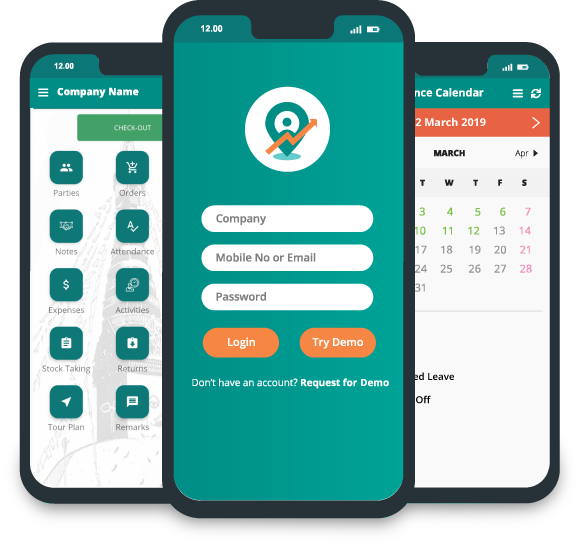
Sales team tracking software is a comprehensive, mobile-first platform that allows businesses to manage field employees, track their daily activities, and optimize field operations in real time. Unlike traditional desktop CRMs, which focus on office-based sales tracking, this software is specifically designed for teams that spend the majority of their working hours outside the office, visiting clients, distributors, retailers, or other key accounts.
In India, where field sales operations often cover hundreds of outlets across multiple states and diverse terrains, these platforms are critical. They bridge the gap between field activity and managerial oversight, ensuring that sales representatives not only follow assigned routes but also capture accurate sales, customer, and market data during their visits.
By centralizing all field activities on a single mobile-friendly platform, businesses can reduce manual reporting, increase accountability, improve productivity, and gain actionable insights that help scale operations efficiently. Modern sales team tracking software also supports integration with existing systems, such as ERP, CRM, and inventory platforms, making it a seamless addition to a company’s tech ecosystem.
Key Features Explained:
-
Real-Time GPS Tracking
Managers can monitor the exact location of each sales representative throughout the day. This ensures accountability, confirms that assigned routes are followed, and verifies that visits are completed on schedule. In India, where field teams cover multiple cities or states, GPS tracking helps optimize travel, reduce delays, and increase the number of outlets visited efficiently. It also allows managers to analyze travel patterns and take corrective action if reps deviate from planned routes. -
Mobile Reporting
Field employees can log visits, submit orders, and record customer feedback directly from their mobile devices. This eliminates delays caused by manual reporting and ensures accurate, real-time data. Representatives can capture product availability, competitor activity, promotional compliance, and client feedback. Attaching photos and notes enriches the data, allowing managers to make faster, informed decisions and address issues like stock shortages or low visibility immediately. -
Task and Beat Management
Managers can delegate specific territories, beats, and daily tasks to sales representatives. Beat planning ensures that high-priority outlets are visited consistently and without overlapping routes. This is especially important in India's tier 2 and tier 3 cities, where outlets are often geographically dispersed. Task and beat planning boosts productivity by directing reps to the appropriate locations and tracking task completion, resulting in disciplined and organized field operations. -
Analytics Dashboards
Centralized dashboards consolidate field data from GPS tracking, mobile reporting, and task management into actionable insights. Managers can evaluate individual performance, territory efficiency, and overall team productivity. Dashboards can highlight trends, such as areas with low visit frequency or fast-moving products, enabling data-driven decisions. Advanced dashboards may also provide predictive insights to anticipate market changes and optimize strategy proactively. -
Integrated Operations Management
By combining GPS tracking, mobile reporting, beat management, and analytics dashboards, the software provides a unified view of field operations. Managers can oversee team activities, optimize resources, and improve overall efficiency. This integration transforms manual, fragmented field processes into a cohesive, automated system, allowing teams to focus on selling rather than administrative tasks. -
Enhanced Accountability and Performance Monitoring
With real-time insights, managers can detect missed visits, route deviations, or underperformance immediately. High-performing employees can be recognized and rewarded, while additional training or support can be provided to those who need it. This fosters a culture of accountability and ensures consistent field coverage across all territories. -
Market Insights and Decision Support
The combination of field data, analytics, and reporting allows businesses to understand market trends, customer preferences, and regional performance patterns. Managers can identify fast-moving products, low-performing outlets, or areas requiring strategic attention. These insights help optimize sales planning, inventory management, and promotional campaigns.
Industry Use Cases in India:
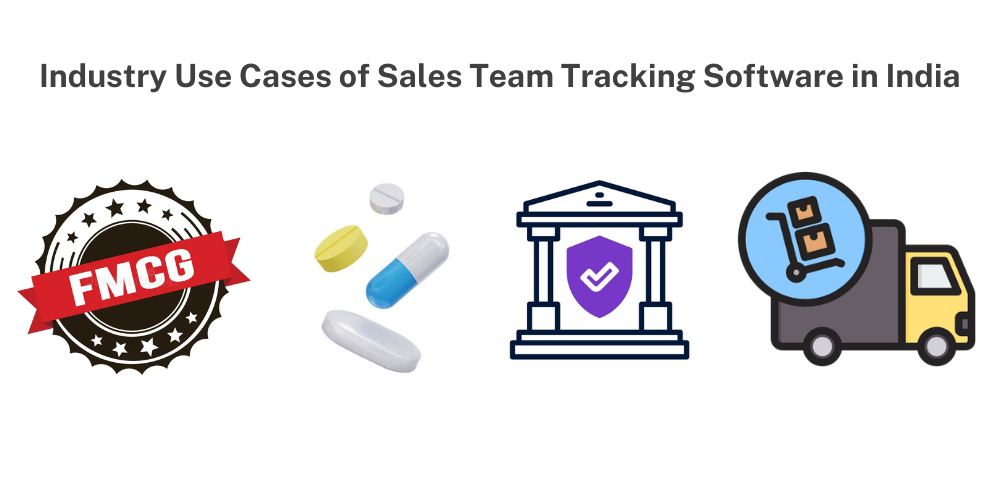
Field sales tracking software is highly versatile and applicable across multiple industries in India. The unique challenges faced by field teams in different sectors make this technology indispensable for managing operations, improving efficiency, and ensuring data-driven decision-making. Below is a detailed look at how various industries leverage sales team tracking solutions:
-
FMCG (Fast-Moving Consumer Goods)
FMCG companies frequently manage extensive retail distribution networks that include hundreds or even thousands of outlets in cities, towns, and rural areas. Field sales tracking software ensures that products are consistently available on shelves and that promotional displays are carried out as planned. Managers can track stock levels in real time, determine which stores need to be replenished, and detect gaps in promotional compliance.
-
Pharmaceuticals
Medical representatives play an important role in the pharmaceutical industry by promoting drugs and maintaining relationships with physicians. Managers can see which doctors were visited, what products were promoted, and whether sample distribution and marketing activities were carried out correctly. Pharmaceutical companies can use analytics dashboards to identify regions with low coverage, plan additional visits, and allocate resources more efficiently, ultimately improving sales performance and healthcare engagement.
-
Banking & Insurance
Banks and insurance companies rely heavily on field agents to acquire new customers, verify paperwork, and provide personalized service. Managers can use tracking software to monitor field agent visits to clients, cross-check attendance, and compare sales performance to targets. The software also uses GPS-based verification to reduce fraud risks such as false visit reporting and manipulated attendance. For banks, real-time monitoring ensures that customer visits, loan documentation, and account openings are completed efficiently, resulting in increased operational compliance and customer satisfaction.
-
Logistics
In the logistics sector, timely delivery and operational efficiency are critical for customer satisfaction and business profitability. Sales team tracking software extends beyond just sales activities; it can also monitor delivery personnel, warehouse pickups, and on-field operations. GPS tracking allows logistics managers to monitor delivery routes, detect delays, and optimize travel schedules, ensuring that goods reach customers on time.
In each of these industries, the common benefit of sales team tracking software is enhanced visibility, accountability, and efficiency. By leveraging mobile technology and real-time analytics, companies can monitor field operations closely, optimize resources, and make data-driven decisions that improve overall performance.
Why Indian Businesses Need Sales Team Tracking
Managing field sales in India is a highly complex task. The country's size, diversity, and geography present challenges that render traditional management methods such as manual reporting, spreadsheets, and desktop-based CRMs largely ineffective for modern businesses. Indian businesses frequently employ large, distributed teams that span multiple states, cities, and rural areas, each with its own set of infrastructure constraints, road conditions, and accessibility issues. Sales representatives spend the majority of their time in the field, visiting clients, distributors, and retail outlets, often in areas with limited connectivity.
This environment makes it difficult for managers to monitor productivity, ensure adherence to sales plans, and make timely decisions. Sales team tracking software addresses these issues by providing mobile-first, real-time, and data-driven solutions that allow businesses to monitor their teams effectively and respond instantly to on-the-ground challenges.
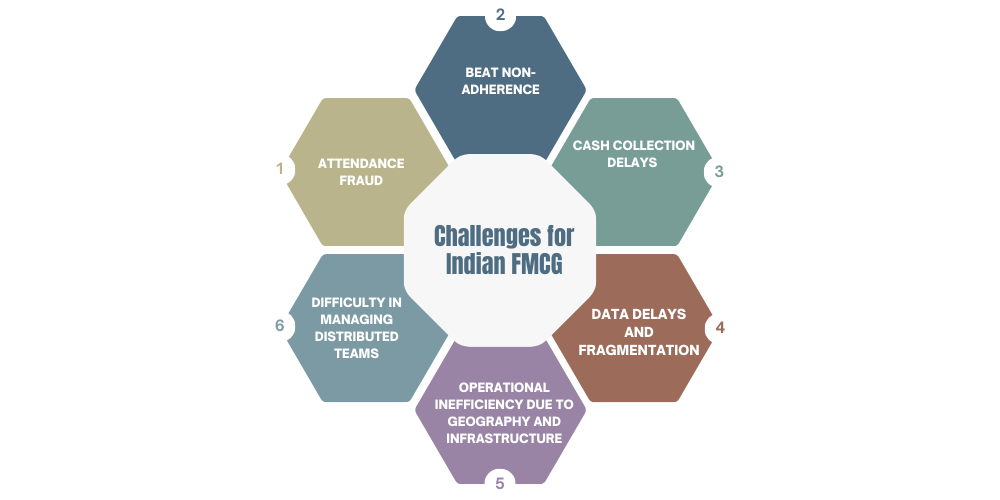
Challenges for Indian Businesses
-
Attendance Fraud
Traditional methods, such as paper registers or manual check-ins, cannot confirm employee presence, leaving managers uncertain about field productivity. Attendance fraud not only distorts performance metrics, but it also causes missed visits, delayed sales, and lost revenue opportunities. -
Beat Non-Adherence
Without systematic monitoring, managers have no way to ensure that each representative follows the planned beat schedule, which leads to inconsistent market penetration, lost opportunities, and weakened relationships with distributors and retailers. -
Cash Collection Delays
Many businesses in India still rely on cash-on-delivery or direct collection from distributors and clients. Manual processes for recording and reconciling payments increase the risk of errors, misreporting, and delays. Managers often have to chase cash collection reports or physically verify transactions, which consumes time and slows down working capital management.
-
Data Delays and Fragmentation
Waiting for daily or weekly manual reports delays actionable insights. Managers often receive incomplete, outdated, or inconsistent data, which can lead to poor decision-making. Delayed reporting affects inventory management, marketing campaigns, promotional planning, and customer engagement strategies. -
Operational Inefficiency Due to Geography and Infrastructure
India’s vast geography, coupled with variable road conditions and traffic congestion, poses significant logistical challenges. Field representatives often spend excessive time traveling between locations, which reduces their effective selling hours. Without route optimization and proper monitoring, teams may waste time on inefficient routes, duplicate visits, or miss certain high-priority outlets entirely. -
Difficulty in Managing Distributed Teams
Managers require visibility into each representative's daily activities, adherence to schedules, and task completion rates. Without a centralized system, it is difficult to ensure consistent performance, provide timely feedback, and identify areas that require additional training or support.
How Software Solves These Problems:
Modern sales team tracking software is intended to address the specific challenges that Indian businesses face in field operations. These platforms, which use mobile technology, GPS tracking, and real-time analytics, allow managers to manage teams, monitor performance, and optimize field activities with minimal manual intervention. Here's how the software addresses the main challenges.
-
Geo-Tagged Check-Ins
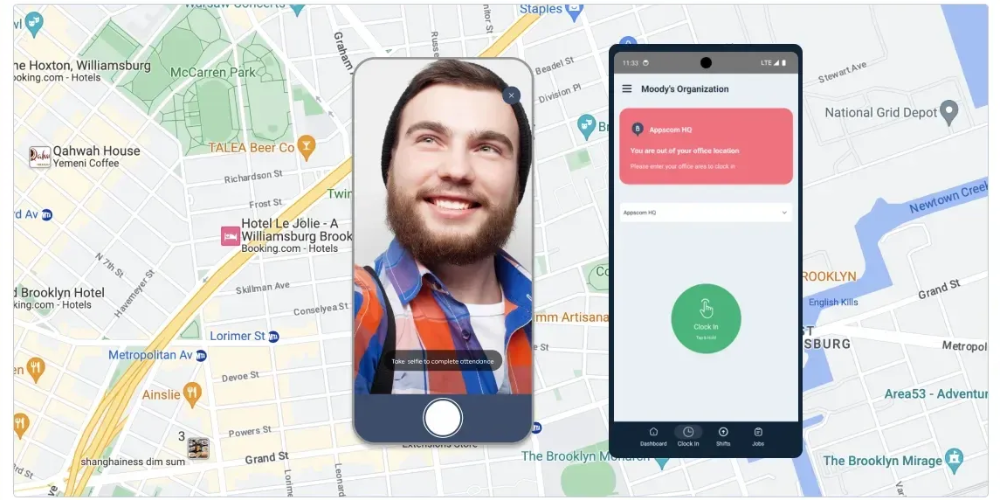
Geo-tagged check-ins are a critical feature of sales tracking software. When employees mark their attendance or log a client visit, the system uses GPS technology to track their exact location. This ensures that field representatives are physically present at the designated locations rather than remotely recording attendance or falsifying visits. -
Live Dashboards
Live dashboards give managers real-time visibility into all aspects of field operations. A centralized platform allows managers to monitor completed visits, pending tasks, order volume, cash collections, and sales performance. This level of visibility eliminates the delays and inaccuracies that come with manual reporting. Furthermore, dashboards enable managers to detect performance gaps, such as missed visits, low-performing territories, or underperforming employees, and take immediate corrective action. -
Automated Reporting
Manual consolidation of daily or weekly reports is time-consuming, error-prone, and frequently results in delayed insights. Sales team tracking software automates this process by collecting data directly from field representatives' mobile devices and automatically producing accurate reports. Managers no longer have to wait for spreadsheets to be completed and submitted at the end of each day. -
Optimized Routes
Travel time and route inefficiency are significant productivity drains for field teams, particularly in countries like India, where traffic congestion, long distances, and varying road conditions are common. Modern sales tracking software examines travel patterns, outlet locations, and visit priorities to suggest the most efficient routes for representatives. Optimized routing reduces unnecessary travel, enables teams to cover more outlets in less time, and lowers fuel and logistical costs. For managers, this feature ensures that high-priority accounts are consistently visited, territories are evenly covered, and employee productivity is maximized.
Sales Team Tracking App Features: What to Look For
A strong sales team tracking app is more than just a location tracker; it is a comprehensive mobile-first solution designed to streamline field operations, increase visibility, and boost sales team productivity. Indian businesses, with their distinct challenges of large territories, dispersed teams, and variable infrastructure, require a tool capable of handling both operational complexity and real-time insights. Here's a detailed look at the key features that businesses should priortize:
-
Live GPS Tracking
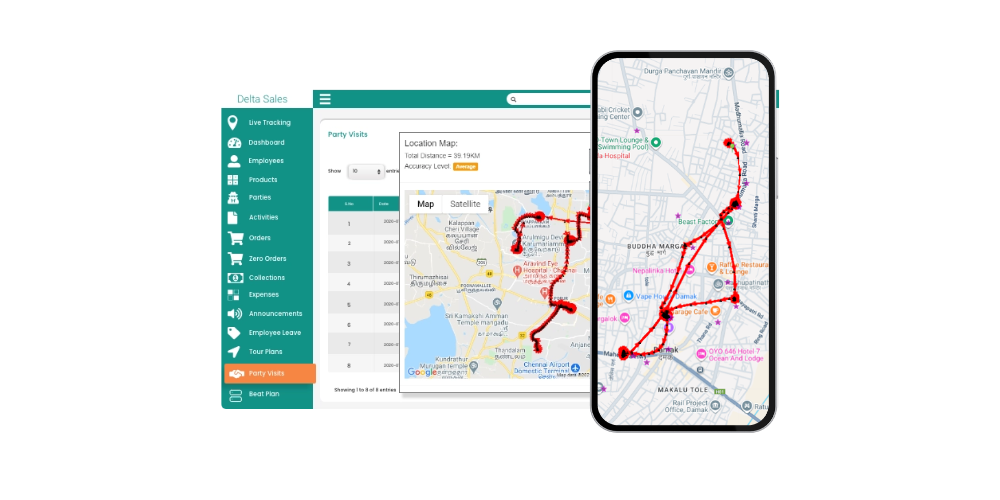
Live GPS tracking provides real-time updates on the exact location of every sales representative, along with a comprehensive location history. This allows managers to create visual heatmaps to identify which territories are performing well and which need additional focus. By tracking movement patterns, managers can detect missed visits, ensure adherence to planned beats, and analyze travel efficiency. For large Indian teams operating across multiple cities and rural areas, GPS tracking ensures accountability, prevents fraud, and helps optimize resource allocation in real time.
-
Beat Plan & Route Management
Efficient beat planning and route management are critical to increasing productivity. Managers can assign predefined routes and territories to each representative, ensuring that all high-priority accounts and retail outlets are serviced. Advanced apps provide route optimization, which reduces travel time, lowers fuel costs, and allows sales representatives to increase the number of daily visits. Proper beat planning also eliminates overlapping visits, ensuring an equitable workload distribution across teams. -
Check-In/Check-Out with Geo-Fencing
Geo-fencing ensures that employees can only mark attendance or check-ins while physically present at a verified client or outlet location. This reduces attendance fraud and strengthens discipline in field operations. Managers can also set alerts for missed check-ins or deviations from scheduled visits, enabling proactive intervention. -
Daily Reporting via Mobile
Real-time mobile reporting is a key feature of modern sales tracking applications. The app allows sales representatives to directly submit visit reports, order details, and customer feedback. Instant reporting eliminates delays caused by manual data collection or end-of-day submissions, ensuring that managers receive accurate and timely information. Real-time insights enable managers to make quick decisions about inventory replenishment, promotions, and market strategy changes, thereby keeping field operations agile and responsive. -
Offline Functionality
Connectivity is a major issue for many Indian sales teams, especially in rural and remote areas. Field representatives can use offline functionality to record visits, capture orders, and log sales data even when they are not connected to the internet. Once connectivity is restored, the app will automatically sync all data with the central system. This ensures that no critical information is lost and that operations continue uninterrupted regardless of network availability, which is critical for businesses operating in India's diverse terrains and infrastructure conditions.
Employee Tracking Software: Monitoring Attendance, Time & Productivity
Employee tracking software complements sales team tracking tools to ensure that field and office teams are efficient, accountable, and productive. While sales tracking software is primarily concerned with client visits, orders, and market engagement, employee tracking software tracks how employees spend their time, complete tasks, and adhere to schedules.
-
Attendance via Geo-Tagging vs Biometrics
Attendance tracking is an essential component of employee monitoring. Geo-tagging allows mobile field teams to only mark attendance when they are physically present at the assigned location. This feature prevents fraudulent check-ins and ensures that sales representatives or field employees follow their scheduled routes. Biometric systems, on the other hand, are better suited to office workers because they allow for precise clock-in and clock-out times. Combining these approaches allows businesses to effectively monitor both remote and in-office teams, ensuring accountability across all work environments. -
Idle Time & Productivity Reports
Understanding how employees spend their work hours is critical to operational efficiency. Modern tracking software compares idle time to productive time, allowing managers to identify patterns of low engagement, unnecessary downtime, or workflow inefficiencies. This data allows businesses to optimize schedules, redistribute workload, and coach employees who may require additional assistance. Over time, analyzing productivity reports reveals high-performing employees who complete tasks efficiently.

-
Task Completion Monitoring
Employee tracking software enables managers to assign tasks to employees and track their completion in real time. This includes tasks such as client follow-ups, merchandising checks, order submissions, and other operational duties. Real-time updates ensure that managers are immediately aware of the status of their tasks, allowing them to intervene if delays or issues arise. This level of monitoring not only ensures accountability but also keeps teams on track to meet daily, weekly, and monthly goals. -
Leave and Work-Hour Management
It takes time and is prone to errors to manually track work hours and leave requests. Employee tracking software automates these processes, recording hours worked, overtime, and approved leaves without requiring human intervention. This ensures accurate payroll processing, reduces administrative overhead, and gives managers a clear view of workforce availability. For large Indian corporations with geographically dispersed teams, automated leave and time tracking eliminates confusion and simplifies workforce management. -
Compliance Considerations
Indian businesses must ensure that employee tracking software complies with local labor laws and privacy regulations. Proper implementation ensures that monitoring is conducted ethically, respecting employee privacy while remaining transparent. To comply with Indian regulations, many modern platforms include role-based access, data encryption, and privacy settings that can be configured. Compliance is especially important for businesses with unionized or regulated workforces, as it ensures legal protection while leveraging technology to boost efficiency.
Field Sales Team Management Software: Running a Distributed Team
Managing a distributed field sales team in India poses unique challenges. Companies frequently have large teams spread across multiple cities, states, and rural areas, making it difficult to track performance, ensure consistent coverage, and keep operations running smoothly. Diverse markets, changing customer behavior, and logistical constraints all complicate the management process. Traditional spreadsheets, manual reporting, and disparate communication tools are no longer sufficient to ensure efficiency and accountability.
-
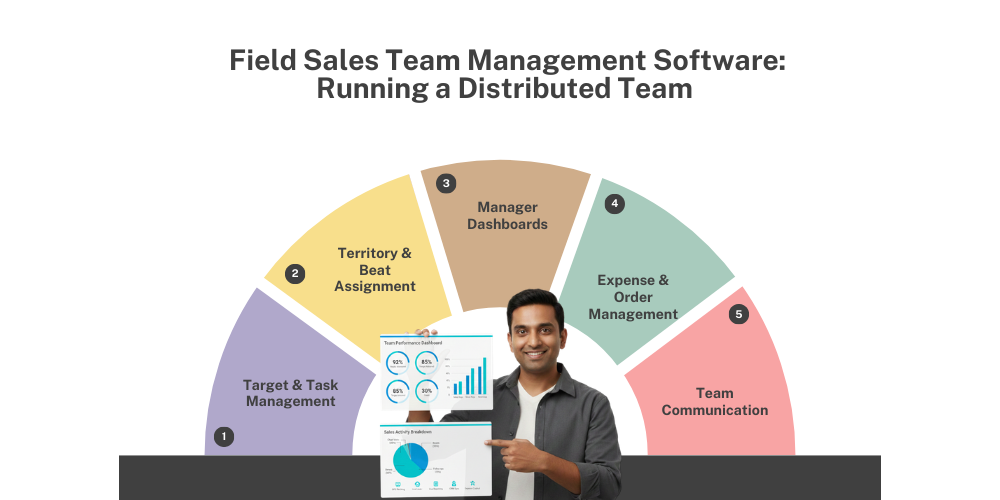
Target & Task Management
One of the key features of field force automation software is the ability to set daily, weekly, or monthly goals for each sales representative. Managers can set goals for sales volume, customer visits, or product promotion activities and track progress in real time. The software also enables task-level monitoring, ensuring that each employee understands exactly what is expected of them. -
Territory & Beat Assignment
Effective coverage of multiple regions is critical in India, where markets are highly diverse and retail networks are widely distributed. Field sales team management software enables structured territory assignment, ensuring that each representative is assigned specific beats and outlets. This avoids overlapping routes, ensures that high-priority clients are visited on a regular basis, and allows for consistent engagement with retailers and distributors.
-
Manager Dashboards
Centralized dashboards are an essential component of distributed team management. Managers can monitor individual and team performance metrics such as completed visits, order conversion rates, attendance, and task completion. Dashboards integrate data from various sources to provide a real-time, comprehensive view of operations. Managers can make informed decisions, provide timely support to underperforming reps, and celebrate top performers by understanding who is performing well and where there are challenges. -
Expense & Order Management
Field sales representatives frequently incur expenses while visiting clients or conducting promotions, and manually tracking these costs can be inefficient. Modern software enables employees to submit expenses digitally, attach receipts, and receive approvals quickly. Order management features allow reps to capture and process orders instantly from the field. Automatic synchronization with backend systems ensures accurate records and faster processing, which is critical for inventory accuracy and on-time fulfillment. -
Team Communication
Smooth communication is essential for distributed teams. Field sales team management software provides centralized messaging, notifications, and alerts to keep managers and representatives connected throughout the day. Important announcements, route changes, task updates, and urgent alerts can all be communicated immediately, reducing miscommunication and delays.
Sales Team Tracking Software vs. Employee Tracking Software: What’s the Difference?
When businesses in India invest in workforce technology, they often face confusion between sales team tracking software and employee tracking software. While both solutions involve monitoring and managing personnel, their purpose, scope, and functionality differ significantly. Understanding these differences helps companies select the right tools for their operations, especially when managing distributed teams across multiple states, urban, and rural markets.
Core Functional Differences
-
Tracking Scope
-
Sales Tracking: Monitors customer visits, sales calls, beat coverage, and order placements.
-
Employee Tracking: Monitors work hours, attendance, location, task completion, and productivity.
-
-
Key Metrics
-
Sales Tracking: Visit frequency, sales conversion rate, revenue per rep, territory performance.
-
Employee Tracking: Time-on-task, idle time, attendance accuracy, and leave management.
-
-
User Base
-
Sales Tracking: Primarily for field sales representatives, merchandisers, and account managers.
-
Employee Tracking: For a broader workforce, including back-office staff, delivery teams, and field employees.
-
-
Data Usage
-
Sales Tracking: Data is used for strategic decision-making, sales forecasting, and market coverage optimization.
-
Employee Tracking: Data is used for operational control, payroll management, and productivity monitoring.
-
-
Integration Requirements
-
Sales Tracking: Often integrates with CRM, ERP, and inventory management systems to streamline sales workflows.
-
Employee Tracking: May integrate with HR, payroll, and attendance systems for complete workforce management.
-
Key Metrics You Can Track With Sales Team Software
Measuring performance is essential for any field sales operation, particularly in India, where teams are frequently spread across multiple states, rural and urban areas, and diverse markets. Sales team software offers a data-driven approach for monitoring performance, optimizing operations, and making informed business decisions. By tracking the right metrics, managers can identify gaps, reward top performers, and ensure that all territories are consistently covered.
-
Visit Frequency
One of the most important metrics is how frequently salespeople visit their assigned clients, retailers, or distributors. Frequent visits boost customer engagement, product visibility, and brand loyalty, particularly in fast-paced industries such as FMCG and pharmaceuticals. -
Call Productivity
Call productivity evaluates the effectiveness of each client interaction. It includes metrics such as the number of calls made, the length of interactions, follow-up actions, and results. This enables managers to determine which representatives are generating meaningful engagement versus those who are simply visiting locations with no productive activity. Improving call productivity ensures that time in the field is used strategically, which improves sales results. -
Order Conversion
Sales team tracking software monitors the ratio of visits or calls to actual orders placed. By analyzing order conversion rates, businesses can determine which territories, products, or representatives are performing well. For example, a representative may visit 30 retailers but only get orders from ten. -
Beat Adherence and Coverage
Beat adherence ensures that field representatives follow predetermined routes and schedules. Missing beats in India, where markets are spread across vast geographical areas, can result in missed sales opportunities or neglected clients. Tracking beat adherence provides insight into whether reps are effectively covering all assigned locations and assists managers in identifying coverage gaps. -
Attendance and Time-on-Field
Field sales software monitors when and where employees work, including clock-in and clock-out times, location-based check-ins, and time spent at each client location. This allows businesses to ensure accountability, identify idle periods, and ensure that employees spend enough time engaging with customers. -
Revenue per Representative, Territory, and Product
Tracking revenue metrics provides a comprehensive view of performance across multiple levels. Managers can track which representatives, territories, and product lines generate the most revenue. This enables businesses to focus marketing efforts, adjust territory assignments, and effectively allocate resources. Businesses can use revenue trends to identify growth opportunities, optimize inventory distribution, and tailor promotions to high-performing regions. -
Sales Funnel Metrics
Sales team tracking software can also provide information about the sales pipeline, such as the number of leads generated, follow-ups completed, and transactions closed. This allows managers to accurately forecast revenue and make informed decisions about staffing, promotions, and growth strategies. In India, where seasonal demand fluctuations are common, monitoring sales funnels helps businesses stay agile and responsive to market changes. -
Customer Feedback and Market Insights
Modern software platforms enable reps to track customer feedback, product availability, competitor activity, and promotional compliance in real time. This data provides managers with valuable insights into market trends, customer preferences, and competitor strategies, allowing them to quickly adjust marketing, pricing, and distribution plans. For Indian businesses with large, geographically dispersed markets, these insights are critical for maintaining a competitive advantage.
Results: What Sales Teams Achieve After Implementation
Implementing sales team tracking software in India can transform how businesses manage field teams, distributors, and retail operations. Companies often see measurable improvements in productivity, visibility, and revenue, especially when managing large, geographically dispersed teams.
-
Higher Sales Productivity
By automating reporting, order capture, and route planning, sales representatives can spend more time engaging with customers and less time on administrative tasks. This increases daily visits and improves overall sales efficiency. -
Improved Visibility for Managers
Real-time dashboards show completed visits, pending tasks, order volumes, and employee locations. Managers can identify gaps quickly, monitor underperforming territories, and intervene as needed.

-
Faster Order Processing
Mobile order capture allows representatives to submit orders immediately, reducing errors and processing time. This ensures faster fulfillment and higher customer satisfaction, especially among FMCG, pharmaceutical, and retail distribution teams. -
Enhanced Distributor and Client Relationships
Businesses that use secondary sales tracking and visibility into distributor performance can optimize inventory, improve replenishment cycles, and strengthen partner relationships. -
Data-Driven Decision Making
Detailed analytics allow companies to identify high-performing reps, analyze revenue trends, track sales conversion, and refine strategies for territories, products, or teams.
How to Choose the Right Sales Team Tracking Software in India
Choosing the right sales team tracking software is critical for Indian businesses that want to effectively manage distributed field teams, improve operational efficiency, and boost revenue. The ideal platform should meet business requirements, be mobile-friendly and scalable, and provide actionable insights for decision-making.
1. Understand Your Industry Needs
Different industries have unique requirements. For example:
-
FMCG companies need strong distributor and retail coverage tracking, along with secondary sales visibility.
-
Pharmaceutical businesses require compliance tracking for medical representative visits and doctor appointments.
-
Banking and insurance firms need attendance verification, cash collection tracking, and agent performance monitoring.
-
Logistics companies require delivery tracking, route optimization, and real-time activity dashboards.
2. Focus on Ease of Use
Field teams spend most of their time away from the office. Software must be intuitive, mobile-friendly, and simple to use. A complicated interface can cause delays in adoption, decreased productivity, and inaccurate reporting. To reduce the need for training, look for platforms with simple dashboards, easy data entry, and clear workflows.
3. Ensure Mobile Optimization
Field sales teams in India frequently work in areas with intermittent internet connectivity and difficult terrain, particularly in tier 2 and tier 3 cities. A mobile-optimized solution enables representatives to log visits, capture orders, update client information, and record market feedback using their phones or tablets. Offline functionality is critical to ensuring continuous data capture, with automatic syncing once connectivity is restored.
4. Check Integration Capabilities
The software should work seamlessly with existing systems such as CRM, ERP, accounting software, and inventory management tools. Integration ensures that order data, sales reports, and client information flow seamlessly across platforms, reducing manual effort and errors. For example, orders captured in the field should be automatically synced with the company's ERP system to speed up processing and billing.
5. Evaluate Scalability
As businesses grow, the software must accommodate more users, larger territories, and additional features without performance issues. Scalability ensures that you do not need to replace the system as your team or market footprint expands. Look for platforms that can support multiple regions, multiple product lines, and increasing sales data volumes.
6. Vendor Support and Training
Reliable customer support, onboarding assistance, and training are essential. Vendors should provide tutorials, live demos, and responsive support to address issues promptly. This ensures a smooth implementation and faster adoption throughout your sales teams.
7. Security and Compliance
Ensure the software adheres to data security standards and Indian privacy regulations. Sensitive client and sales data must be protected through encryption, secure logins, and role-based access controls.
Conclusion
Managing Indian field sales teams without modern tools results in missed visits, inaccurate reporting, and lost revenue. Sales team tracking software addresses these issues by incorporating mobile-first tracking, automated reporting, analytics, and territory management.
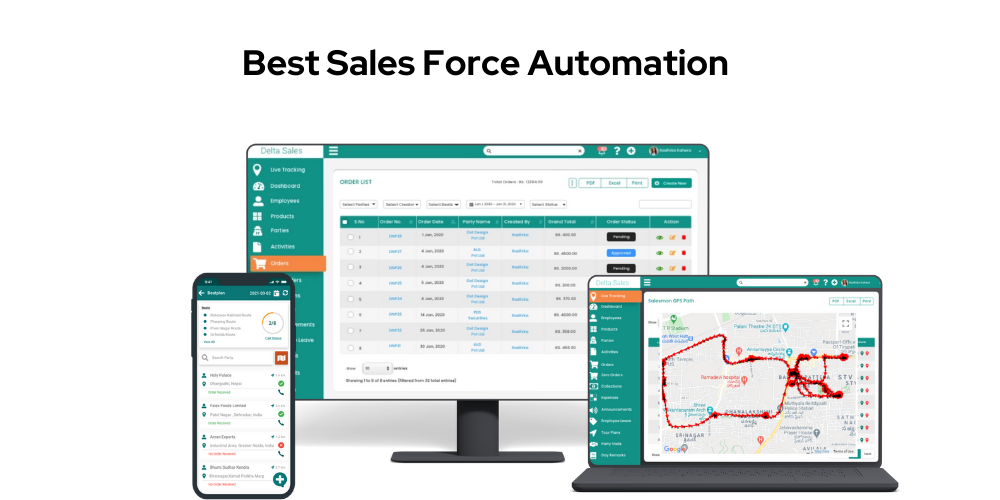
Indian businesses that implement these solutions benefit from increased productivity, improved visibility, stronger distributor relationships, and data-driven decision-making. Platforms such as the Delta Sales App enable teams to streamline operations, improve efficiency, and increase revenue.
Book a Demo Today to discover how digital solutions can transform your sales operations in India.