
What Separates a Good Field Sales Application from a Great One?

In today’s competitive sales environment, businesses rely heavily on field sales applications to manage distributed teams, track performance, and streamline daily operations. However, not all solutions deliver the same level of impact. While many tools qualify as “good,” only a few evolve into “great” platforms that truly transform sales execution.
A strong field force automation system goes beyond basic tracking, it enables real-time decision-making, improves productivity, and strengthens customer engagement.
This blog explores what separates a good field sales application from a great one and how businesses can identify the right solution.
What Is a Field Sales Application?
A field sales application is a digital tool designed to help sales teams manage customer visits, record sales activities, and report daily progress from the field. It replaces manual reporting methods such as spreadsheets, WhatsApp updates, and paper-based logs.
Most modern tools include features like:
- Customer Visit Tracking: A customer visit tracking software records every customer interaction in real time, improving field visibility, sales accountability, and customer relationship management across all assigned territories.
- Order Booking: A sales order management system enables sales representatives to book orders instantly from the field, reducing processing delays, minimizing errors, and improving order fulfillment efficiency.
- Payment Collection: A payment collection management system records customer payments in real time, helping businesses improve cash flow, reduce outstanding dues, and streamline financial reconciliation processes.
- Attendance Management: An attendance management system automatically tracks employee check-ins, check-outs, and working hours, improving workforce accountability and simplifying daily attendance monitoring for managers.
- Basic Reporting Dashboards: A sales reporting dashboard provides daily performance summaries, helping managers monitor activities, track KPIs, and make faster data-driven business decisions efficiently.
These features are useful, but they often define only a “good” application, not a great one.
Why Field Sales Apps Are Essential in Modern Sales Operations
Modern sales teams operate in highly competitive and fast-moving environments where quick decision-making, seamless communication, and real-time visibility are essential for success. Managing field representatives through phone calls, spreadsheets, or manual reports is no longer practical, especially for businesses with multiple territories and large sales teams.
A field sales application centralizes all sales activities into a single platform, enabling managers to monitor field operations, optimize resources, and make informed decisions using live data. It not only improves operational efficiency but also enhances customer service, employee accountability, and overall sales performance.
By leveraging sales force automation software, organizations can streamline their field operations, eliminate repetitive administrative tasks, and empower sales representatives to spend more time building customer relationships and closing deals.
A sales force automation software helps organizations:
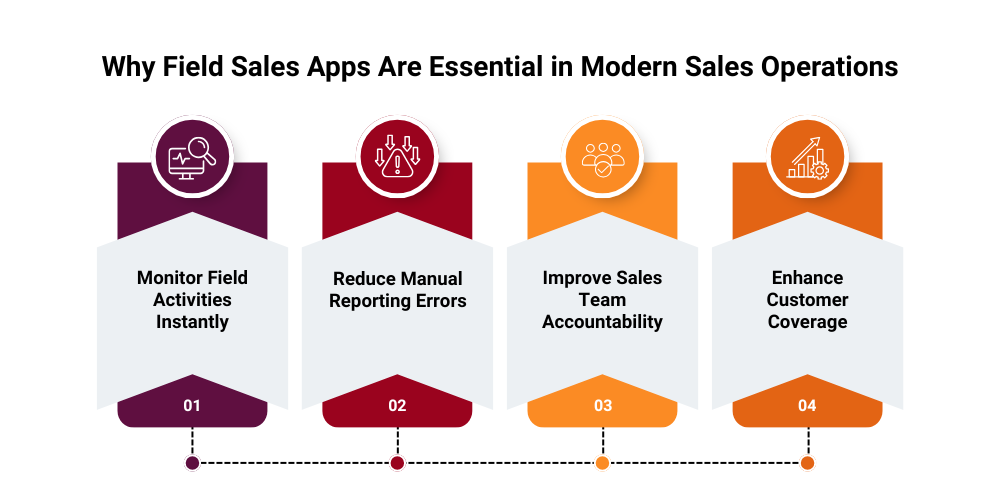
Monitor Field Activities Instantly: Real-time sales tracking enables managers to monitor customer visits, sales activities, and employee locations instantly, improving operational visibility and enabling faster business decisions.
Reduce Manual Reporting Errors: Automated reporting software captures field data automatically, minimizing manual entry mistakes, eliminating duplicate records, and ensuring highly accurate sales and operational reports.
Improve Sales Team Accountability: Field employee tracking with GPS verification and activity logs ensures every customer visit is recorded accurately, increasing transparency, accountability, and overall team performance.
Enhance Customer Coverage: Customer relationship management (CRM) features help sales teams schedule regular visits, track follow-ups, and ensure every customer receives timely attention without missing opportunities.
Without a modern field sales application, managers often struggle with delayed reporting, inconsistent data, limited visibility into field operations, and slower decision-making. By adopting digital sales solutions, businesses can improve productivity, optimize field performance, strengthen customer relationships, and stay ahead in today's competitive marketplace.
Characteristics of a Good Field Sales Application
A good field sales application provides the essential features required to digitize everyday sales activities and simplify field operations. It replaces manual processes with digital workflows, helping sales representatives perform their daily tasks more efficiently while giving managers basic visibility into team performance.
These applications are particularly beneficial for businesses transitioning from spreadsheets, paper records, or messaging apps to a centralized field force automation platform. They improve operational consistency, reduce paperwork, and ensure that critical sales information is captured digitally.
A good application typically includes the following core capabilities:
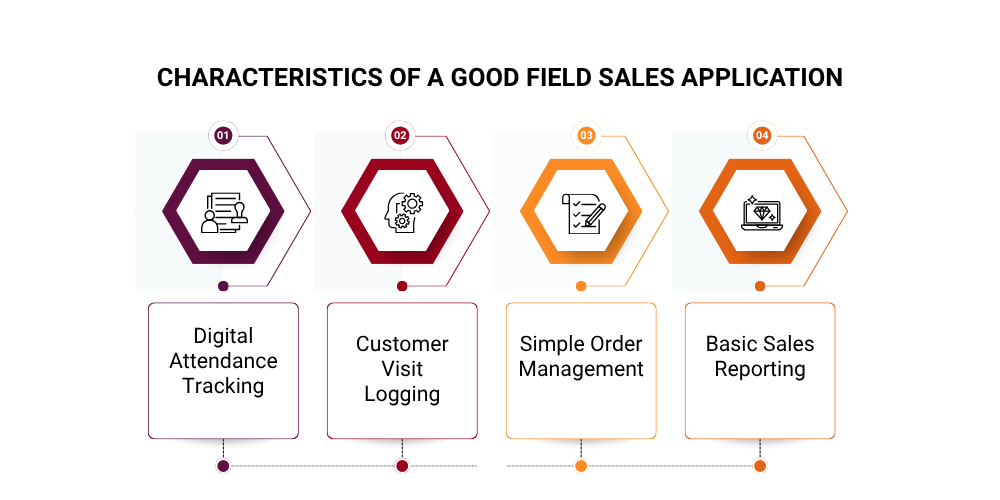
- Digital Attendance Tracking: An attendance management system automatically records employee check-ins, check-outs, and working hours, improving workforce accountability and simplifying attendance monitoring.
- Customer Visit Logging: Customer visit tracking software records every customer interaction with timestamps and visit details, helping managers monitor field activities and improve customer engagement.
- Simple Order Management: A sales order management system enables field representatives to create and submit customer orders digitally, reducing manual paperwork and improving order processing efficiency.
- Basic Sales Reporting: A sales reporting dashboard provides daily summaries of sales activities, allowing managers to monitor performance, review KPIs, and generate standard business reports.
While these features successfully support routine field operations, they mainly address operational needs rather than strategic business objectives. Most good applications focus on recording activities but provide limited capabilities for advanced analytics, workflow automation, predictive insights, and performance optimization.
For example, they may not offer real-time sales tracking, intelligent route optimization, automated reporting, AI-driven recommendations, or comprehensive business intelligence dashboards. As a result, managers often need to perform additional analysis manually before making informed decisions.
Most importantly, these applications do not fully utilize mobile workforce management capabilities to improve productivity, optimize territory performance, and drive long-term business growth. To achieve these outcomes, businesses require a more advanced field sales solution that goes beyond basic functionality and delivers automation, analytics, and real-time decision support.
Key Limitations of Average Field Sales Apps
Although many field sales applications offer the basic functionality needed to manage daily operations, they often struggle to meet the growing demands of modern businesses. As organizations expand their sales teams, customer base, and territories, these limitations become more noticeable and can negatively impact productivity, visibility, and business growth.
Average field sales apps primarily focus on recording activities rather than providing meaningful insights that help managers make strategic decisions. They often lack advanced automation, intelligent analytics, and seamless integrations that are essential for today's competitive sales environment.
Some of the most common limitations include:
Limited Sales Analytics Tools: Basic sales analytics software provides only simple reports, making it difficult to identify trends, measure KPIs, and optimize sales performance effectively.
Delayed Reporting Cycles: Without real-time reporting, managers often receive updates hours or days later, delaying decisions and reducing their ability to respond quickly to business challenges.
No Intelligent Insights or Forecasting: Average applications lack sales forecasting tools that analyze historical data, predict future demand, and identify growth opportunities for proactive planning.
Weak Integration with CRM Systems: Poor CRM integration creates disconnected data across departments, resulting in duplicate entries, inconsistent information, and inefficient business workflows.
Lack of Automation in Workflows: Limited workflow automation requires employees to perform repetitive manual tasks such as report creation, data entry, and follow-up tracking, reducing overall productivity.
These shortcomings prevent businesses from achieving complete operational visibility and often force managers to rely on manual analysis before making critical decisions. As a result, sales teams spend more time on administrative work instead of customer engagement, while management struggles to monitor performance in real time.
To stay competitive, businesses need a field sales application that goes beyond basic functionality by combining automation, advanced analytics, intelligent reporting, and seamless system integration. These capabilities empower organizations to improve efficiency, enhance decision-making, and drive long-term sales growth.
What Makes a Field Sales Application “Great”
A great field sales application does much more than digitize daily activities, it becomes a strategic asset that helps businesses improve efficiency, increase productivity, and make faster, data-driven decisions. Instead of simply tracking customer visits or recording sales orders, it connects every aspect of field operations into a single intelligent platform.
Unlike average applications, a great field force automation platform continuously collects, analyzes, and presents actionable insights that empower managers to optimize sales performance, improve customer engagement, and streamline business operations. It enables organizations to shift from reactive management to proactive planning by providing real-time visibility into every field activity.
The key differentiators that separate a great field sales application from a good one include:
Real-Time Data Synchronization: Cloud-based reporting automatically syncs field data across devices, providing managers with instant access to customer visits, orders, collections, and employee activities without reporting delays.
Advanced Business Intelligence Dashboards: Interactive business intelligence dashboards transform raw sales data into visual reports, enabling managers to analyze KPIs, identify trends, and make informed business decisions quickly.
Intelligent Automation of Workflows: Sales automation software eliminates repetitive tasks such as manual reporting, attendance logging, follow-up reminders, and report generation, allowing sales teams to focus more on selling.
Strong Scalability for Growing Teams: A scalable field sales management app supports expanding teams, multiple territories, distributors, and increasing customer volumes without affecting performance or reporting accuracy.
Deep Integration with Business Systems: Seamless CRM and ERP integration connects sales, inventory, finance, and customer data into one centralized system, improving collaboration and eliminating duplicate data entry.
Beyond these core capabilities, a great field sales application also supports advanced features such as GPS tracking, route optimization, automated expense management, customer feedback collection, performance analytics, and customizable reporting. These capabilities help organizations improve operational transparency, strengthen employee accountability, and maximize field productivity.
Ultimately, a great field sales application empowers businesses to move beyond reactive reporting and embrace proactive decision-making. By combining automation, analytics, and real-time visibility, it enables managers to identify opportunities faster, resolve issues proactively, optimize resources effectively, and achieve sustainable sales growth.

Role of Automation in Field Sales Performance
Automation is one of the biggest factors that separates an average field sales application from an exceptional one. Instead of spending hours on repetitive administrative tasks, field sales teams can focus on building customer relationships, closing deals, and achieving sales targets. By leveraging sales automation software, businesses can streamline everyday operations, improve data accuracy, and significantly enhance overall field sales performance.
In traditional field sales operations, representatives often spend a considerable amount of time manually recording customer visits, updating spreadsheets, preparing End-of-Day (EOD) reports, and communicating daily activities through emails or messaging apps. These manual processes are not only time-consuming but also increase the chances of errors, duplicate entries, and delayed reporting.
Automation eliminates these inefficiencies by capturing data as activities occur and instantly making it available to managers through centralized dashboards. This ensures that every customer interaction, sales order, payment collection, and field visit is accurately recorded without requiring additional effort from sales representatives.
A modern field force automation platform helps businesses automate several critical sales processes, including:
- Automatically Generate EOD Reports: Automated EOD reporting compiles all daily sales activities into comprehensive reports, eliminating manual report preparation while providing managers with accurate, real-time business insights.
- Capture Field Data Without Manual Entry: Real-time field data capture automatically records customer visits, GPS check-ins, orders, collections, and follow-ups, reducing human errors and improving reporting accuracy.
- Reduce Administrative Workload: Workflow automation minimizes repetitive administrative tasks, allowing sales representatives to spend more time meeting customers, generating leads, and increasing sales productivity.
- Improve Reporting Accuracy: Sales reporting software captures information directly from field activities, ensuring consistent, error-free reports that support reliable business analysis and strategic planning.
Beyond these core functions, automation also simplifies attendance tracking, expense management, route planning, task assignments, customer follow-ups, and performance monitoring. Managers receive instant notifications and live updates, enabling them to identify issues early, allocate resources effectively, and provide timely support to field teams.
Another significant advantage of automation is faster decision-making. Since managers have access to real-time sales analytics and business intelligence dashboards, they can monitor key performance indicators (KPIs), evaluate territory performance, identify sales opportunities, and address operational challenges without waiting for end-of-day summaries.
Ultimately, automation transforms field sales from a reactive process into a proactive one. It increases operational efficiency, strengthens employee accountability, improves customer satisfaction, and helps businesses achieve sustainable growth. By reducing manual work and enabling intelligent decision-making, sales force automation software empowers organizations to maximize field productivity while allowing sales representatives to focus on what they do best, building relationships and driving revenue.
How Great Field Sales Apps Improve Sales Team Productivity
When all these advanced features work together, a field sales application becomes much more than a simple tracking tool, it becomes a productivity engine for the entire sales organization. By automating routine tasks, providing real-time visibility, and enabling smarter decision-making, businesses can significantly improve the efficiency and effectiveness of their field sales teams.
Instead of spending valuable hours on administrative work, sales representatives can dedicate more time to meeting customers, generating leads, nurturing relationships, and closing deals. At the same time, managers gain complete visibility into field operations, allowing them to monitor performance, identify improvement areas, and provide timely support whenever required.
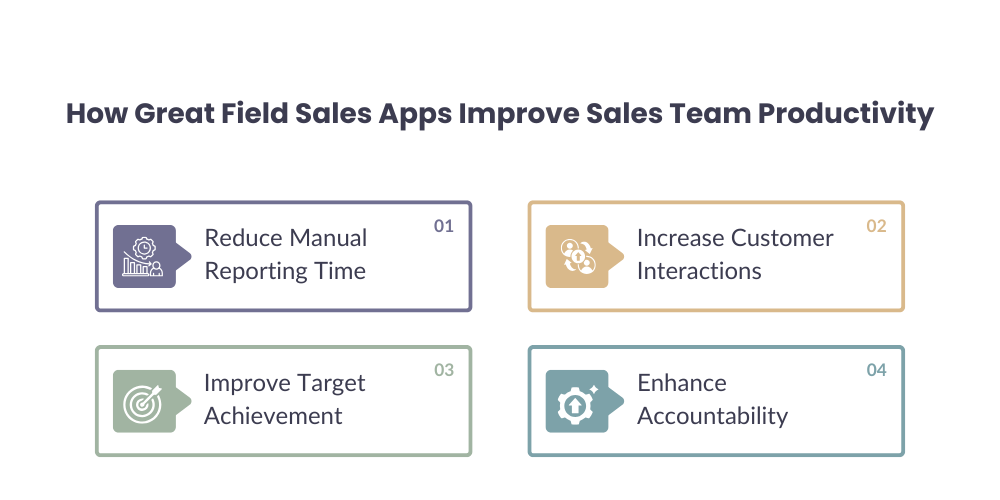
A powerful field sales tracking software helps businesses improve productivity in several ways:
- Reduce Manual Reporting Time: Automated reporting software eliminates manual data entry, allowing sales representatives to spend more time selling and serving customers.
- Increase Customer Interactions: Customer visit management streamlines daily schedules, enabling representatives to meet more customers and strengthen long-term business relationships consistently.
- Improve Target Achievement: Sales performance tracking helps managers monitor progress continuously, motivating teams to achieve targets efficiently and consistently every month.
- Enhance Accountability: GPS tracking software records verified customer visits and activities, ensuring transparency, accountability, and accurate field sales performance evaluation.
Choosing the Right Solution for Your Business
Selecting the right field sales application is a strategic business decision that can significantly influence your organization's productivity, sales performance, and long-term growth. While many solutions offer similar core features, the ideal platform should provide the flexibility, intelligence, and scalability required to support your business as it evolves.
Rather than choosing software based solely on price or a basic feature checklist, businesses should evaluate whether the solution can automate workflows, deliver actionable insights, integrate with existing systems, and adapt to future operational needs. A well-designed field sales management software should simplify daily operations while empowering managers with real-time data for faster and more informed decision-making.
When evaluating a field sales application, consider the following factors:
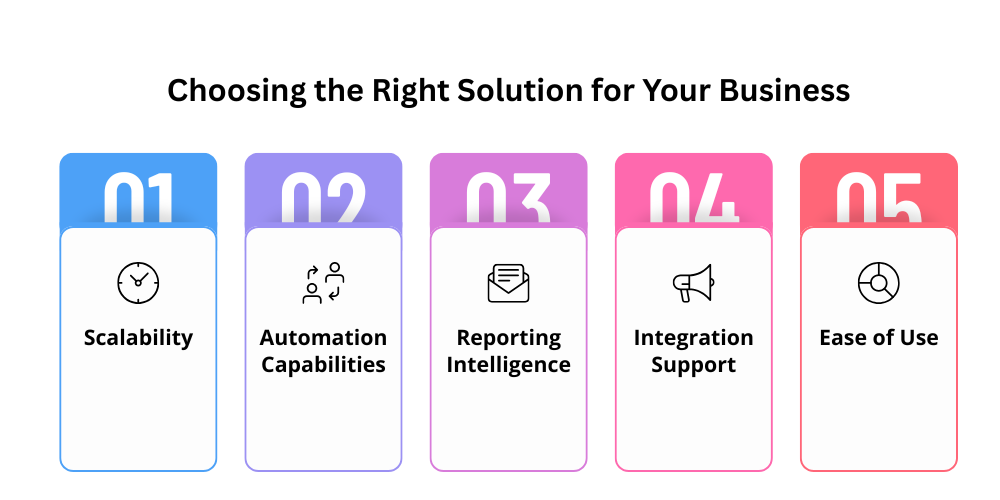
Scalability: Choose a scalable field force automation platform that can easily accommodate growing sales teams, expanding territories, increasing customer databases, and higher transaction volumes without compromising performance.
Automation Capabilities: Look for sales automation software that automates repetitive tasks such as attendance tracking, order processing, EOD reporting, expense management, and customer follow-ups to improve operational efficiency.
Reporting Intelligence: A robust business intelligence dashboard should provide real-time reports, customizable KPIs, sales analytics, and performance insights that help managers make data-driven business decisions.
Integration Support: Ensure the application offers seamless CRM and ERP integration, allowing sales, inventory, finance, and customer data to flow across departments without manual intervention.
Ease of Use: A user-friendly mobile sales tool should feature an intuitive interface, quick navigation, and offline functionality, enabling field representatives to perform tasks efficiently with minimal training.
Beyond these essential factors, businesses should also consider data security, cloud accessibility, customer support, software reliability, customization options, and the vendor's ability to deliver regular updates as business requirements change.
A truly great field sales application is not just a tool for tracking daily activities, it is a long-term technology partner that supports business expansion, enhances field productivity, and accelerates digital transformation. By investing in the right solution, organizations can improve operational efficiency, strengthen customer relationships, optimize sales execution, and build a sustainable competitive advantage in today's rapidly evolving marketplace.
How Delta Sales App Delivers a Great Field Sales Experience
The Delta Sales App is more than just a field sales application, it's a comprehensive field force management software built to help businesses streamline operations, improve sales productivity, and make smarter decisions through automation and real-time insights. Designed for industries such as FMCG, pharmaceuticals, manufacturing, distribution, and retail, the platform equips field sales teams with everything they need to work efficiently while giving managers complete visibility into on-ground activities.
Unlike basic field sales apps that simply record customer visits or generate reports, Delta Sales App combines sales automation, GPS tracking, business intelligence, and mobile workforce management into one unified platform. This enables organizations to digitize their entire field sales process, reduce manual work, and improve operational efficiency.
The platform helps businesses:
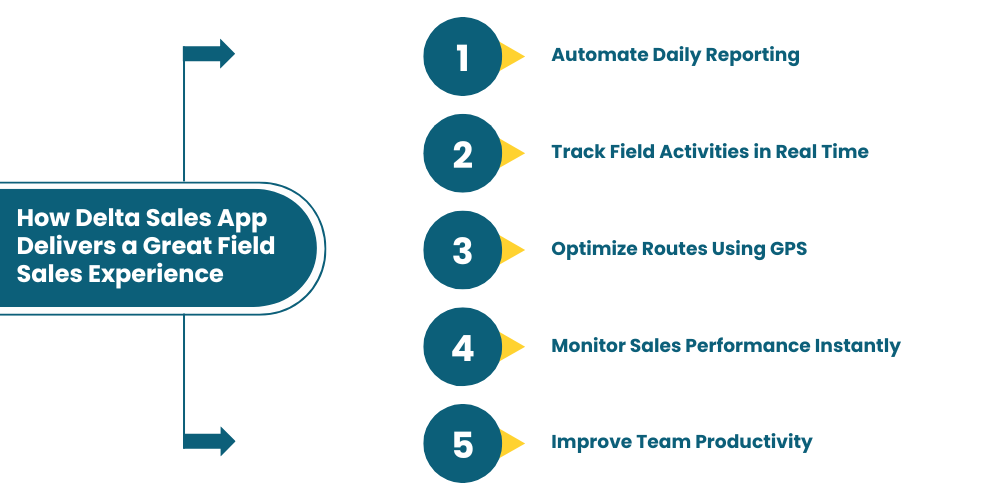
Automate Daily Reporting: Automated EOD reporting captures every field activity throughout the day and generates accurate reports automatically, eliminating manual reporting and saving valuable time.
Track Field Activities in Real Time: Real-time sales tracking allows managers to monitor customer visits, orders, attendance, collections, and field employee activities from a centralized dashboard.
Optimize Routes Using GPS: Built-in GPS tracking and route optimization help sales representatives follow efficient travel routes, reduce travel time, lower operational costs, and increase daily customer coverage.
Monitor Sales Performance Instantly: Advanced sales analytics dashboards provide real-time insights into sales targets, team productivity, customer visits, revenue generation, and territory-wise performance.
Improve Team Productivity: By automating repetitive tasks and simplifying field operations, field sales automation software enables representatives to spend more time selling and building stronger customer relationships.
Beyond these capabilities, Delta Sales App also supports customer management, order management, payment collection, attendance tracking, expense management, task management, distributor management, inventory visibility, and customizable reports, all from a single mobile platform.
By transforming raw field data into actionable business insights, Delta Sales App empowers managers to identify performance gaps, optimize resources, improve customer engagement, and make faster, data-driven decisions. Whether you're managing a small sales team or a large nationwide workforce, the platform scales with your business and supports long-term growth.
With its powerful combination of automation, analytics, and real-time visibility, Delta Sales App helps businesses move beyond day-to-day operational management and build a smarter, more productive, and high-performing field sales organization.
Final Thoughts
The difference between a good and a great field sales application lies in intelligence, automation, and visibility. While good apps handle basic operations, great applications transform how businesses execute sales strategies, improve team productivity, and make faster, data-driven decisions.
As businesses continue their digital sales transformation journey, investing in advanced field force automation software is no longer optional, it's essential for achieving sustainable sales growth and staying ahead of the competition.
If you're ready to empower your field sales team with real-time tracking, intelligent automation, advanced reporting, and actionable insights, Delta Sales App is the ideal solution.
Book a free demo today and discover how Delta Sales App can streamline your field operations, boost sales productivity, and help your business grow faster.