
SFA vs. CRM: Why Your Field Sales Team Needs an Integrated Field Force App
In today’s highly competitive sales environment, organizations with large field sales teams face mounting pressure to execute faster, sell smarter, and operate with complete visibility. Managing on-ground sales representatives, territory executives, merchandisers, and distribution partners requires more than basic customer tracking. It demands intelligent, real-time, execution-focused technology.
This blog explores SFA vs CRM in depth, explaining their differences, limitations, and why modern field sales organizations need an integrated field force app that combines the strengths of both.
Understanding CRM: A Relationship-Centric System
CRM systems were originally designed to centralize customer information and improve relationship management. Their primary goal is to help sales teams track interactions, manage leads, and nurture customer relationships throughout the sales funnel.
Core Capabilities of CRM Systems
-
Storing Customer and Prospect Data
CRM systems centralize customer and prospect information, including contact details, company profiles, and historical data, enabling sales teams to access accurate, consistent records across the organization.
-
Tracking Communication History (Calls, Emails, Meetings)
CRMs log all customer interactions, providing sales teams with a complete communication timeline that improves follow-ups, ensures continuity, and prevents duplicated or missed engagement.
-
Managing Leads and Opportunities
CRM platforms help organize, qualify, and prioritize leads while tracking opportunities through defined sales stages, enabling structured selling and better conversion management.
-
Monitoring Deal Progress and Pipeline Health
CRMs provide visibility into deal stages, win probabilities, and revenue forecasts, helping managers assess pipeline strength and identify risks or bottlenecks early.
-
Supporting Marketing and Customer Service Activities
CRM systems integrate marketing campaigns and customer support data, enabling aligned engagement, personalized messaging, and improved post-sale service experiences.
For inside sales teams, account managers, and B2B relationship-driven sales models, CRM systems provide significant value by creating a single source of truth for customer interactions.
Where CRM Falls Short for Field Sales
Despite their strengths, CRM systems struggle when applied to field sales operations. Most CRMs lack:
-
Real-Time Location Tracking
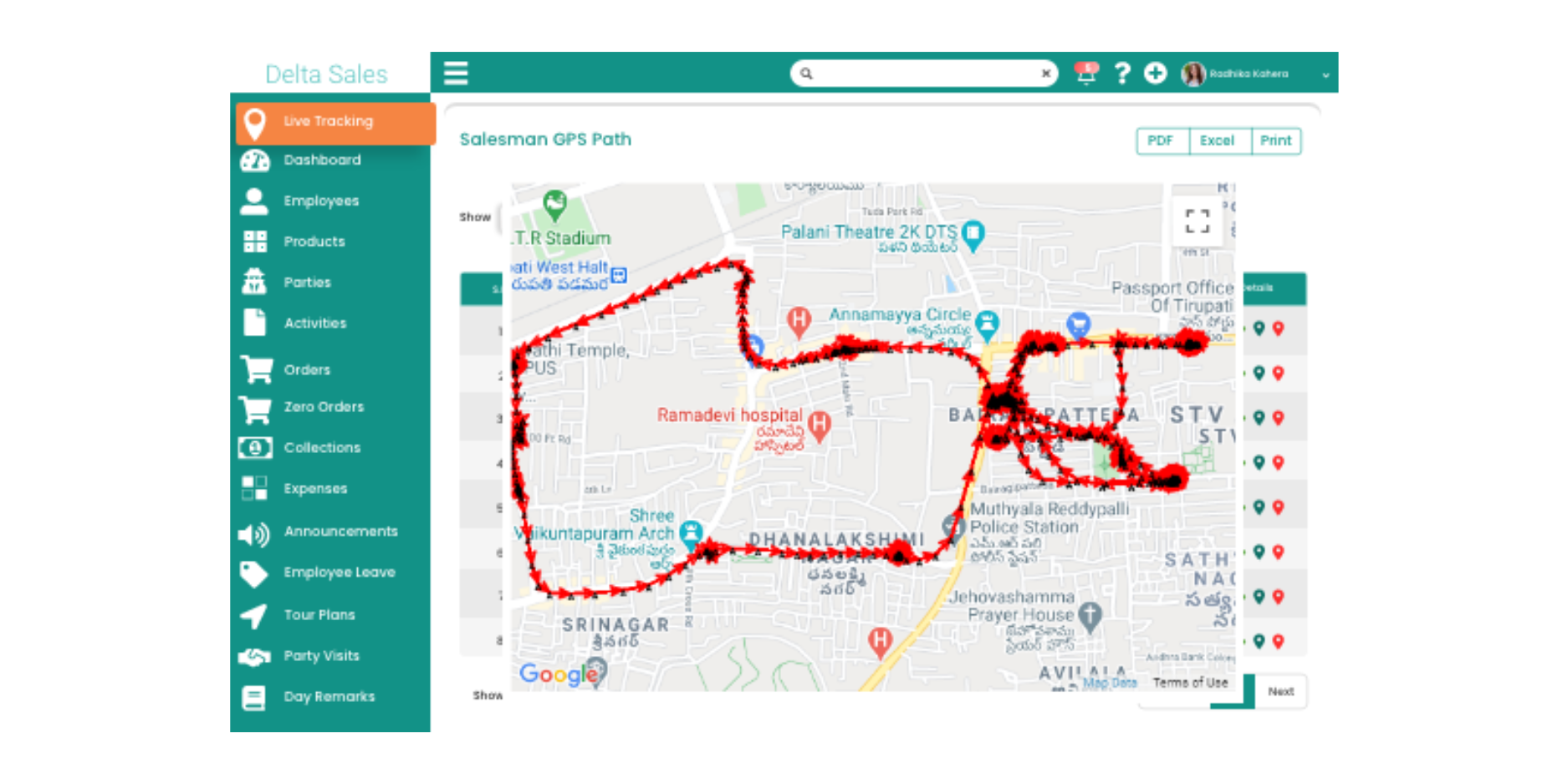
Most CRM systems cannot track live field representative locations, making it difficult for managers to verify visit authenticity, optimize coverage, or respond quickly to changing field conditions.
-
Route Planning and Visit Optimization
CRMs typically lack intelligent route planning tools, forcing field teams to rely on manual planning, which increases travel time, costs, and missed sales opportunities.
-
Outlet-Level Execution Visibility
CRM platforms do not capture granular, outlet-level execution data such as product availability, display compliance, or in-store activity outcomes critical for field sales performance.
-
Offline Functionality for Low-Connectivity Regions
Many CRM systems depend on constant internet connectivity, limiting usability for field teams operating in remote or low-network areas where uninterrupted data access is essential.
-
Daily Activity Monitoring and Productivity Tracking
CRMs offer limited tools to track daily field activities, attendance, and task completion, reducing management visibility into individual productivity and execution discipline.
-
CRM as a Reporting Tool Rather Than an Execution Engine
Due to these limitations, CRM primarily supports reporting and relationship tracking, but fails to actively drive daily field execution, accountability, and operational efficiency.
What Is SFA? A System Built for Field Execution
Sales Force Automation (SFA) is specifically designed to automate and optimize the daily activities of field sales teams. Unlike CRM, which focuses on relationships, SFA focuses on execution, productivity, and performance in the field.
Key Capabilities of SFA
An SFA solution typically includes:
-
Daily Beat Planning and Route Optimization
SFA systems automate daily beat plans and optimize travel routes, helping field representatives reduce travel time, increase outlet coverage, and maximize productive selling hours.
-
Outlet Visit Tracking with GPS Validation
SFA captures GPS-verified outlet visits, ensuring visit authenticity, improving compliance, and providing managers with accurate, real-time visibility into field execution.
-
Order Booking and Invoicing
SFA enables instant order capture and invoice generation at the outlet, reducing manual errors, accelerating order processing, and improving overall sales cycle efficiency.
-
Product Availability and Inventory Visibility
SFA provides real-time visibility into product availability and inventory levels, helping sales teams prevent stock-outs and make informed selling decisions at each outlet.
-
Scheme and Pricing Automation
SFA automatically applies approved pricing and promotional schemes, ensuring consistency, eliminating manual calculations, and preventing revenue leakage during field transactions.
-
Attendance and Activity Tracking
SFA records attendance, working hours, and daily activities digitally, enabling accurate productivity tracking and improved accountability across field sales teams.
-
Real-Time Reporting and Analytics
SFA delivers real-time dashboards and analytics on sales, coverage, and performance, empowering managers to make faster, data-driven decisions.
-
SFA as a Digital Command Center for Field Sales
By integrating execution, tracking, and analytics, SFA functions as a centralized control system that drives efficient field operations and complete managerial visibility.
SFA acts as a digital command center for field representatives, enabling them to execute their responsibilities efficiently while providing managers with complete operational visibility.
SFA vs CRM: Core Differences Explained
|
Aspect |
CRM (Customer Relationship Management) |
SFA (Sales Force Automation) |
|
Purpose and Focus |
Focuses on managing customer relationships, interactions, and long-term engagement across the sales lifecycle. |
Focuses on driving daily field sales execution, activity tracking, and on-ground performance. |
|
Key Question Addressed |
Who is the customer and what is our relationship with them? |
What happened in the field today and how effectively did the sales team execute? |
|
Primary User Base |
Used mainly by inside sales teams, key account managers, and senior leadership. |
Used daily by field sales representatives, supervisors, and regional managers. |
|
Data Granularity |
Captures high-level customer profiles, interactions, and deal-level information. |
Captures detailed, transaction-level, outlet-level, and activity-based execution data. |
|
Mobility and Offline Capability |
Limited mobile optimization and offline functionality for field operations. |
Mobile-first design with strong offline capabilities for uninterrupted field execution. |
Understanding these core differences helps businesses choose the right system based on their sales structure and execution needs. To explore a detailed comparison of CRM and SFA, including challenges and benefits, read our in-depth guide on SFA vs CRM.
Why CRM Alone Is Not Enough for Field Sales Teams
Organizations that rely solely on CRM for managing field sales often face critical execution gaps. Sales managers struggle to verify whether planned visits happened, whether promotions were executed correctly, or whether orders reflect actual market demand.
Without SFA, companies experience:
-
Poor Visibility into Daily Field Activities
Without SFA, managers lack real-time insight into field visits, tasks, and execution quality, making it difficult to monitor compliance, identify gaps, or support field teams effectively.
-
Inaccurate Sales Forecasting
CRM-only systems rely on delayed or incomplete data, leading to inaccurate forecasts that fail to reflect actual field execution, market demand, and real sales momentum.
-
Delayed Decision-Making
Limited real-time execution data causes management decisions to be reactive rather than proactive, slowing responses to market changes, competitor activity, and field-level challenges.
-
Low Sales Representative Productivity
Field representatives spend excessive time on manual reporting and administrative tasks, reducing selling time and overall productivity without execution-focused automation.
-
High Dependency on Manual Reporting
Manual data entry and end-of-day reporting increase errors, consume valuable time, and delay performance insights critical for managing large field sales operations.
-
Impact on Strategy Execution and Revenue Growth
This gap between sales strategy and on-ground execution weakens market penetration, slows growth, and limits scalability across territories and distribution networks.
This disconnect between strategy and execution directly impacts revenue growth and market expansion.

The Rise of Integrated Field Force Apps
Modern sales organizations no longer see SFA vs CRM as an either-or decision. Instead, they recognize the need for integrated field force apps that combine the relationship intelligence of CRM with the execution power of SFA. 147An integrated field force app acts as a unified platform where:
-
Seamless Customer Data Flow Between CRM and SFA
Integrated field force apps synchronize customer data across CRM and SFA, eliminating silos and ensuring sales teams always work with accurate, up-to-date customer information.
-
Real-Time Field Execution Updates Customer Records
Field activities such as visits, orders, and feedback instantly update customer records, ensuring relationship data reflects actual on-ground interactions and execution outcomes.
-
Holistic View of Relationships and Performance for Managers
Managers gain a unified dashboard combining customer engagement metrics with field execution data, enabling comprehensive performance evaluation and informed decision-making.
-
Alignment of Sales Strategies with Ground Realities
Integrated platforms connect strategic sales plans with real-time field insights, ensuring targets, promotions, and coverage strategies align with actual market conditions.
-
Data-Driven Strategic Decision-Making
By leveraging accurate, real-time execution data, leadership can make faster, more confident strategic decisions that improve sales effectiveness and market responsiveness.
Key Benefits of an Integrated SFA and CRM Approach
|
Benefit Area |
SFA Contribution |
CRM Contribution |
|
End-to-End Sales Visibility |
Provides real-time field execution data such as visits, orders, activity tracking, and outlet-level performance. |
Centralizes customer interactions, order history, and account information for a complete relationship view. |
|
Improved Field Productivity |
Automates daily tasks, visit planning, order booking, and reporting, enabling sales representatives to spend more time selling. |
Supports opportunity tracking and customer communication, reducing follow-up inefficiencies and duplicated efforts. |
|
Accurate Forecasting and Planning |
Feeds real-time execution and sales data into dashboards, reflecting actual market activity and ground realities. |
Uses consolidated execution and relationship data to generate more reliable forecasts and strategic plans. |
|
Better Territory and Route Management |
Optimizes daily routes, beat plans, and workload distribution based on real field performance data. |
Supports territory-level account visibility and planning aligned with customer segmentation and priorities. |
|
Stronger Customer Relationships |
Captures on-ground insights, feedback, and service execution details to improve in-store and field-level engagement. |
Leverages execution data with customer history to enable personalized, timely, and consistent customer interactions. |
Industry Use Cases Where SFA Outperforms CRM Alone
-
FMCG and Consumer Goods
Field execution, retail visibility, and distributor coordination are critical. SFA enables outlet-level tracking, while CRM supports key account management.
-
Pharmaceutical Sales
Medical representatives rely on SFA for daily call planning, compliance, and sample tracking, with CRM supporting doctor relationship management.
-
Telecom and Utilities
Field sales and service teams require real-time updates, location tracking, and instant order processing, which CRM alone cannot deliver.
-
Distribution-Driven Businesses
SFA ensures accurate secondary sales tracking, distributor visibility, and last-mile execution.
Choosing the Right Integrated Field Force App
When evaluating solutions in the SFA vs CRM landscape, organizations should prioritize platforms that:
-
Mobile-First and Offline-Enabled Architecture
A mobile-first, offline-enabled platform ensures uninterrupted field operations, allowing sales representatives to work efficiently in remote areas and sync data automatically once connectivity is restored.
-
Seamless CRM Integration
The platform should integrate smoothly with existing CRM systems, enabling consistent customer data flow and eliminating duplication, manual reconciliation, and fragmented sales information.
-
Real-Time Analytics and Dashboards
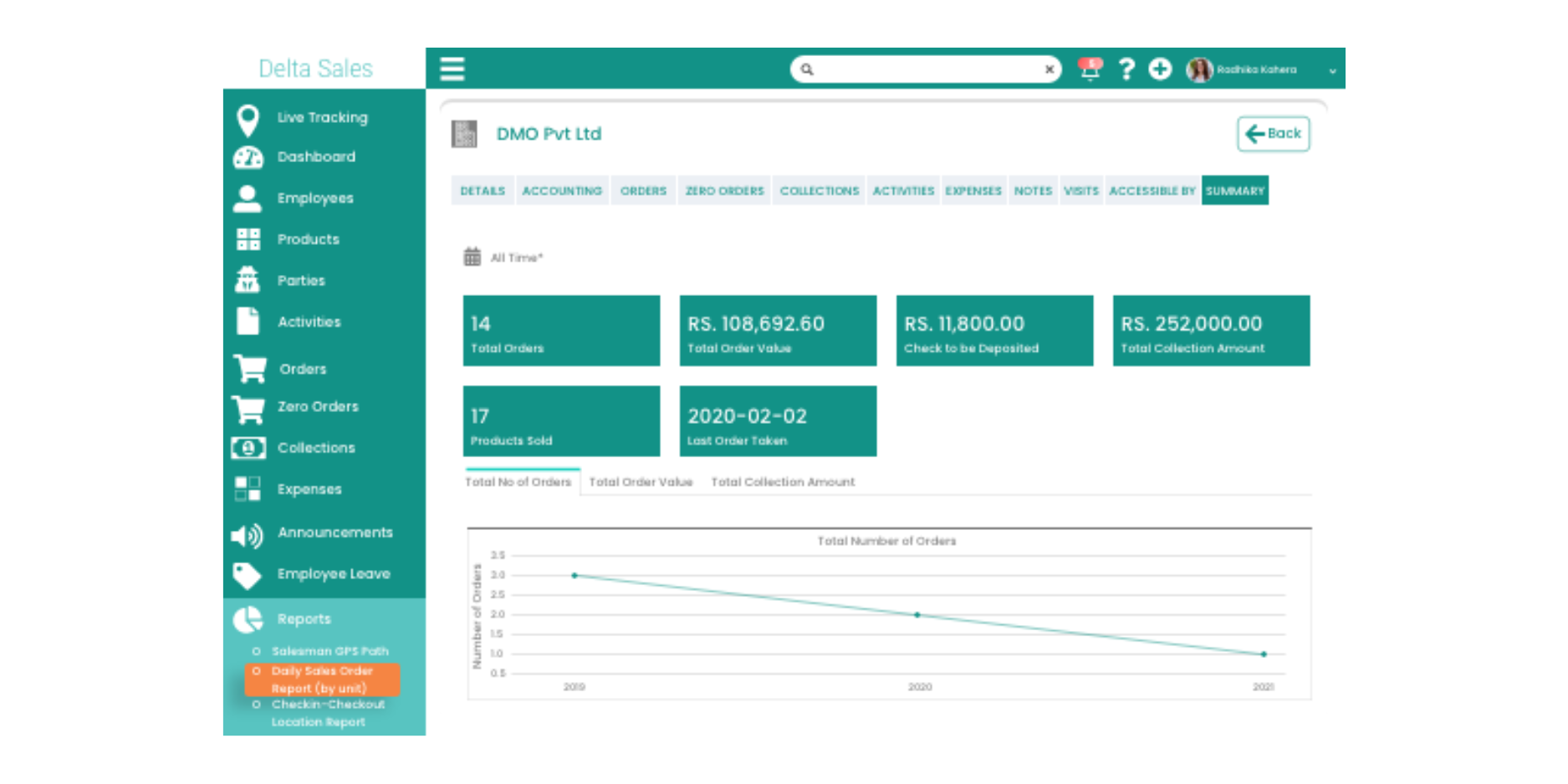
Real-time dashboards provide instant visibility into sales performance, field activities, and execution metrics, empowering managers to make faster, data-driven decisions.
-
Scalability Across Regions and Teams
A scalable solution supports business growth by accommodating expanding sales teams, territories, and markets without performance issues or complex system reconfigurations.
-
Customization Based on Industry Needs
Customization allows the platform to adapt workflows, reports, and processes specific to industry requirements, ensuring higher adoption and better alignment with business operations.
-
Integrated Field Force App as a Strategic Asset
When thoughtfully designed, an integrated field force app drives execution excellence, operational efficiency, and long-term competitive advantage beyond basic software functionality.
A well-designed integrated field force app becomes a strategic asset rather than just a software tool.
Conclusion
The debate of SFA vs CRM highlights a fundamental truth: CRM alone cannot power modern field sales operations. While CRM remains essential for relationship management, SFA is indispensable for driving execution, accountability, and on-ground performance.
Delta Sales App exemplifies this integrated approach by bringing together intelligent Sales Force Automation, seamless CRM integration, real-time analytics, and mobile-first execution in a single platform. It empowers field teams to execute better every day while giving managers complete visibility and control.
Take control of your field sales performance with Delta Sales App.
Request a Demo Today and see how integrated SFA and CRM can transform your sales execution.