
How to Measure Time Spent per Store and Why It Matters for Retail Sales
Have you ever glanced at your sales team's visit report and thought, "Were they truly connecting with the retailer, or did they simply check in and move on?"
Many retail sales managers keep an eye on the number of customer visits made each day. However, just counting visits doesn't paint the whole picture. A sales representative might complete 20 visits in a single day but could spend only a few minutes at each location, without engaging in meaningful conversations about new products, checking inventory, or placing orders.
This is why the time spent per store has emerged as one of the most crucial metrics for retail sales performance. It allows managers to gauge whether field representatives are dedicating enough time to foster relationships with retailers, showcase new products, enhance merchandising, and ultimately drive more sales.
Thanks to modern field sales automation software, businesses can effortlessly track visit duration, GPS location, check-in/check-out times, and other field activities, providing managers with complete insight into every customer interaction.
In this guide, you'll discover what time spent per store truly means, how to measure it effectively, why it holds significance, and how to leverage this data to boost retail sales performance.
What Is Time Spent per Store?
Time spent per store is the total duration a sales representative spends at a retail outlet during a customer visit. It starts when the representative checks in at the store and ends when they check out after completing all planned activities.
Unlike simply counting the number of outlets visited, this metric measures how much time is actually invested in interacting with the retailer. It provides managers with valuable insight into whether field representatives are conducting meaningful sales activities or simply making quick visits to complete their daily targets.
A productive customer visit typically involves several tasks, such as:
-
Discussing product availability and stock requirements
-
Pitching new products or product line extensions
-
Taking sales orders
-
Checking shelf placement and product visibility
-
Informing retailers about ongoing offers and schemes
-
Collecting retailer feedback
-
Resolving issues related to previous orders or deliveries
When a sales representative visits a grocery store to introduce a new beverage, they engage in various meaningful activities: checking stock levels, explaining promotional offers, taking orders, and addressing any questions from the retailer. This thoughtful approach naturally requires more time than a quick visit where someone merely marks attendance and leaves after a short chat.
It's important to recognize that time spent at a store shouldn't be seen as just a number. More time at an outlet doesn't guarantee a productive visit. Businesses should assess the duration of visits in conjunction with the specific activities accomplished, such as the number of orders taken, products presented, merchandising evaluations, and the level of interaction with the retailer.
When tracked effectively through a field sales tracking app, the time spent per store can serve as a valuable measure of customer engagement, sales efforts, and the overall quality of visits. This insight allows managers to determine if their field teams are genuinely adding value during each customer interaction, rather than simply focusing on the quantity of outlets visited.
Why Time Spent per Store Matters
In retail sales, true success goes beyond the sheer number of stores a sales representative visits each day. It hinges on the meaningful interactions and accomplishments during each visit. A representative who hurriedly checks off multiple outlets may seem busy, but if they fail to connect with retailers, share insights about new products, or uncover potential sales opportunities, those visits do little to foster business growth. Engaging authentically with retailers is what truly drives success in the field.
That’s why time spent per store is an important measure of performance. It helps managers to assess the quality of customer visits, not just the quantity. Knowing how much time sales reps spend at each outlet helps businesses understand if they are spending enough time on activities that drive sales, build retailer relationships, and improve in-store execution.
Time spent in store can also help managers spot gaps in field operations. Very short visits may indicate that representatives are missing some important tasks, while very long visits may indicate operational problems or poor planning of the route. Visit duration combined with sales results provides a fuller picture of field performance and helps managers make better decisions.
-
Assists Managers in Validating Meaningful Customer Visits
A visit report that is marked as complete doesn't necessarily reflect genuine engagement. Some representatives might quickly check in, spend just a few moments in the store, and rush off to the next location without truly connecting with the retailer or fulfilling their planned tasks. By tracking the time spent at each store, managers can gain insights into whether representatives are genuinely interacting with customers rather than just ticking off visits. This approach fosters accountability and ensures that field visits are meaningful and aligned with business goals.
-
Ensures New Products and Product Line Extensions Are Properly Pitched
Introducing a new product goes beyond simply handing over a brochure or saying its name. Sales representatives must take the time to engage with retailers, explaining the product's features, showcasing its benefits, discussing pricing, answering questions, and suggesting the best options based on what customers in the store are looking for. If representatives only spend a few fleeting moments at each location, they risk missing the opportunity to effectively present new products or expand existing lines. By monitoring how long visits last, managers can ensure their teams dedicate sufficient time to promote products that not only boost sales but also enhance their presence on the shelves.
-
Increases Accountability Across Field Teams
When managers can see how long customers are visited, along with GPS check-ins and visit records, they can spot unusual trends, like frequent short visits or incomplete interactions. This insight motivates representatives to engage meaningfully during visits and discourages behaviors like simply checking in without making real sales efforts. It fosters a culture of transparency and accountability within the entire field sales team.
-
Improves Retailer Relationships
Retailers tend to prefer working with representatives who genuinely grasp their challenges and offer meaningful support. Building strong relationships involves engaging in regular conversations, collaboratively solving problems, and following up consistently, rather than making hurried visits. Taking the time to connect during customer visits enables sales representatives to truly understand what retailers need, address their questions, explore business opportunities, and foster trust. This approach nurtures stronger partnerships, cultivates loyalty, and encourages repeat business over time.
-
Leads to Better Order Collection Opportunities
A salesperson who takes the time to truly understand stock levels, engage in discussions about popular products, and recognize when replenishment is needed is more likely to gather larger and more precise orders. Genuine conversations open the door for upselling, cross-selling, and suggesting additional products that retailers might have missed. Consequently, thoughtful customer visits often lead to increased order values and enhanced sales performance.
-
Improves Merchandising and Shelf Execution
Customer visits go beyond just taking orders; they are an opportunity for representatives to connect with retailers on a deeper level. This includes checking product availability, ensuring products are well-placed on shelves, verifying that promotional displays are eye-catching, and spotting any out-of-stock items. These tasks demand time and keen attention to detail. By measuring how long visits last, we can ensure that representatives are fully engaged in these important merchandising activities, which not only boost product visibility but also enrich the overall shopping experience for customers.
-
Provides Better Performance Insights
Visit duration gains significant importance when integrated with other essential sales metrics like outlet coverage, order value, customer visit frequency, and secondary sales. By moving beyond a simple count of stores visited, managers can gain insights into how customer interactions influence sales results. This approach aids in recognizing high-performing sales representatives, refining sales strategies, and enhancing overall productivity in the field.
Why Managers Need Visit Duration Data
For a sales manager, simply knowing that a store was visited doesn't tell the whole story. The real question is what took place during that visit. Did the sales representative take the time to connect with the retailer, or did they just check in, mark the visit as done, and rush off to the next location? Without data on how long visits last, managers struggle to see the true quality of field activities. Daily reports might show that all scheduled outlets were visited, but they fail to reveal whether the representative engaged in meaningful conversations, showcased new products, or discovered ways to boost sales.
This insight is particularly crucial in sectors like FMCG, consumer goods, pharmaceuticals, and distribution, where each customer visit is a chance to build stronger relationships with retailers and drive sales growth. By tracking the time spent at each store, managers can gain a clearer picture of how their field teams are managing their time and whether their visits are genuinely effective.
Visit duration data helps managers answer questions like:
-
Did the sales representative spend enough time with the retailer?
-
Was the complete product range presented, including new product line extensions?
-
Were new SKUs or promotional offers discussed?
-
Did the representative inspect stock levels before taking an order?
-
Were shelves checked for product availability and visibility?
-
Was the retailer's feedback recorded and addressed?
-
Did the representative simply check in and leave or conduct a complete sales visit?
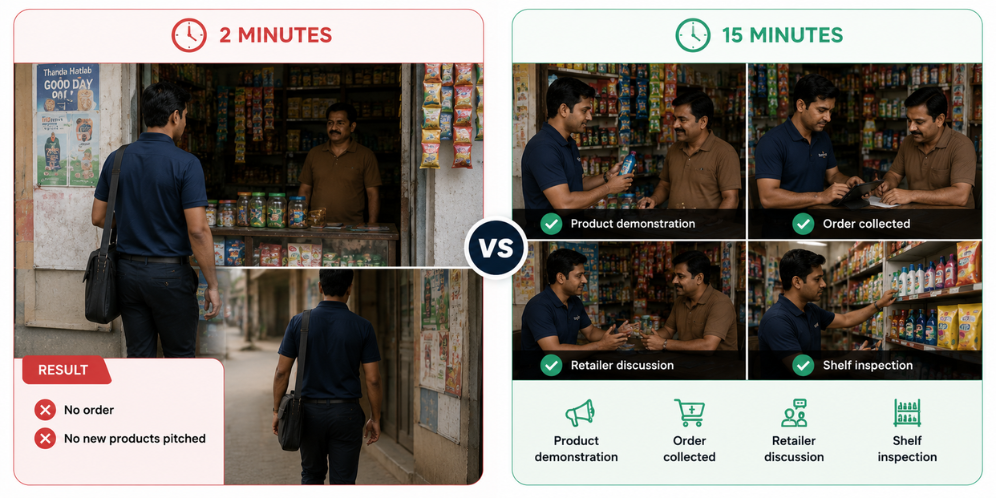
If a representative only spends two minutes at a large supermarket with various product categories, it can lead to doubts about whether they managed to complete all their intended tasks. On the other hand, a 15-minute visit that involves engaging in product discussions, checking inventory, collecting orders, and merchandising is much more likely to provide meaningful benefits for both the retailer and the business.
How to Measure Time Spent per Store
Effectively tracking the time spent at each store goes beyond simply asking sales representatives to jot down their arrival and departure times. Manual logging can often lead to inaccuracies, consume valuable time, and be susceptible to mistakes or manipulation. A more efficient approach is to implement a digital customer visit tracking solution that seamlessly records visits, confirms the representative's location, and accurately calculates the time spent at each outlet.
The journey starts when a sales representative arrives at the retailer and checks in using a mobile app. This system captures the check-in time, GPS location, and relevant visit details. During their time at the store, the representative engages in various sales activities, such as presenting products, checking inventory, placing orders, or taking photos of the store. After completing all necessary tasks, they check out, enabling the system to automatically determine the total duration of the visit.
-
GPS Check-In
-1784522880.png)
To effectively measure how long a sales representative spends at a store, it all starts with accurately noting the moment they arrive. SFA uses GPS-based Employee Location Tracking to confirm the representative's GPS location before they can check in. This way, we ensure that the visit officially begins only when the salesperson is actually at the customer's location, which helps prevent any false or remote check-ins. By utilizing GPS-based check-ins, we also enhance customer visit tracking, making sure that the scheduled visits are carried out at the right outlet and in line with the planned route.
-
Customer Visit Activities
Once the sales representative checks in, they dive into the planned activities for that customer visit. This is where the true value of the visit unfolds. Instead of just ticking a box for attendance, representatives should seize the opportunity to connect with retailers, discover new possibilities, and boost sales.
Common activities during customer visits include:
-
Showcasing new products and extensions to existing lines
-
Taking orders from retailers
-
Checking on stock levels
-
Ensuring products are well-placed and visible on shelves
-
Discussing promotional offers and schemes
-
Taking photos of merchandising displays or shelf setups
-
Gathering feedback from retailers
-
Jotting down notes from the visit
-
GPS Check-Out
After the sales representative wraps up all their activities, they simply check out using the app. The system captures the check-out time and effortlessly calculates how long they spent at the store by looking at the check-in and check-out times.
With automated GPS check-out, the visit duration is tracked accurately, eliminating the need for manual entries. This feature also helps managers spot any unusually brief visits, which could suggest a lack of customer interaction or that some sales tasks were left unfinished.
-
Visit Reports and Analytics
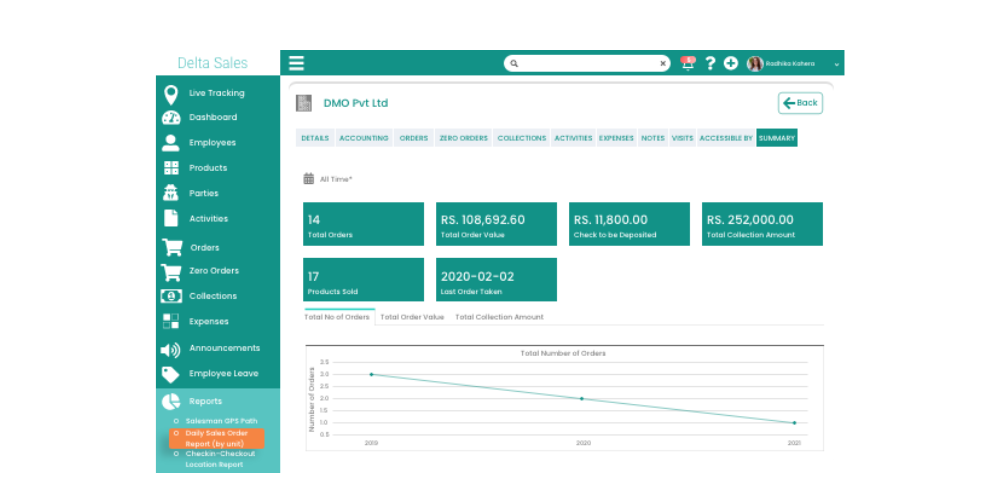
After the visit is completed, the Customer Visit Tracking system generates detailed reports that managers can access in real time. These reports provide a comprehensive view of each customer interaction, making it easier to monitor field performance and improve accountability.
A typical visit report includes:
-
Check-in and check-out time
-
Total time spent per store
-
GPS-verified visit location
-
Customer details
-
Orders placed during the visit
-
Products presented
-
Images captured
-
Visit notes
-
Visit completion status
Combining Time Spent with Other Sales Metrics
Although the time spent at each store can provide insights into customer engagement, it’s important not to look at this metric alone. For instance, a sales representative who spends 20 minutes in a store may not be more effective than one who only spends 10 minutes. What truly matters is what they accomplish during their visit.
To gain a fuller understanding of field performance, managers should pair visit duration with other important sales metrics. This combined approach can reveal whether customer interactions are fostering stronger relationships with retailers, driving increased sales, and enhancing retail execution.
-
Customer Visit Tracking
Customer Visit Tracking is a crucial metric to pair with visit duration. It assesses if sales representatives are adhering to their scheduled visits and logs the time spent at each location. For instance, if a representative routinely spends just three minutes at each outlet, it may prompt managers to examine the quality of customer interactions. On the other hand, suitable visit lengths, along with documented visit activities, suggest that representatives are engaging in substantial customer interactions rather than merely fulfilling attendance requirements.
-
Sales Orders
The time customers spend in a store should ideally translate into tangible business results. By analyzing how long customers stay compared to sales order data, managers can uncover whether longer visits lead to bigger purchases or more items bought. When representatives take the time to engage with retailers, understand their needs, suggest complementary products, and introduce new stock-keeping units (SKUs), businesses are more likely to experience a boost in order quantities and enhanced sales performance.
-
Secondary Sales
The length of time representatives spend with retailers gains significance when viewed through the lens of a secondary sales automation system. When representatives dedicate themselves to grasping the needs of retailers, advocating for product line extensions, and making sure shelves are stocked, they often play a crucial role in boosting secondary sales. If stores that benefit from longer, meaningful visits consistently see improved secondary sales, managers can leverage this knowledge to encourage and share effective sales strategies throughout their teams.
-
Beat Plan Compliance
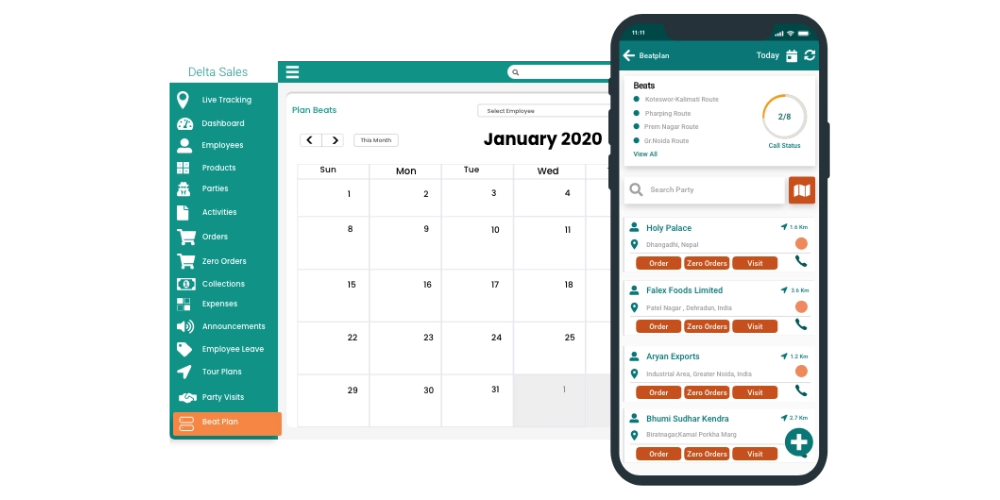
Evaluating visit duration in conjunction with beat planning data enables managers to understand how well representatives are striking a balance between covering outlets and engaging with customers. For example, if a representative is trying to visit too many stores in one day, they might rush through each location, which can diminish the quality of their interactions with customers. By keeping an eye on beat plan compliance alongside how long visits last, managers can fine-tune daily routes and make sure representatives have ample time for meaningful and effective visits.
-
Retail Execution
The time representatives spend in each store should be considered in conjunction with retail execution metrics. During their visits, representatives play a vital role in connecting with customers by checking product availability, ensuring products are correctly placed on shelves, capturing engaging merchandising images, and making sure promotional displays are set up effectively. When a representative dedicates sufficient time at a store but the merchandising standards still fall short, managers have the opportunity to pinpoint areas needing improvement and offer personalized coaching. Conversely, when retail execution is strong and visit durations are appropriate, it shows that customer interactions are genuinely beneficial.
How Delta Sales App Helps Measure Time Spent per Store
Understanding how much time is spent at each store becomes truly meaningful when the data is reliable, easily accessible, and integrated with other field sales activities. The Delta Sales App combines all these features into a single platform, empowering businesses to keep track of customer visits, enhance accountability, and make informed decisions based on data.
-1784693514.png)
Equipped with customer visit tracking and field sales monitoring tools, the Delta Sales App effortlessly logs every customer interaction from the moment a sales representative checks in until they check out. Managers can pinpoint exactly when a representative arrives at a store, how long they remain, what tasks they complete, and whether those visits lead to significant business results.
Rather than depending on manual reports or guesswork, businesses can enjoy real-time insights into the effectiveness of their field sales teams.
-
GPS-Verified Customer Visits
The Delta Sales App incorporates GPS technology to ensure that sales representatives are genuinely at the retailer's location before they check in. This approach helps to prevent false visits and gives managers peace of mind, knowing that every customer interaction logged truly occurred.
-
Automatic Time Tracking
The app seamlessly tracks when representatives check in and out, accurately measuring the time spent at each store without the need for manual input. This feature allows managers to easily oversee visit durations across all locations and spot any unusually brief or extended visits that might require further investigation.
-
Comprehensive Customer Visit Tracking
Every interaction with a customer is carefully recorded in our customer visit tracking system, giving managers a clear insight into field activities. Beyond just tracking the duration of visits, they can delve into:
-
The timeline of customer visits
-
Frequency of visits
-
The GPS coordinates of each visit
-
Check-in and check-out timestamps
-
Observations made during visits
-
Photos of the store
-
The current status of each visit
This method guarantees a thorough account of every customer visit, extending beyond merely verifying if the outlet was visited.

-
Track Sales Activities During Every Visit
The time spent at a store transforms into a valuable experience when paired with the meaningful activities undertaken during the visit. The Delta Sales App empowers sales representatives to
-
Capture sales orders seamlessly
-
Introduce new products and exciting product line extensions
-
Take engaging merchandising photos
-
Verify stock availability effortlessly
-
Gather insightful retailer feedback
-
Process payments conveniently
-
Jot down visit notes for future reference
This approach allows managers to gain a deeper understanding of not only how long representatives spent at a store but also the impactful contributions they made during that time.
-
Real-Time Reports and Performance Analytics
Delta Sales App empowers managers with intuitive dashboards and insightful reports that blend visit duration with essential sales metrics. By examining customer visit tracking, order data, outlet coverage, and representative productivity all in one place, businesses can uncover performance trends, refine sales routes, and support their field teams more effectively. From spotting hurried customer visits to keeping an eye on key accounts or ensuring that representatives dedicate ample time to introducing new products, the Delta Sales App delivers the valuable insights necessary to enhance retail sales performance.
Conclusion
Understanding how much time is spent in each store allows businesses to gain valuable insights into every customer interaction. Rather than just counting the number of stores visited, managers can assess if their sales representatives are dedicating enough time to showcase new products, introduce product line extensions, check inventory levels, build strong relationships with retailers, and create meaningful sales opportunities. When this information is paired with customer visit tracking, GPS verification, sales orders, and retail execution metrics, the duration of visits becomes a crucial measure of field sales effectiveness. It enables businesses to spot hurried visits, enhance accountability, optimize sales routes, and ensure that every customer engagement contributes to overall growth. With the Delta Sales App, you can effortlessly track customer visits, monitor the time spent at each store, verify field activities, and receive real-time insights into your sales team's performance: all from one convenient platform.
Are you ready to elevate the quality of every customer visit?
Schedule a free demo of the Delta Sales App today and see how automated customer visit tracking and field sales analytics can empower your team to boost productivity, strengthen retailer relationships, and drive increased sales.