Top 10 Retail Execution Software Solutions for FMCG Brands
Retail execution software helps FMCG brands make sure their products are moved, shown, advertised, and sold correctly in stores. Companies that run distributor networks and field sales teams find it hard to keep retail execution steady. Sales managers want to check that reps visit the stores, that key items are on hand, that orders are logged, that displays match the brand look, and that retailers get the focus they need to boost sales. When field data is not trustworthy, these tasks usually rely on paper reports, phone calls, and uneven market feedback.
The best retail execution software turns these tasks into a process. It links store visit logs, order entry, merchandising checks, photo confirmation, inventory checks, and instant reports. Some tools concentrate on shelf data and planogram rules, while others link execution to beat planning, distributor control, secondary sales, and full sales force automation.
This blog compares the top 10 retail execution software solutions for FMCG brands, outlining their key capabilities, ideal use cases, and limitations to help you identify the right fit for your business. Before comparing vendors, explore our guide to retail execution software to understand its key features, benefits, and role in improving FMCG retail operations.
Leading FMCG Retail Software Solutions
Retail execution means more than recording a salesperson's visit. FMCG teams need to know whether planned outlets were covered, priority SKUs were available, orders were booked, promotions were executed, and distributor stock could support demand.
The platforms below approach these challenges differently. Some emphasize field sales and distribution automation, while others specialize in shelf analytics, merchandising, or enterprise consumer goods management. The best choice is the one that fits your team's daily workflows and the level of retail visibility your business requires.
1. Delta Sales App
Best for: FMCG brands, distributors, and wholesalers managing field sales and retail coverage
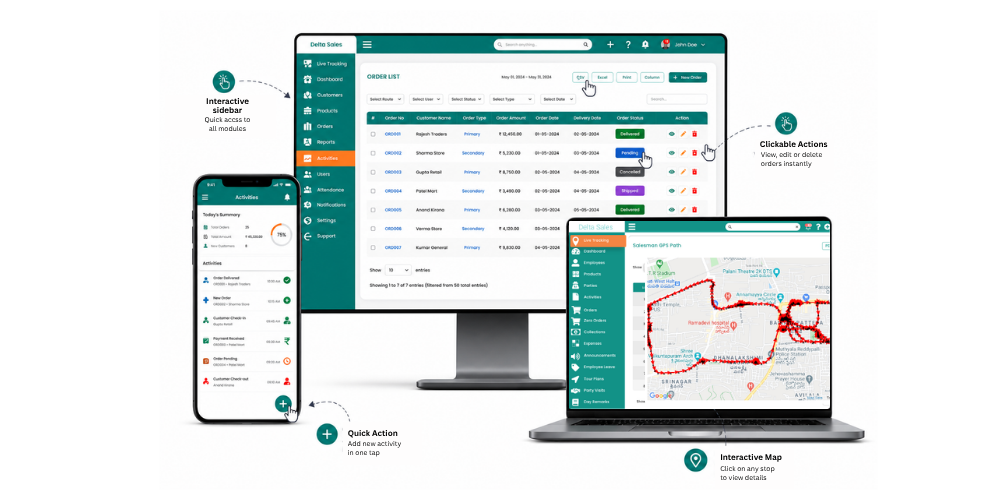
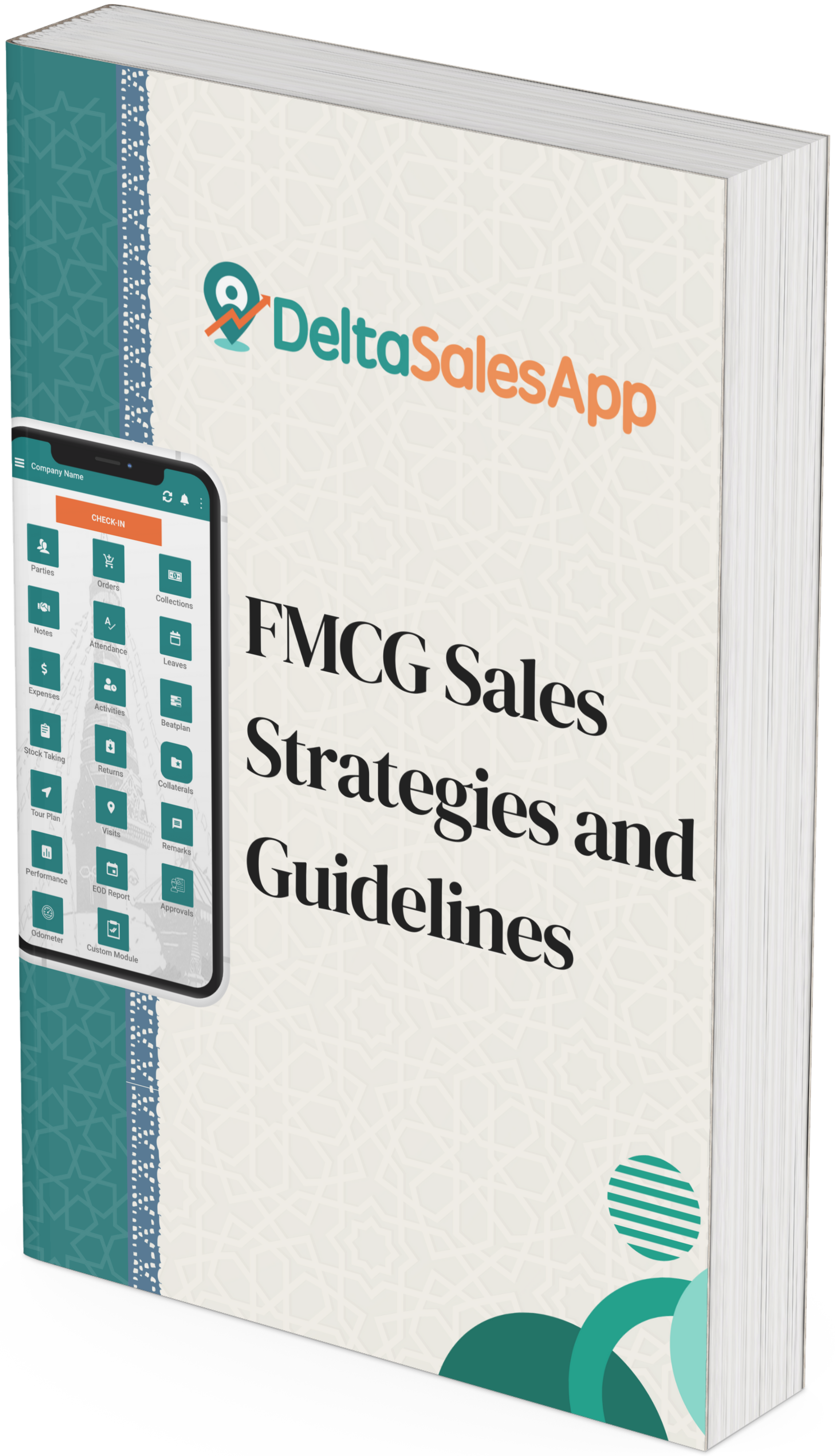
Delta Sales App is a field sales and distribution platform for businesses that need better visibility into outlet visits, order booking, sales activities, and field team performance. It is particularly relevant to FMCG businesses that depend on distributor networks and recurring retailer visits to maintain secondary sales.
Rather than treating retail execution as an isolated merchandising function, the platform connects daily field activities with customer management, orders, inventory-related workflows, and reporting.
Key retail execution capabilities
-
Outlet visit tracking: Monitor customer visits and use location-based verification to improve visibility into planned field activity.
-
Beat planning: Assign routes and outlets to sales representatives and monitor execution against planned coverage.
-
Order booking: Capture retailer orders through the mobile app, helping managers track order activity and sales performance.
-
Stock and inventory workflows: Support stock-taking and inventory visibility alongside order and distribution processes.
-
Attendance and activity reporting: Track attendance, field movements, daily work logs, and end-of-day sales reports.
-
Offline functionality: Continue supported field workflows when connectivity is unavailable, with data syncing when the connection returns.
Where it fits best
Consider Delta Sales App if your main challenge is understanding what happens between a distributor and the retailer. For example, a sales manager may need to identify which outlets were visited, where orders were generated, which routes were completed, and how individual representatives performed.
Bringing these activities into one system can reduce dependence on manually consolidated DSRs and repeated phone follow-ups. It also helps managers compare planned coverage with actual field activity.
2. Salesforce Consumer Goods Cloud
Best for: Enterprise FMCG brands with complex sales operations
Salesforce Consumer Goods Cloud helps consumer goods companies connect retail execution with customer relationship management and broader sales processes. It supports field teams in planning store visits, capturing retail information, and monitoring execution across different outlets.
Key features:
-
Retail visit planning and execution
-
Mobile order capture and inventory tracking
-
Retail audits and promotional compliance
-
Customer data management and performance reporting
Who should consider it: Large FMCG organizations that already use Salesforce or need retail execution connected with enterprise CRM workflows, customer data, and centralized reporting.
3. Trax
Best for: AI-powered shelf analytics and merchandising execution
Trax specializes in retail intelligence, helping FMCG brands understand what is happening on store shelves. Its technology focuses on analyzing shelf images and converting visual information into insights about product availability, placement, and merchandising performance.
Key features:
-
AI-powered shelf-image analysis
-
Product availability and shelf monitoring
-
Planogram and merchandising compliance
-
Retail execution insights and reporting
Who should consider it: FMCG brands that prioritize shelf visibility, product placement, share of shelf, and merchandising compliance across large retail networks.
4. Repsly
Best for: Field merchandising and retail execution teams
Repsly helps brands manage field representatives and coordinate activities across retail locations. It brings store visits, field data collection, and performance reporting into a centralized system, giving managers better visibility into execution.
Key features:
-
Store visit scheduling and territory management
-
Retail audits, surveys, and field data collection
-
Order and activity tracking
-
Dashboards and field team performance reporting
Who should consider it: FMCG brands and consumer goods companies with dedicated merchandising or field sales teams that need to coordinate store visits, collect retail information, and evaluate execution across territories.
5. Bizom
Best for: FMCG sales automation and distribution management
Bizom offers technology designed for consumer goods companies managing complex sales and distribution networks. Its platform connects field sales activities with distributor operations and retail-level information, helping businesses monitor sales performance and improve route-to-market execution.
Key features:
-
Beat planning and outlet coverage
-
Retailer order booking and field sales automation
-
Distributor and inventory-related workflows
-
Sales analytics and distribution performance reporting
Who should consider it: FMCG businesses that manage extensive distributor networks and want to connect field sales execution with distribution operations, retailer servicing, and sales performance analysis.

6. FieldAssist
Best for: FMCG field sales and route-to-market execution
FieldAssist provides sales force automation and distribution technology for consumer goods businesses. It helps companies organize field activities, manage retailer interactions, and connect on-ground sales operations with business reporting.
Key features:
-
Beat planning and field visit management
-
Retailer order booking
-
Merchandising and retail execution workflows
-
Sales performance and distribution analytics
Who should consider it: FMCG brands looking to coordinate field sales teams, improve outlet coverage, streamline retailer order collection, and gain better visibility into sales execution across territories.
7. Movista
Best for: Retail task management and merchandising operations
Movista focuses on managing distributed retail workforces and coordinating in-store activities. Its platform helps businesses assign tasks, standardize store-level processes, and monitor whether planned activities are completed across retail locations.
Key features:
-
Store task assignment and scheduling
-
Digital checklists and retail surveys
-
Photo-based proof of execution
-
Workforce coordination and task reporting
Who should consider it: Consumer goods brands, retailers, and merchandising organizations that manage recurring store tasks, promotional campaigns, product displays, and field teams working across multiple locations.
8. SalesDiary
Best for: FMCG field sales and distribution automation
SalesDiary provides digital tools for managing field sales activities and distribution workflows. It helps businesses organize retailer visits, capture orders, and track field performance, reducing dependence on manual reporting and disconnected spreadsheets.
Key features:
-
Beat planning and outlet management
-
Mobile order booking
-
Field activity and sales reporting
-
Retail execution and distribution workflows
Who should consider it: FMCG manufacturers and distributors that want to digitize everyday sales operations, improve retailer coverage, and give managers clearer visibility into field activities and order collection.
9. Mobisy / BeatRoute
Best for: Route-to-market and field sales automation
Mobisy is associated with BeatRoute, a sales execution platform designed to help businesses coordinate field operations and manage route-to-market processes. It supports structured field workflows, enabling companies to organize retailer interactions and monitor sales activities across their distribution networks.
Key features:
-
Beat planning and visit management
-
Retailer and customer management
-
Mobile order booking
-
Field activity tracking and sales reporting
Who should consider it: FMCG brands and distribution-led businesses that need consistent field sales processes, structured outlet visits, and better visibility into sales execution across territories.
10. Ivy Mobility
Best for: Enterprise consumer goods sales and distribution
Ivy Mobility provides enterprise software for consumer goods companies managing sales, distribution, and route-to-market operations. Its solutions focus on connecting field activities with broader business processes to help organizations coordinate execution across their distribution networks.
Key features:
-
Field sales and retailer management workflows
-
Order capture and sales reporting
-
Distribution and route-to-market processes
-
Enterprise system integration capabilities
Who should consider it: Medium-to-large consumer goods organizations seeking to coordinate field sales, distribution operations, and business systems across multiple territories and markets.
How to Choose Retail Execution Software for Your FMCG Brand
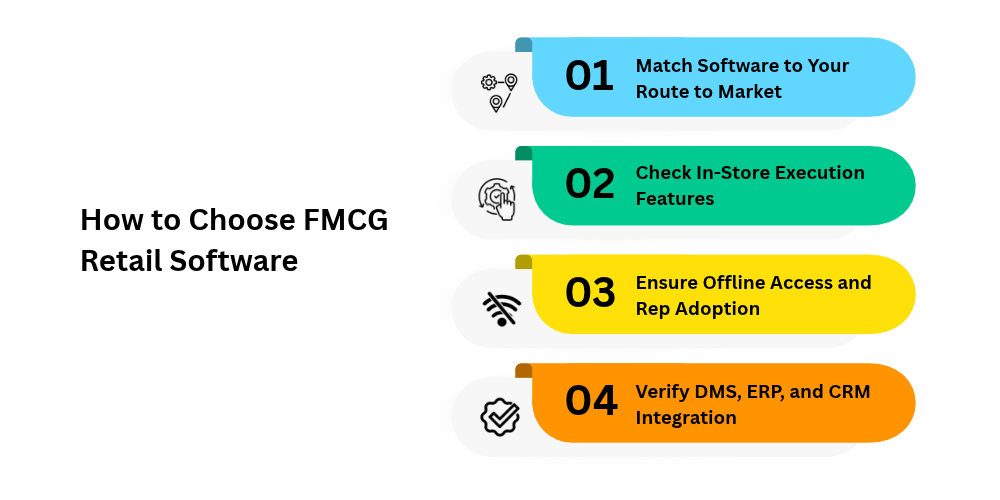
Selecting retail execution software is not simply a matter of comparing feature lists. The right platform should reflect how your products reach the retailer, how field representatives work, and how management measures execution.
Before committing to a solution, evaluate these four areas.
1. Match the Tool to Your Route to Market
Your route to market determines which workflows the software must support. An FMCG manufacturer selling through distributors has different requirements from a brand using a dedicated merchandising team to manage modern retail accounts. A wholesale business may prioritize order booking and collections, while a national consumer goods brand may focus on shelf compliance, planogram adherence, and promotional visibility. Map your existing process before evaluating vendors:
-
How do products move from the manufacturer to distributors and retailers?
-
Who visits outlets and records orders?
-
How are distributor stock levels and secondary sales monitored?
-
Who verifies merchandising and promotional activities?
-
How do managers identify missed outlets and underperforming territories?
The answers will help you distinguish between a field sales automation platform, a dedicated merchandising solution, and a broader retail execution system.
2. Check In-Store Execution Depth, Not Just Order Booking
Order management is only one part of retail execution. An order may be recorded successfully while the outlet still has stockouts, poor shelf visibility, or incomplete promotional displays.
Your evaluation should cover the actual work representatives must complete inside each outlet. Look for capabilities such as:
-
Product availability and stock checks.
-
SKU-level assortment verification.
-
Shelf and merchandising audits.
-
Photo-based proof of execution.
-
Promotion and display compliance.
-
Competitor activity recording, where relevant.
-
Visit-level reporting and corrective action tracking.
Ask vendors to demonstrate these workflows using your real products and outlet scenarios. If shelf-image recognition is essential, verify whether the system analyzes images automatically or simply stores photographs for manual review.
3. Look for Offline Use and Rep Adoption
Field representatives often work across markets where mobile connectivity is inconsistent. A tool that slows down order booking or prevents representatives from completing visits during network interruptions can disrupt the entire sales process. Check whether the mobile application supports the workflows your team uses most frequently while offline, including order capture, visit records, and relevant audits. Confirm how data synchronization works and how the system handles conflicts or failed uploads.
4. Confirm Integration With Your DMS, ERP, or CRM
Retail execution data becomes more useful when it connects with the rest of your business. For example, an order captured by a field representative should ideally flow into the relevant sales or distribution process without repeated manual entry. Distributor stock data can also help representatives make better ordering decisions, provided the necessary integration is available. Ask vendors to explain:
-
Which DMS, ERP, and CRM systems they support.
-
Whether integration is native, API-based, or custom-built.
-
How frequently orders, inventory, and customer data synchronize.
-
How product, retailer, and distributor master data are maintained.
-
How integration errors are identified and resolved.
-
Whether implementation and ongoing integration support incur additional costs.
Do not assume that two systems integrate simply because both vendors mention APIs. Request a demonstration of the actual data flow and confirm which information moves in each direction.
Final Thoughts
Retail execution software should help FMCG brands understand what is happening at the outlet level and act on that information. The most suitable platform depends on whether your biggest challenge is field-team visibility, distributor coordination, order capture, merchandising compliance, or advanced shelf intelligence.
For businesses that need practical control over everyday field sales, Delta Sales App is worth evaluating for its combination of beat planning, outlet visit tracking, order management, inventory workflows, and sales reporting. Brands that require advanced visual shelf analytics or extensive enterprise CRM capabilities should also assess specialized solutions such as Trax and Salesforce Consumer Goods Cloud.
Want to improve visibility into your field sales operations? Book a free demo to evaluate whether it fits your business requirements.