
The Complete Guide to Retail Execution Software: In-Store Tracking, Compliance & Field Execution in 2026
Retail has undergone a fundamental transformation over the last decade. With the rise of omnichannel retail, hyper-competition, and data-driven decision-making, brands can no longer rely solely on traditional distribution strategies.
Modern businesses are shifting toward a data-first, execution-driven approach, where in-store performance directly impacts revenue growth. This shift has made tools like Retail Execution Software indispensable.
what is retail execution and why it matters, a complete guide to retail execution strategies is essential for organizations aiming to stay competitive in today’s market. Retail execution is no longer just about placing products on shelves, it is about ensuring the right product, in the right place, at the right time, with perfect compliance.
What is Retail Execution Software?
Retail execution software is a digital platform that helps brands and field teams monitor, manage, and optimize in-store activities. It acts as a centralized system to track merchandising, audits, store visits, and compliance with brand guidelines.
In simple terms, it ensures that what a brand plans at the corporate level is accurately executed at the retail level.
It is often aligned with a broader retail execution framework and growth strategies, helping businesses bridge the gap between planning and execution.
Key Capabilities of Retail Execution Software
Store Visit Management
Plan, schedule, and monitor field representatives’ store visits efficiently, ensuring optimal coverage, reduced travel time, and improved productivity across all assigned retail locations.
Merchandising Execution
Ensure accurate product placement, shelf visibility, and adherence to planograms, helping brands maintain consistency and improve in-store presence across multiple retail outlets.
Retail Audits & Surveys
Conduct structured audits and surveys to capture real-time store data, including pricing, stock levels, and competitor insights, enabling informed decision-making and performance evaluation.
Task & Workflow Management
Assign, track, and manage tasks for field teams with automated workflows, ensuring accountability, timely completion, and streamlined coordination between managers and on-ground staff.
Inventory & Stock Monitoring
Monitor stock levels at retail outlets in real time, identify shortages or overstock situations, and ensure efficient replenishment to maintain consistent product availability.
Compliance Tracking
Track adherence to brand guidelines, promotional campaigns, and merchandising standards, ensuring consistent execution across stores and minimizing deviations that impact brand reputation.
Real-Time Reporting & Analytics
Access live dashboards and analytics to monitor field performance, sales trends, and execution quality, enabling faster, data-driven decisions and continuous operational improvements.
GPS Tracking & Route Optimization
Track field staff locations using GPS and optimize travel routes to reduce time, fuel costs, and ensure maximum productivity during daily store visits.
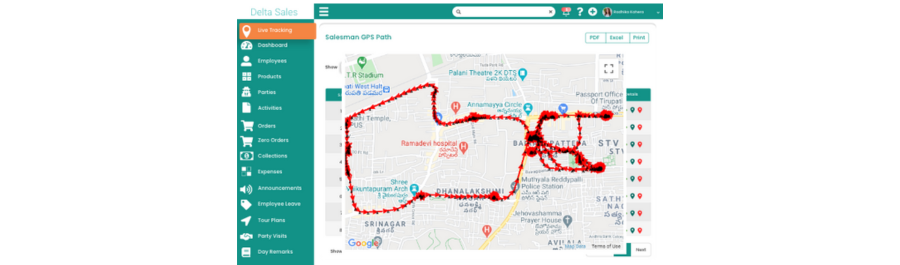
Image Capture & Visual Merchandising Validation
Capture real-time images from stores to validate merchandising execution, ensuring correct product placement, display compliance, and providing visual proof for management review.
Secondary Sales Tracking
Track sales from distributors to retailers to gain deeper market insights, understand product movement, and make better demand forecasting and inventory planning decisions.
Distributor & Retailer Coordination
Enhance communication and coordination between distributors and retailers, ensuring smoother operations, timely order fulfillment, and better alignment across the distribution network.
Order Capture & On-Field Order Management
Enable field representatives to capture and process orders directly during store visits, reducing delays, minimizing errors, and accelerating the overall order-to-delivery cycle.
Performance Tracking & KPI Monitoring
Measure field team performance using key performance indicators, track productivity levels, and identify improvement areas to drive better efficiency and accountability.
Why Retail Execution Matters in Modern Retail
Retail execution plays a decisive role in determining how effectively a brand performs at the ground level. In today’s highly competitive retail landscape, success is no longer driven by strategy alone, it depends on how well that strategy is executed in-store. Even the most well-planned campaigns can fail if they are not implemented correctly across retail outlets.
- It directly influences customer experience
The way products are displayed, stocked, and presented significantly impacts how customers perceive a brand. Well-executed retail operations create a seamless and satisfying shopping experience, increasing the likelihood of purchase and brand loyalty. - It impacts shelf visibility and product availability
If products are not visible or available when customers need them, sales opportunities are lost instantly. Effective retail execution ensures optimal shelf placement, reduces stockouts, and maximizes product discoverability. - It ensures promotional compliance
Promotional campaigns are only effective when executed correctly at the store level. Retail execution ensures that discounts, displays, and offers are implemented as planned, maintaining consistency and maximizing campaign ROI. - It strengthens brand presence at the point of sale
The retail store is where final purchase decisions are made. Strong execution ensures consistent branding, better visibility, and a compelling in-store presence that influences customer choices and drives conversions.
A strong execution strategy helps businesses align with retail execution priorities for field teams, ensuring consistent performance across geographies.
In FMCG and retail industries, even a small gap in execution can lead to significant revenue loss.
Key Components of Retail Execution Software
Retail execution software is built on a set of core components that work together to streamline field operations, improve visibility, and ensure consistent in-store execution. These components enable businesses to manage complex retail networks efficiently while maintaining control over on-ground activities.
Store Visit Management
This component helps plan, schedule, and monitor field visits, ensuring that sales representatives cover assigned outlets efficiently while maintaining discipline, accountability, and optimized travel routes.
Merchandising Management
It focuses on ensuring proper product placement, shelf visibility, and adherence to planograms, helping brands maintain consistency and maximize their in-store presence across all retail locations.
Retail Audits & Data Collection
This enables field teams to conduct structured audits, capture real-time store data, and gather insights on pricing, stock levels, and competitor activities for better decision-making.
Task & Activity Management
Managers can assign tasks, set priorities, and track execution in real time, ensuring that field teams complete activities efficiently and align with business objectives.
Inventory Visibility
Provides real-time insights into stock availability at retail outlets, helping businesses prevent stockouts, manage replenishment cycles, and ensure continuous product availability.
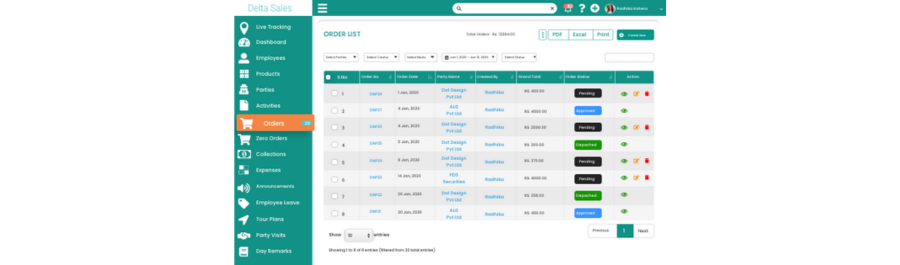
Order Management System
Allows field representatives to capture and process orders directly from stores, reducing manual errors, speeding up order processing, and improving overall supply chain efficiency.
Compliance Monitoring
Ensures that brand guidelines, promotional campaigns, and merchandising standards are followed consistently across all stores, minimizing deviations and maintaining brand integrity.
Real-Time Reporting & Analytics
Offers dashboards and analytics tools that provide actionable insights into field performance, store execution, and sales trends, enabling faster and smarter business decisions.
GPS Tracking & Field Force Monitoring
Tracks the real-time location of field staff, ensuring transparency, improving route planning, and enhancing overall productivity and accountability.
Integration Capabilities
Seamlessly integrates with existing systems such as CRM, ERP, and distributor management software, ensuring smooth data flow and eliminating operational silos.
How Retail Execution Software Works
Retail execution software operates as a connected system that links field teams, managers, and backend operations into a single workflow. It ensures that every retail activity from planning to execution and reporting, is streamlined, trackable, and data-driven.
1. Planning & Task Allocation
Managers create store visit schedules, assign tasks, and define objectives for field representatives. These tasks may include merchandising checks, audits, order collection, or promotional execution.
2. Field Execution via Mobile App
Field representatives use a mobile application to access their daily plans, visit assigned stores, and perform tasks such as updating stock data, capturing images, and completing checklists.
3. Real-Time Data Capture
During store visits, data is captured instantly, including product availability, shelf placement, pricing, and competitor activity. This ensures accurate and up-to-date information from the ground.
4. GPS Tracking & Visit Validation
The software tracks field staff locations through GPS, verifying store visits and ensuring route adherence, which improves transparency and accountability.
5. Image Capture & Proof of Execution
Sales reps upload store images as visual proof of merchandising and promotional compliance, allowing managers to validate execution remotely.
6. Order Collection & Processing
Field teams can capture orders directly from retailers during visits, which are then synced with backend systems for faster processing and fulfillment.
7. Data Synchronization (Online/Offline)
The software works both online and offline. Data collected without internet connectivity is stored locally and automatically synced once the device reconnects.
8. Centralized Dashboard & Monitoring
All collected data is sent to a centralized dashboard where managers can monitor field activities, track performance, and ensure execution quality in real time.
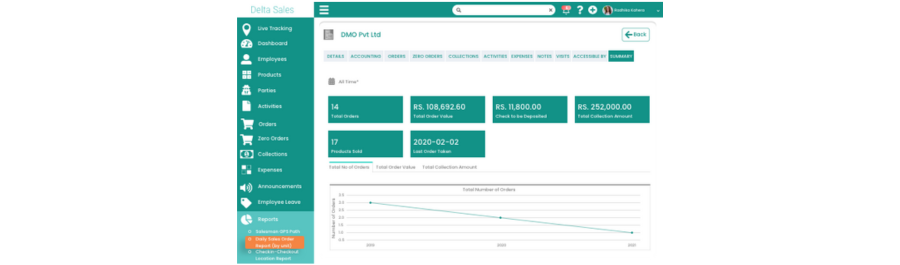
9. Reporting & Analytics
Advanced analytics tools process the data to generate reports on sales performance, field productivity, stock levels, and campaign effectiveness.
10. Decision-Making & Optimization
Based on insights, businesses can optimize strategies, improve execution gaps, and make informed decisions to enhance retail performance and drive growth.
In essence, retail execution software creates a continuous feedback loop, plan → execute → track → analyze → improve, ensuring that retail strategies are consistently translated into measurable results at the store level.
Benefits of Retail Execution Software
Retail execution software delivers measurable advantages by improving visibility, control, and efficiency across retail operations. It enables businesses to execute strategies effectively while optimizing field performance and in-store outcomes.
Improved Field Team Productivity
Automates routine tasks, streamlines workflows, and provides clear daily plans, enabling field representatives to focus on high-impact activities and complete more visits efficiently.
Enhanced In-Store Visibility
Provides real-time insights into store-level activities, including stock availability, product placement, and promotional execution, ensuring complete transparency across all retail outlets.
Better Merchandising Compliance
Ensures consistent implementation of planograms and brand guidelines, helping maintain uniform product presentation and improving overall shelf visibility and brand recall.
Real-Time Decision Making
Access to live data and analytics allows managers to respond quickly to issues such as stockouts, poor execution, or low-performing outlets.
Reduced Stockouts and Lost Sales
By tracking inventory levels and identifying gaps early, businesses can ensure timely replenishment and prevent missed sales opportunities due to product unavailability.
Faster Order Processing
Enables on-field order capture and direct system integration, reducing delays, minimizing manual errors, and accelerating the order-to-delivery cycle.
Improved Accountability and Tracking
GPS tracking and activity logs ensure that field teams follow schedules, complete assigned tasks, and maintain accountability for their performance.
Stronger Distributor and Retailer Relationships
Improves coordination and communication across the supply chain, leading to smoother operations, timely deliveries, and better collaboration with partners.
Data-Driven Performance Optimization
Detailed reports and analytics help identify trends, measure KPIs, and uncover improvement areas, enabling continuous optimization of retail strategies.
Scalability for Growing Businesses
Supports expansion across multiple regions and outlets without increasing operational complexity, making it easier to manage large and distributed retail networks.
Overall, retail execution software empowers businesses to bridge execution gaps, improve operational efficiency, and drive consistent growth by ensuring that every retail activity contributes to business objectives.
In-Store Tracking: Driving Real-Time Insights
In-store tracking enables businesses to monitor:
- Product Availability
Track real-time product availability across retail outlets to identify stock shortages, prevent lost sales opportunities, and ensure timely replenishment for consistent customer demand fulfillment. - Shelf Placement
Monitor product positioning on shelves to ensure proper visibility, adherence to planograms, and maximize customer attention, ultimately improving product discoverability and increasing purchase likelihood. - Competitor Activities
Capture insights on competitor pricing, promotions, and product placement within stores, helping businesses refine strategies, stay competitive, and respond quickly to changing market dynamics. - Store Conditions
Evaluate overall store conditions, including cleanliness, display quality, and branding presence, ensuring a consistent shopping environment that positively influences customer experience and brand perception.
By implementing 30 metrics to track in a retail audit, businesses can gain deeper insights into store-level performance.
This helps identify gaps and optimize store-level execution efficiently.
Merchandising Compliance: Ensuring Brand Standards
Merchandising compliance ensures that products are displayed, positioned, and promoted in line with predefined brand guidelines across all retail outlets. It plays a critical role in maintaining consistency, strengthening brand identity, and maximizing in-store impact.
In a competitive retail environment, even minor deviations in product placement or display standards can affect visibility and sales. Retail execution software helps businesses monitor compliance in real time, ensuring that every store reflects the brand’s intended presentation and strategy.
Planogram Adherence
Ensures that products are placed according to approved layouts, maintaining uniform shelf structure, improving visibility, and delivering a consistent shopping experience across all retail locations.
Promotional Display Accuracy
Verifies that promotional materials, offers, and displays are implemented correctly in stores, ensuring campaigns are executed as planned and deliver maximum impact.
Brand Consistency Across Stores
Maintains uniform branding elements such as signage, colors, and product arrangement, helping reinforce brand identity and improve customer recognition at every retail touchpoint.
Image-Based Validation
Field teams capture real-time images of store displays, allowing managers to remotely verify compliance and take corrective actions when deviations are identified.
Deviation Alerts and Corrective Actions
Identifies gaps in execution and notifies managers instantly, enabling quick corrective measures to ensure compliance standards are consistently maintained.
This directly supports retail execution strategies for FMCG promotion season, where visibility is key to driving sales.
Field Execution: Empowering Sales Teams on Ground
Field execution is at the core of successful retail operations, as it directly connects strategy with on-ground implementation. Field teams act as the bridge between brands and retail outlets, ensuring that every plan is executed accurately where it matters most.
With the support of digital tools, businesses can empower their field force with better visibility, control, and efficiency. These tools not only simplify daily operations but also enable teams to perform with greater accuracy and accountability.
Capture Data in Real Time
Field representatives can instantly record store-level data, including stock availability, pricing, and merchandising details, ensuring accurate, up-to-date information for faster decision-making and improved operational visibility.
Execute Store Visits Efficiently
Digital scheduling and route optimization help sales teams plan and complete more store visits in less time, improving productivity while ensuring proper coverage of assigned territories.
Track Tasks and Targets
Managers can assign tasks and set performance targets, while field teams can track their progress in real time, ensuring better alignment with business goals and higher accountability.
Provide Actionable Insights
Collected data is transformed into meaningful insights, helping businesses identify execution gaps, understand market trends, and make informed decisions to continuously improve retail performance.
Understanding field team insights for better retail execution enables organizations to improve productivity and performance.
Data Analytics & Reporting in Retail Execution
Data analytics and reporting have become critical components of modern retail execution, transforming raw field data into actionable business intelligence. Instead of relying on delayed or manual reports, businesses can now access real-time insights that drive faster and more accurate decision-making.
Advanced analytics acts as a game changer by providing complete visibility into field operations, store performance, and sales outcomes. With centralized dashboards, managers can monitor execution quality, identify inefficiencies, and continuously optimize strategies for better results.
Track KPIs
Businesses can monitor key performance indicators such as sales volume, store coverage, task completion rates, and field productivity, ensuring teams stay aligned with defined performance goals.
Analyze Trends
Data dashboards help identify patterns in sales, customer demand, and product movement, enabling businesses to anticipate market changes and adjust strategies proactively.
Identify Execution Gaps
Analytics highlights inconsistencies in store execution, such as missing products, poor merchandising, or incomplete tasks, allowing managers to take corrective action quickly.
Measure ROI
Businesses can evaluate the effectiveness of promotions, campaigns, and field activities by analyzing performance data, ensuring better resource allocation and improved return on investment.
These insights help generate retail execution insights to boost field sales, enabling smarter decision-making.
Challenges in Retail Execution Without Technology
Retail execution becomes significantly more complex and error-prone when managed without digital tools. Manual processes, delayed reporting, and lack of visibility create gaps between planning and actual execution, ultimately impacting sales and brand performance.
Without proper technology, businesses struggle to maintain consistency, monitor field activities, and respond quickly to market changes. These challenges not only reduce operational efficiency but also limit growth potential in a competitive retail environment.
Lack of Real-Time Visibility
Businesses cannot access up-to-date information from retail outlets, leading to delayed decisions, missed opportunities, and an inability to respond quickly to on-ground issues.
Poor Compliance Tracking
Without automated systems, ensuring adherence to merchandising guidelines and promotional execution becomes difficult, resulting in inconsistent brand presentation and reduced campaign effectiveness.
Inefficient Field Operations
Manual planning and reporting slow down field teams, reduce productivity, and create confusion around tasks, schedules, and performance expectations.
Inconsistent Data Collection
Data collected manually is often incomplete, inaccurate, or delayed, making it unreliable for analysis and limiting the ability to make informed business decisions.
These issues contribute to retail execution and supply chain challenges, affecting overall business performance.
How to Choose the Right Retail Execution Software
Selecting the right retail execution software is critical for ensuring efficient field operations, accurate data collection, and improved sales performance. The ideal solution should align with your business goals, support your team in the field, and provide actionable insights for decision-making.
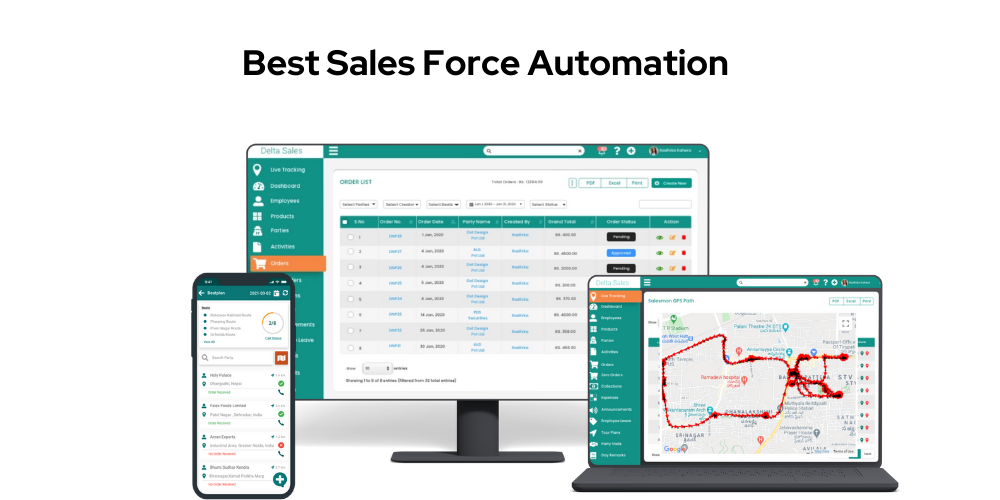
A well-chosen platform can significantly enhance productivity, streamline workflows, and ensure better visibility across retail operations.
Key Factors to Evaluate
- Ease of Use
The software should have an intuitive and user-friendly interface that allows sales teams to quickly adopt and use it without extensive training.
A simple interface reduces onboarding time, minimizes errors, and ensures that field teams can focus more on execution rather than struggling with the system. - Scalability
Choose a solution that can grow with your business and handle increasing data, users, and territories without performance issues.
Scalable software ensures long-term usability and supports expansion into new regions, product lines, or markets without requiring major system changes. - Mobile Capabilities
The software must offer strong mobile functionality, enabling field teams to access, update, and report data on the go.
Mobile access ensures real-time data entry, improves accuracy, and empowers sales representatives to perform their tasks efficiently from any location. - Analytics Features
Advanced analytics and reporting capabilities are essential for tracking performance, identifying trends, and making informed decisions.
Robust analytics help businesses monitor KPIs, evaluate field activities, and optimize strategies based on real-time insights. - Integration with Existing Systems
The software should seamlessly integrate with existing tools such as CRM, ERP, and distribution systems.
Smooth integration ensures data consistency across platforms, reduces duplication, and enhances overall operational efficiency.
It is important to follow a complete guide to retail execution strategies to ensure alignment with business goals.
Use Cases Across FMCG, Pharma & Retail Industries
Retail execution software is widely adopted across FMCG, Pharma, and Retail industries to streamline field operations, improve compliance, and enhance visibility. Each industry leverages the software differently based on its operational needs and regulatory requirements.
By enabling real-time tracking, automated reporting, and data-driven insights, this technology helps businesses maintain consistency and improve performance across all retail touchpoints.
Key Use Cases by Industry
- FMCG (Fast-Moving Consumer Goods)
Retail execution software helps FMCG companies monitor shelf conditions, track promotions, and ensure distributor compliance across multiple outlets.
It enables better product visibility, ensures correct placement, and helps brands execute promotional campaigns effectively at the store level. - Pharma (Pharmaceutical Industry)
In the pharmaceutical sector, the software is used for conducting retail audits, tracking prescriptions, and ensuring regulatory compliance.
It helps pharma companies maintain strict adherence to guidelines while improving visibility into product availability and pharmacy-level execution. - Retail Industry
Retail businesses use execution software for visual merchandising, store audits, and inventory tracking.
It ensures that stores maintain proper product displays, stock levels are optimized, and customer experience is consistently improved.
It supports retail execution across modern trade and general trade, ensuring consistency across channels.
How These Use Cases Drive Business Value
Across all three industries, retail execution software enhances operational efficiency by automating manual processes and providing real-time insights. It helps businesses reduce errors, improve compliance, and make data-driven decisions.
By adopting this technology, companies can strengthen their retail presence, improve field team productivity, and deliver a better customer experience, ultimately leading to increased sales and sustainable growth.
Future Trends in Retail Execution Software
The future of retail execution software is being shaped by rapid advancements in artificial intelligence, automation, and connected technologies. As businesses continue to digitize their field operations, these innovations are enabling more accurate, efficient, and scalable retail execution.
Companies that adopt these modern capabilities will gain a significant competitive advantage by improving decision-making, optimizing performance, and enhancing overall operational visibility.

Key Future Trends
- AI-Powered Analytics
Retail execution software will increasingly rely on AI to analyze large volumes of data and generate actionable insights.
This will help businesses identify patterns, track performance, and optimize strategies with greater accuracy and efficiency. - Predictive Insights
Advanced systems will move beyond reporting historical data to predicting future outcomes such as demand fluctuations and stockouts.
This will enable proactive decision-making and help businesses stay ahead of market challenges. - Automation
Automation will streamline repetitive tasks such as reporting, scheduling, and audit processes.
This will reduce manual effort, minimize errors, and allow field teams to focus on high-value activities. - Image Recognition
AI-based image recognition will play a key role in automating shelf audits and ensuring planogram compliance.
It will enhance accuracy in tracking product placement, availability, and retail execution standards. - IoT Integration
Integration with IoT devices will enable real-time data collection from smart sensors and connected systems.
This will provide continuous visibility into store conditions, inventory levels, and customer interactions.
Impact on the Future of Retail Execution
These trends will transform retail execution into a more intelligent, automated, and data-driven process. Businesses will be able to respond faster to market changes, improve operational efficiency, and enhance customer experiences.
Organizations that embrace these innovations early will be better positioned to scale, adapt, and succeed in an increasingly competitive retail environment.
Final Thoughts
Retail execution is no longer optional, it is a strategic necessity. Organizations that invest in structured processes, data-driven insights, and advanced tools will outperform competitors.
By adopting modern solutions and focusing on must-have features in a retail execution tool, businesses can ensure operational excellence and sustainable growth.
Retail execution software is not just a tool, it is the backbone of modern retail success.
Transform Your Retail Execution with Delta Sales App
Book a Demo Today and discover how Delta Sales App can help you enhance visibility, improve compliance, and drive higher sales performance with next-generation retail execution technology.