
Why Manufacturers, Distributors, and Field Sales Teams Need One Connected Platform
Manufacturers rarely sell directly to the final retailer. Products move through distributors, wholesalers, sales reps, and multiple layers of the channel before they ever reach the shelf. Each layer generates its own information: orders, inventory, pricing, collections, retailer visits, secondary sales, and territory performance.
The problem starts when that information sits in different systems. A manufacturer runs production and ERP data. A distributor manages inventory and fulfillment separately. Field reps capture orders and updates through a CRM, a mobile app, spreadsheets, or even WhatsApp. The information exists, but it doesn't move at the speed the business actually needs.
That creates a familiar situation: sales knows one number, the distributor has another, and the operations team ends up spending real time just figuring out which one is correct. A connected platform fixes this by bringing these activities into one coordinated flow. Instead of treating field sales, distribution, orders, inventory, and reporting as separate processes, it ties them together around the same customers, products, territories, and transactions.
In this blog, we will explore the hidden costs of disconnected sales and distribution systems, how fragmentation affects manufacturers, distributors, and field sales teams, what a truly connected platform should include, and how the right technology can create a more coordinated sales and distribution operation.
The Hidden Cost of Disconnected Systems in Manufacturing and Distribution
Disconnected systems do not always create an obvious problem on day one. A sales team can continue working with spreadsheets, an ERP, separate distributor management software, and messaging apps for a long time.
The cost appears gradually through duplicated work, delayed information, inconsistent data, and decisions made with incomplete visibility.
- Disconnected Data Across ERP, CRM, and Field Sales
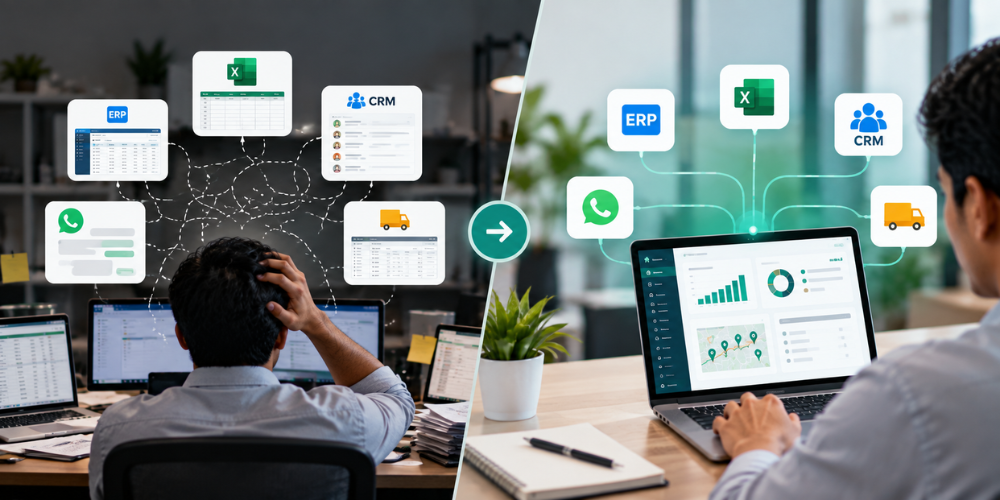
An ERP holds product, inventory, finance, and order data. A CRM holds customer records and sales opportunities. A field sales app captures retailer visits, orders, collections, attendance, and territory activity. When these systems don't talk to each other, employees end up doing the connecting themselves. A sales rep might check one system for customer details, call a distributor about stock, look somewhere else for pricing, and then enter the order in a fourth place. That's how you end up with several versions of the same information. Customer names get duplicated. Product codes don't match across systems. Pricing updates in one place and not another. Orders sit waiting for manual checks before they reach the right distributor or warehouse. None of this comes from having multiple systems. Plenty of businesses run several specialized systems just fine, as long as those systems exchange information reliably. What actually causes the mess is workflows that were never connected in the first place.
-
Order Delays, Stockouts, and Pricing Errors Caused by Fragmentation
Consider a field representative visiting a retailer. The retailer wants to order several SKUs, but the representative does not have current visibility into distributor stock. The order is recorded based on expected availability. Later, the distributor discovers that some items are unavailable. The sales team now has to communicate the shortage, revise the order, and potentially arrange a replacement. A similar problem can occur with pricing and schemes. If the latest price list or promotional scheme has not reached the field team, representatives may book orders using outdated information. Each issue may appear minor. Across hundreds or thousands of orders, however, these exceptions create operational friction. Connected systems reduce the number of handoffs required between the person taking the order, the distributor fulfilling it, and the manufacturer monitoring channel demand.
How Disconnection Impacts Manufacturers, Distributors, and Field Reps Differently
When the sales process is disconnected, each team feels it differently. Manufacturers can't see much of the demand downstream. Distributors work with stock and order information that's split up. Field reps lose time to reporting and coordination. Those gaps are what a connected platform is for.
-
Manufacturers: Limited Visibility into Distributor and Retail-Level Sales
Manufacturers usually see primary sales, shipments, production, and warehouse stock clearly. What happens after the product enters the distribution network is harder to see. How fast are distributors selling through their stock? Which territories are producing secondary sales? Which SKUs are slow? Which retailers get visited regularly, and which distributors are behind their targets? When field sales data and distributor data sit in separate systems, manufacturers tend to get those answers from periodic reports instead of a live view. By the time a report arrives, a shift in demand or a weak channel may have been going on for a while. For companies with large distributor networks, linking field activity to distributor and sales data shows what's happening in the market much sooner.

-
Distributors: Inventory Mismatches and Order Fulfillment Delays
Distributors are the ones filling orders every day, so they need to know what's been ordered, what's in stock, what's already spoken for, and what needs restocking. When orders come in through separate channels, someone often has to check the details by hand before processing them. Stock mismatches get worse when several reps are booking orders in the same territory. If order booking and inventory sit in the same workflow, a distributor can spot a shortage before it turns into a late or failed delivery.
-
Field Sales Teams: No Real-Time Access to Stock, Pricing, or Order History
A field rep standing in front of a retailer needs answers on the spot. Is the SKU they're asking for in stock? What price applies? What did this retailer order last time, and how much have they bought so far this month? Is there an unpaid balance? Which products is the current campaign pushing? Where is the next outlet on the beat? Without that information in hand, reps end up calling or texting someone, digging through spreadsheets, or asking distributor staff. The visit drags on, and a lot of time goes to back-and-forth that didn't need to happen.
What "One Connected Platform" Actually Means
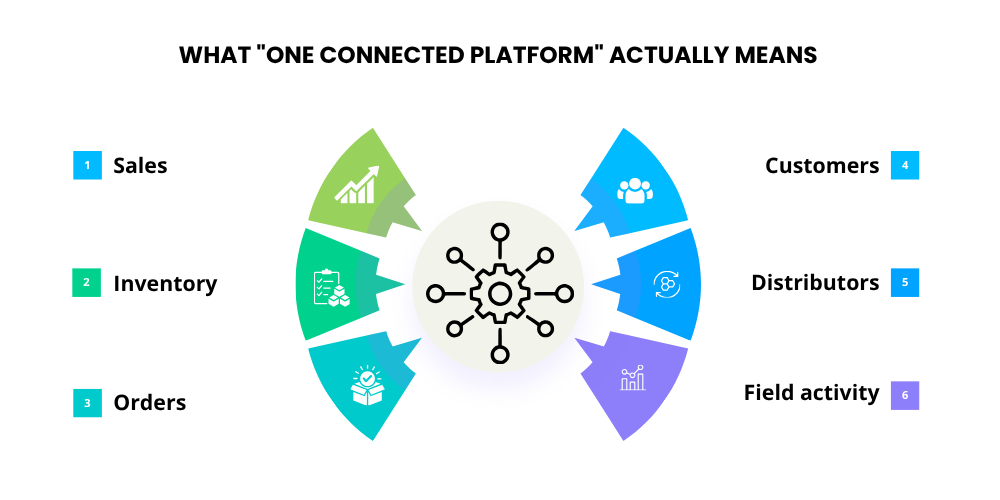
A connected platform doesn't have to replace every system a company already runs. What it needs to do is let the teams and systems involved in sales and distribution see the same information and pass data to each other. A visit in the field should carry through to the order, and the order through to the reports management reads.
-
Unified Data Layer Across Sales, Inventory, and Order Management
A connected sales operation runs on shared information. Customer records, products, orders, stock levels, targets, pricing, and distributor relationships shouldn't sit in separate datasets when the work needs them to talk to each other. When a rep books an order, for example, that order should be tied to the customer, the territory, the products, the distributor, and the reporting line it belongs to. It then arrives with context and isn't just another row in a spreadsheet.
-
Real-Time Sync Between Field Activity and Back-Office Systems
Field reps generate data all day. They finish a retailer visit, book an order, record a payment collection, update an outlet profile, or file a report. Managers and back-office staff get more out of that information if they can see it as it happens instead of waiting for an end-of-day spreadsheet. Syncing in real time, or close to it, keeps the office in step with what's going on in the market. It also lets managers deal with problems when they come up, without leaving them for the weekly review.
-
Single Source of Truth for Customers, Products, and Pricing
A connected platform should cut down on conflicting versions of the same business information. A customer should look the same in every record. Product data should follow one set structure, and the teams that need prices and schemes should be able to find them. This matters most for companies with thousands of outlets, several distributors, big SKU catalogs, or many sales territories. The bigger the channel gets, the more it costs when the data doesn't agree.
Core Capabilities a Connected Platform Must Have
Connecting systems is only useful when the platform supports the workflows field teams and distribution businesses actually perform.
-
Integrated Order Booking and Inventory Visibility
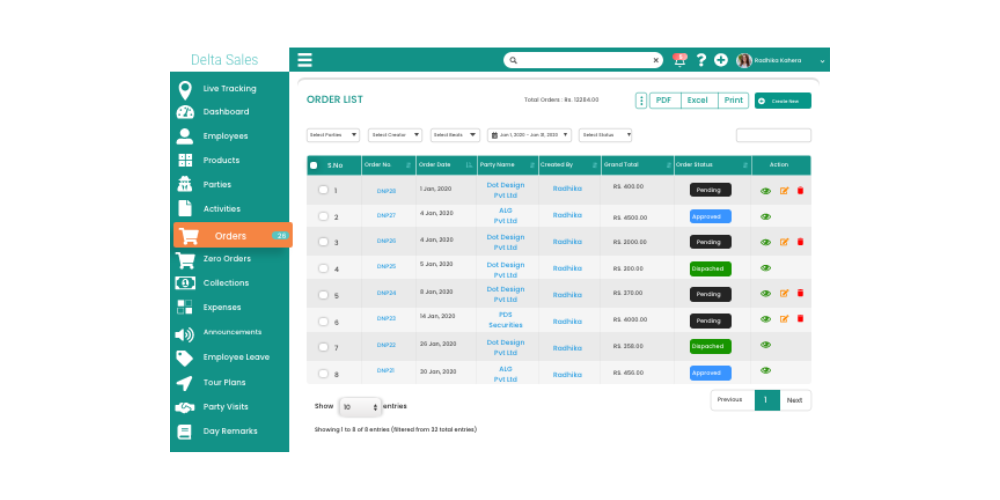
Order reporting should be simple enough for representatives to complete during a retailer visit. A connected system can associate the order with the right customer, products, quantities, territory, and sales representative while making relevant inventory information available to the field team. This reduces the need to record orders separately and communicate them manually to distributors. For businesses handling both primary and secondary sales, the same principle can help create better visibility across different levels of the channel.
-
Field Sales Automation: Route Planning, Visit Tracking, Reporting
A digital order form isn't enough for a field sales team. A useful platform also covers beat and route planning, visit tracking, GPS activity monitoring, attendance, DSR reporting, expense reporting, and territory coverage. Route optimization cuts down on needless travel. Visit tracking shows whether the outlets on the plan were actually visited. Automated reports save reps the time they'd otherwise spend writing up their day. The point of all this is reliable visibility into field activity, and watching employees for its own sake isn't part of it.
-
Distributor and Retailer Management in One System
Manufacturers and distributors each need to see different parts of the channel. A connected platform should let them manage distributor and retailer information in the same place as sales activity. That covers outlet profiles, visit and order history, collections, territory assignments, sales performance, and the relevant distributor details. With all of it linked, managers can spot patterns that would stay buried if the data lived in separate spreadsheets.
-
Real-Time Dashboards for Sales, Stock, and Performance Tracking
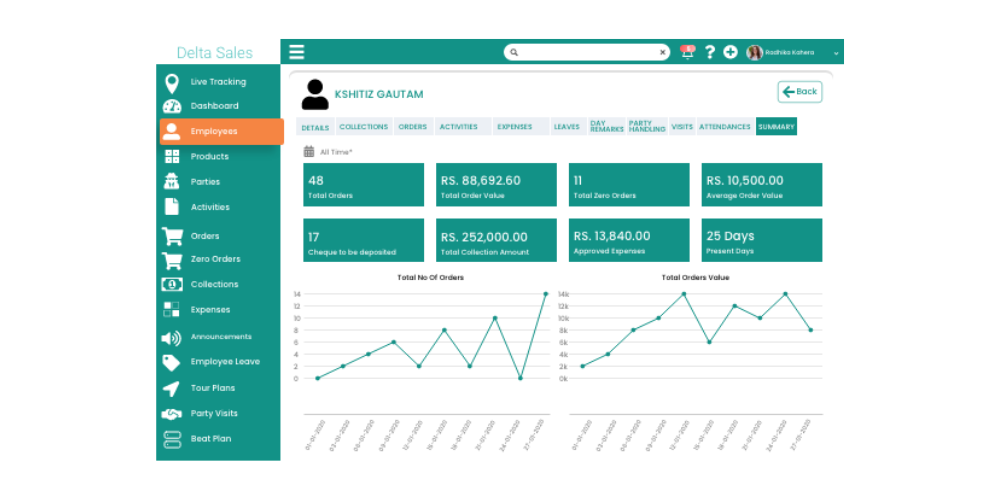
Managers shouldn't have to wait for month-end to find out whether a territory is doing well. A dashboard can pull together sales achievement, order volume, field visits, customer coverage, collections, and rep activity in one view, and the real value comes from reading those numbers side by side. Say a territory's sales are low. The cause could be poor outlet coverage, a distributor running short on stock, retailers ordering less often, or weak SKU penetration. The sales figure by itself won't tell you which one it is.
Business Impact of Connecting Manufacturers, Distributors, and Field Teams
The purpose of connectivity is not simply to create a cleaner software environment. It should improve the way information moves through the business.
-
Faster Order-to-Delivery Cycles
When an order goes straight from the field into the workflow, there's less chance of it stalling on manual data entry or people asking each other the same questions twice. The rep captures the retailer's order during the visit; it's linked to the right customer and product records, and the fulfillment team can see it right away. With fewer manual handoffs, the path from order to delivery is easier to keep track of.
-
Reduced Stockouts and Overstocking
Stock data is more useful when it sits next to sales activity. If managers can see which SKUs are selling in which territories and through which distributors, they can spot where demand and available stock are drifting apart. Holding more inventory isn't the aim. What helps is knowing where stock is needed and where it's sitting unsold. That leads to better restocking decisions and fewer avoidable stockouts and overstocks.
-
Improved Field Sales Productivity and Accountability
A connected platform takes paperwork off the reps and gives managers a view of how field work is going. Reps no longer have to spend long stretches writing up DSRs, putting visit reports together, or sending order updates, because the information gets captured as they do their normal work. Managers can then check territory coverage, planned versus completed visits, orders, collections, and sales performance from one system.
-
Better Demand Forecasting Across the Supply Chain
Demand forecasting becomes more useful when it incorporates information from closer to the market. Distributor orders show channel movement. Retailer orders provide another signal. Field visits reveal outlet-level activity. SKU-level sales data show which products are moving. When these signals are connected, manufacturers and distributors have more context for planning production, replenishment, inventory, and sales targets. A connected platform does not eliminate forecasting uncertainty. It gives teams better operational data with which to manage it.
Signs Your Business Needs a Connected Platform
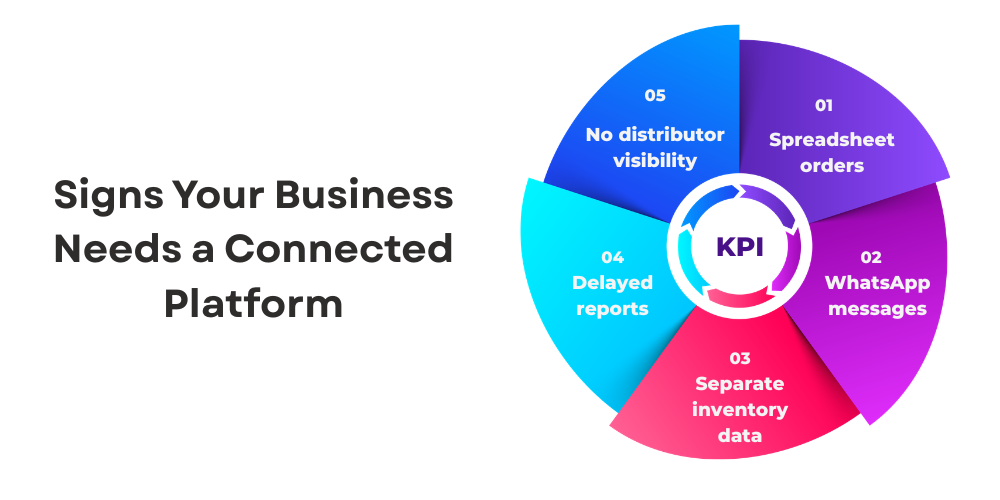
Not every company needs to replace its existing technology stack. But certain operational patterns suggest that disconnected workflows are becoming a constraint.
-
Sales and Inventory Data Living in Separate Systems
If sales managers regularly contact warehouse or distributor teams to confirm whether products are available, there is a visibility gap. The problem becomes more significant when teams operate across several regions, warehouses, or distributors.
-
Field Reps Relying on Spreadsheets or WhatsApp for Orders
Messaging apps are fine for talking to people, but they weren't built to hold structured sales records. When retailer orders come in over WhatsApp, and someone types them into another system later, that's an extra step, and details can get lost on the way. Spreadsheets have the same problem when they're used for daily visits, collections, expenses, or DSR reports.
-
Lack of Real-Time Visibility Into Distributor Performance
If managers only judge distributors from periodic reports, they can't see much of what happens between one report and the next. Questions about how often orders come in, which SKUs are moving, how many retailers are being covered, what's been collected, and how sales compare to target take a while to answer. A connected system puts those numbers in one set of reports, so they're available when someone needs them.
How to Choose the Right Connected Platform for Your Business
Choosing a connected platform should start with your actual sales operation, not a long list of software features. Look at how your manufacturers, distributors, managers, and field representatives currently share information and where delays or gaps occur. The right platform should connect those workflows without making daily field work more complicated.
-
Integration Capabilities with Existing ERP/CRM
If the business already relies on an ERP or CRM, the new platform should fit into that environment. Look at available integrations, APIs, data synchronization capabilities, customer and product mapping, and the information that needs to move between systems. The objective should be to reduce duplicate data entry rather than create another isolated database.
-
Offline-First Support for Field Sales Teams
Field sales can't count on a steady connection. Reps work in rural territories, warehouses, and industrial areas, and in other places where mobile data drops out. With an offline-first app, they can keep logging visits, orders, and other field details without a signal, and the data syncs to the central system once they're back online. For distribution businesses that cover a mix of territories, this is a requirement.
-
Scalability Across Regions, Distributors, and Product Lines
A platform that works for 20 reps shouldn't become hard to run at 200. Check how it copes with multiple territories, distributor networks, customer groups, product catalogs, sales hierarchies, and reporting needs. Scaling also has to keep the app easy to use. Reps shouldn't need a lot of training just because the company got bigger.
How Delta Sales App Brings Manufacturers, Distributors, and Field Teams Onto One Platform
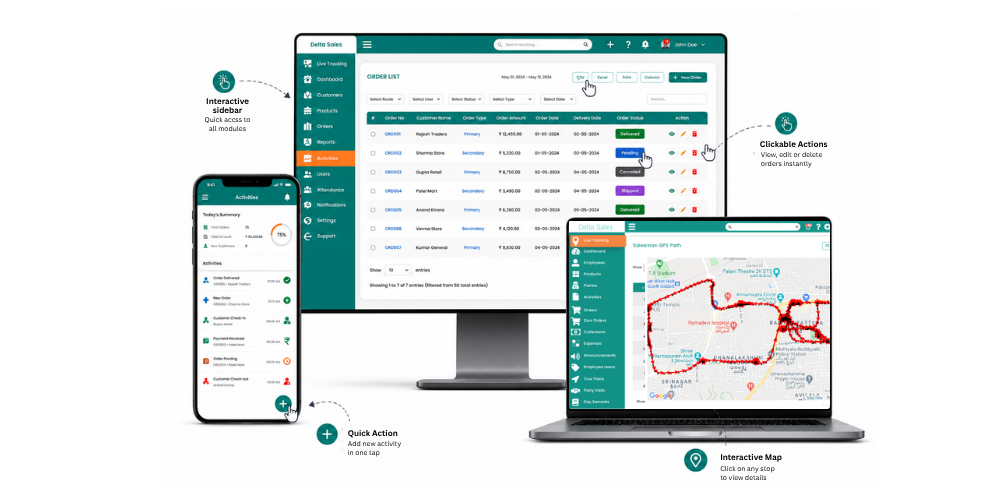
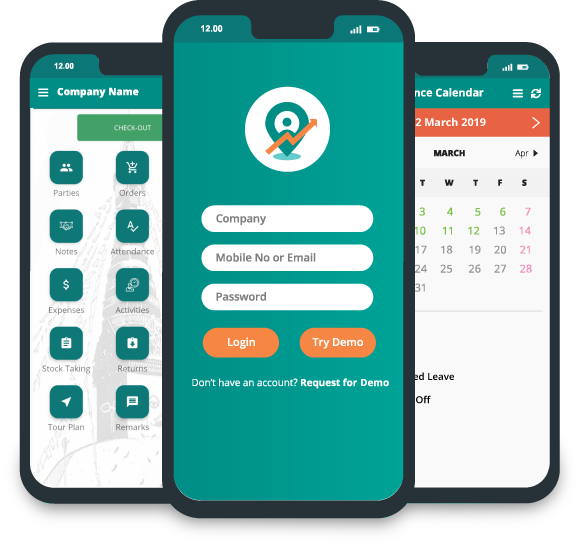
Delta Sales App is designed around the workflows that connect field sales with distribution operations. Rather than treating order booking, field activity, attendance, route planning, customer visits, and reporting as unrelated tasks, it brings these activities into a centralized field sales automation environment. For manufacturers, distributors, wholesalers, and FMCG businesses, this creates a more connected workflow between the people managing the market and the teams managing operations.
-
Real-Time Order, Inventory, and Distributor Visibility in One Place
Delta Sales App covers order management, distributor and party management, sales reporting, and real-time analytics. Field teams log customer visits and orders on the mobile app, and managers follow sales activity and performance through central dashboards and reports. That means less reliance on separate spreadsheets and manual reporting. For businesses that handle both primary and secondary sales, linking field activity to channel data, also show more about how distributors and retailers are performing.
-
Field Sales Automation Built for Distribution-Led Businesses
Taking orders is only part of a rep's day. They follow beat plans, visit their assigned outlets, book orders, handle collections, submit expenses, log attendance, and finish their daily reports. Delta Sales App puts all of that in one field sales automation system. GPS tracking shows where field activity is happening, and beat and route planning help teams cover their territories. Automated reports and dashboards give managers a structured view of sales and field performance. That makes it a fit for businesses that sell through a spread-out network of retailers, distributors, wholesalers, and field reps.
-
Offline-First Design for Reps Working Without Steady Connectivity
A field sales platform has to work where the sales team actually works. Representatives may not have reliable internet access throughout the day. An offline-first approach allows important field activities to continue even when connectivity is limited. Orders and other field information can be captured on the mobile device and synchronized when a connection becomes available. For teams covering rural markets and territories with inconsistent network coverage, this can prevent connectivity issues from becoming workflow interruptions.
Conclusion
Manufacturers, distributors, and field sales teams depend on one another, but their software workflows often operate separately. That separation creates familiar problems: delayed orders, inconsistent information, manual reconciliation, limited distributor visibility, inefficient field reporting, and difficulty understanding what is happening at the retailer level. A connected platform addresses the underlying information gap. The objective is not to put every business function into one piece of software. It is to connect the workflows that need to work together.
For businesses managing distributed sales teams, thousands of outlets, multiple distributors, or large product catalogs, this connection becomes increasingly important as operations grow. Delta Sales App provides a centralized environment for field sales automation, order management, attendance, beat planning, customer visit tracking, expense reporting, distributor management, and sales analytics. When the field and back office work from connected information, sales operations become easier to monitor, coordinate, and improve.
Ready to connect your field sales operations? Book a free demo to see how Delta Sales App can fit into your sales and distribution workflow.